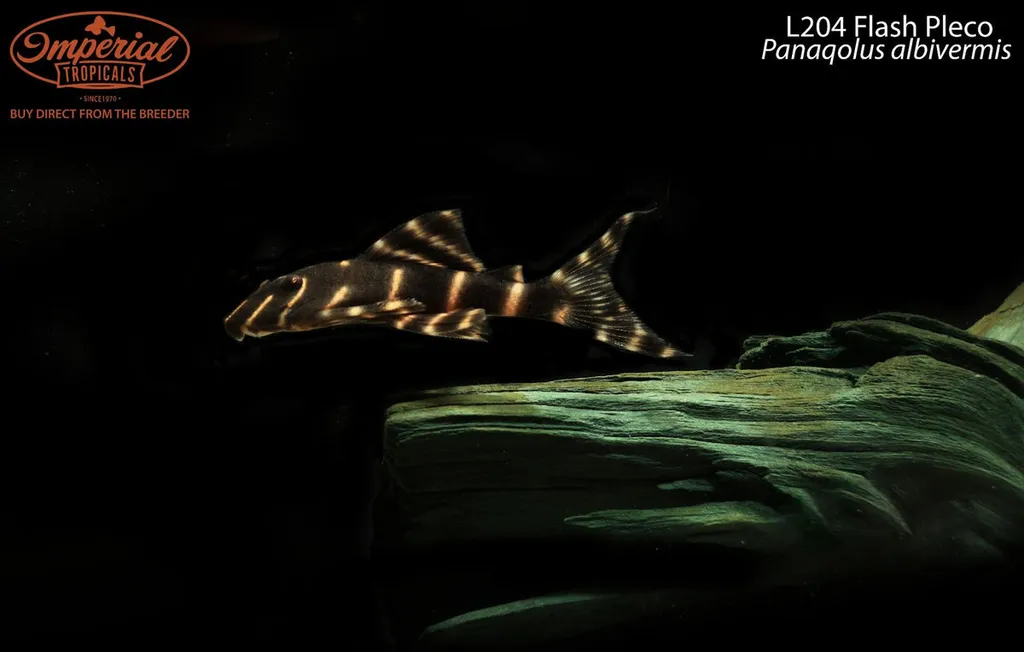
Flash pleco (L204)
Panaqolus albivermis
Also known as L204, Emperor Pleco, Flash Plec
FreshwaterFish
Care at a glance
- Temperature
- 77–84°F
- 25–29°C
- pH
- 6.0–7.5
- Adult size
- 5.1 in
- 13 cm
- Minimum tank
- 40 gal
- 150 L
- Temperament
- Mostly peaceful
- Social behavior
- Solitary
- Swim level
- Bottom
- Diet
- Omnivore
- Difficulty
- Medium
- Breeding
- Medium
- Rarity
- Rare
- Family
- Loricariidae
- Origin
- Rio San Alejandro, a tributary of the Rio Ucayali in the upper Amazon of Peru.
Overview
The flash pleco (L204) is a wood-eating pleco for a community tank full of driftwood. It is best kept by someone with a little experience.
Did you know
Wood-eating plecos like the flash pleco pass a lot of fine, sawdust-like waste. It is a normal sign that they really are rasping and digesting their driftwood.
Caring for the flash pleco (L204)
Give the flash pleco (L204) at least 40 gal (150 L), with plenty of driftwood and some caves. Keep the water clean and flowing, at 77 to 84°F (25 to 29°C) and a pH of 6.0 to 7.5.
Its gut is built for wood and fiber. It rasps the wood and digests the biofilm and fiber, so submerged wood is part of its diet, not decoration. Keep soft wood available at all times. Supplement with sinking wood-based and vegetable pellets and blanched zucchini, with only occasional protein.
The flash pleco is fairly peaceful but territorial around its chosen cave or log. It is a solitary fish and safe with community tank mates. Breeding it is of medium difficulty.
Good to know
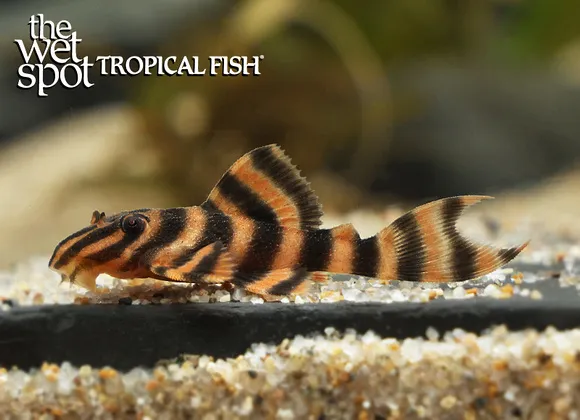
The flash pleco (L204) was described in 2017 as Panaqolus albivermis. The name points to the white, worm-like lines on its dark body. It is a small member of the wood-eating pleco group, in the family Loricariidae. The fine cream stripes give it the flash and emperor trade names.
In the wild
The flash pleco (L204) comes from the Rio San Alejandro, a tributary of the Rio Ucayali in the upper Amazon of Peru. It lives in fast, well-oxygenated streams full of sunken branches and root tangles.
Weekly picks
Tank mates
The flash pleco (L204) is a mostly peaceful, solitary species that keeps to the bottom. These picks share a community profile with it, are safe together in both directions, and overlap on water type, temperature and pH.
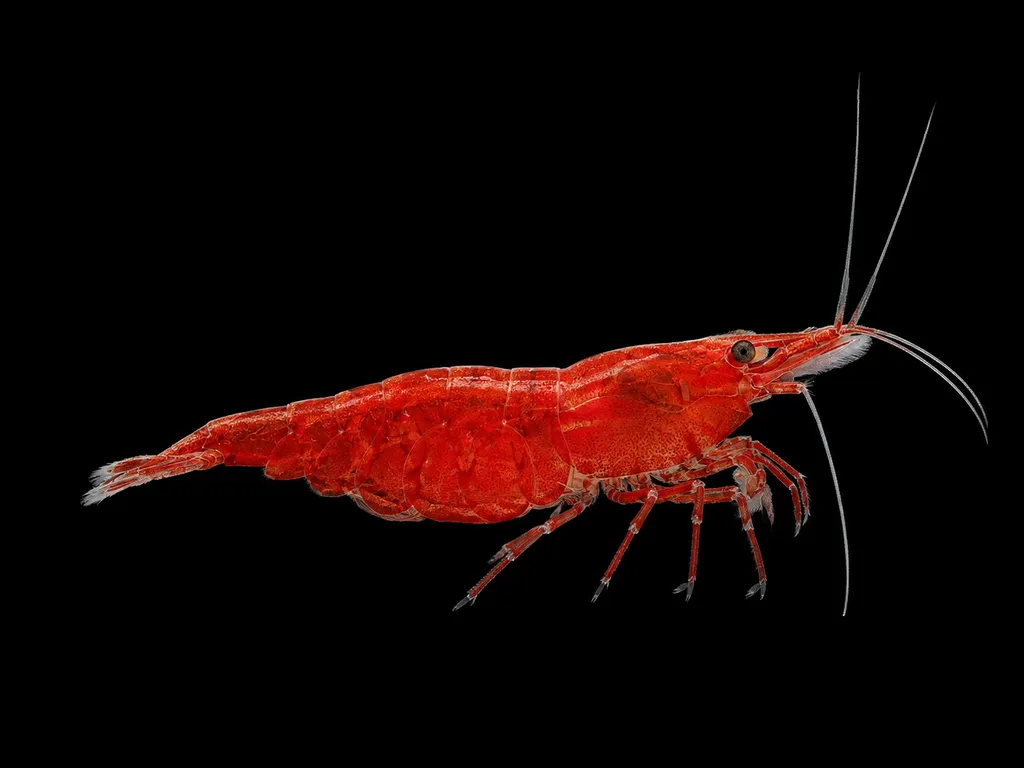
Neocaridina shrimp
Neocaridina davidi
Freshwater1.6 in (4 cm) · 5 gal (19 L)59–84°F (15–29°C)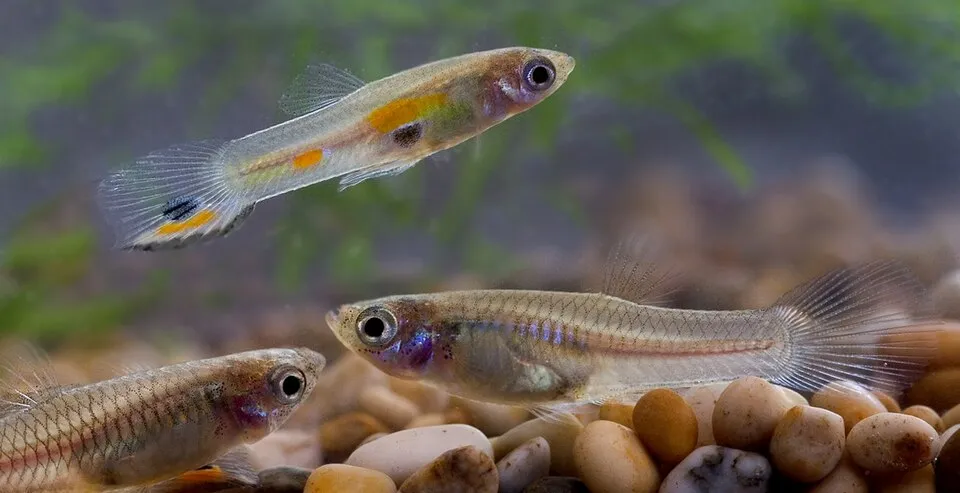
Guppy
Poecilia reticulata
FreshwaterBrackish2.4 in (6 cm) · 10 gal (38 L)64–82°F (18–28°C)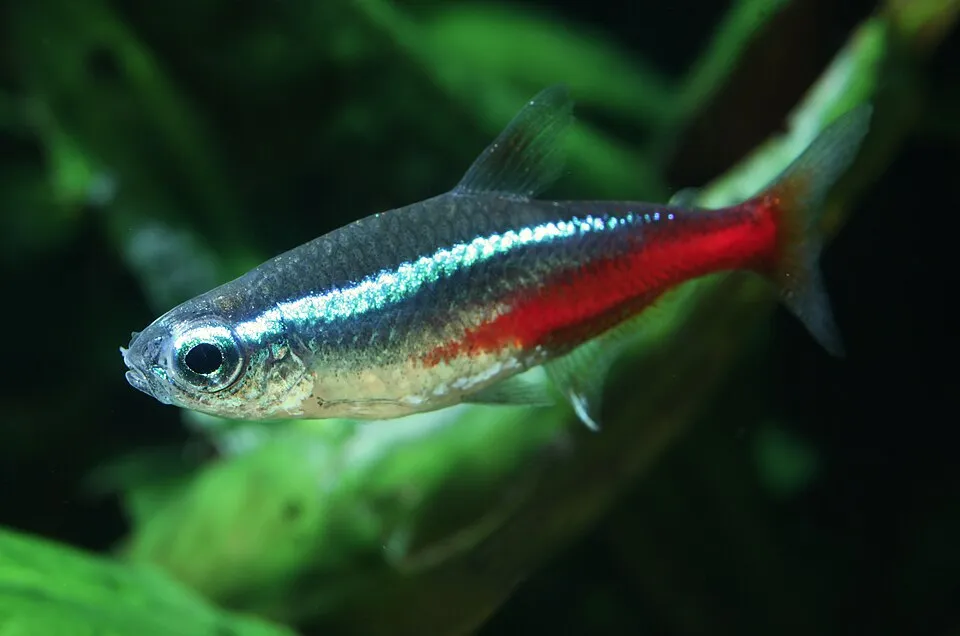
Neon tetra
Paracheirodon innesi
Freshwater1.5 in (3.8 cm) · 11 gal (40 L)70–77°F (21–25°C)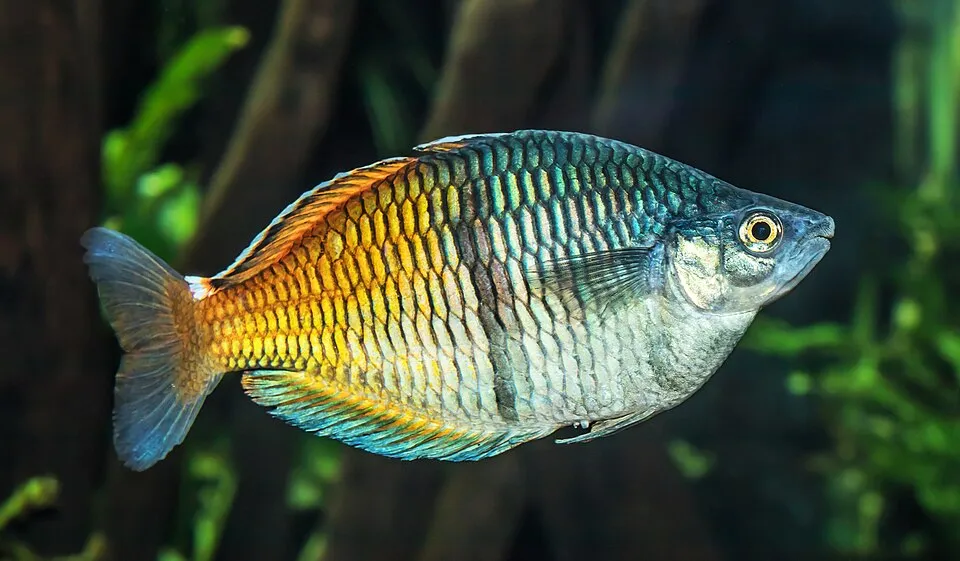
Boeseman's rainbowfish
Melanotaenia boesemani
Freshwater4.3 in (11 cm) · 29 gal (108 L)81–86°F (27–30°C)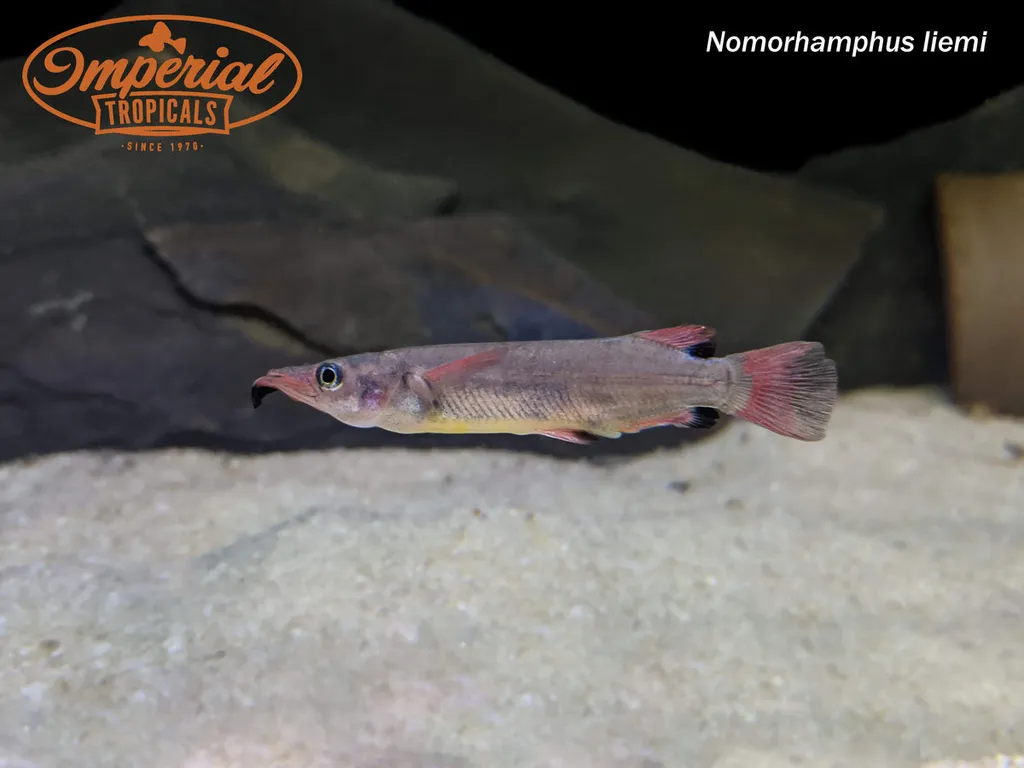
Celebes halfbeak
Nomorhamphus liemi
Freshwater3.5 in (9 cm) · 40 gal (150 L)68–77°F (20–25°C)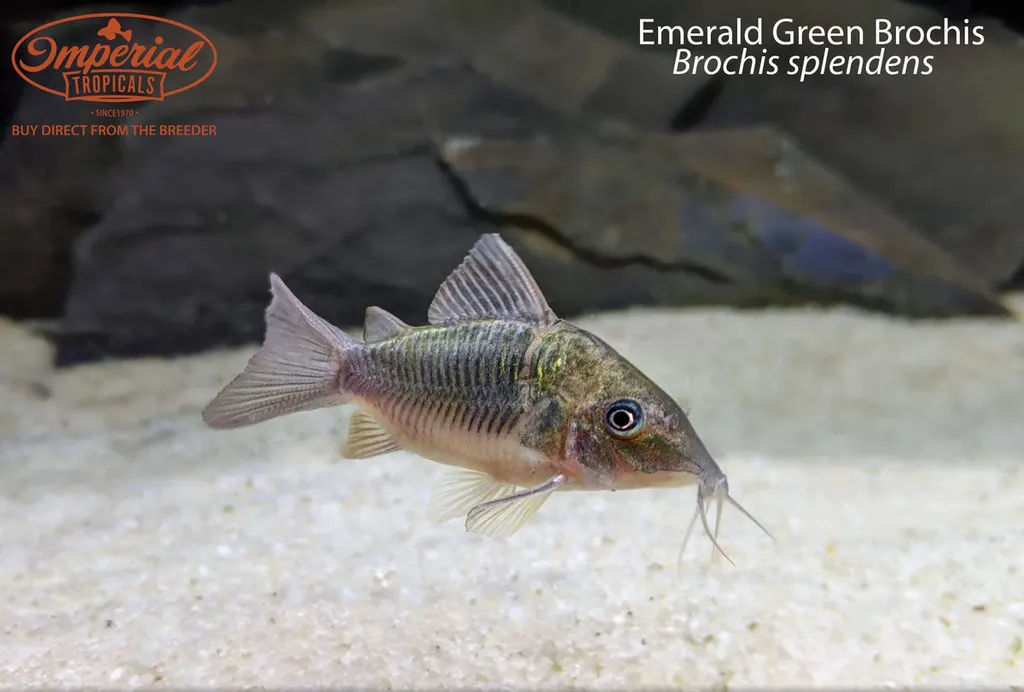
Emerald catfish
Brochis splendens
Freshwater3.1 in (8 cm) · 40 gal (150 L)70–82°F (21–28°C)
Common questions
What size tank does a flash pleco (L204) need?
A flash pleco (L204) needs at least 40 gal (150 L). It spends most of its time in the bottom.
What temperature and pH does a flash pleco (L204) need?
A flash pleco (L204) is comfortable at 77–84°F (25–29°C) with a pH of 6.0–7.5.
What does a flash pleco (L204) eat?
A flash pleco (L204) eats wood, so keep soft driftwood available at all times. Add sinking wood-based and vegetable pellets and blanched zucchini, with only occasional protein.
How big does a flash pleco (L204) get?
An adult flash pleco (L204) reaches about 5.1 in (13 cm).
Related species
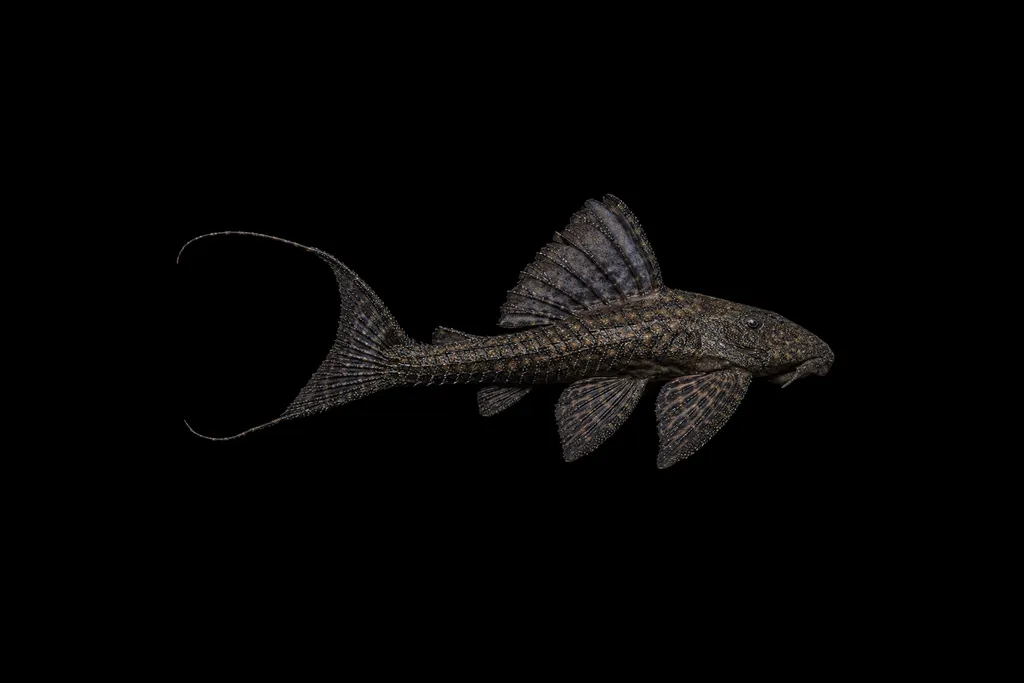
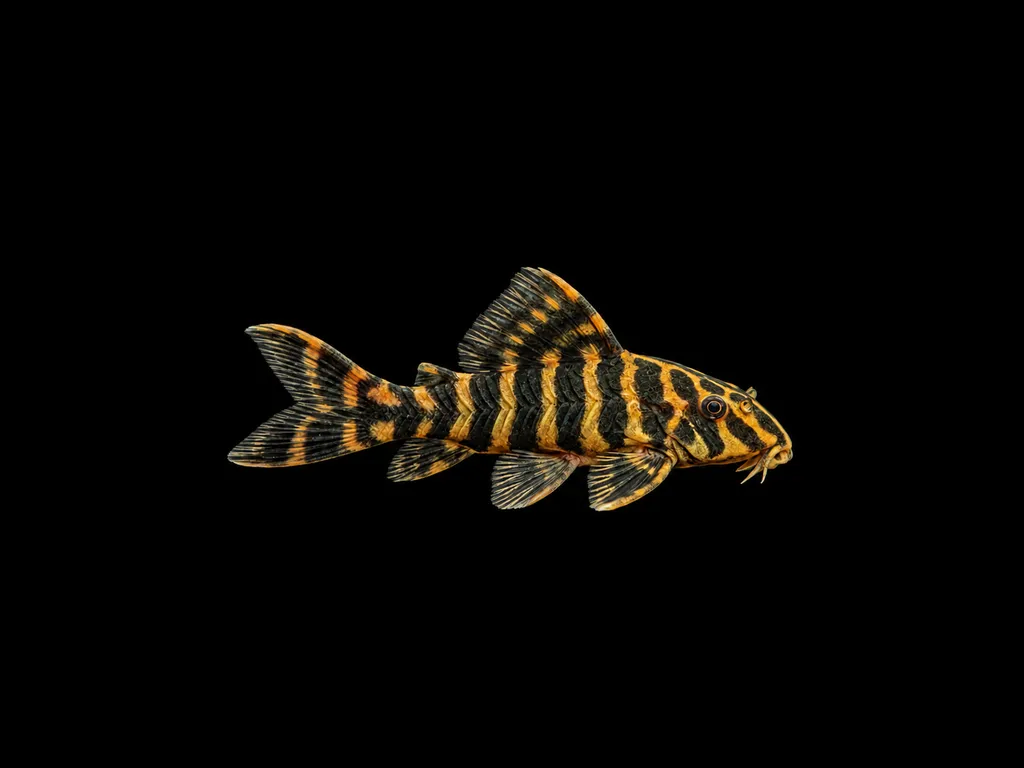 5.1 in (13 cm)40 gal (150 L)77–84°F (25–29°C)
Tiger pleco (L002)
Panaqolus sp. L002
5.1 in (13 cm) · 40 gal (150 L)
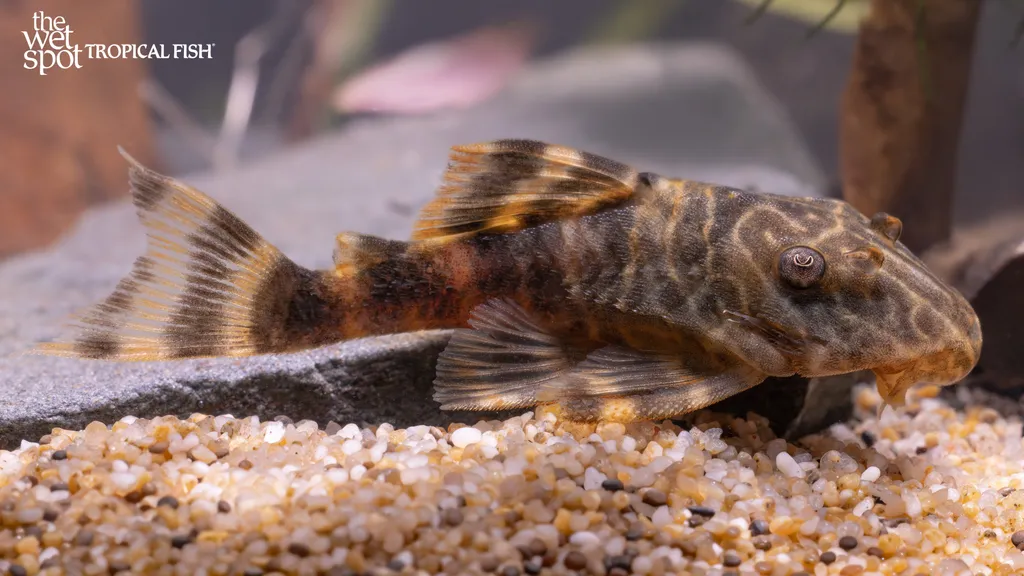
 4.7 in (12 cm)30 gal (112 L)75–84°F (24–29°C)
Nocturnal panaqolus
Panaqolus nocturnus
4.7 in (12 cm) · 30 gal (112 L)
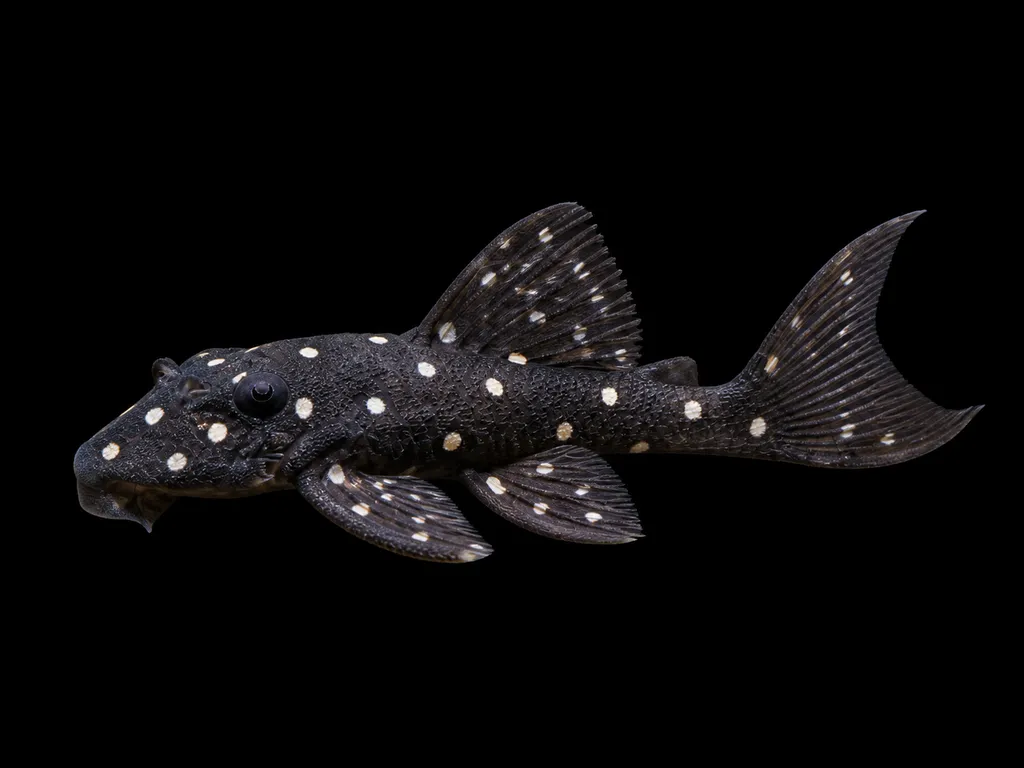
 3.5 in (9 cm)20 gal (75 L)73–82°F (23–28°C)
Clown pleco
Panaqolus maccus
3.5 in (9 cm) · 20 gal (75 L)
 5.5 in (14 cm)53 gal (200 L)77–84°F (25–29°C)
Galaxy panaqolus
Panaqolus albomaculatus
5.5 in (14 cm) · 53 gal (200 L)
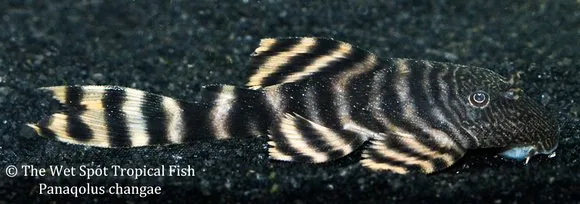 3.9 in (10 cm)42 gal (160 L)77–84°F (25–29°C)
Iquitos tiger pleco
Panaqolus changae
3.9 in (10 cm) · 42 gal (160 L)
 3.1 in (8 cm)42 gal (160 L)77–84°F (25–29°C)
Bloodred tiger pleco
Panaqolus claustellifer
3.1 in (8 cm) · 42 gal (160 L)