Blackspot lampeye
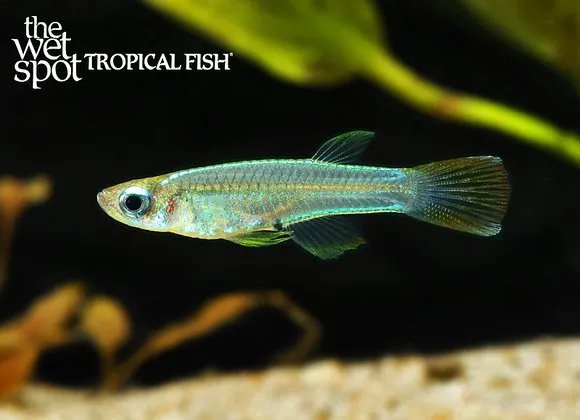
Poropanchax stigmatopygus
Also known as Stigmatopygus lampeye, Black spot blue lampeye killifish
FreshwaterFish
Care at a glance
- Temperature
- 72–79°F
- 22–26°C
- pH
- 6.0–7.5
- Adult size
- 1.2 in
- 3 cm
- Minimum tank
- 11 gal
- 40 L
- Temperament
- Peaceful
- Social behavior
- Schooling
- Swim level
- Middle
- Difficulty
- Medium
- Breeding
- Egg depositor · Medium
- Rarity
- Rare
- Family
- Procatopodidae
- Origin
- Chad and Niger savanna waters
Overview
The blackspot lampeye is one of the smallest lampeyes, a gentle schooling fish for the middle of a quiet, densely planted nano tank. It takes a little more care than a beginner fish.
Did you know
Some sellers list the blackspot lampeye as the anus spot lampeye. That blunt name is an accurate translation of stigmatopygus, which points to the small dark mark just above the vent.
Caring for the blackspot lampeye
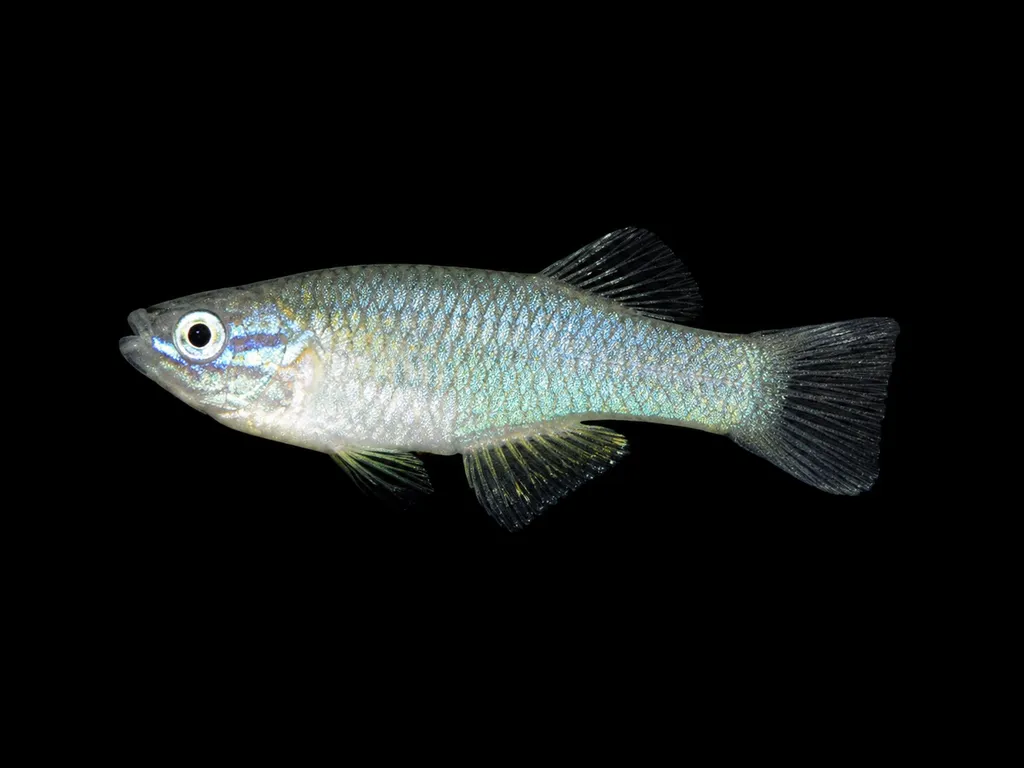
Blackspot lampeyes settle well as a group in 11 gal (40 L) or more, with soft light and gentle flow. A dark substrate, dense fine-leaved planting and calm, well-filtered water bring out the blue eye shine and thin body lines.
Aim for soft to neutral water at 72 to 79°F (22 to 26°C) and a pH of 6.0 to 7.5. Feed very fine foods, such as crushed flake, micro pellets and powdered fry food. Add small live or frozen daphnia and cyclops.
Keep them in a group of ten or more, so they feel secure and stay out in the open. Only the calmest, tiniest tank mates suit them, such as small rasboras or dwarf shrimp. Anything pushy will keep them hidden.
Blackspot lampeyes are continuous plant spawners, depositing a few eggs a day among fine plants or a mop over a long period. Breeding is moderately difficult, and the minute fry need infusoria-sized food before they can take newly hatched brine shrimp.
Good to know
The blackspot lampeye, Poropanchax stigmatopygus, is a true micro fish in the family Procatopodidae. It carries three fine blue lines along each flank.
In the wild
The blackspot lampeye comes from slow, weedy savanna waters of the Chad basin and nearby drainages. It lives in shallow pools and channels that are warmed by the sun and thick with vegetation.
Weekly picks
Tank mates
The blackspot lampeye is a peaceful, schooling species that keeps to the middle. These picks share a community profile with it, are safe together in both directions, and overlap on water type, temperature and pH.
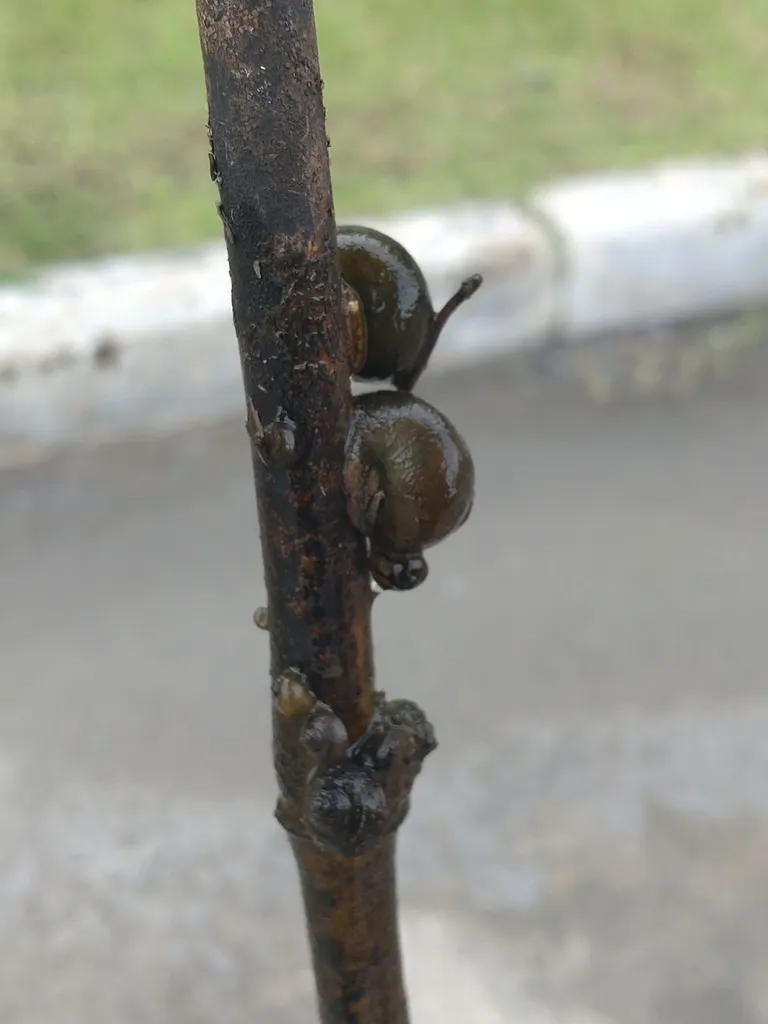
White wizard snail
Filopaludina martensi
Freshwater2 in (5 cm) · 11 gal (40 L)72–79°F (22–26°C)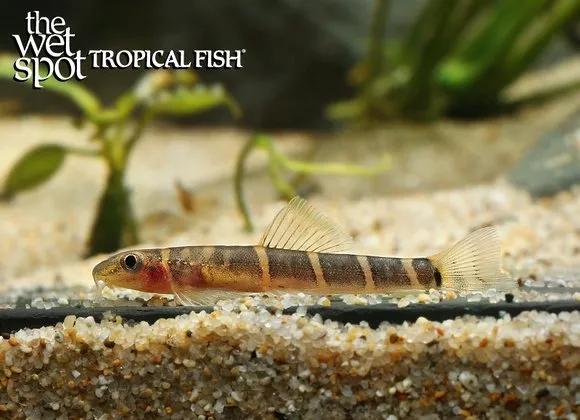
Fire-eyed loach
Barbucca diabolica
Freshwater1.2 in (3 cm) · 11 gal (40 L)72–79°F (22–26°C)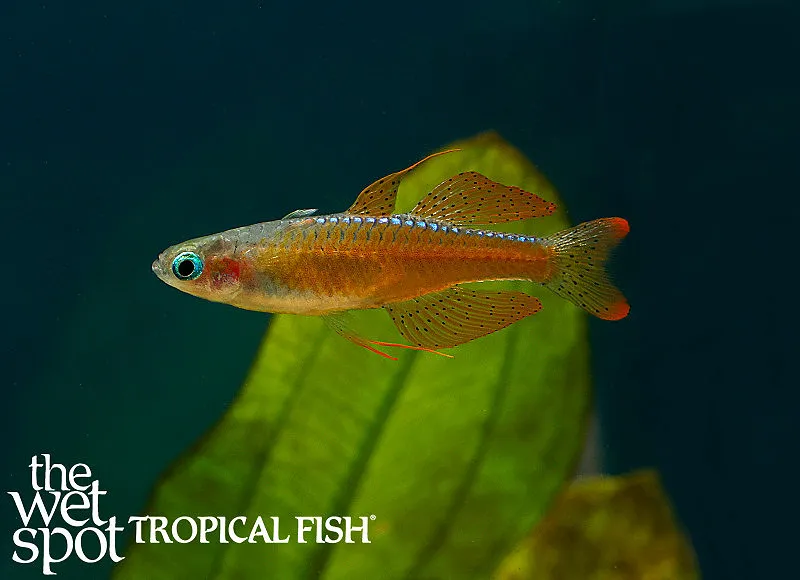
Red neon blue-eye
Pseudomugil luminatus
Freshwater1.4 in (3.5 cm) · 11 gal (40 L)72–81°F (22–27°C)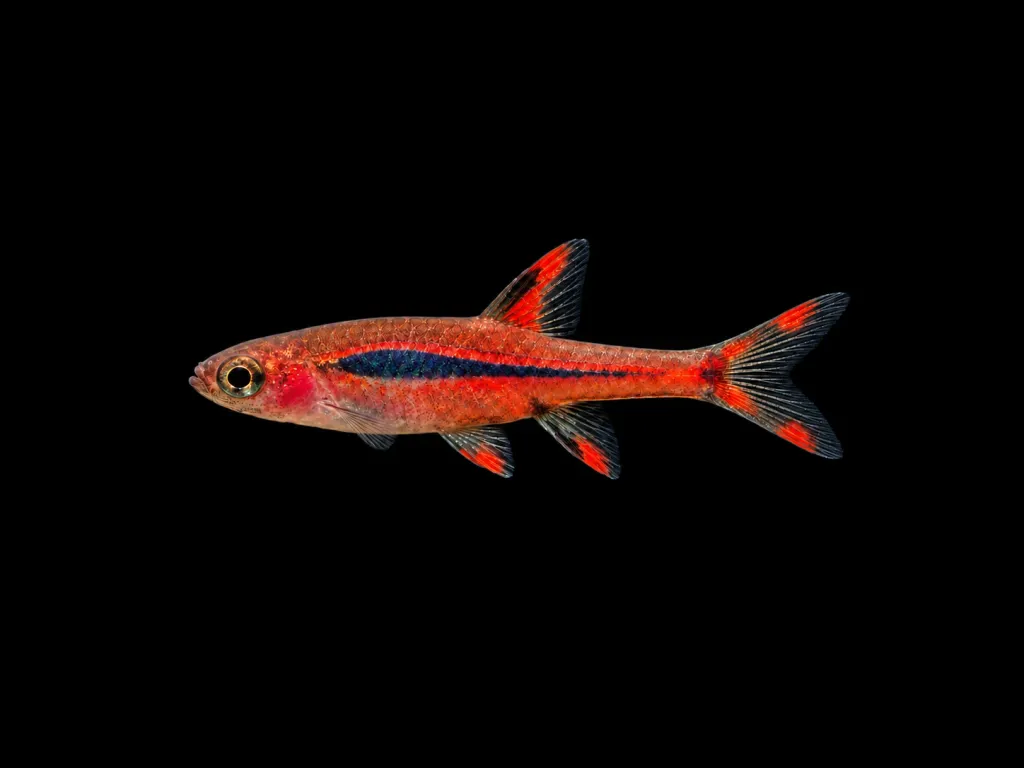
Chili rasbora
Boraras brigittae
Freshwater0.8 in (2 cm) · 11 gal (40 L)72–82°F (22–28°C)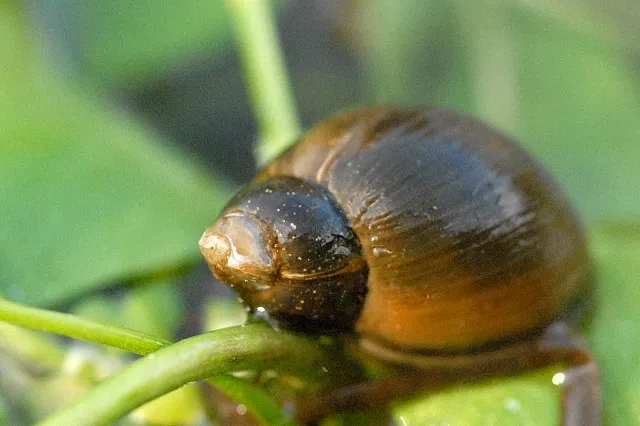
Wandering snail
Ampullaceana balthica
Freshwater0.8 in (2 cm) · 11 gal (40 L)50–84°F (10–29°C)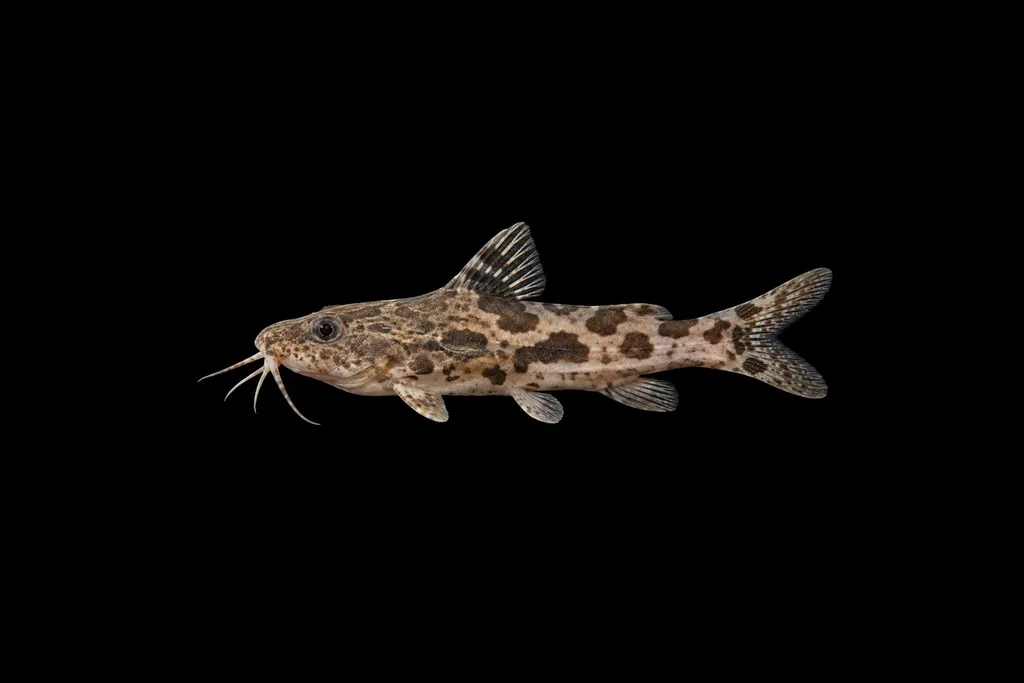
Harlequin moth catfish
Pseudolaguvia ribeiroi
Freshwater1.6 in (4 cm) · 11 gal (40 L)68–79°F (20–26°C)
Common questions
What size tank does a blackspot lampeye need?
A blackspot lampeye needs at least 11 gal (40 L). It spends most of its time in the middle.
What temperature and pH does a blackspot lampeye need?
A blackspot lampeye is comfortable at 72–79°F (22–26°C) with a pH of 6.0–7.5.
What does a blackspot lampeye eat?
A blackspot lampeye eats very fine foods, such as crushed flake, micro pellets and powdered fry food. It also takes small live or frozen daphnia and cyclops.
How big does a blackspot lampeye get?
An adult blackspot lampeye reaches about 1.2 in (3 cm).
Does a blackspot lampeye need a group?
Yes. A blackspot lampeye is a schooling species and should be kept in a group, not singly.
How does a blackspot lampeye breed?
Blackspot lampeyes deposit a few eggs a day among fine plants or a mop over a long period. Breeding them is moderately difficult, and the minute fry need infusoria-sized food at first.
Related species
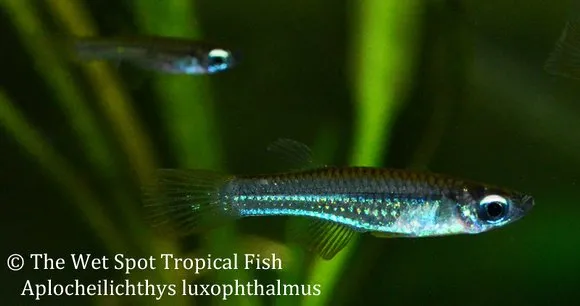 1.6 in (4 cm)14 gal (54 L)72–79°F (22–26°C)
Filamentous lampeye
Poropanchax luxophthalmus
1.6 in (4 cm) · 14 gal (54 L)
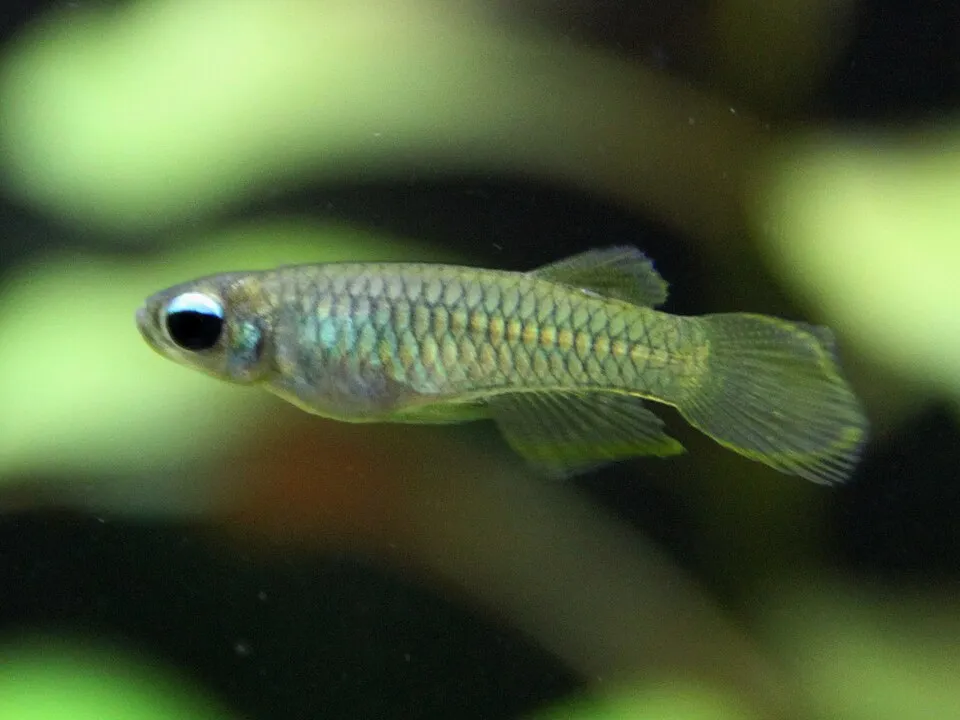
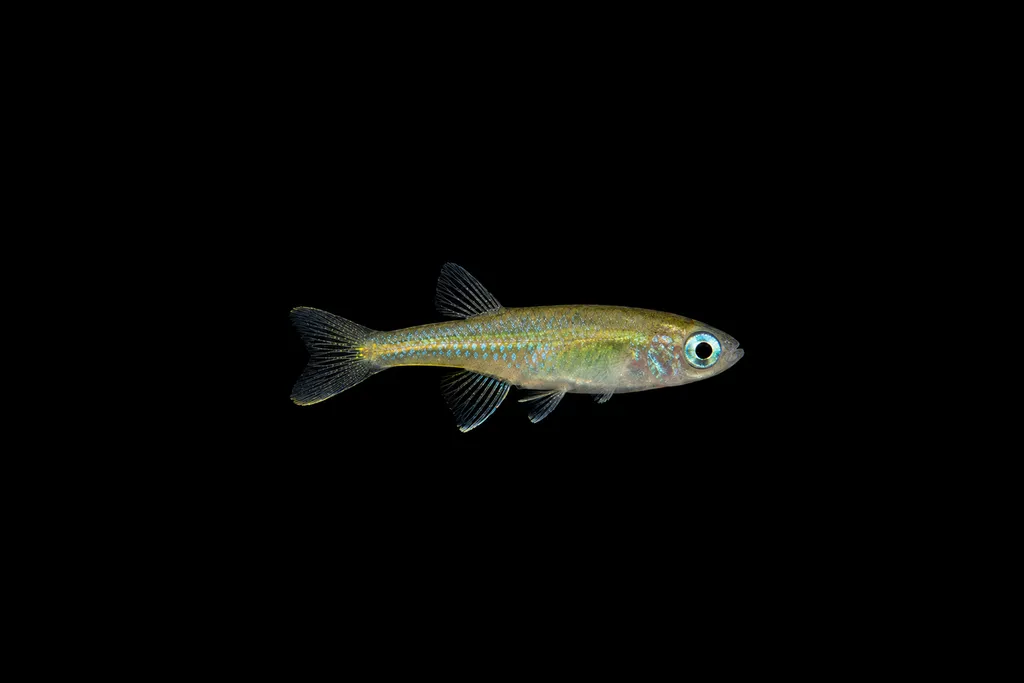 1.6 in (4 cm)14 gal (54 L)72–79°F (22–26°C)
Scheel's lampeye
Poropanchax scheeli
1.6 in (4 cm) · 14 gal (54 L)
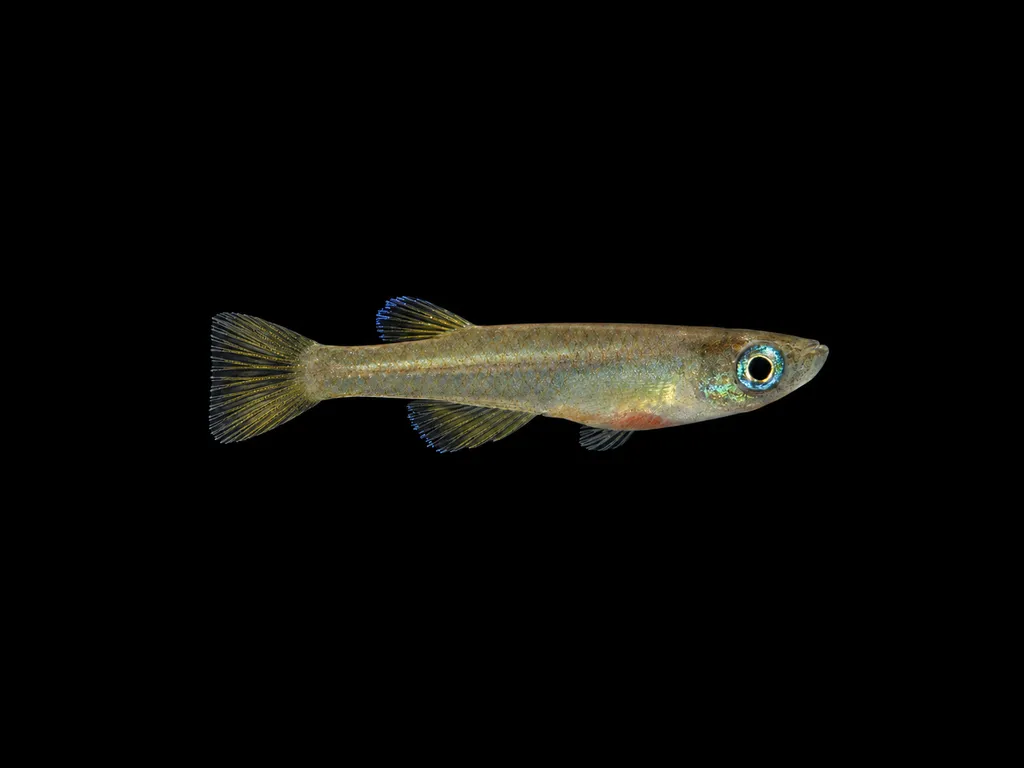
 1.6 in (4 cm)20 gal (75 L)72–79°F (22–26°C)
Norman's lampeye
Poropanchax normani
1.6 in (4 cm) · 20 gal (75 L)
 1.4 in (3.5 cm)11 gal (40 L)72–79°F (22–26°C)
Amber-finned lampeye
Foerschichthys flavipinnis
1.4 in (3.5 cm) · 11 gal (40 L)
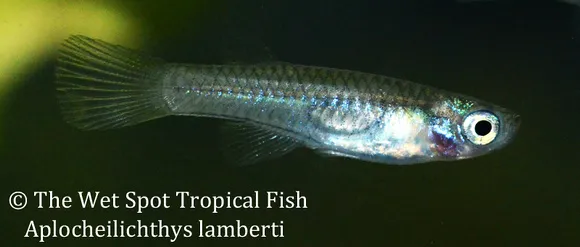 1.8 in (4.5 cm)14 gal (54 L)72–79°F (22–26°C)
Lambert's lampeye
Rhexipanchax lamberti
1.8 in (4.5 cm) · 14 gal (54 L)
 1.8 in (4.5 cm)14 gal (54 L)68–75°F (20–24°C)
Mount Nimba lampeye
Rhexipanchax nimbaensis
1.8 in (4.5 cm) · 14 gal (54 L)