Blackfin cory
Hoplisoma leucomelas
Also known as Corydoras leucomelas, Peruvian Freckled Cory
FreshwaterFish
Care at a glance
- Temperature
- 73–79°F
- 23–26°C
- pH
- 6.0–7.5
- Adult size
- 1.8 in
- 4.5 cm
- Minimum tank
- 16 gal
- 60 L
- Temperament
- Peaceful
- Social behavior
- Shoaling
- Swim level
- Bottom
- Diet
- Omnivore
- Difficulty
- Medium
- Breeding
- No record
- Rarity
- Very rare
- Family
- Callichthyidae
- Origin
- Peru
Overview
The blackfin cory is a small, peaceful catfish for the bottom of a community tank. It is a step up from the easiest fish, so a little experience helps.
Did you know
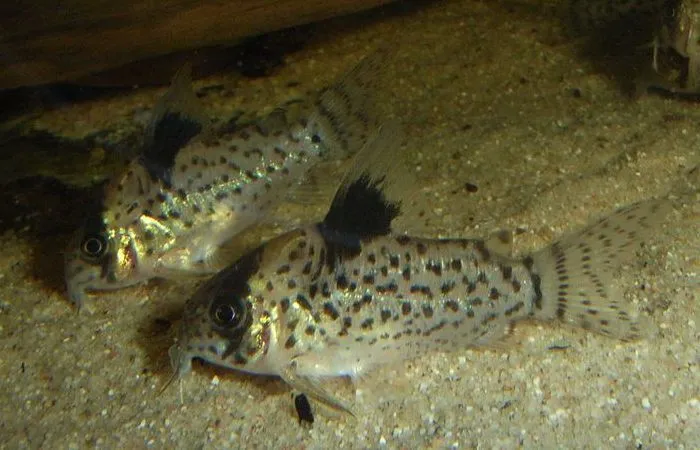
The blackfin cory's species name, leucomelas, means white and black in Greek. It fits a see-through, silvery fish set off by an inky dorsal fin and a dark bar through the eye. It is one of several look-alike freckled cories exported from Peru.
Caring for the blackfin cory
Keep blackfin cories in a group of at least six, so they feel secure and stay active out on the sand. A group is comfortable in 16 gal (60 L) or larger. Use a soft sand bed so their barbels stay healthy, with driftwood and dried leaves for cover. Shade part of the tank with plants.
Keep the water at 73 to 79°F (23 to 26°C) and a pH of 6.0 to 7.5. They want it clean, with a gentle flow. Feed sinking pellets, frozen bloodworm and daphnia, and a little algae wafer. Always check that the food settles where they can reach it.
Blackfin cories are peaceful and spend the day nosing through the substrate. Choose gentle community tank mates, such as small tetras or rasboras, that will not crowd the floor. Regular aquarium spawning of this species is not widely recorded. Cories of this type lay sticky eggs, and the female positions each one with her clasped pelvic fins.
Good to know
The blackfin cory belongs to the armored catfish family Callichthyidae, and it is listed as Hoplisoma leucomelas as well as Corydoras leucomelas. Bony plates take the place of scales along its flanks.
In the wild
Blackfin cories come from the western Amazon in Peru. They live over sand and leaf litter in warm, soft, slightly acidic water.
Weekly picks
Tank mates
The blackfin cory is a peaceful, shoaling species that keeps to the bottom. These picks share a community profile with it, are safe together in both directions, and overlap on water type, temperature and pH.
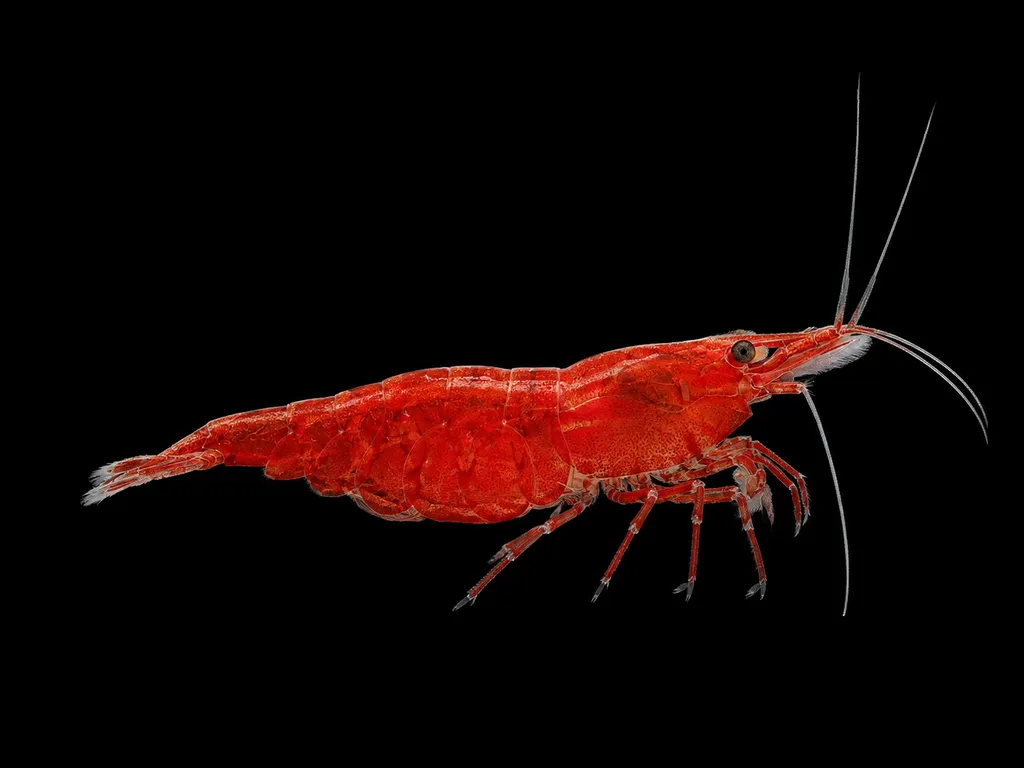
Neocaridina shrimp
Neocaridina davidi
Freshwater1.6 in (4 cm) · 5 gal (19 L)59–84°F (15–29°C)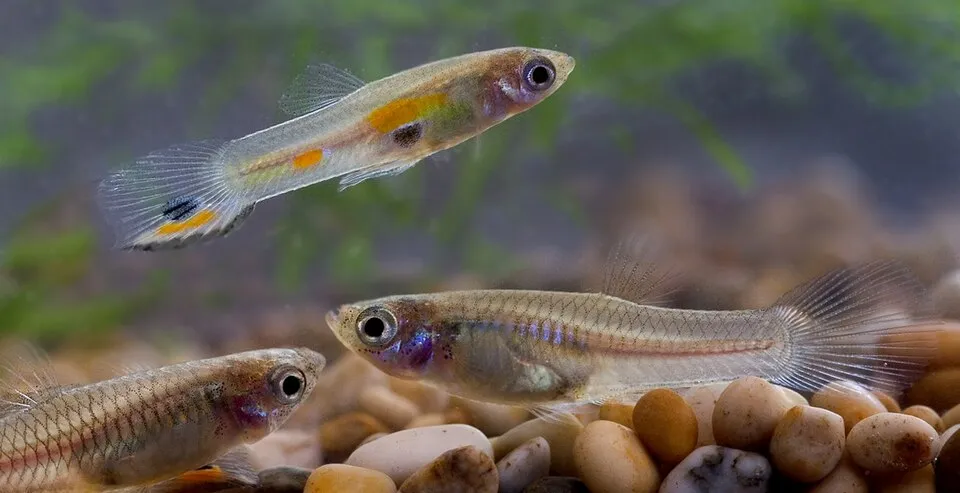
Guppy
Poecilia reticulata
FreshwaterBrackish2.4 in (6 cm) · 10 gal (38 L)64–82°F (18–28°C)
Neon tetra
Paracheirodon innesi
Freshwater1.5 in (3.8 cm) · 11 gal (40 L)70–77°F (21–25°C)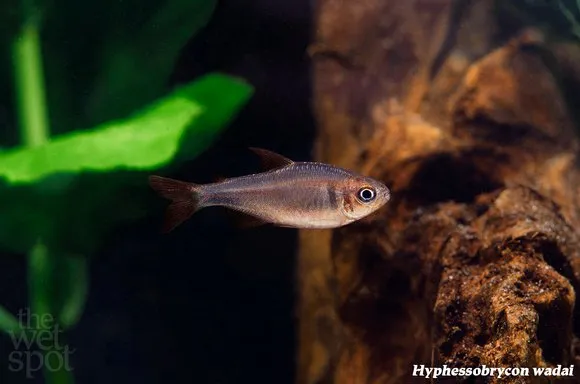
Blueberry tetra
Hyphessobrycon wadai
Freshwater1.7 in (4.2 cm) · 16 gal (60 L)72–81°F (22–27°C)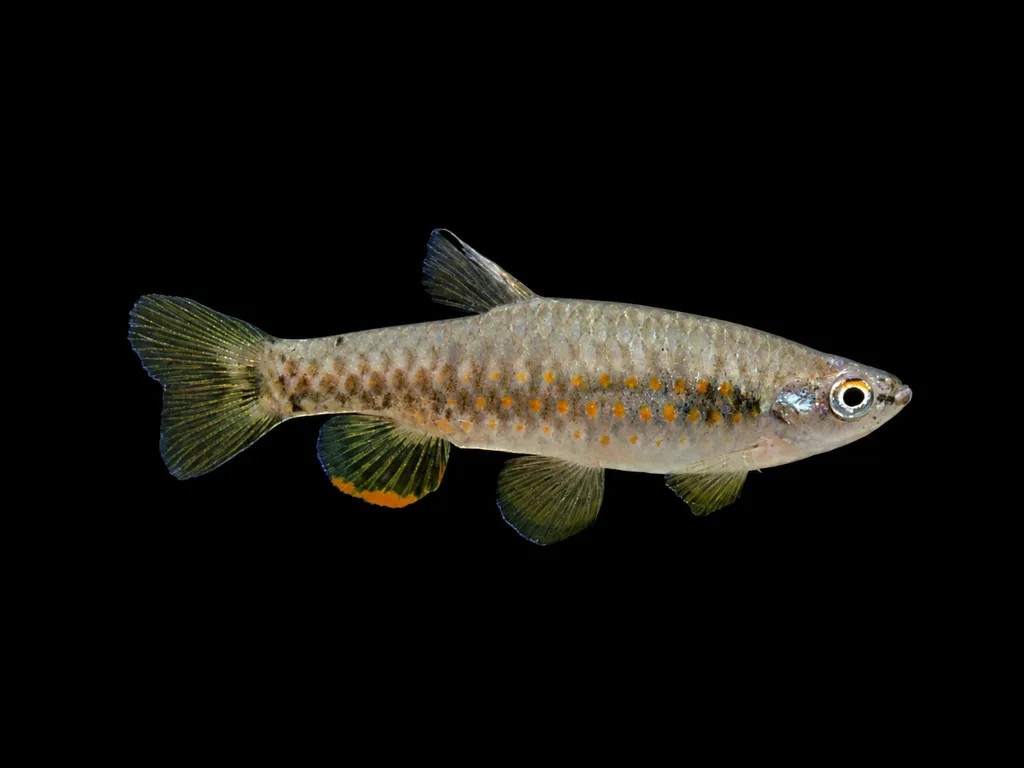
Fanning characin
Pyrrhulina rachoviana
Freshwater2 in (5 cm) · 16 gal (60 L)68–79°F (20–26°C)
White spotted rabbit snail
Tylomelania towutica
Freshwater4.3 in (11 cm) · 16 gal (60 L)75–84°F (24–29°C)
Common questions
What size tank does a blackfin cory need?
A blackfin cory needs at least 16 gal (60 L). It spends most of its time in the bottom.
What temperature and pH does a blackfin cory need?
A blackfin cory is comfortable at 73–79°F (23–26°C) with a pH of 6.0–7.5.
What does a blackfin cory eat?
A blackfin cory eats sinking pellets, frozen bloodworm and daphnia, plus a little algae wafer. Check that the food settles on the bottom, where it can reach it.
How big does a blackfin cory get?
An adult blackfin cory reaches about 1.8 in (4.5 cm).
Does a blackfin cory need a group?
Yes. A blackfin cory is a shoaling species and should be kept in a group, not singly.
How does a blackfin cory breed?
Blackfin cories are not widely spawned in aquariums. Cories of this type lay sticky eggs, which the female positions using her clasped pelvic fins.
Related species
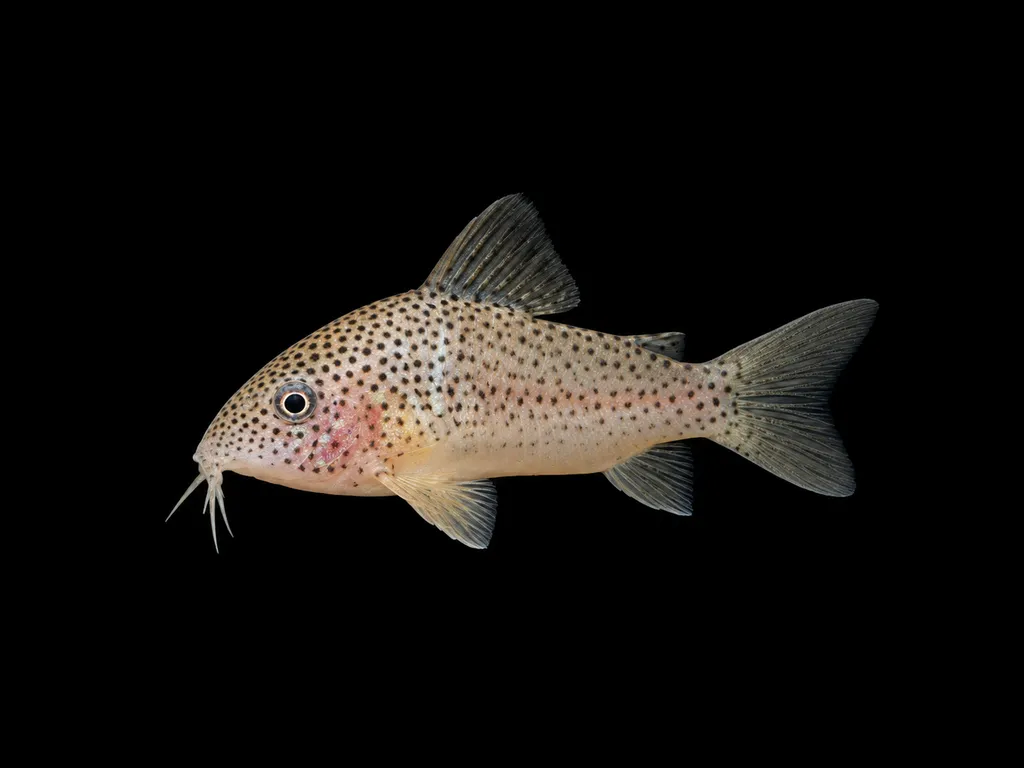 1.8 in (4.5 cm)15 gal (55 L)75–82°F (24–28°C)
Apiaka cory
Hoplisoma apiaka
1.8 in (4.5 cm) · 15 gal (55 L)
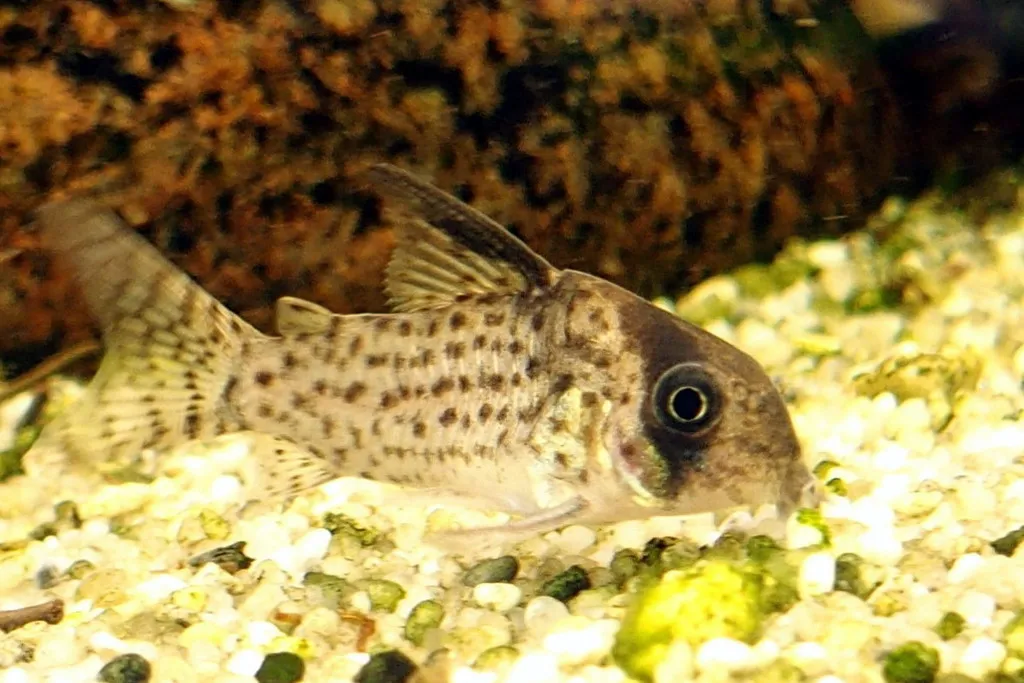 1.8 in (4.5 cm)15 gal (55 L)75–82°F (24–28°C)
Kane's cory
Hoplisoma kanei
1.8 in (4.5 cm) · 15 gal (55 L)
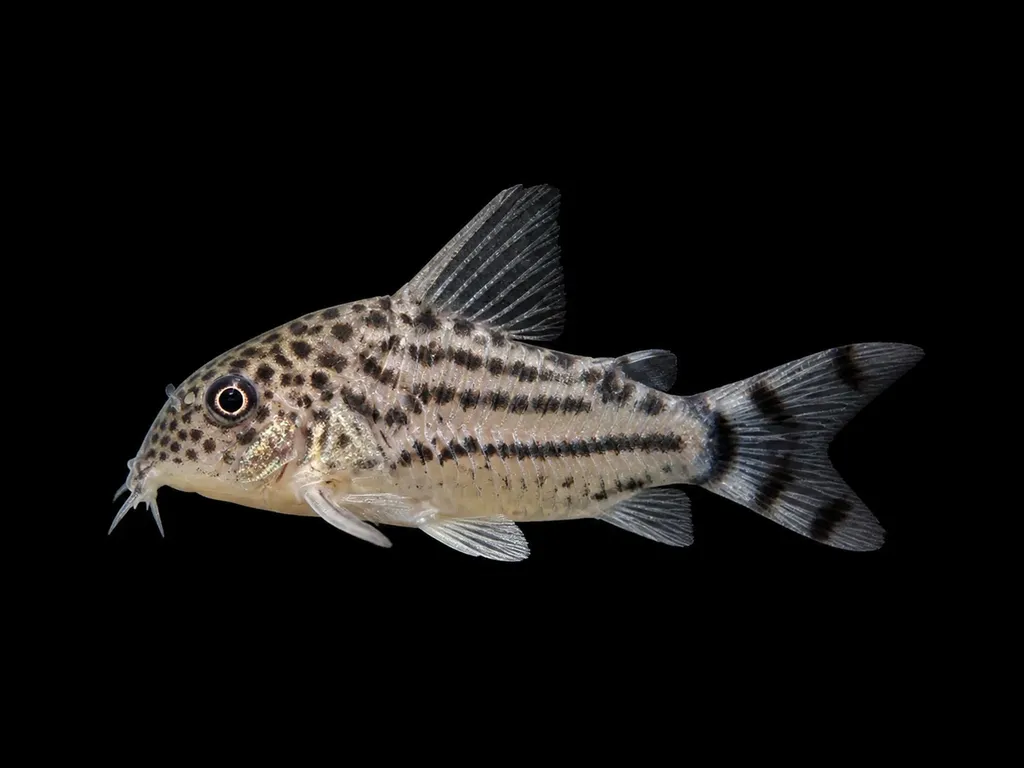 1.8 in (4.5 cm)16 gal (60 L)73–81°F (23–27°C)
Knaack's cory
Hoplisoma knaacki
1.8 in (4.5 cm) · 16 gal (60 L)
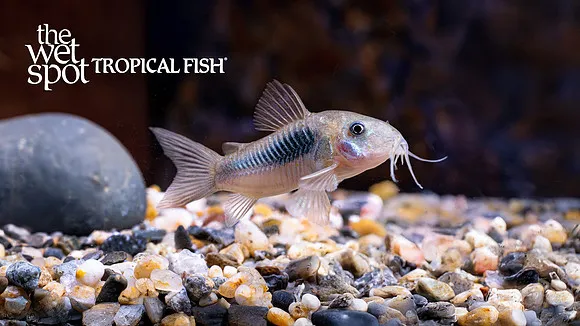 2 in (5 cm)15 gal (55 L)70–79°F (21–26°C)
Blackstripe cory
Hoplisoma bondi
2 in (5 cm) · 15 gal (55 L)
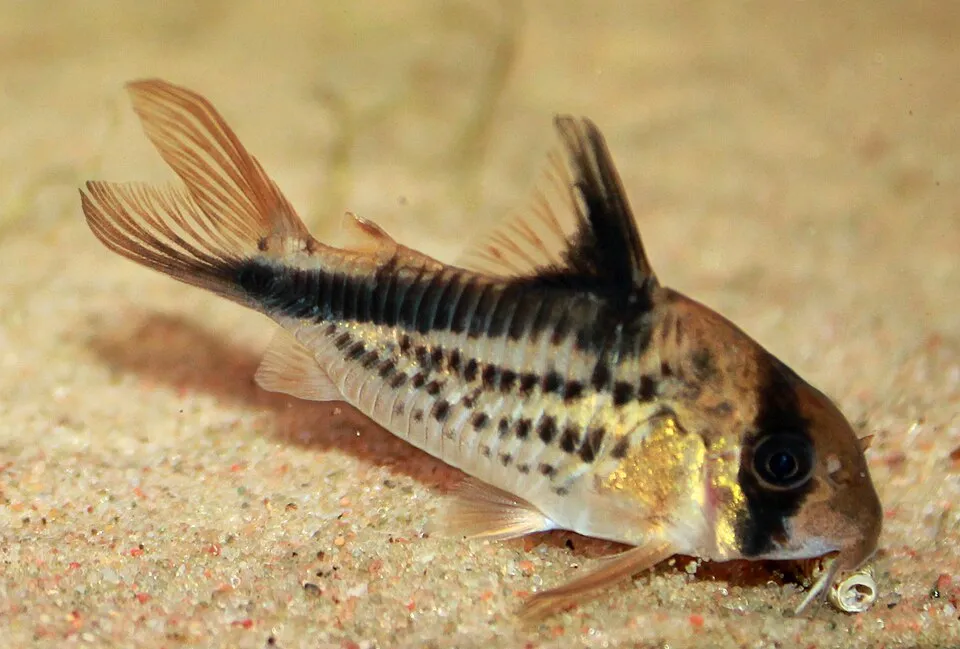 2 in (5 cm)16 gal (60 L)70–75°F (21–24°C)
Dirty bandit cory
Hoplisoma loxozonum
2 in (5 cm) · 16 gal (60 L)
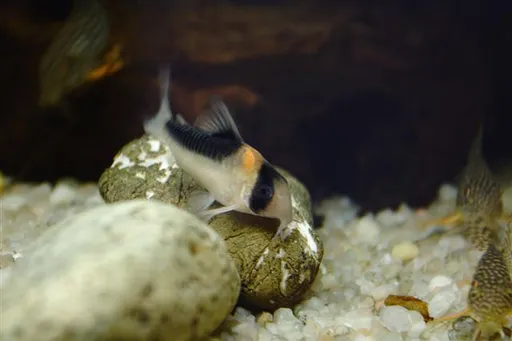 2 in (5 cm)20 gal (75 L)72–79°F (22–26°C)
Duplicate cory
Hoplisoma duplicareum
2 in (5 cm) · 20 gal (75 L)