Barred-tail cory
Hoplisoma cochui
Also known as Corydoras cochui
FreshwaterFish
Care at a glance
- Temperature
- 70–82°F
- 21–28°C
- pH
- 6.0–7.5
- Adult size
- 1.4 in
- 3.5 cm
- Minimum tank
- 13 gal
- 50 L
- Temperament
- Peaceful
- Social behavior
- Shoaling
- Swim level
- Bottom
- Difficulty
- Medium
- Breeding
- No record
- Rarity
- Rare
- Family
- Callichthyidae
- Origin
- Brazil
Overview
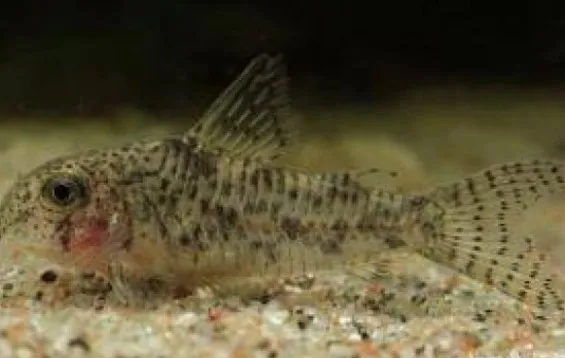
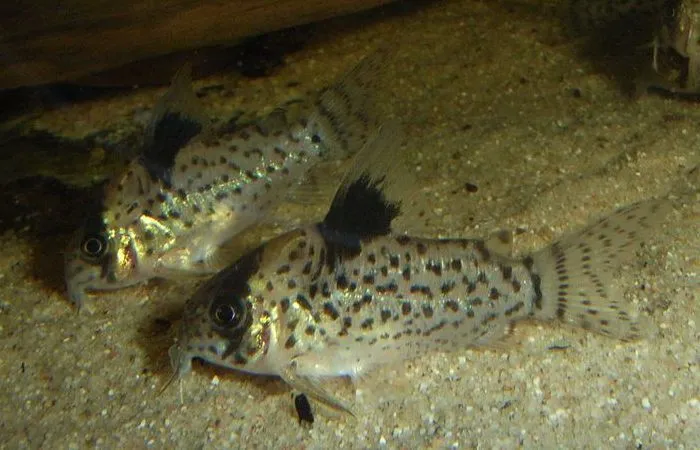
These are peaceful schooling cories, so keep at least six together; a lone one is stressed and inactive. They work the bottom of the tank all day looking for food. A 50 liter tank with soft sand, hiding spots, and gentle flow suits them. Keep water at 21 to 28 C and pH 6 to 7.5. Feed sinking pellets and wafers plus frozen bloodworms or brine shrimp, and make sure food actually reaches the bottom.
In the wild
Barred-tail cories come from clear, slow streams and small tributaries in the Rio Araguaia basin in Brazil, over sand and mud with plant cover. A soft sand bottom matters here because these cories sift the substrate constantly and sharp gravel wears down their barbels. Add plants and shade and keep gentle flow.
Good to know
This is a small armored catfish in the family Callichthyidae, one of the tiniest Corydoras at around 3.5 cm. The common name comes from the dark bars on its tail fin. It is an egg scatterer with no parental care, and the eggs hatch in roughly three to five days. Wild populations face pressure from deforestation and pollution but aren't formally listed as endangered.
Did you know
Their small size makes them one of the few cories that fit a nano tank. Like other cories they can gulp air from the surface and absorb oxygen through their gut, a backup breathing trick for the low-oxygen pools they sometimes live in.
Weekly picks
Tank mates
Barred-tail cory is a peaceful, shoaling species that keeps to the bottom. These picks share a community profile with it, are safe together in both directions, and overlap on water type, temperature and pH.
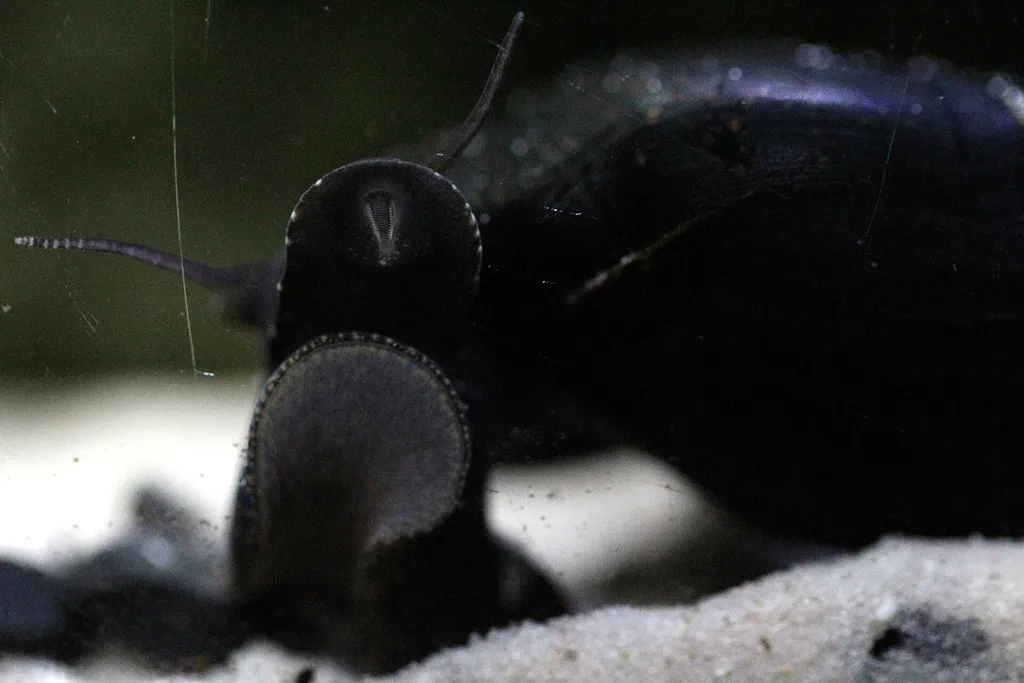
Black devil snail
Faunus ater
Freshwater3.9 in (10 cm) · 13 gal (50 L)72–86°F (22–30°C)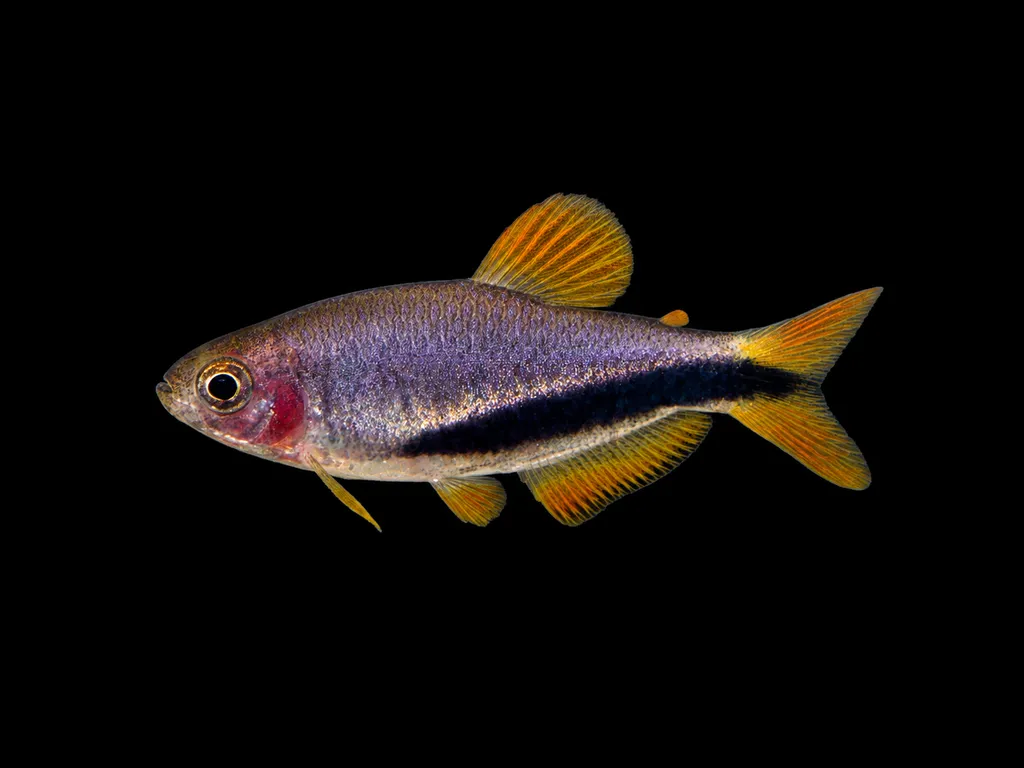
Black arrow tetra
Inpaichthys luizae
Freshwater1.4 in (3.5 cm) · 14 gal (54 L)72–81°F (22–27°C)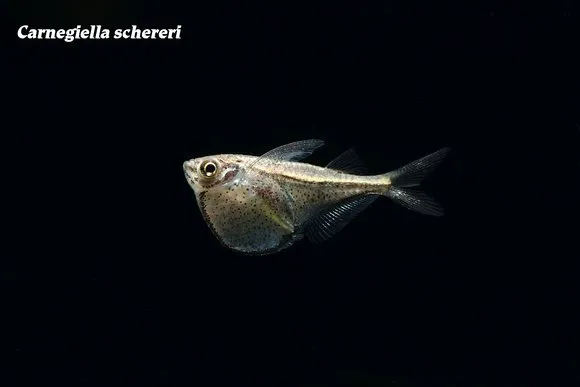
Scherer's hatchetfish
Carnegiella schereri
Freshwater1 in (2.6 cm) · 14 gal (54 L)73–82°F (23–28°C)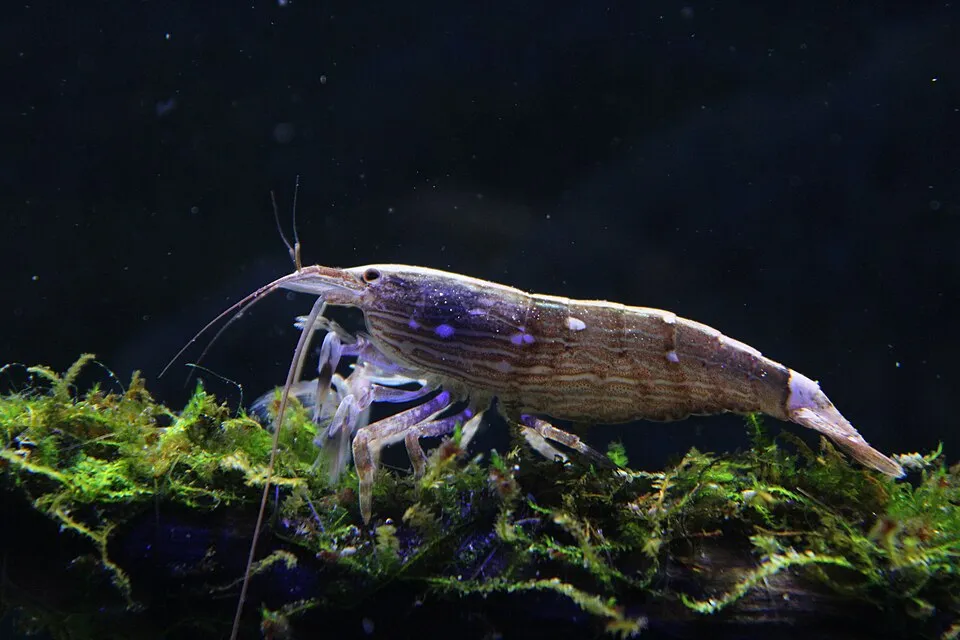
Bamboo shrimp
Atyopsis moluccensis
Freshwater3.9 in (10 cm) · 13 gal (50 L)72–84°F (22–29°C)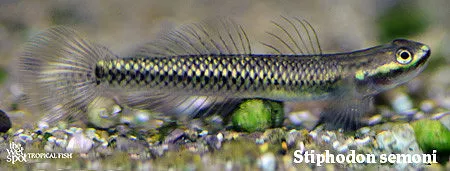
Cobalt blue goby
Stiphodon semoni
Freshwater1.8 in (4.5 cm) · 13 gal (50 L)68–79°F (20–26°C)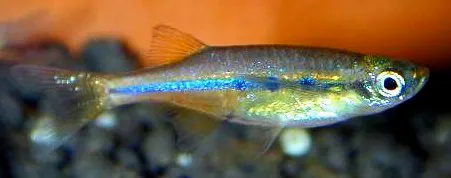
Orange hatchet danio
Laubuka dadiburjori
Freshwater1.2 in (3 cm) · 13 gal (50 L)68–75°F (20–24°C)
Common questions
What size tank does a Barred-tail cory need?
A Barred-tail cory needs at least 13 gal (50 L). It spends most of its time in the bottom.
What temperature and pH does a Barred-tail cory need?
A Barred-tail cory is comfortable at 70–82°F (21–28°C) with a pH of 6.0–7.5.
How big does a Barred-tail cory get?
An adult Barred-tail cory reaches about 1.4 in (3.5 cm).
Does a Barred-tail cory need a group?
Yes. A Barred-tail cory is a shoaling species and should be kept in a group, not singly.
Related species
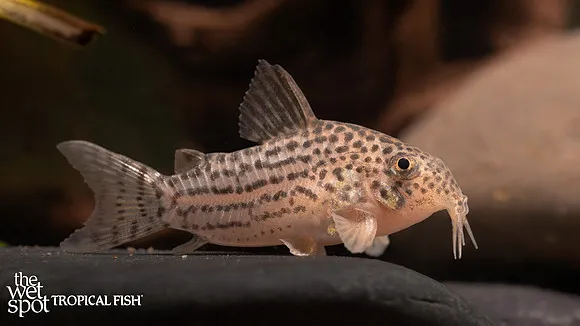 1.4 in (3.5 cm)12 gal (45 L)72–79°F (22–26°C)
Reynolds's cory
Hoplisoma reynoldsi
1.4 in (3.5 cm) · 12 gal (45 L)
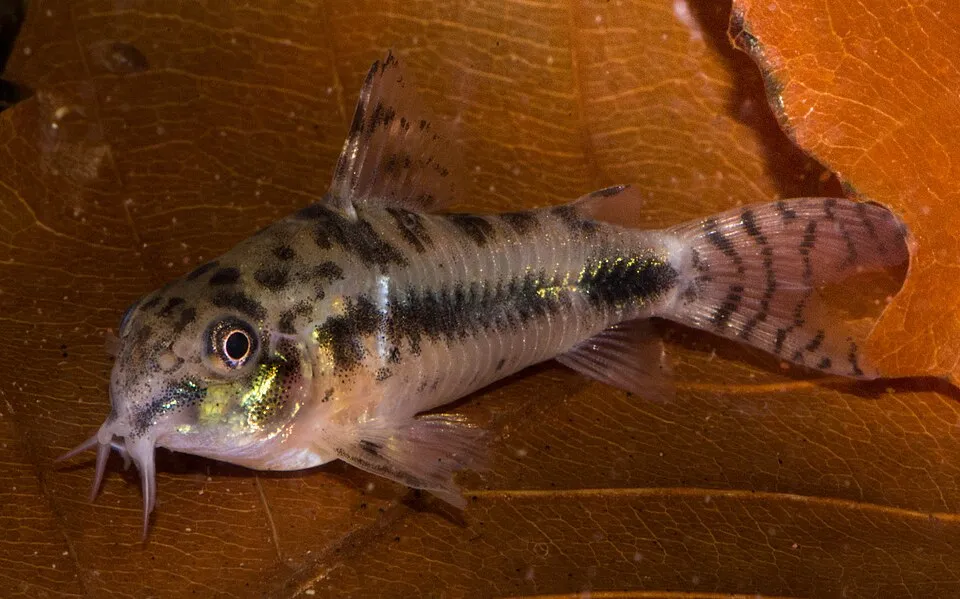 1.4 in (3.5 cm)15 gal (55 L)68–79°F (20–26°C)
Salt and pepper cory
Hoplisoma habrosum
1.4 in (3.5 cm) · 15 gal (55 L)
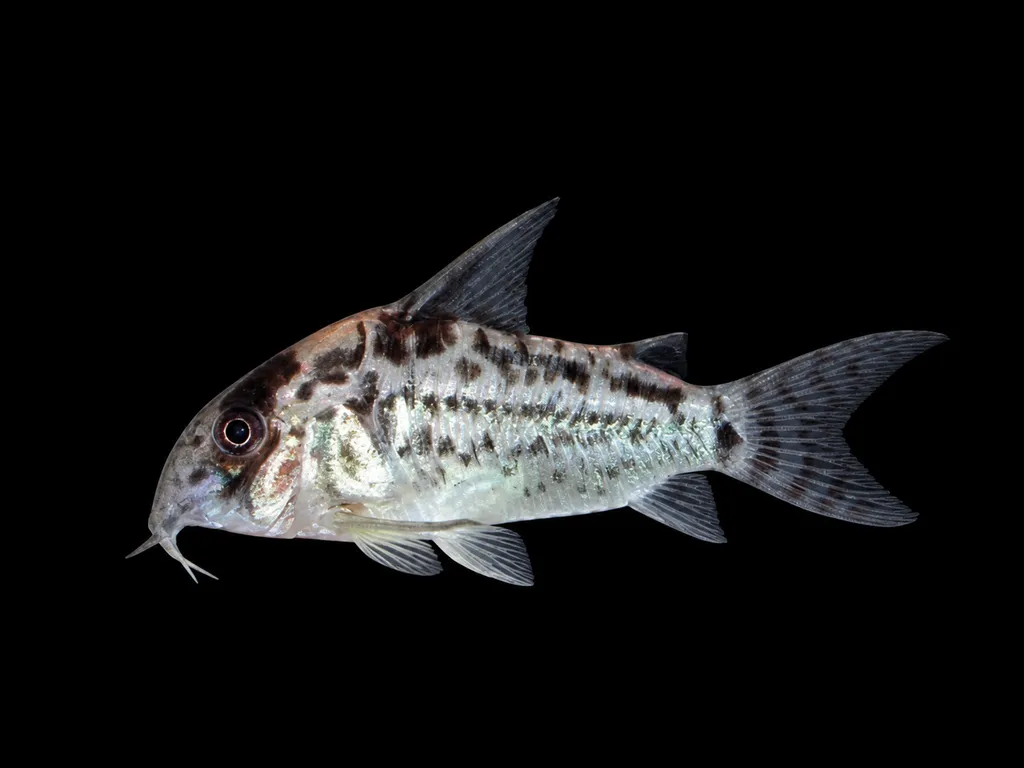 1.6 in (4 cm)15 gal (55 L)72–79°F (22–26°C)
Evelyn's cory
Hoplisoma evelynae
1.6 in (4 cm) · 15 gal (55 L)
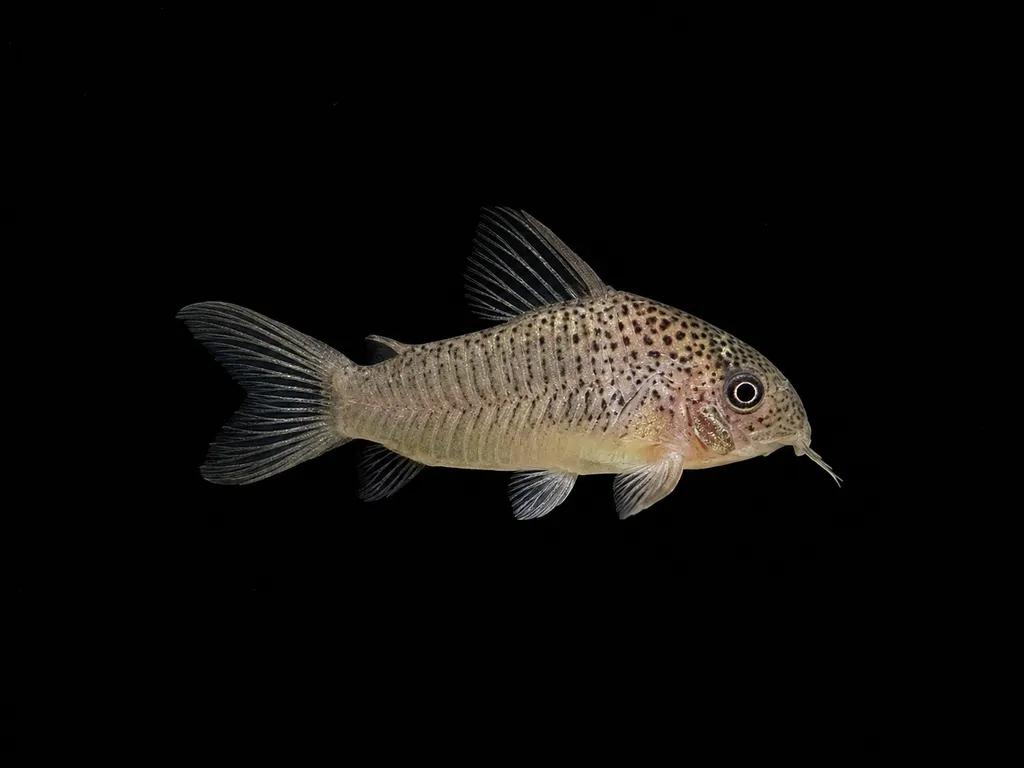 1.6 in (4 cm)15 gal (55 L)72–81°F (22–27°C)
Many-spotted cory
Hoplisoma polystictum
1.6 in (4 cm) · 15 gal (55 L)
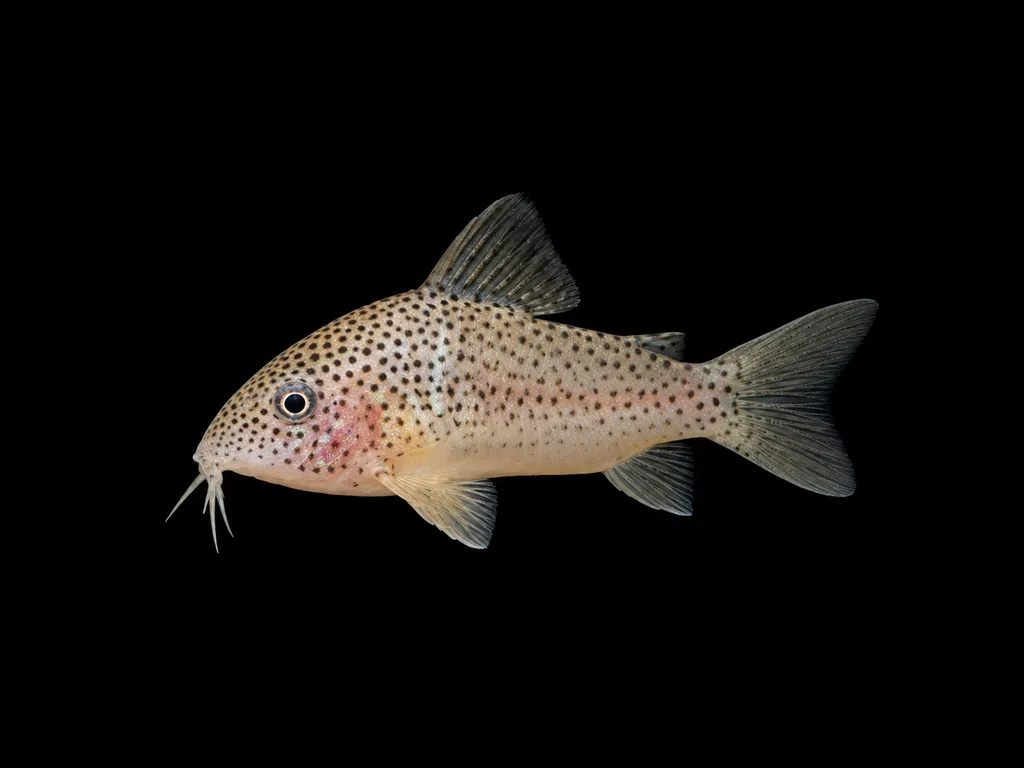 1.8 in (4.5 cm)15 gal (55 L)75–82°F (24–28°C)
Apiaka cory
Hoplisoma apiaka
1.8 in (4.5 cm) · 15 gal (55 L)
 1.8 in (4.5 cm)16 gal (60 L)73–79°F (23–26°C)
Blackfin cory
Hoplisoma leucomelas
1.8 in (4.5 cm) · 16 gal (60 L)