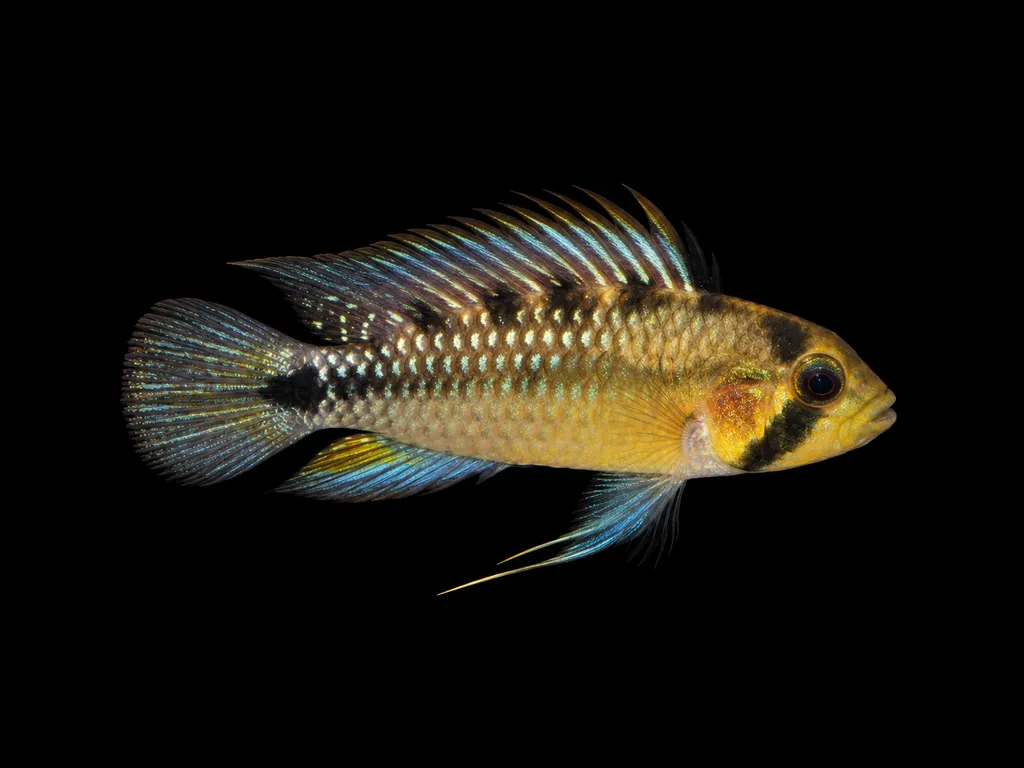
Red-lined dwarf cichlid
Apistogramma rubrolineata
Also known as Bolivian red-line apisto
FreshwaterFish
Care at a glance
- Temperature
- 73–81°F
- 23–27°C
- pH
- 5.5–7.0
- Adult size
- 2 in
- 5 cm
- Minimum tank
- 16 gal
- 60 L
- Temperament
- Mostly peaceful
- Social behavior
- Social
- Swim level
- Bottom
- Difficulty
- Medium
- Breeding
- Cave spawner · Medium
- Rarity
- Rare
- Family
- Cichlidae
- Origin
- Rio Manuripi, Pando, northern Bolivia
Overview
The red-lined dwarf cichlid is a mostly peaceful apisto that keeps near the bottom of the tank. It sits a level above beginner fish.
Did you know
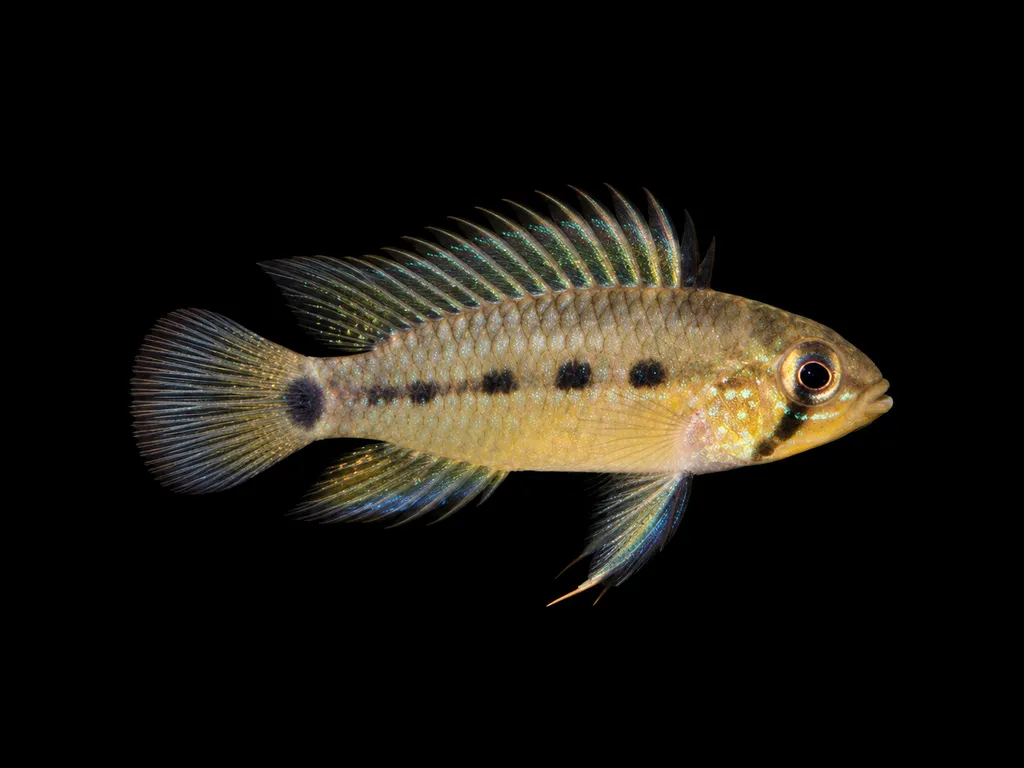
The red-lined dwarf cichlid is one of the few apistos you can identify from a photo of just the flank. Its red pinstripes give it away without the fins or face.
Caring for the red-lined dwarf cichlid
Keep a pair of red-lined dwarf cichlids in a tank of 16 gal (60 L). Use a standard layout of sand, leaf litter and caves.
Its water demands are moderate by apisto standards. Hold the water at 73 to 81°F (23 to 27°C) with a pH of 5.5 to 7.0. It has a steady appetite for frozen and small dry foods.
The pair behaves like a classic apisto pair, with a cave-centered female and a patrol-minded male. Bolivian exports are nearly nonexistent, so the species persists through hobby breeding. A spawning pair is worth real effort. Breeding is moderately tricky, and the fry raise readily on baby brine shrimp.
Good to know
Hein, Zarske and Zapata described the red-lined dwarf cichlid in 2002. It takes its name from the parallel red lines that males draw along the flanks. It is one of only a handful of described Bolivian apistos, from a country whose dwarf cichlid fauna remains barely collected.
In the wild
The red-lined dwarf cichlid is known from the Rio Manuripi in northern Bolivia. It lives along stream margins with sand, leaf litter and marginal plants, in mildly acidic water. Bolivia's lowlands run a touch cooler than the central Amazon.
Weekly picks
Tank mates
The red-lined dwarf cichlid is a mostly peaceful, social species that keeps to the bottom. These picks share a community profile with it, are safe together in both directions, and overlap on water type, temperature and pH.
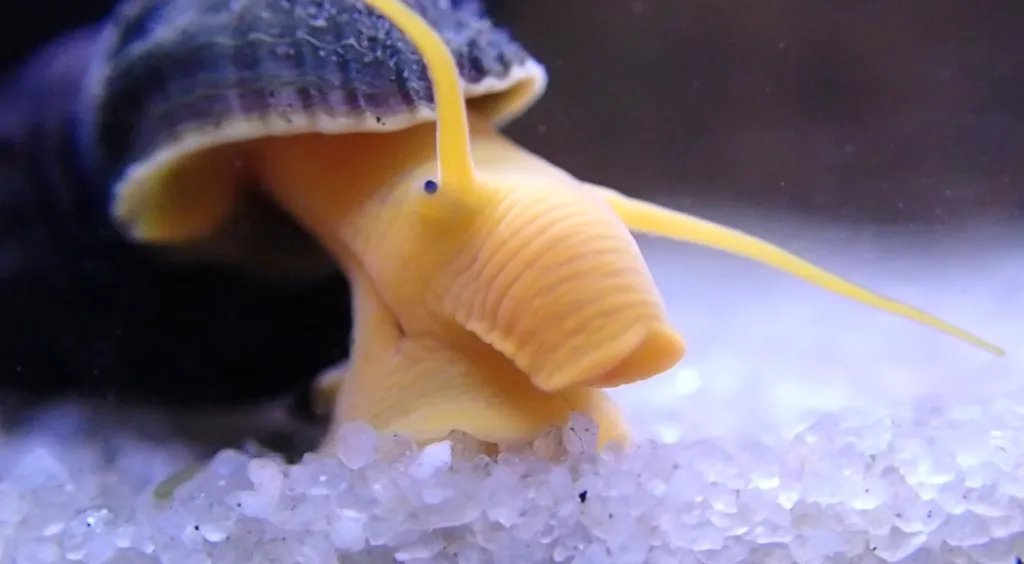
Gold rabbit snail
Tylomelania gemmifera
Freshwater2.8 in (7 cm) · 16 gal (60 L)75–82°F (24–28°C)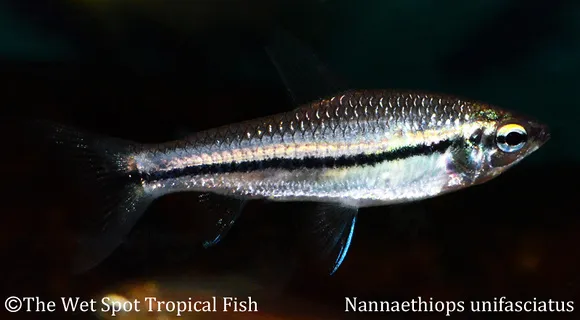
African oneline tetra
Nannaethiops unitaeniatus
Freshwater2.6 in (6.5 cm) · 16 gal (60 L)72–79°F (22–26°C)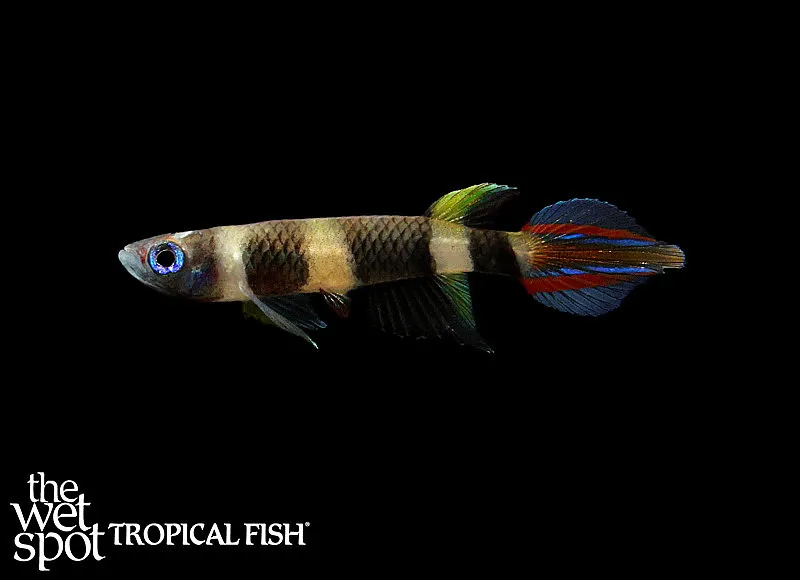
Clown killifish
Epiplatys annulatus
Freshwater1.4 in (3.5 cm) · 15 gal (55 L)68–79°F (20–26°C)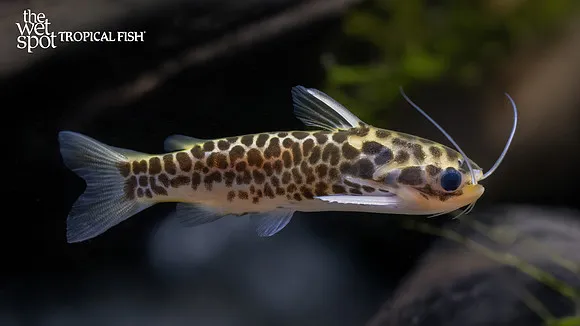
Oil catfish
Duringlanis perugiae
Freshwater2.4 in (6 cm) · 15 gal (55 L)75–82°F (24–28°C)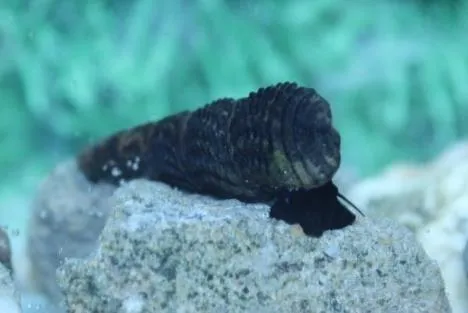
White spotted rabbit snail
Tylomelania towutica
Freshwater4.3 in (11 cm) · 16 gal (60 L)75–84°F (24–29°C)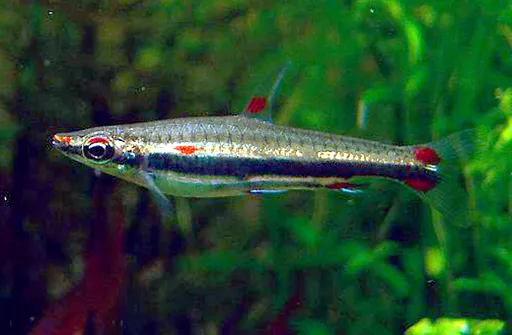
Harrison's pencilfish
Nannostomus harrisoni
Freshwater2.2 in (5.5 cm) · 16 gal (60 L)73–82°F (23–28°C)
Common questions
What size tank does a red-lined dwarf cichlid need?
A red-lined dwarf cichlid needs at least 16 gal (60 L). It spends most of its time in the bottom.
What temperature and pH does a red-lined dwarf cichlid need?
A red-lined dwarf cichlid is comfortable at 73–81°F (23–27°C) with a pH of 5.5–7.0.
What does a red-lined dwarf cichlid eat?
A red-lined dwarf cichlid has a steady appetite for frozen and small dry foods.
How big does a red-lined dwarf cichlid get?
An adult red-lined dwarf cichlid reaches about 2 in (5 cm).
How does a red-lined dwarf cichlid breed?
A red-lined dwarf cichlid breeds like a classic apisto, with the female centered on a cave and the male on patrol. Breeding is moderately tricky, and the fry raise readily on baby brine shrimp.
Related species
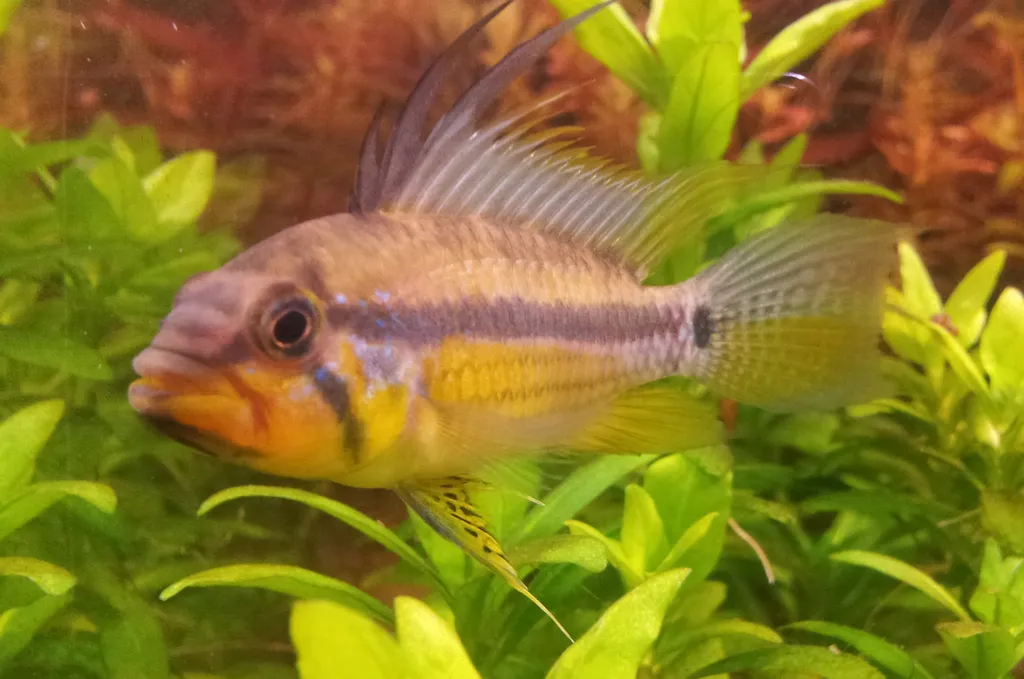 2 in (5 cm)16 gal (60 L)75–82°F (24–28°C)
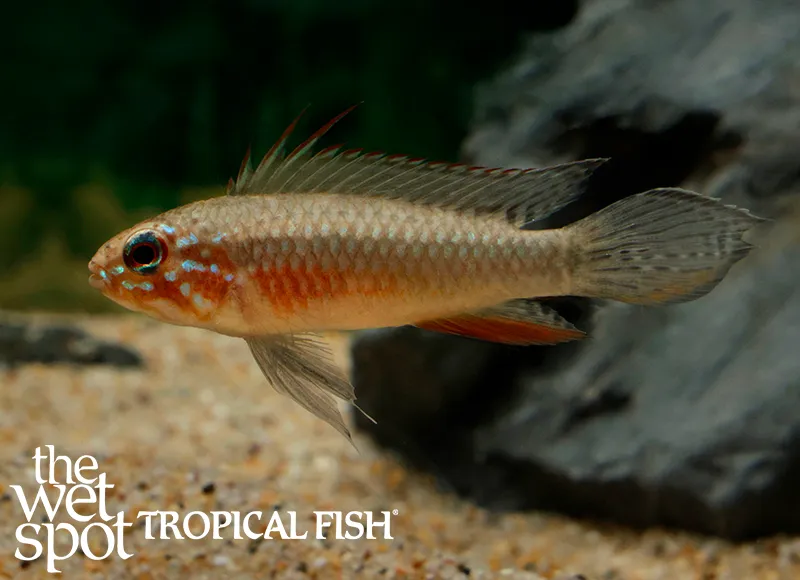
Allpahuayo dwarf cichlid
Apistogramma allpahuayo
2 in (5 cm) · 16 gal (60 L)
 2 in (5 cm)20 gal (75 L)75–84°F (24–29°C)
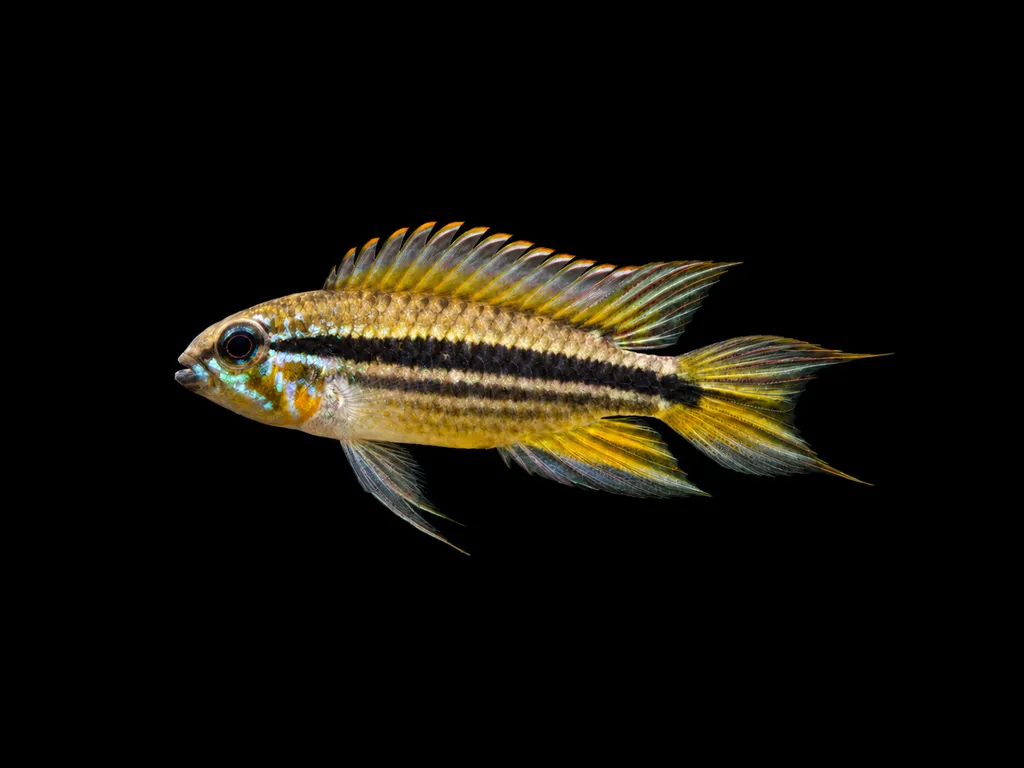
Elizabeth's dwarf cichlid
Apistogramma elizabethae
2 in (5 cm) · 20 gal (75 L)
 2 in (5 cm)16 gal (60 L)79–86°F (26–30°C)
Mendez's dwarf cichlid
Apistogramma mendezi
2 in (5 cm) · 16 gal (60 L)
 2 in (5 cm)16 gal (60 L)75–82°F (24–28°C)
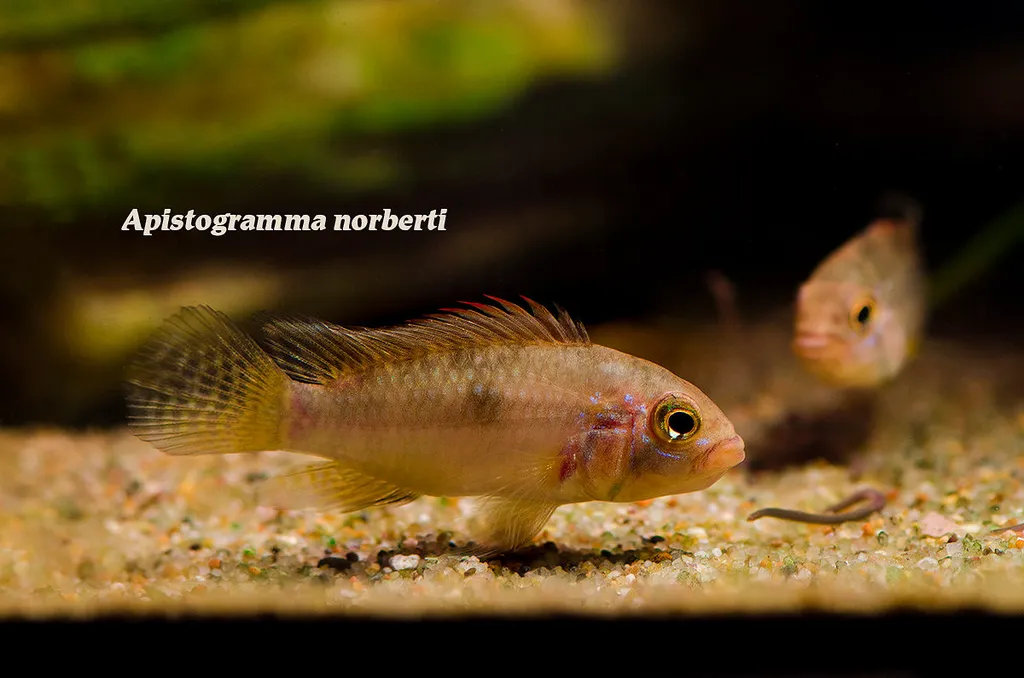
Norbert's dwarf cichlid
Apistogramma norberti
2 in (5 cm) · 16 gal (60 L)
 2 in (5 cm)16 gal (60 L)75–82°F (24–28°C)
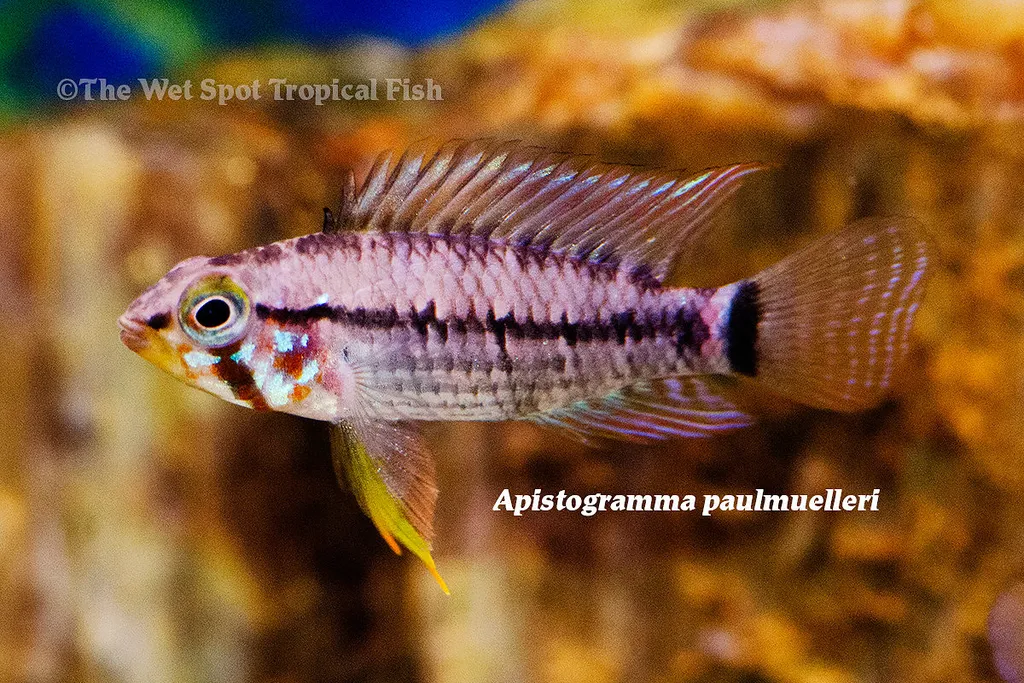
Paul Mueller's dwarf cichlid
Apistogramma paulmuelleri
2 in (5 cm) · 16 gal (60 L)
 2 in (5 cm)16 gal (60 L)75–82°F (24–28°C)
Rosita dwarf cichlid
Apistogramma rositae
2 in (5 cm) · 16 gal (60 L)