Norbert's dwarf cichlid
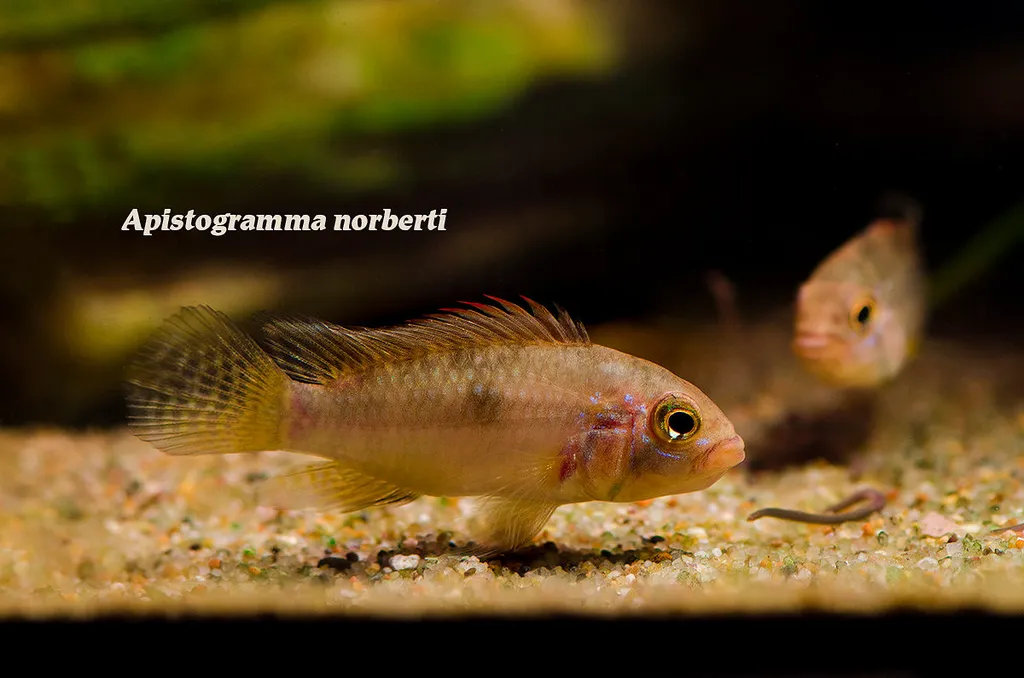
Apistogramma norberti
Also known as Tahuayo apisto
FreshwaterFish
Care at a glance
- Temperature
- 75–82°F
- 24–28°C
- pH
- 5.2–6.8
- Adult size
- 2 in
- 5 cm
- Minimum tank
- 16 gal
- 60 L
- Temperament
- Mostly peaceful
- Social behavior
- Social
- Swim level
- Bottom
- Difficulty
- Medium
- Breeding
- Cave spawner · Medium
- Rarity
- Rare
- Family
- Cichlidae
- Origin
- Rio Tahuayo basin south of Iquitos, Loreto, Peru
Overview
Norbert's dwarf cichlid is an unfussy rare apisto that keeps to the bottom of the tank. It is a gentle step up from the easiest fish.
Did you know
Collectors find Norbert's dwarf cichlid in water barely deeper than its own body. It hides under single leaves at the flooded forest edge.
Caring for the Norbert's dwarf cichlid
Keep a pair of Norbert's dwarf cichlids in 16 gal (60 L) or more, with cover. Use a leaf-littered tank with caves and gentle filtration.
Hold the water at 75 to 82°F (24 to 28°C) and a pH of 5.2 to 6.8. It eats frozen and sinking dry foods readily.
Peaceful, litter-loving corys and small tetras live well beside it. Males can be pushy with a single female, so either give her escape cover or keep a small harem.
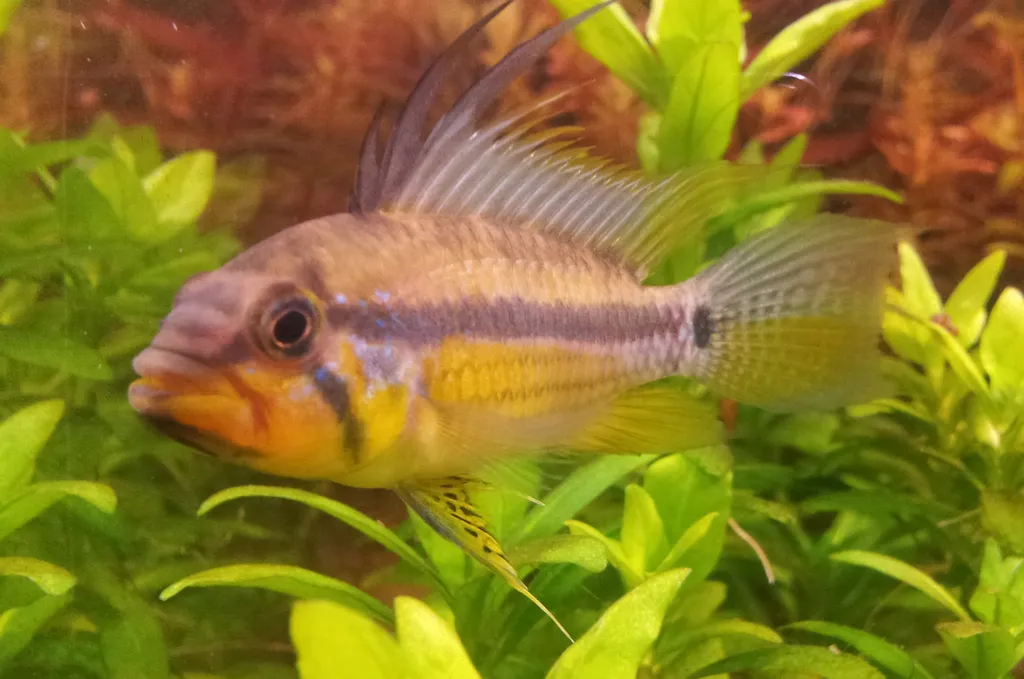
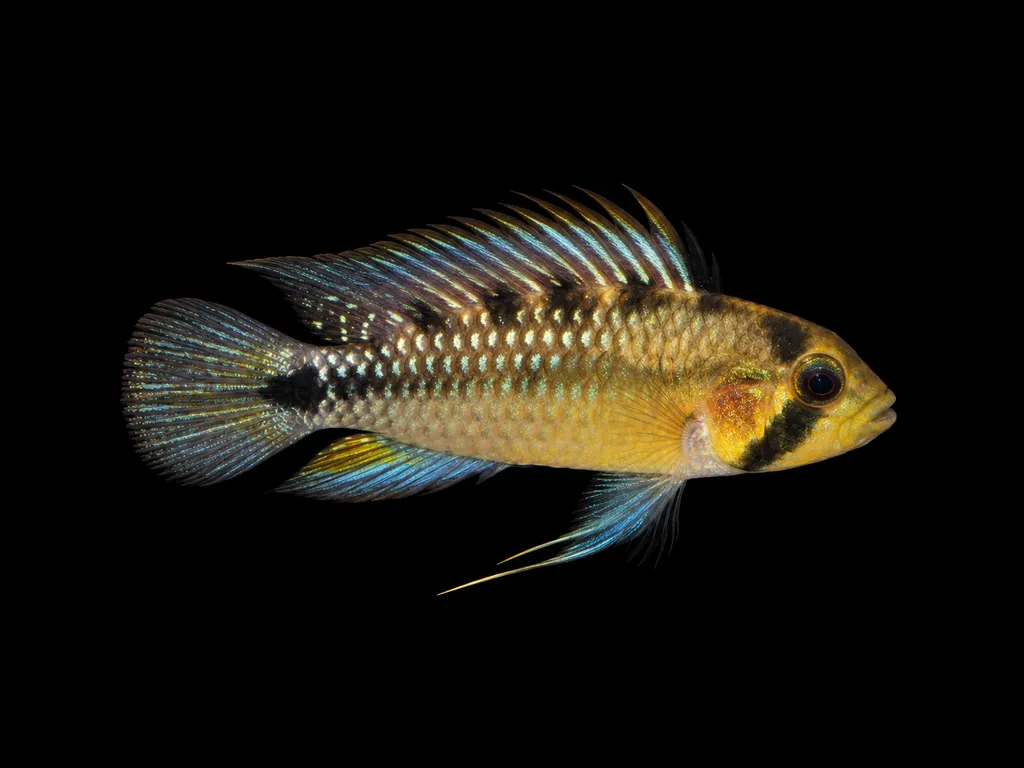
Males show a tall front dorsal fin and a dark tail spot framed in amber. Females in brood dress turn the classic apisto yellow, with sharply defined black markings. Pairs spawn in caves without needing extreme water chemistry, though softer water is still better, and breeding is moderately tricky.
Good to know
Wolfgang Staeck described Norbert's dwarf cichlid in 1991 and named it for the circle of Peruvian collectors around the aquarist Norbert Zarske. It is a compact species in the cacatuoides lineage.
In the wild
Norbert's dwarf cichlid lives in the Tahuayo drainage south of Iquitos, in Peru. It keeps to shaded forest pools and stream edges with sand, leaf litter and fallen branches. The water there is soft and mildly acidic rather than extreme blackwater.
Weekly picks
Tank mates
The Norbert's dwarf cichlid is a mostly peaceful, social species that keeps to the bottom. These picks share a community profile with it, are safe together in both directions, and overlap on water type, temperature and pH.
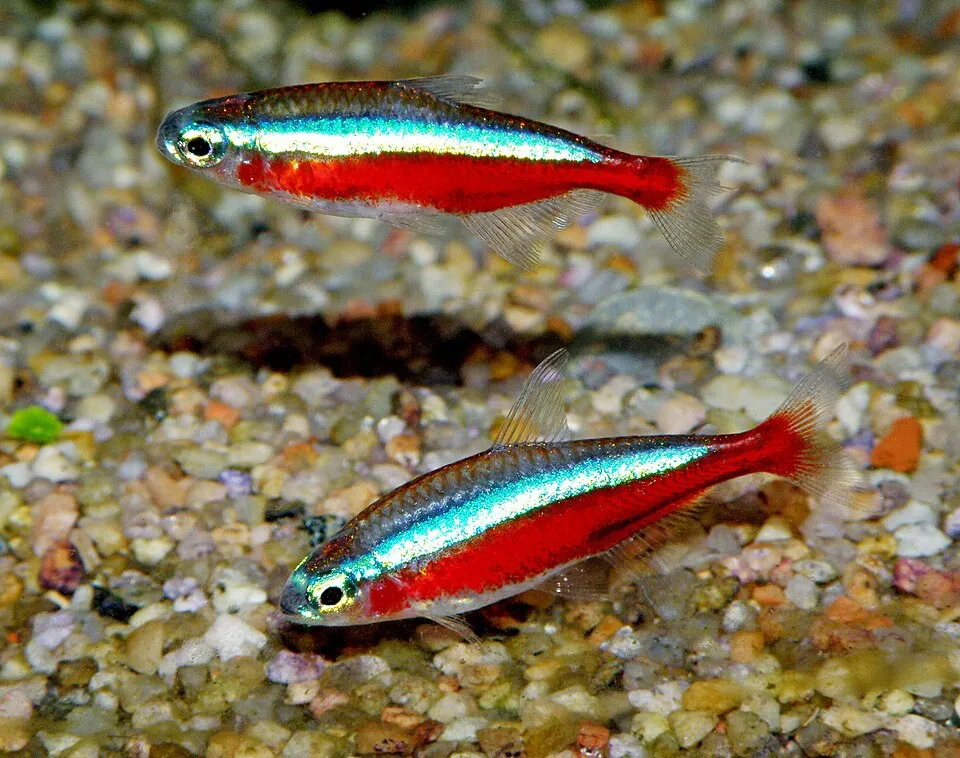
Cardinal tetra
Paracheirodon axelrodi
Freshwater1.8 in (4.5 cm) · 16 gal (60 L)73–84°F (23–29°C)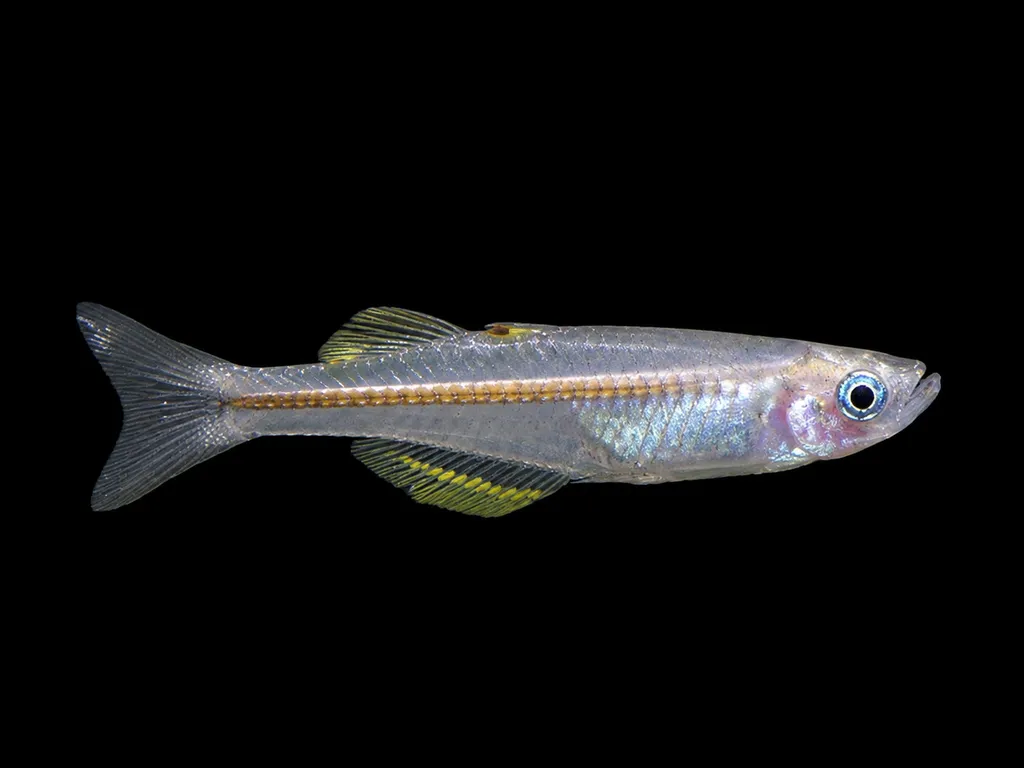
New Guinea blue-eye
Pseudomugil novaeguineae
Freshwater1.8 in (4.5 cm) · 15 gal (55 L)79–86°F (26–30°C)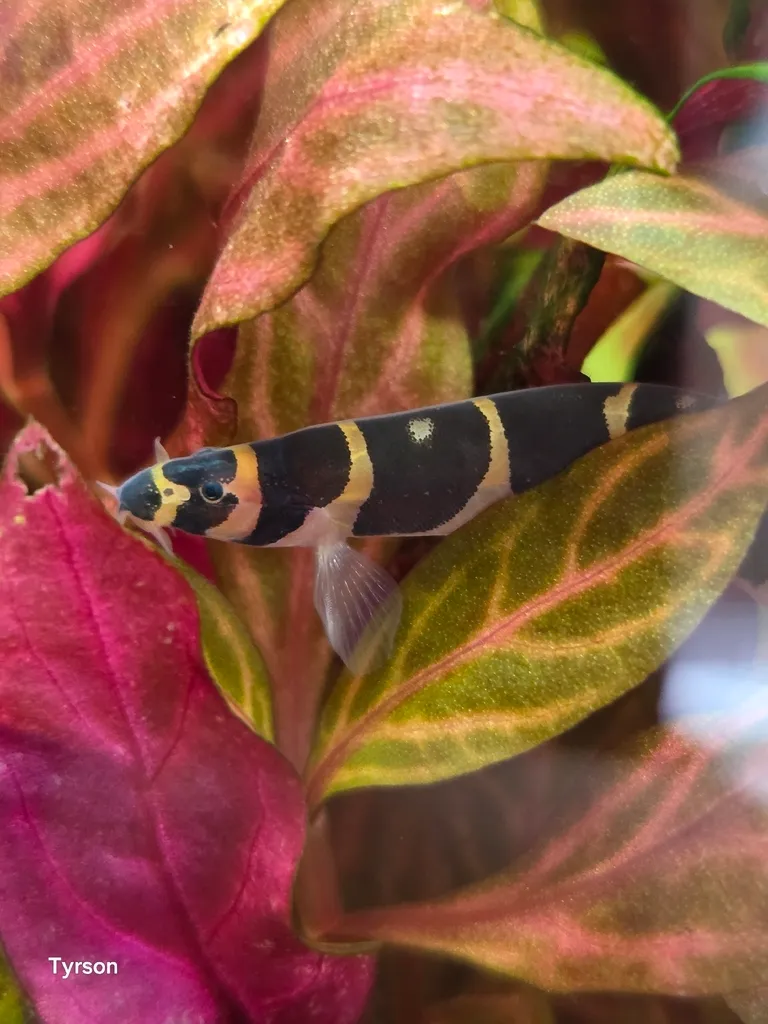
Kuhli loach
Pangio kuhlii
Freshwater3.9 in (10 cm) · 17 gal (65 L)72–82°F (22–28°C)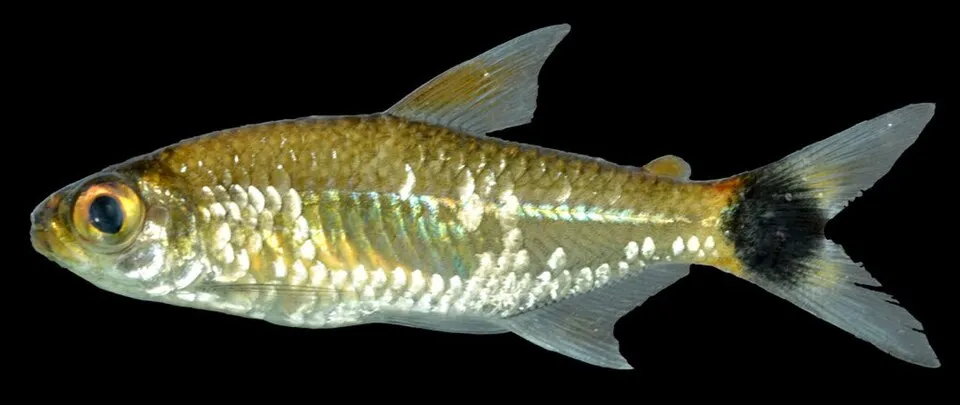
Ceros tetra
Moenkhausia ceros
Freshwater2 in (5 cm) · 16 gal (60 L)75–82°F (24–28°C)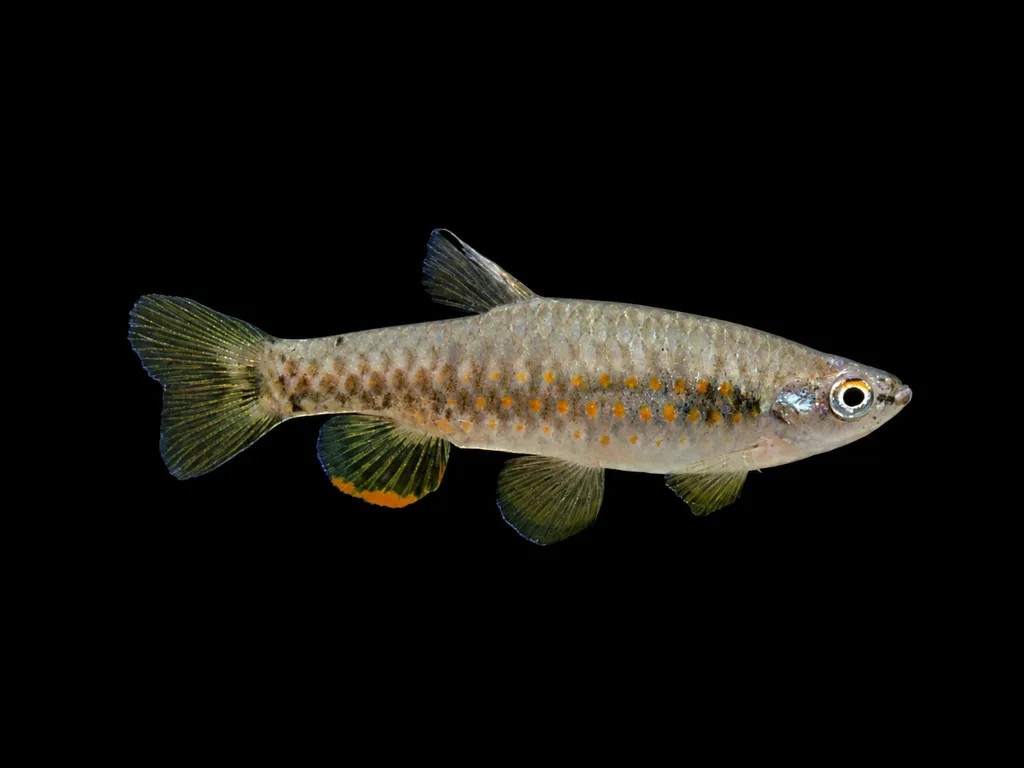
Fanning characin
Pyrrhulina rachoviana
Freshwater2 in (5 cm) · 16 gal (60 L)68–79°F (20–26°C)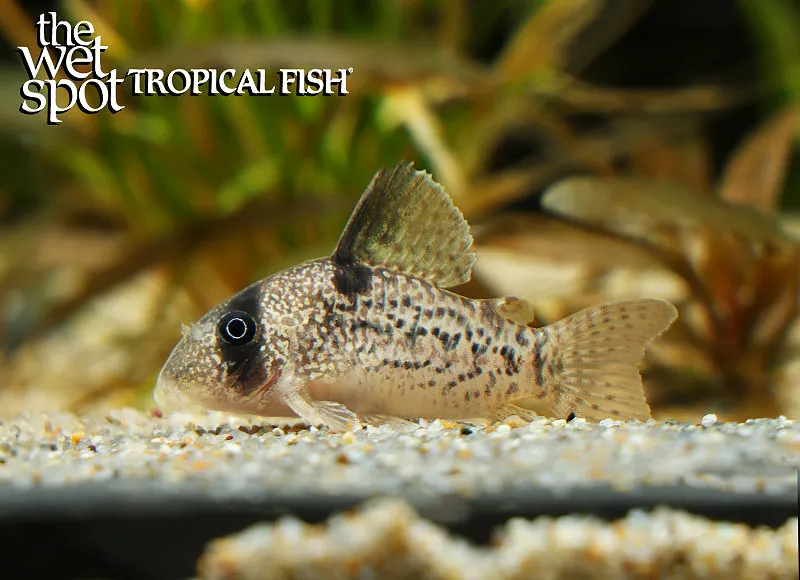
Ancestor cory
Hoplisoma noxium
Freshwater2.4 in (6 cm) · 16 gal (60 L)75–82°F (24–28°C)
Common questions
What size tank does a Norbert's dwarf cichlid need?
A Norbert's dwarf cichlid needs at least 16 gal (60 L). It spends most of its time in the bottom.
What temperature and pH does a Norbert's dwarf cichlid need?
A Norbert's dwarf cichlid is comfortable at 75–82°F (24–28°C) with a pH of 5.2–6.8.
What does a Norbert's dwarf cichlid eat?
A Norbert's dwarf cichlid eats frozen foods and sinking dry foods readily.
How big does a Norbert's dwarf cichlid get?
An adult Norbert's dwarf cichlid reaches about 2 in (5 cm).
How can you tell a male Norbert's dwarf cichlid from a female?
Males carry a tall front dorsal fin and a dark spot on the tail, framed in amber. A female guarding a brood turns classic apisto yellow, with sharp black markings.
How does a Norbert's dwarf cichlid breed?
A Norbert's dwarf cichlid spawns in caves and does not need extreme water chemistry, though softer water is better. Breeding it is moderately tricky.
Related species
 2 in (5 cm)16 gal (60 L)75–82°F (24–28°C)
Allpahuayo dwarf cichlid
Apistogramma allpahuayo
2 in (5 cm) · 16 gal (60 L)
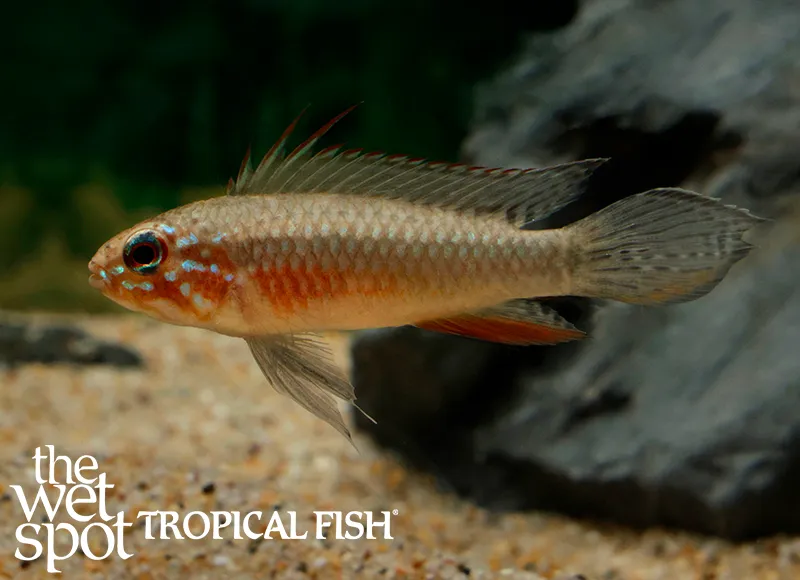 2 in (5 cm)20 gal (75 L)75–84°F (24–29°C)
Elizabeth's dwarf cichlid
Apistogramma elizabethae
2 in (5 cm) · 20 gal (75 L)
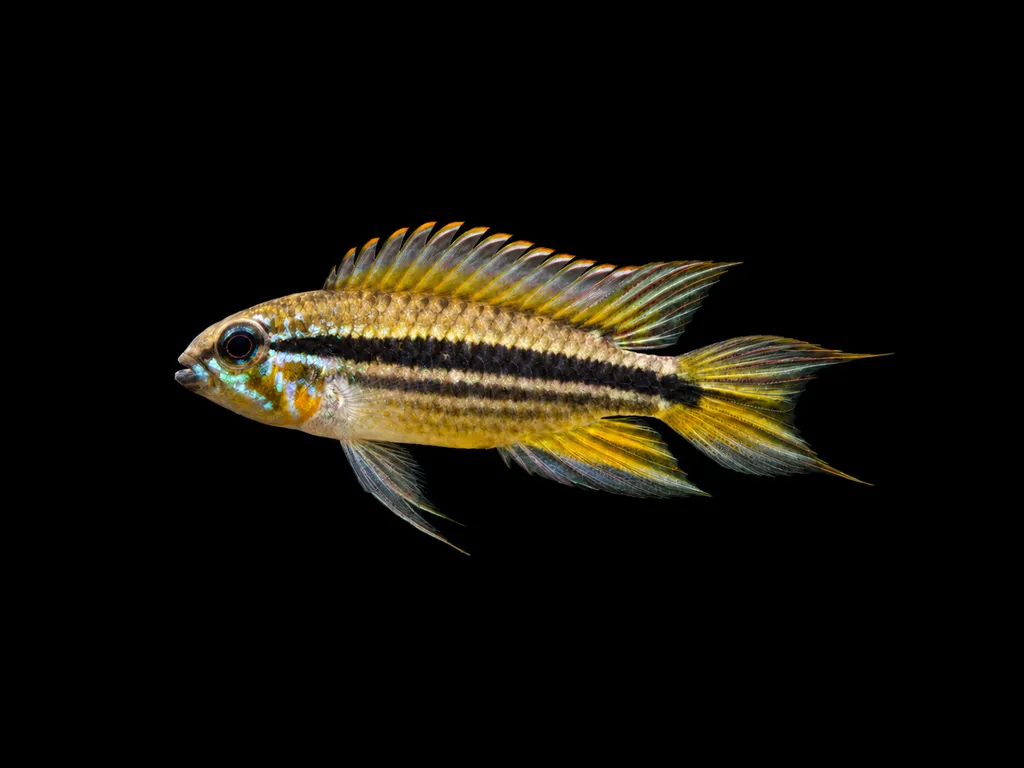 2 in (5 cm)16 gal (60 L)79–86°F (26–30°C)
Mendez's dwarf cichlid
Apistogramma mendezi
2 in (5 cm) · 16 gal (60 L)
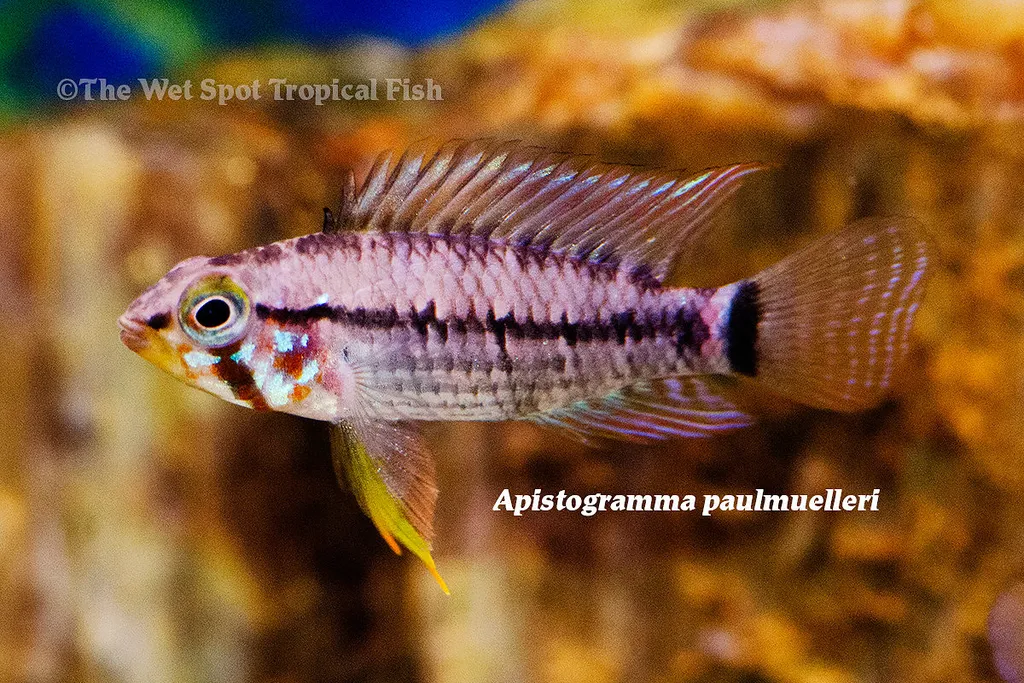 2 in (5 cm)16 gal (60 L)75–82°F (24–28°C)
Paul Mueller's dwarf cichlid
Apistogramma paulmuelleri
2 in (5 cm) · 16 gal (60 L)
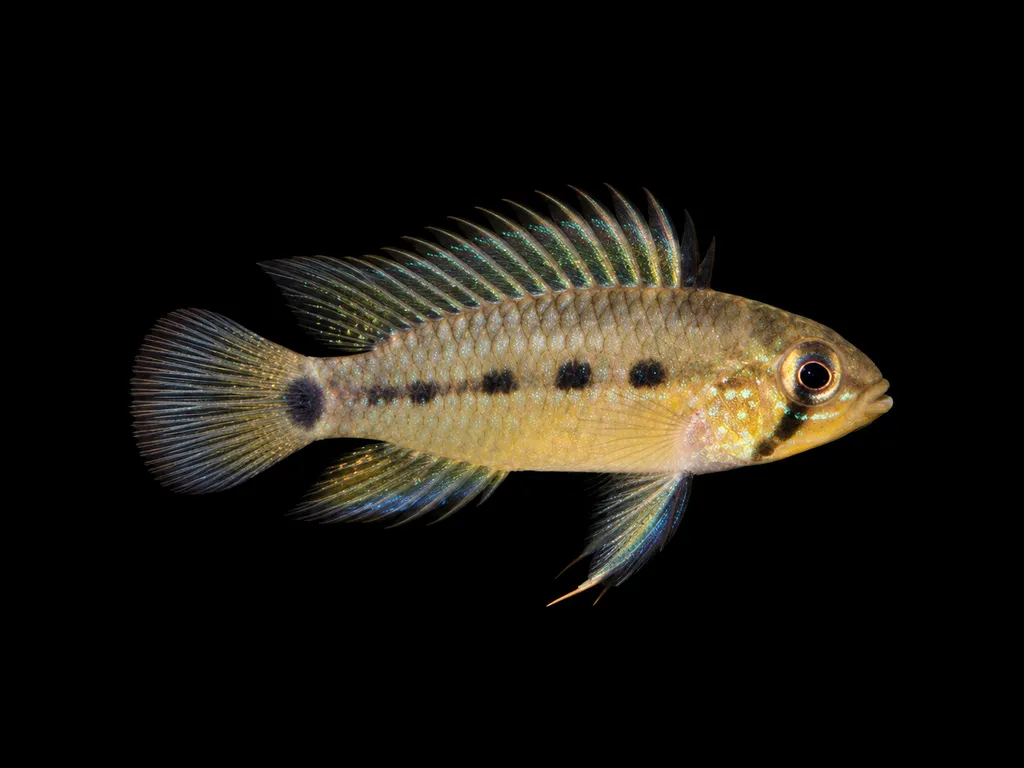 2 in (5 cm)16 gal (60 L)73–81°F (23–27°C)
Red-lined dwarf cichlid
Apistogramma rubrolineata
2 in (5 cm) · 16 gal (60 L)
 2 in (5 cm)16 gal (60 L)75–82°F (24–28°C)
Rosita dwarf cichlid
Apistogramma rositae
2 in (5 cm) · 16 gal (60 L)