Elizabeth's dwarf cichlid
Apistogramma elizabethae
Also known as Elizabeth's apisto, A208
FreshwaterFish
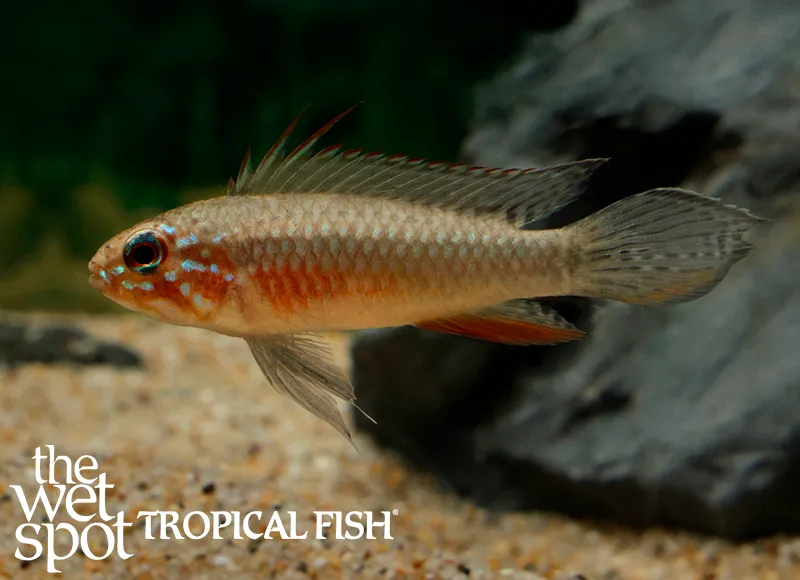
Care at a glance
- Temperature
- 75–84°F
- 24–29°C
- pH
- 4.0–6.0
- Adult size
- 2 in
- 5 cm
- Minimum tank
- 20 gal
- 75 L
- Temperament
- Mostly peaceful
- Social behavior
- Solitary
- Tankmates
- With caution
- Swim level
- Bottom
- Difficulty
- Difficult
- Breeding
- Hard
- Rarity
- Rare
- Family
- Cichlidae
- Origin
- Lower Rio Uaupes and Rio Icana in the upper Rio Negro system of northwestern Brazil, in true blackwater leaf-litter creeks.
Overview
A pair needs a tank of at least 75 liters at 24 to 29 C and pH 4.0 to 6.0, with very soft, tannin-stained water. Provide caves, leaf litter, and dense cover. Feed small live and frozen foods. It is mostly peaceful but sensitive, and fry only survive in very soft, acidic water.
In the wild
Apistogramma elizabethae lives in the lower Rio Uaupes and Rio Icana in the upper Rio Negro system of northwestern Brazil. It occupies true blackwater leaf-litter creeks that are very soft and acidic. This is a demanding blackwater specialist. It needs mature, very soft, acidic water to survive and breed.
Good to know
Apistogramma elizabethae was described by Kullander in 1980 and carries the code A208. Males reach about 5 cm, and the shape of the male tail fin changes with age from rounded to a long spade shape. Most fish in the trade are wild imports rather than tank-bred.
Did you know
It is one of the more demanding dwarf cichlids, and its fry are so sensitive to water chemistry that breeding it is a real accomplishment.
Common questions
What size tank does an Elizabeth's dwarf cichlid need?
An Elizabeth's dwarf cichlid needs at least 20 gal (75 L). It spends most of its time in the bottom.
What temperature and pH does an Elizabeth's dwarf cichlid need?
An Elizabeth's dwarf cichlid is comfortable at 75–84°F (24–29°C) with a pH of 4.0–6.0.
How big does an Elizabeth's dwarf cichlid get?
An adult Elizabeth's dwarf cichlid reaches about 2 in (5 cm).
Related species
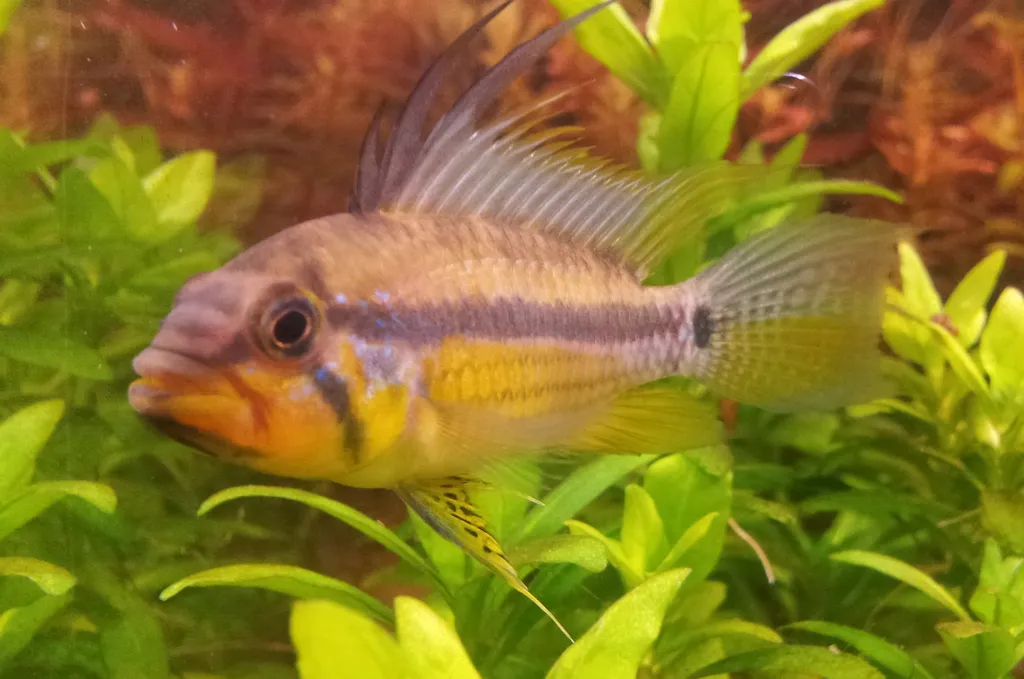 2 in (5 cm)16 gal (60 L)75–82°F (24–28°C)
Allpahuayo dwarf cichlid
Apistogramma allpahuayo
2 in (5 cm) · 16 gal (60 L)
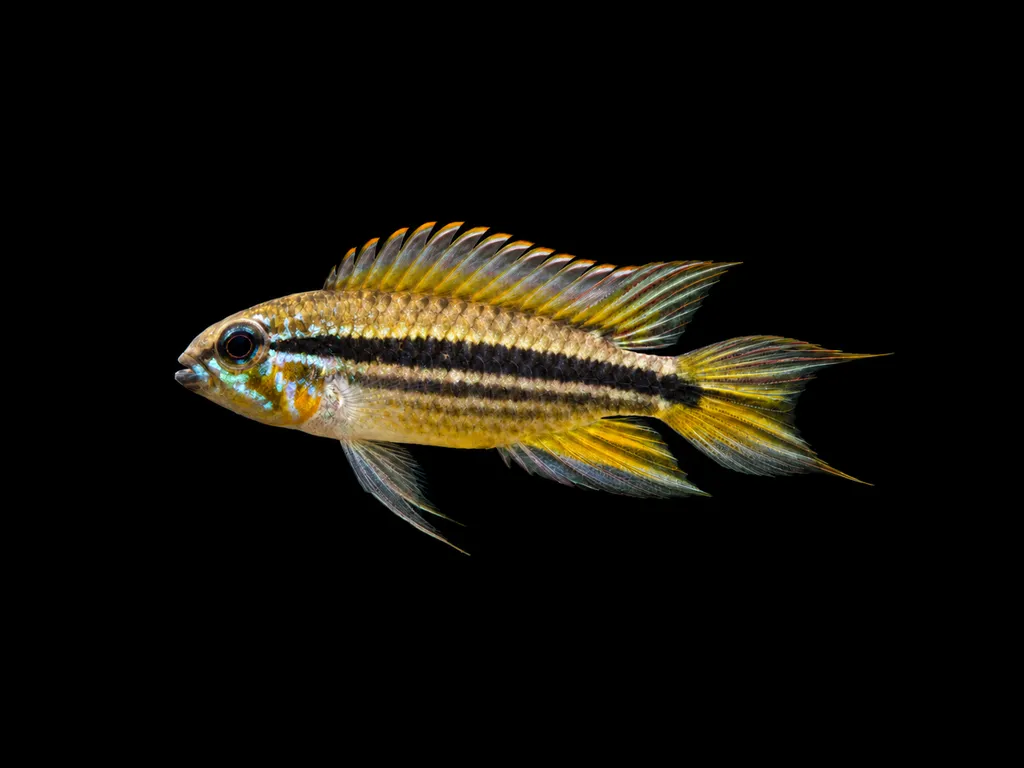 2 in (5 cm)16 gal (60 L)79–86°F (26–30°C)
Mendez's dwarf cichlid
Apistogramma mendezi
2 in (5 cm) · 16 gal (60 L)
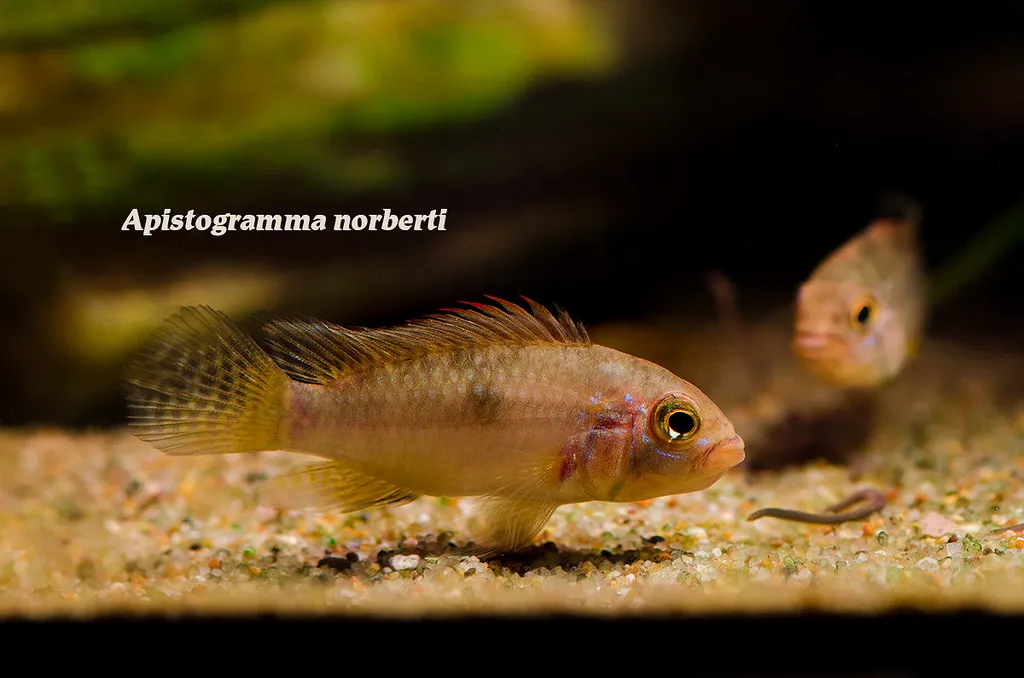 2 in (5 cm)16 gal (60 L)75–82°F (24–28°C)
Norbert's dwarf cichlid
Apistogramma norberti
2 in (5 cm) · 16 gal (60 L)
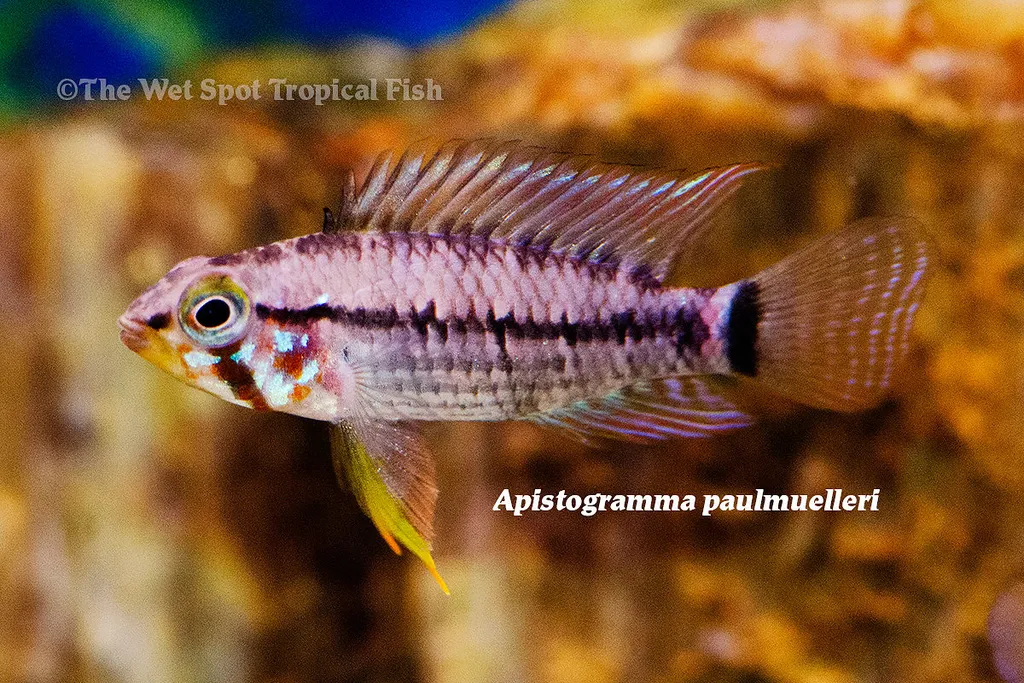 2 in (5 cm)16 gal (60 L)75–82°F (24–28°C)
Paul Mueller's dwarf cichlid
Apistogramma paulmuelleri
2 in (5 cm) · 16 gal (60 L)
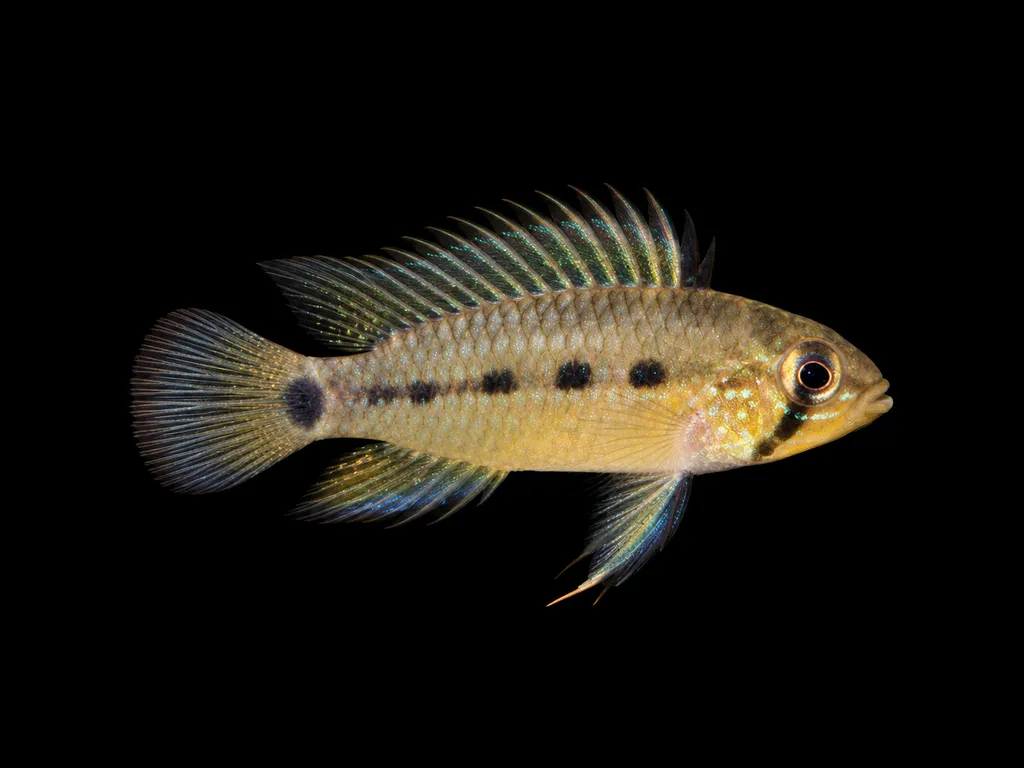 2 in (5 cm)16 gal (60 L)73–81°F (23–27°C)
Red-lined dwarf cichlid
Apistogramma rubrolineata
2 in (5 cm) · 16 gal (60 L)
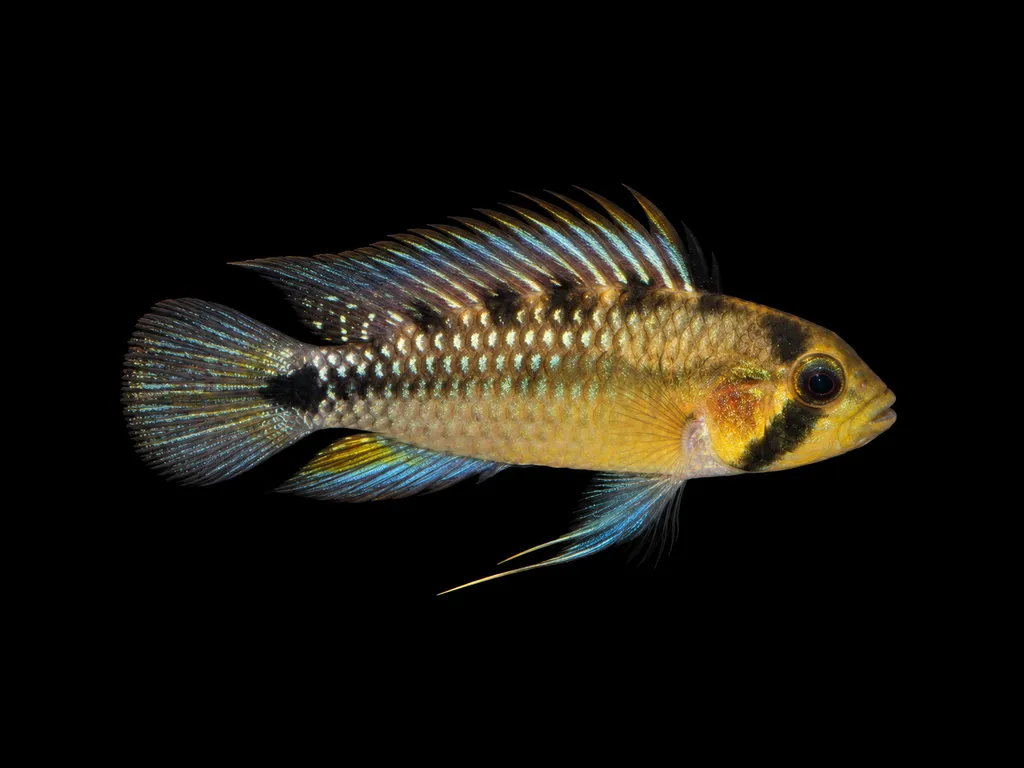 2 in (5 cm)16 gal (60 L)75–82°F (24–28°C)
Rosita dwarf cichlid
Apistogramma rositae
2 in (5 cm) · 16 gal (60 L)