Fire-tail dwarf cichlid
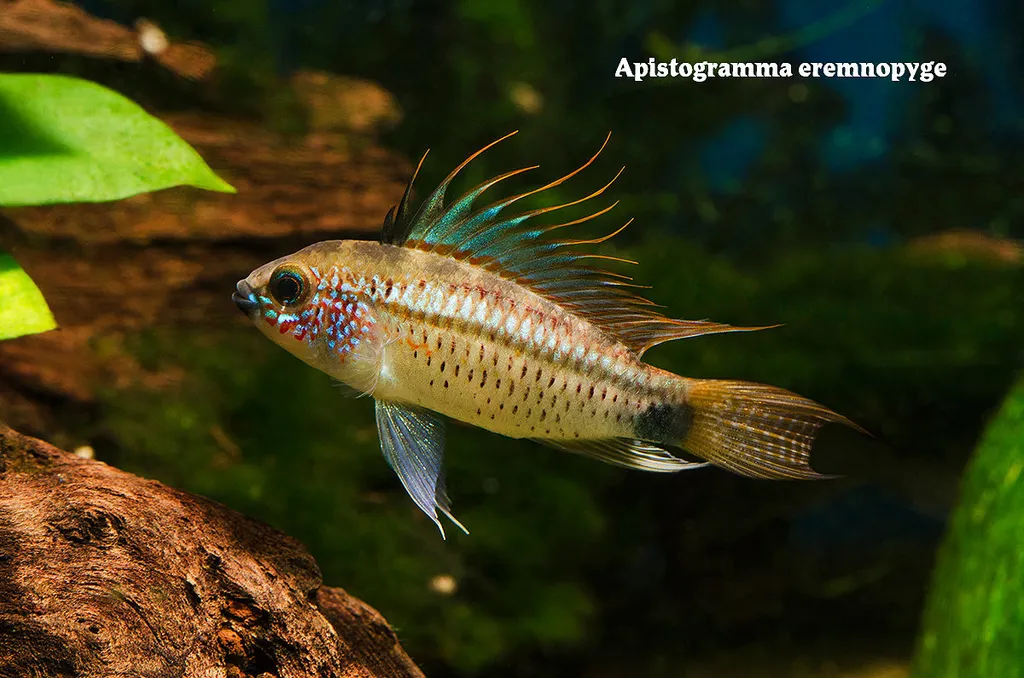
Apistogramma eremnopyge
Also known as Eremnopyge apisto
FreshwaterFish
Care at a glance
- Temperature
- 73–81°F
- 23–27°C
- pH
- 5.0–6.8
- Adult size
- 1.8 in
- 4.5 cm
- Minimum tank
- 16 gal
- 60 L
- Temperament
- Mostly peaceful
- Social behavior
- Social
- Swim level
- Bottom
- Difficulty
- Medium
- Breeding
- Cave spawner · Hard
- Rarity
- Rare
- Family
- Cichlidae
- Origin
- Rio Pintuyacu, a tributary of the Rio Itaya, Loreto, Peru
Overview
The fire-tail dwarf cichlid is a small, shy apisto for the bottom of a dim, calm tank. Keeping it well takes a little experience.
Did you know
Males carry a red-over-black flag on the tail, and it flares during displays. That flag is why importers call the species the fire-tail apisto.
Caring for the fire-tail dwarf cichlid
Keep a pair of fire-tail dwarf cichlids in a tank of at least 16 gal (60 L), with heavy cover. They are shy, and they need the security of leaf litter and shade before they show their color. Give them a sand bottom buried under leaves, a few small caves and dim light.
Hold the water soft, at 73 to 81°F (23 to 27°C) and a pH of 5.0 to 6.8. Offer small live and frozen foods at first, then wean the fish onto fine sinking granules.
Choose the calmest tank mates possible, or none at all, for this mostly peaceful fish. Pairs spawn in tight cavities in the leaf litter, and breeding them is hard. Soft, warm, clean water makes the difference between eggs that develop and eggs that fungus.
Good to know
Apistogramma eremnopyge was described by Ready and Kullander in 2004. Its species name roughly means dark rump, for the bold black blotch males wear at the tail base below a band of red. Males also layer red facial stripes over metallic blue cheeks, which makes a mature fish look painted.
In the wild
The fire-tail dwarf cichlid is known from the Rio Pintuyacu, in the Itaya drainage of northern Peru. It lives in shaded forest streams thick with leaf litter, and it spends its day picking through the litter for food.
Weekly picks
Tank mates
The fire-tail dwarf cichlid is a mostly peaceful, social species that keeps to the bottom. These picks share a community profile with it, are safe together in both directions, and overlap on water type, temperature and pH.
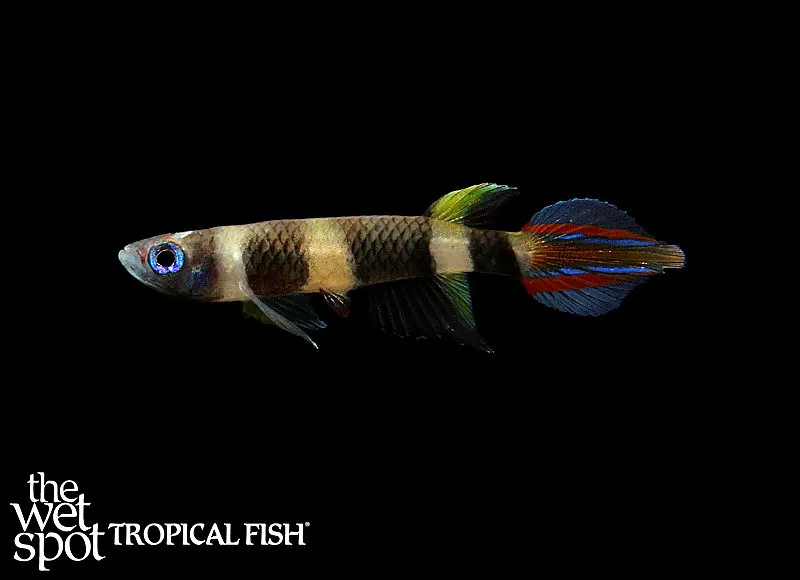
Clown killifish
Epiplatys annulatus
Freshwater1.4 in (3.5 cm) · 15 gal (55 L)68–79°F (20–26°C)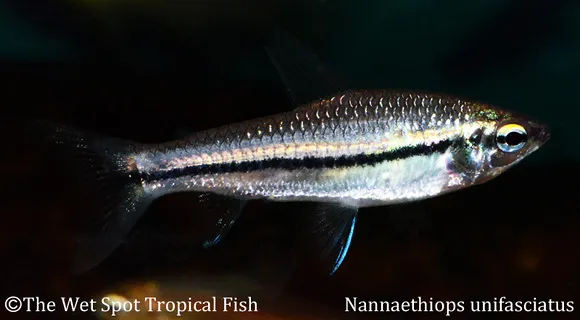
African oneline tetra
Nannaethiops unitaeniatus
Freshwater2.6 in (6.5 cm) · 16 gal (60 L)72–79°F (22–26°C)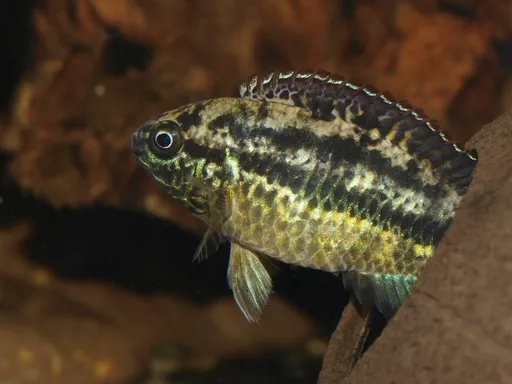
Golden dwarf cichlid
Nannacara anomala
Freshwater3.1 in (8 cm) · 16 gal (60 L)72–82°F (22–28°C)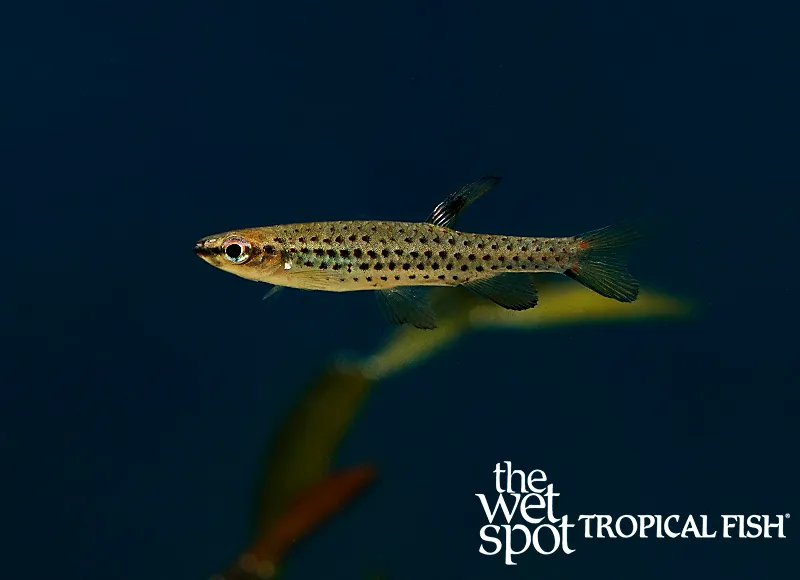
Spotted splash tetra
Copella nattereri
Freshwater2 in (5 cm) · 16 gal (60 L)75–82°F (24–28°C)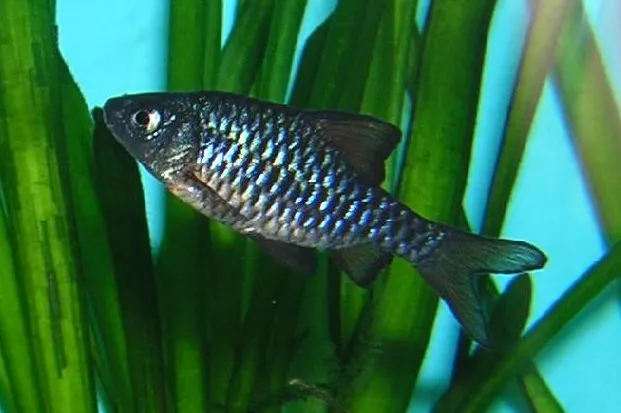
Checkered barb
Oliotius oligolepis
Freshwater1.8 in (4.5 cm) · 16 gal (60 L)68–79°F (20–26°C)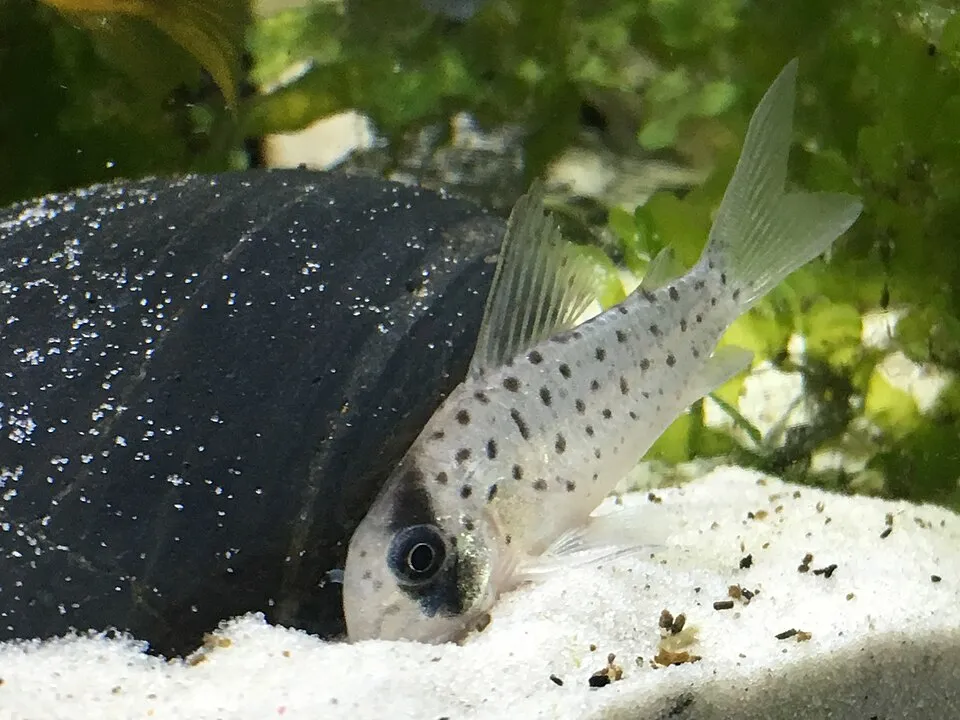
Fairy cory
Hoplisoma atropersonatum
Freshwater2 in (5 cm) · 16 gal (60 L)70–81°F (21–27°C)
Common questions
What size tank does a fire-tail dwarf cichlid need?
A fire-tail dwarf cichlid needs at least 16 gal (60 L). It spends most of its time in the bottom.
What temperature and pH does a fire-tail dwarf cichlid need?
A fire-tail dwarf cichlid is comfortable at 73–81°F (23–27°C) with a pH of 5.0–6.8.
What does a fire-tail dwarf cichlid eat?
A fire-tail dwarf cichlid eats small live and frozen foods at first. Over time, you can wean it onto fine sinking granules.
How big does a fire-tail dwarf cichlid get?
An adult fire-tail dwarf cichlid reaches about 1.8 in (4.5 cm).
How does a fire-tail dwarf cichlid breed?
A fire-tail dwarf cichlid pair spawns in tight cavities in the leaf litter, and breeding is hard. Soft, warm, clean water decides whether the eggs develop or fungus.
Related species
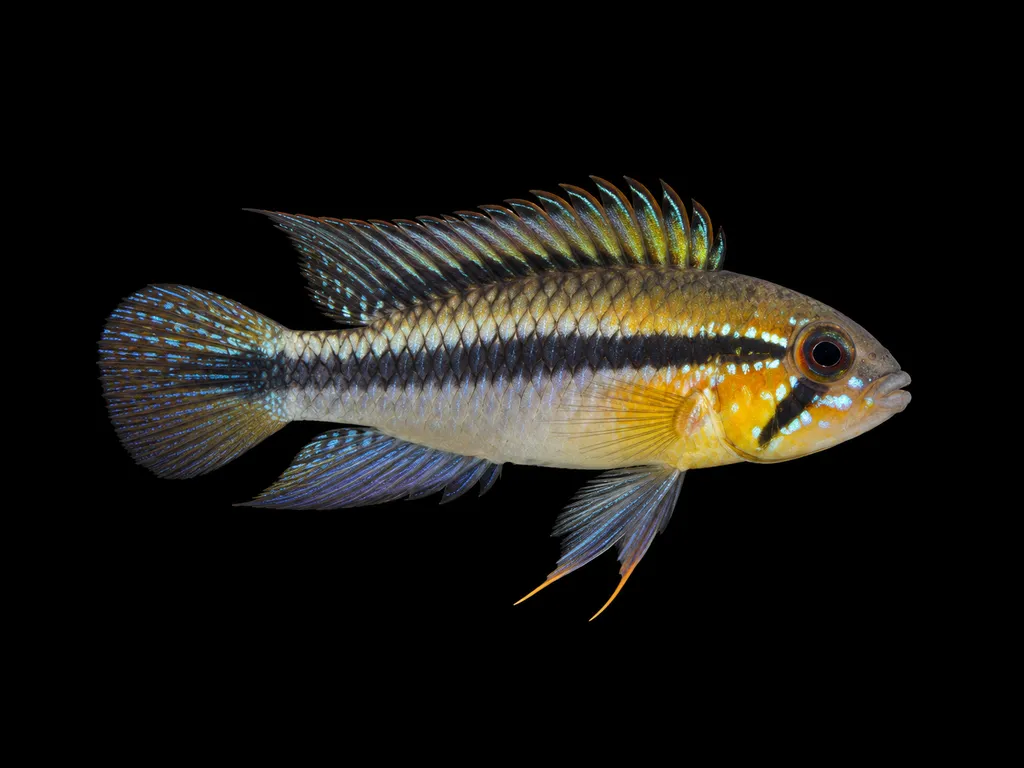 1.8 in (4.5 cm)15 gal (55 L)77–84°F (25–29°C)
Bridge dwarf cichlid
Apistogramma gephyra
1.8 in (4.5 cm) · 15 gal (55 L)
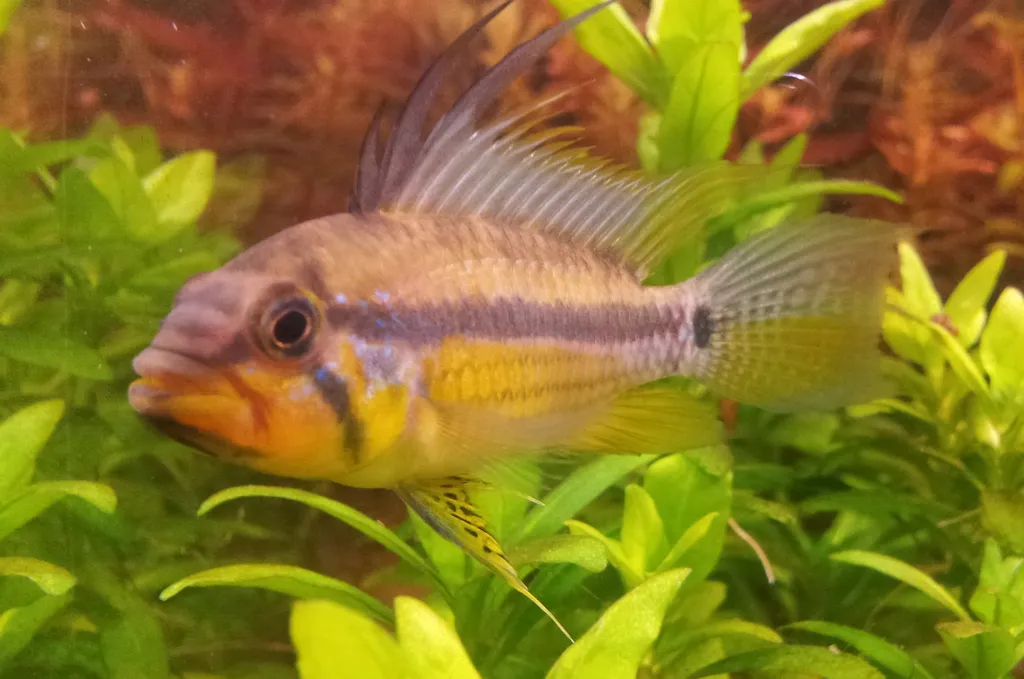 2 in (5 cm)16 gal (60 L)75–82°F (24–28°C)
Allpahuayo dwarf cichlid
Apistogramma allpahuayo
2 in (5 cm) · 16 gal (60 L)
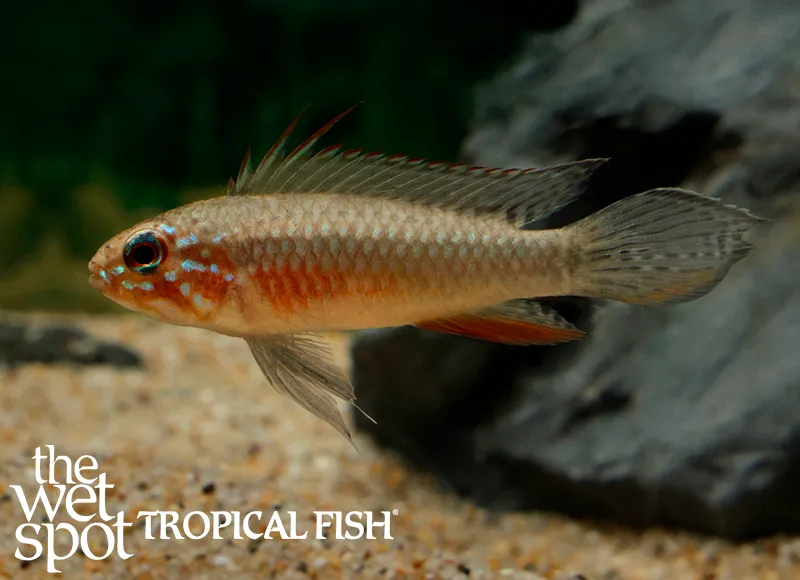 2 in (5 cm)20 gal (75 L)75–84°F (24–29°C)
Elizabeth's dwarf cichlid
Apistogramma elizabethae
2 in (5 cm) · 20 gal (75 L)
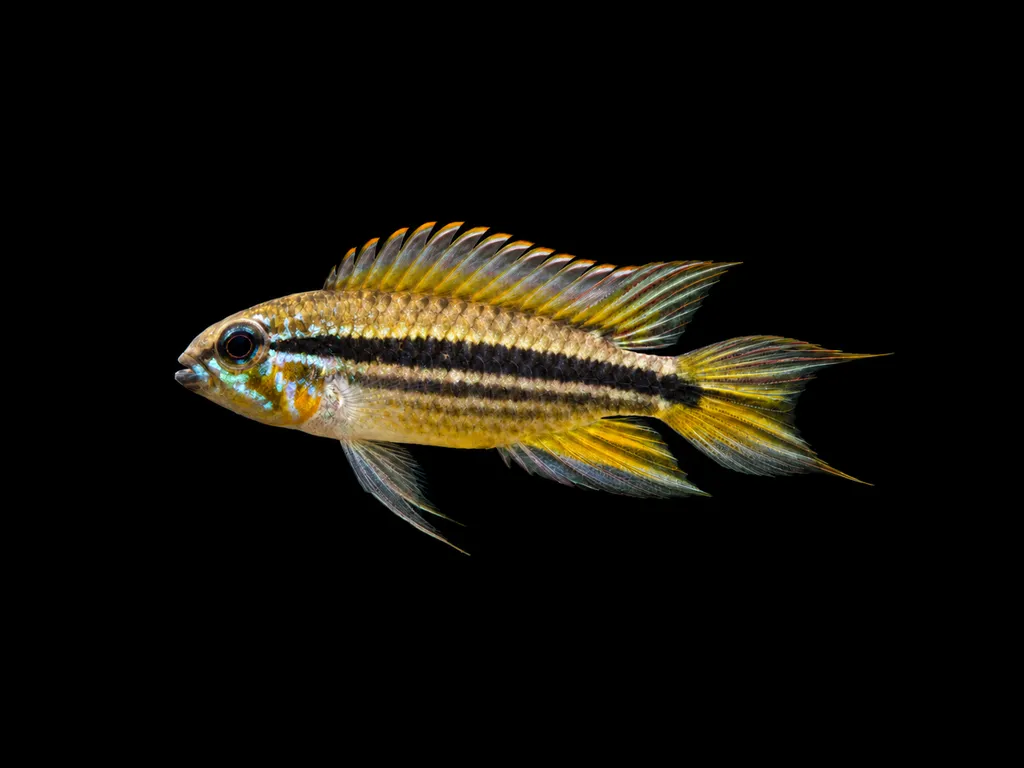 2 in (5 cm)16 gal (60 L)79–86°F (26–30°C)
Mendez's dwarf cichlid
Apistogramma mendezi
2 in (5 cm) · 16 gal (60 L)
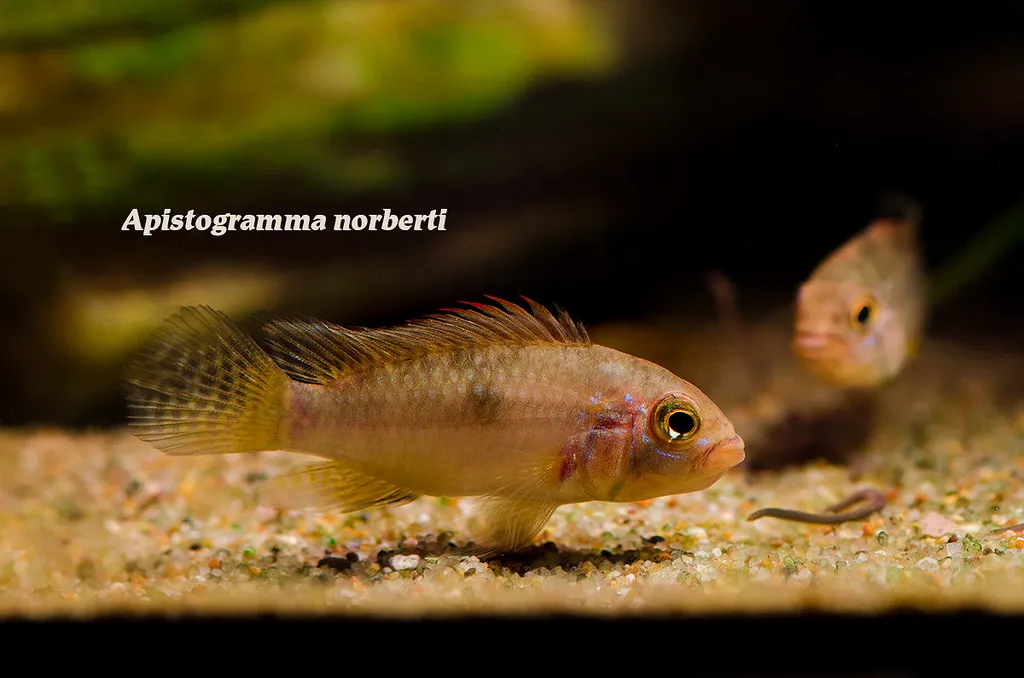 2 in (5 cm)16 gal (60 L)75–82°F (24–28°C)
Norbert's dwarf cichlid
Apistogramma norberti
2 in (5 cm) · 16 gal (60 L)
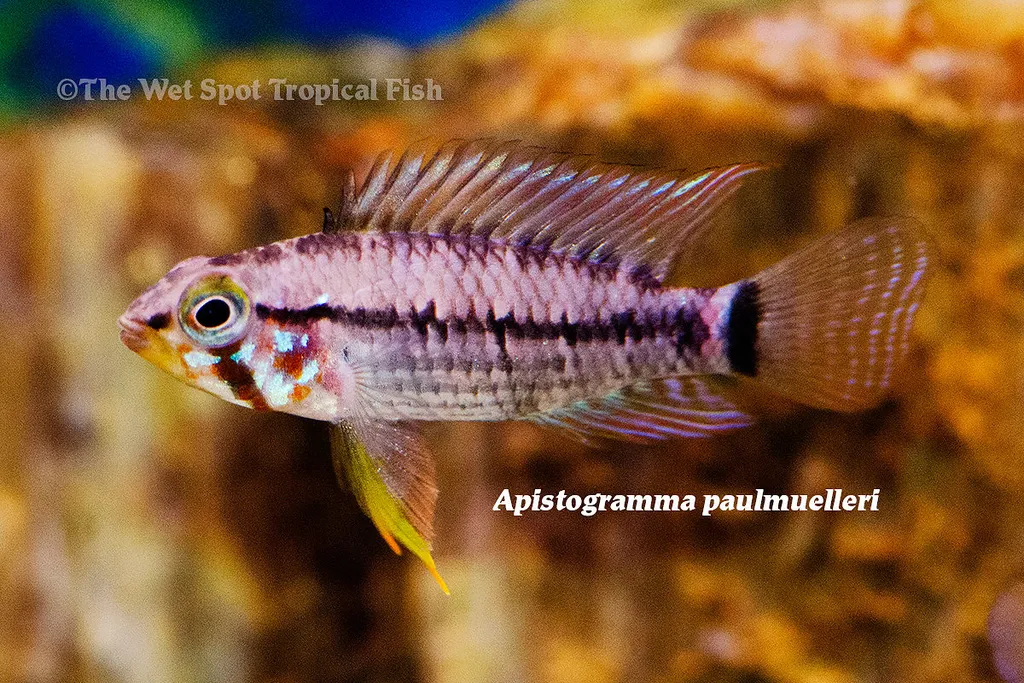 2 in (5 cm)16 gal (60 L)75–82°F (24–28°C)
Paul Mueller's dwarf cichlid
Apistogramma paulmuelleri
2 in (5 cm) · 16 gal (60 L)