Bridge dwarf cichlid
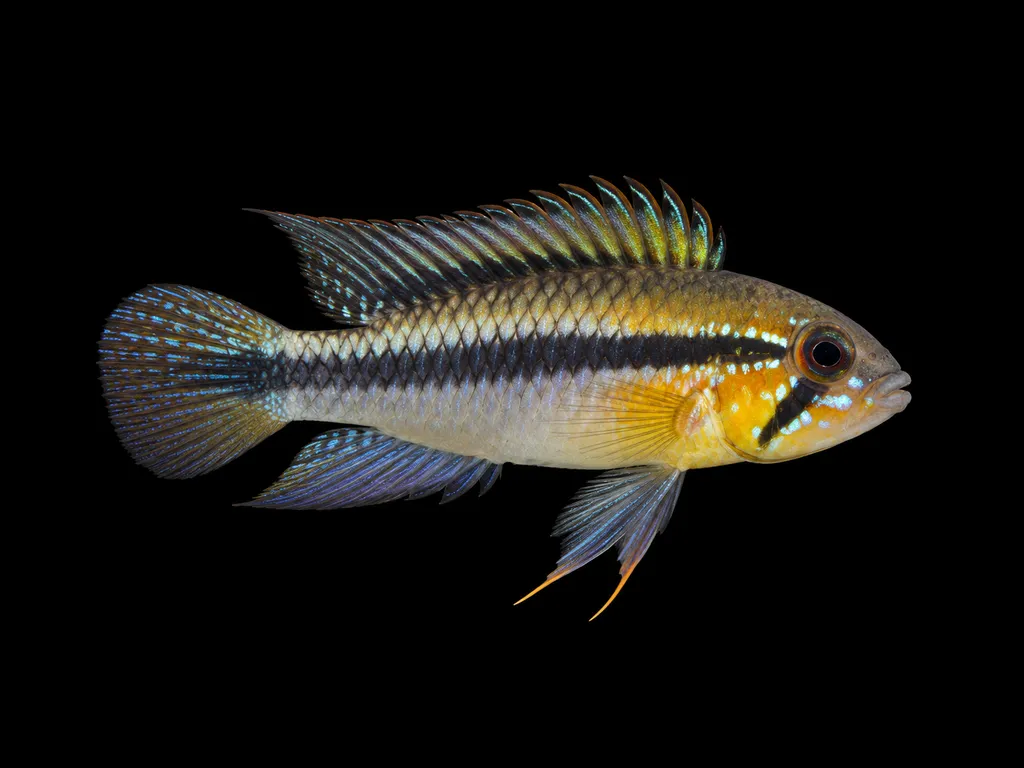
Apistogramma gephyra
Also known as Gephyra apisto
FreshwaterFish
Care at a glance
- Temperature
- 77–84°F
- 25–29°C
- pH
- 4.8–6.3
- Adult size
- 1.8 in
- 4.5 cm
- Minimum tank
- 15 gal
- 55 L
- Temperament
- Mostly peaceful
- Social behavior
- Social
- Swim level
- Bottom
- Difficulty
- Difficult
- Breeding
- Cave spawner · Hard
- Rarity
- Rare
- Family
- Cichlidae
- Origin
- Lower Rio Negro blackwaters, Amazonas, Brazil
Overview
The bridge dwarf cichlid is a small blackwater apisto that lives near the bottom of the tank. It is a fish for experienced keepers.
Did you know
The bridge dwarf cichlid's scientific name, gephyra, means bridge. Its describer chose it because the fish's characters stand halfway between Apistogramma agassizii and the pertensis group.
Caring for the bridge dwarf cichlid
Treat bridge dwarf cichlids like a slightly fussier agassizii. Keep a pair in 15 gal (55 L) or more, over sand and a deep leaf layer, with caves and dim light.
Give them soft, warm, tannin-stained water at 77 to 84°F (25 to 29°C) and a pH of 4.8 to 6.3. In hard water this fish neither colors up nor does well over the long term.
Feed small live and frozen foods to bring it into condition, since dry food is hit or miss. It is mostly peaceful, and any dither fish should be few and gentle.
Cave spawns follow the standard pattern, led by the female. The eggs need very soft, acidic water to hatch reliably, and breeding is hard.
Good to know
Kullander described the bridge dwarf cichlid in 1980. Males carry a spade-shaped tail edged in red and blue. The species is easily mistaken for a small agassizii, and careful counting of the stripe rows is how the two are told apart.
In the wild
The bridge dwarf cichlid lives in the blackwater tributaries of the lower Rio Negro in Brazil. It keeps to shallow litter banks, where the water runs stained, hot and nearly free of minerals.
Weekly picks
Tank mates
The bridge dwarf cichlid is a mostly peaceful, social species that keeps to the bottom. These picks share a community profile with it, are safe together in both directions, and overlap on water type, temperature and pH.
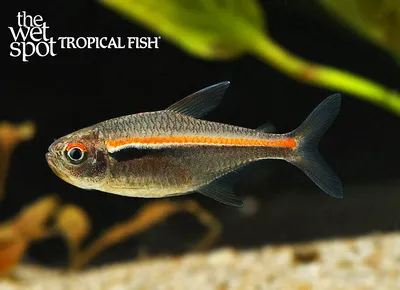
Amapa tetra
Hyphessobrycon amapaensis
Freshwater1.4 in (3.6 cm) · 15 gal (55 L)73–82°F (23–28°C)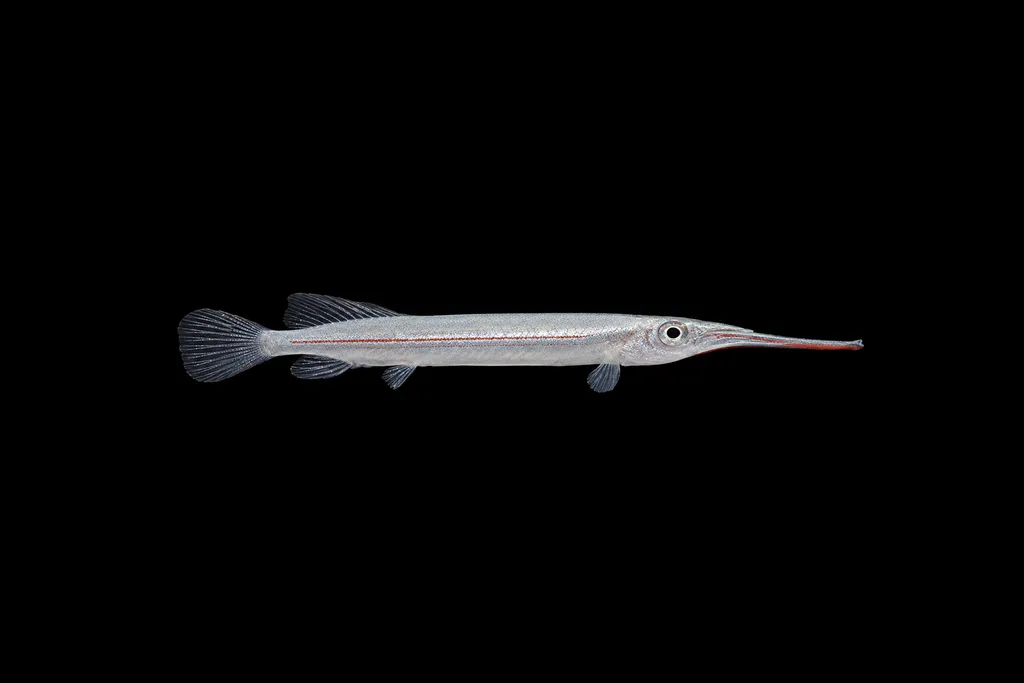
Fire halfbeak
Hemirhamphodon kapuasensis
Freshwater2.4 in (6 cm) · 14 gal (54 L)73–81°F (23–27°C)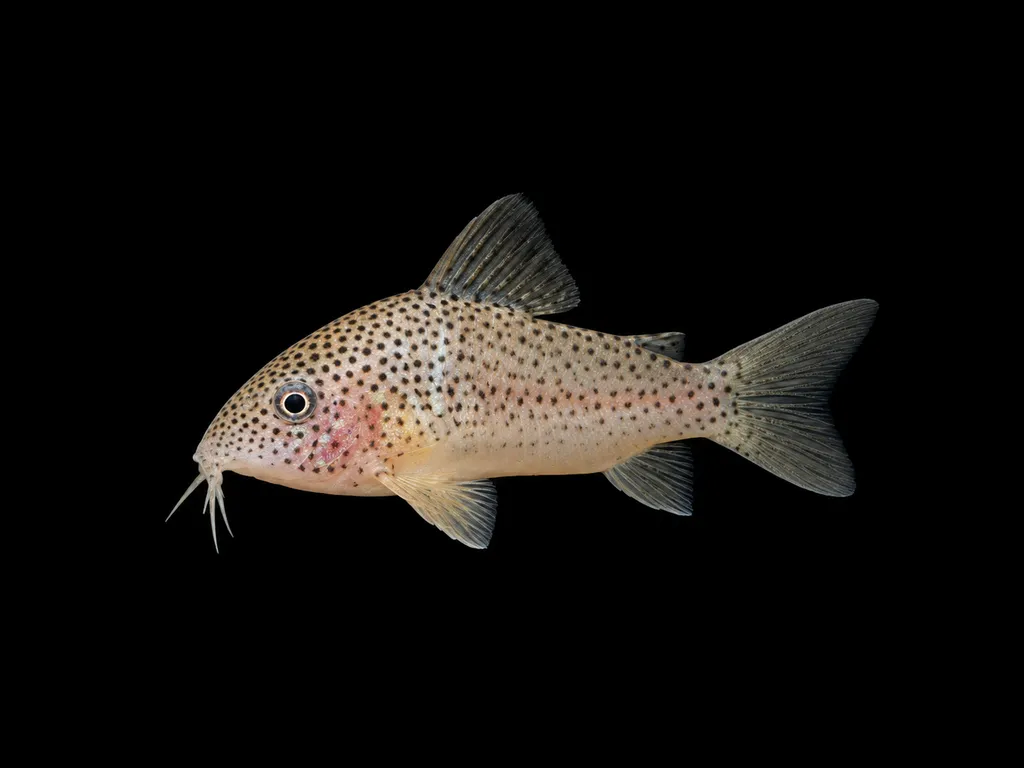
Apiaka cory
Hoplisoma apiaka
Freshwater1.8 in (4.5 cm) · 15 gal (55 L)75–82°F (24–28°C)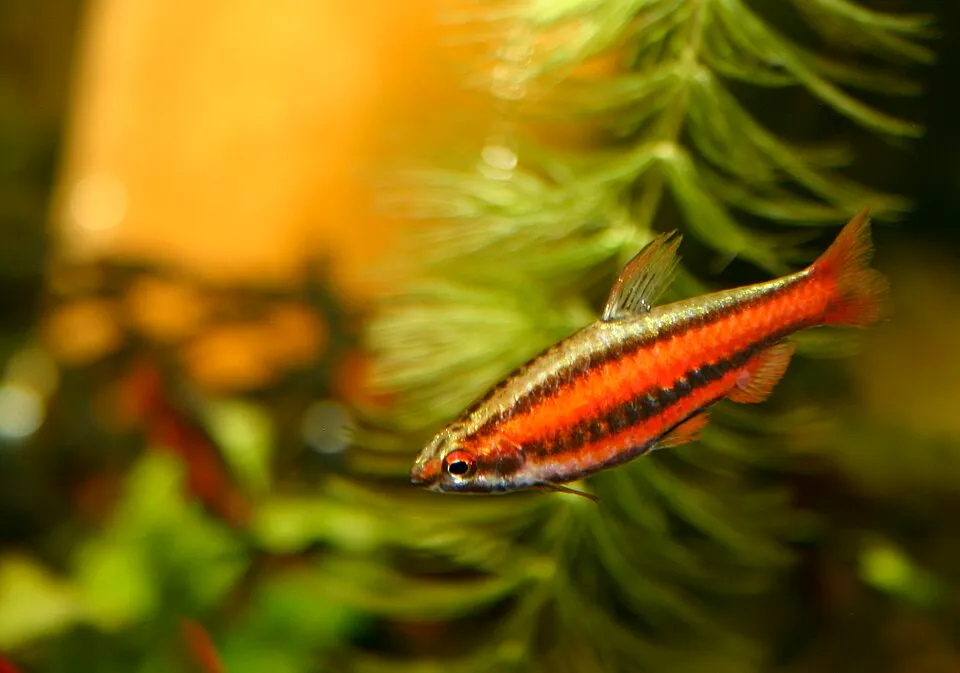
Coral red pencilfish
Nannostomus mortenthaleri
Freshwater1.2 in (3 cm) · 15 gal (55 L)75–82°F (24–28°C)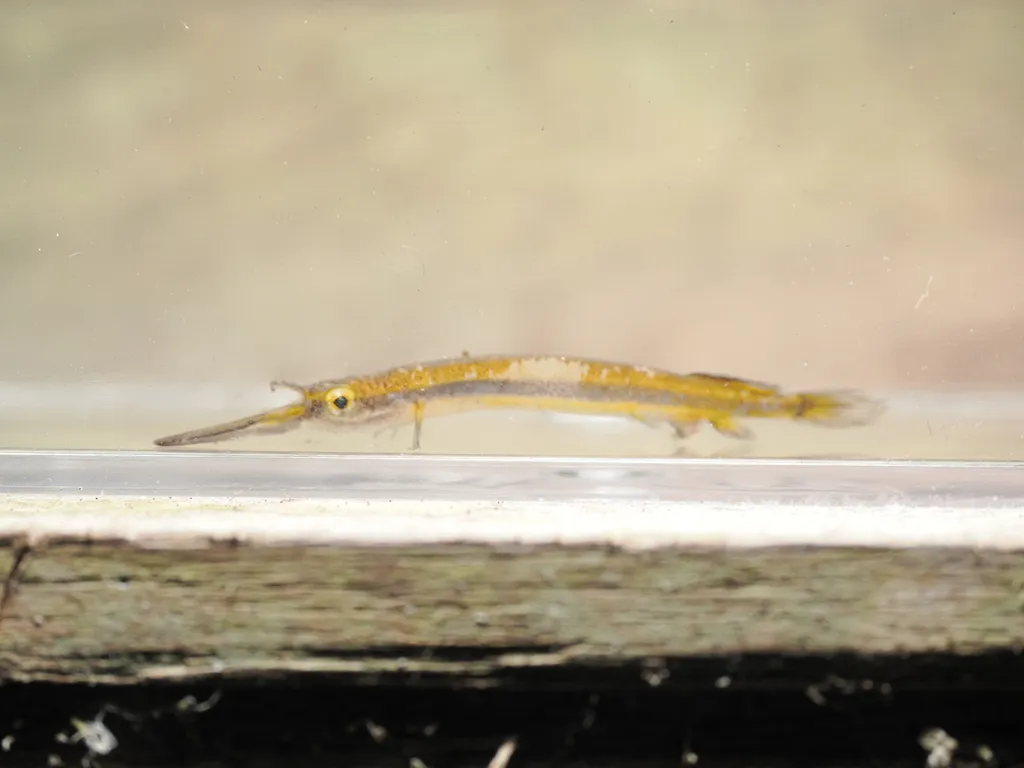
Gold-spotted halfbeak
Hemirhamphodon chrysopunctatus
Freshwater2.6 in (6.5 cm) · 14 gal (54 L)73–81°F (23–27°C)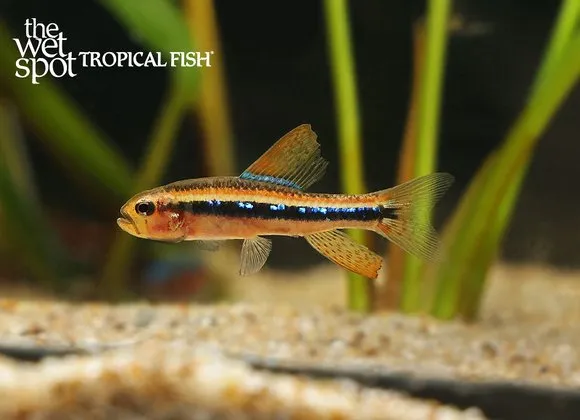
Black darter tetra
Poecilocharax weitzmani
Freshwater1.9 in (4.7 cm) · 14 gal (54 L)75–82°F (24–28°C)
Common questions
What size tank does a bridge dwarf cichlid need?
A bridge dwarf cichlid needs at least 15 gal (55 L). It spends most of its time in the bottom.
What temperature and pH does a bridge dwarf cichlid need?
A bridge dwarf cichlid is comfortable at 77–84°F (25–29°C) with a pH of 4.8–6.3.
What does a bridge dwarf cichlid eat?
A bridge dwarf cichlid eats small live and frozen foods, which bring it into condition. Dry food is hit or miss.
How big does a bridge dwarf cichlid get?
An adult bridge dwarf cichlid reaches about 1.8 in (4.5 cm).
How does a bridge dwarf cichlid breed?
A bridge dwarf cichlid spawns in a cave, and the female leads in the standard pattern. The eggs need very soft, acidic water to hatch reliably, and breeding is hard.
Related species
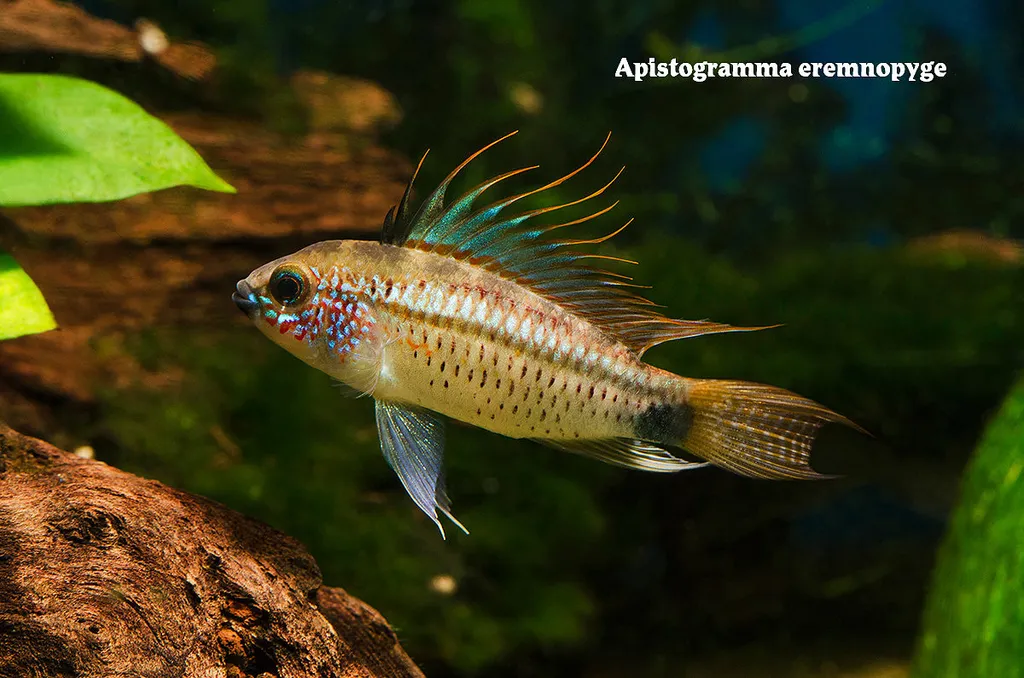 1.8 in (4.5 cm)16 gal (60 L)73–81°F (23–27°C)
Fire-tail dwarf cichlid
Apistogramma eremnopyge
1.8 in (4.5 cm) · 16 gal (60 L)
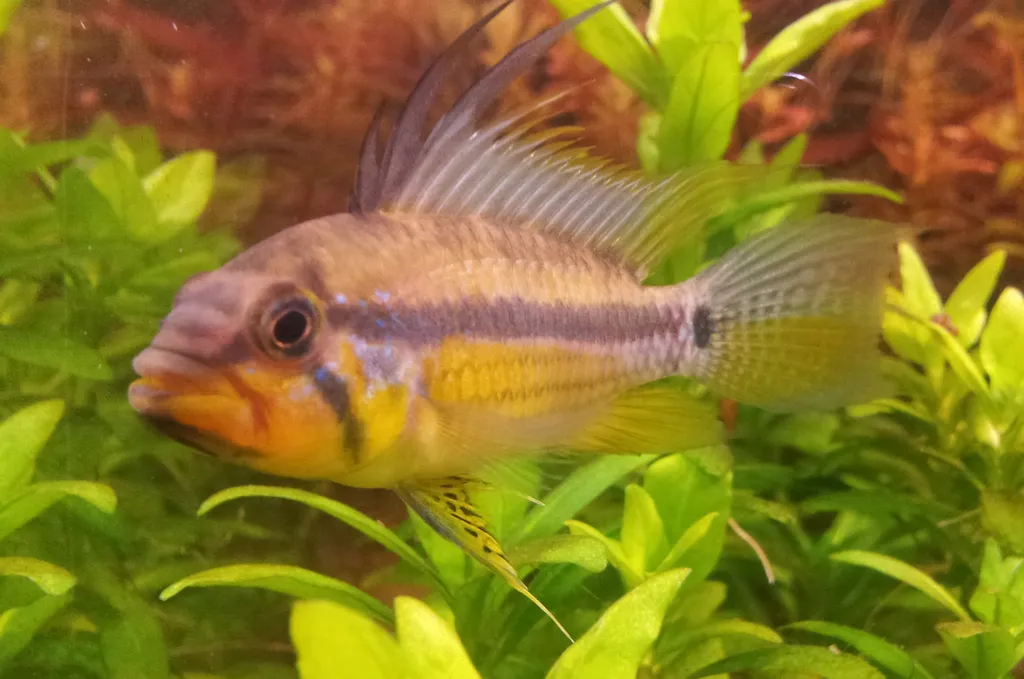 2 in (5 cm)16 gal (60 L)75–82°F (24–28°C)
Allpahuayo dwarf cichlid
Apistogramma allpahuayo
2 in (5 cm) · 16 gal (60 L)
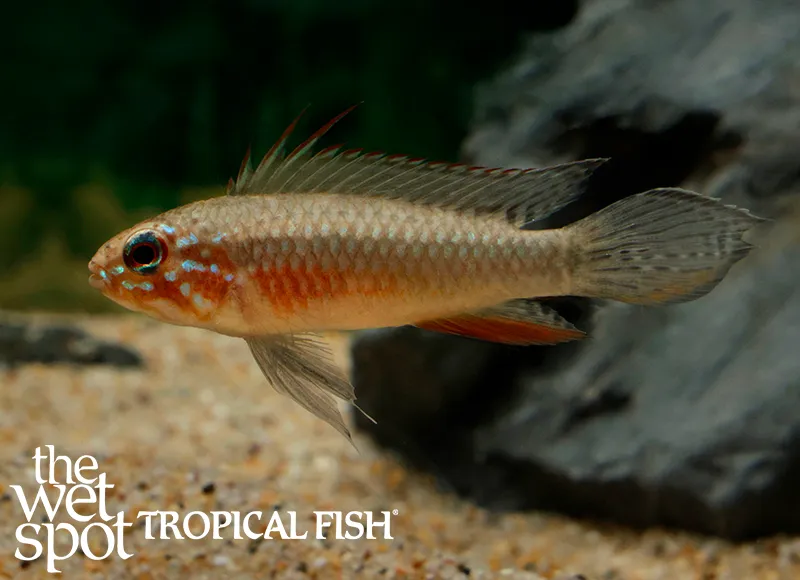 2 in (5 cm)20 gal (75 L)75–84°F (24–29°C)
Elizabeth's dwarf cichlid
Apistogramma elizabethae
2 in (5 cm) · 20 gal (75 L)
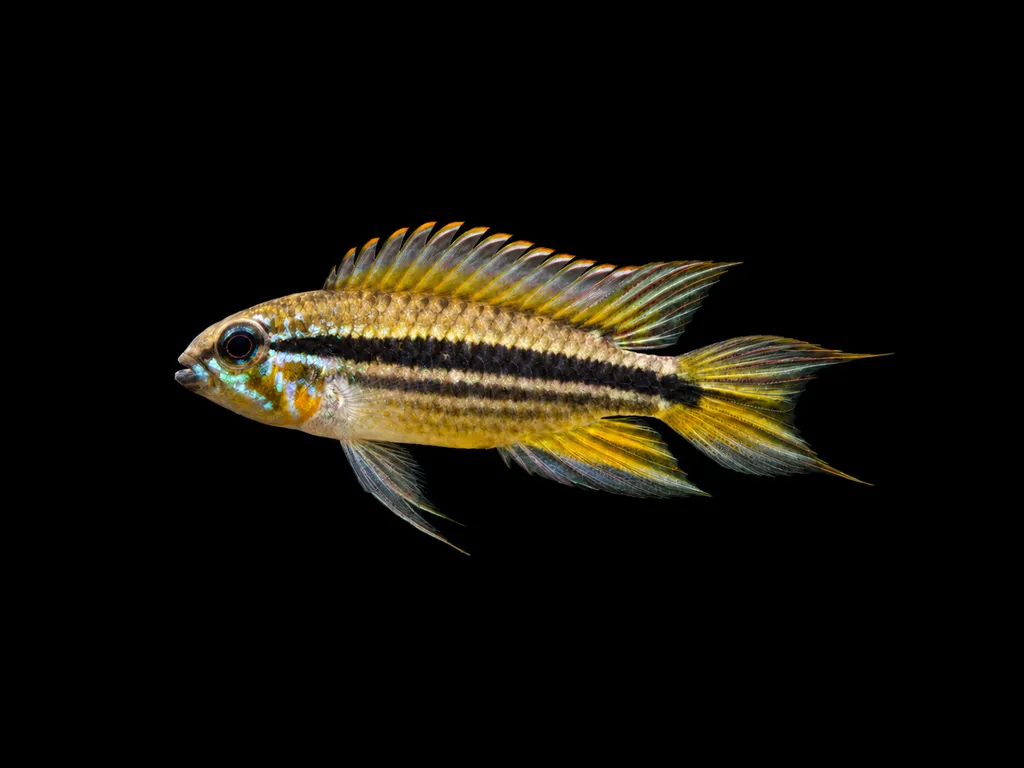 2 in (5 cm)16 gal (60 L)79–86°F (26–30°C)
Mendez's dwarf cichlid
Apistogramma mendezi
2 in (5 cm) · 16 gal (60 L)
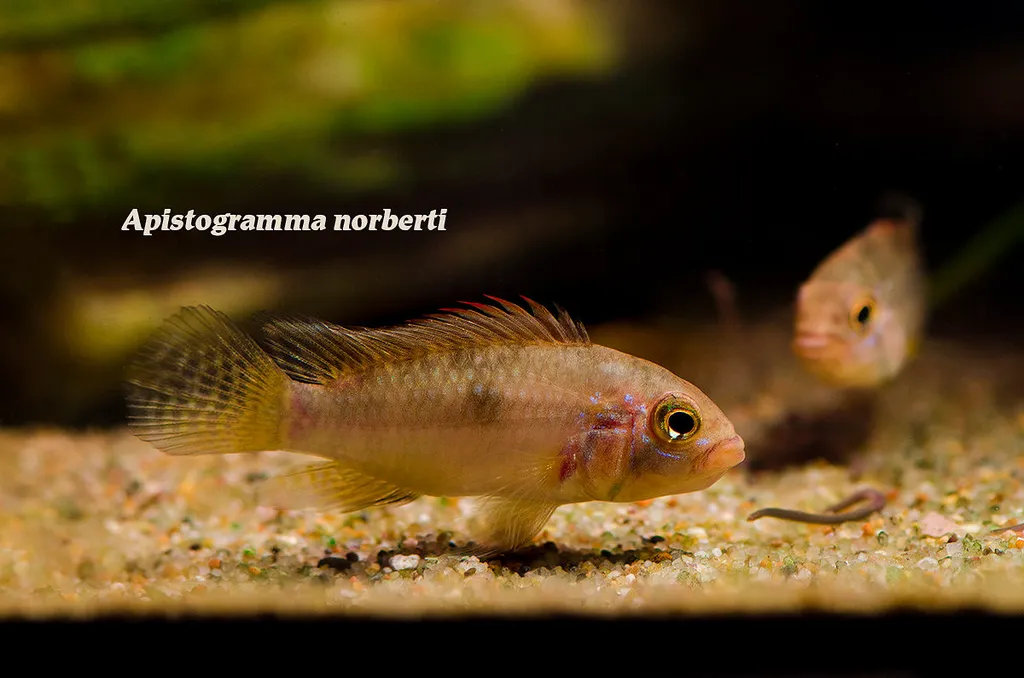 2 in (5 cm)16 gal (60 L)75–82°F (24–28°C)
Norbert's dwarf cichlid
Apistogramma norberti
2 in (5 cm) · 16 gal (60 L)
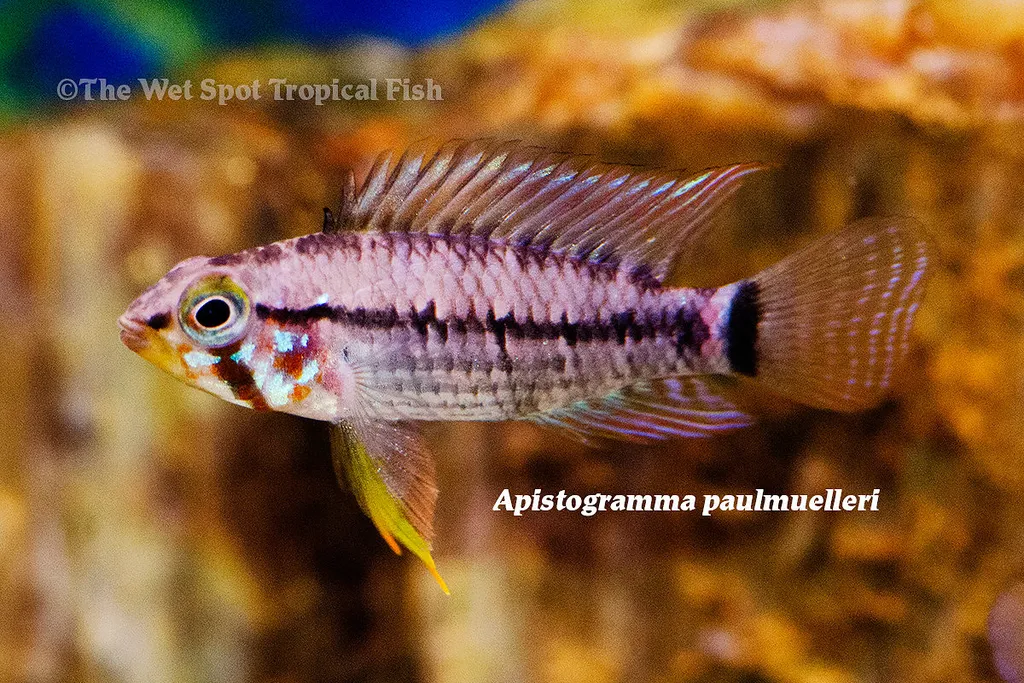 2 in (5 cm)16 gal (60 L)75–82°F (24–28°C)
Paul Mueller's dwarf cichlid
Apistogramma paulmuelleri
2 in (5 cm) · 16 gal (60 L)