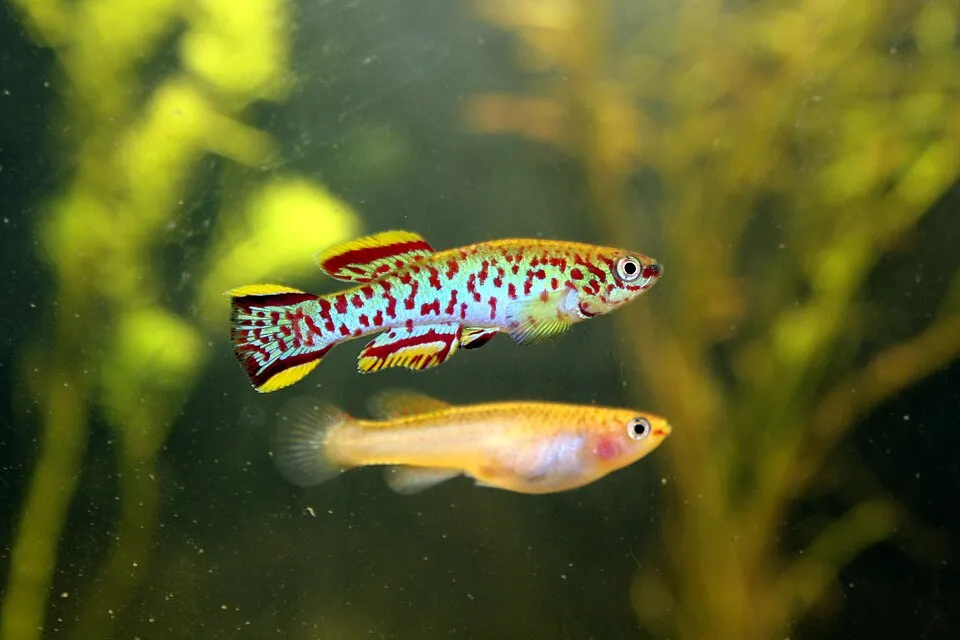
Steel blue killifish
Fundulopanchax gardneri
Also known as Gardneri Killi
FreshwaterFish
Care at a glance
- Temperature
- 70–79°F
- 21–26°C
- pH
- 6.5–7.5
- Adult size
- 2.2 in
- 5.5 cm
- Minimum tank
- 21 gal
- 80 L
- Temperament
- Mostly peaceful
- Social behavior
- Social
- Swim level
- Middle
- Difficulty
- Medium
- Breeding
- Easy
- Rarity
- Rare
- Family
- Nothobranchiidae
- Origin
- Nigeria, Cameroon
Overview
The steel blue killifish is one of the easiest killifish for a first-timer, hardy and forgiving in a quiet planted tank. Keep it as a pair or as one male with two or three females, since males glow steel blue and yellow and can chase both rivals and lone females. Feed live and frozen foods such as bloodworms, brine shrimp, daphnia and blackworms, with some flake taken readily. It occupies the middle water among the plants and appreciates a tight lid, as killifish jump. A tank of 80 liters or larger comfortably houses a small group.
In the wild
Fundulopanchax gardneri comes from streams, pools and swampy places across Nigeria and Cameroon, often in savannah and forest-edge country. Many of these waters are soft and slightly acidic to neutral, warm and well vegetated. Recreate this with a planted, gently filtered tank, some cover and warm water from about 21 to 26 C, with a pH around 6.5 to 7.5. It is adaptable and tolerates a fair range of conditions as long as the water is clean, which is part of why it is such a good beginner killifish.
Good to know
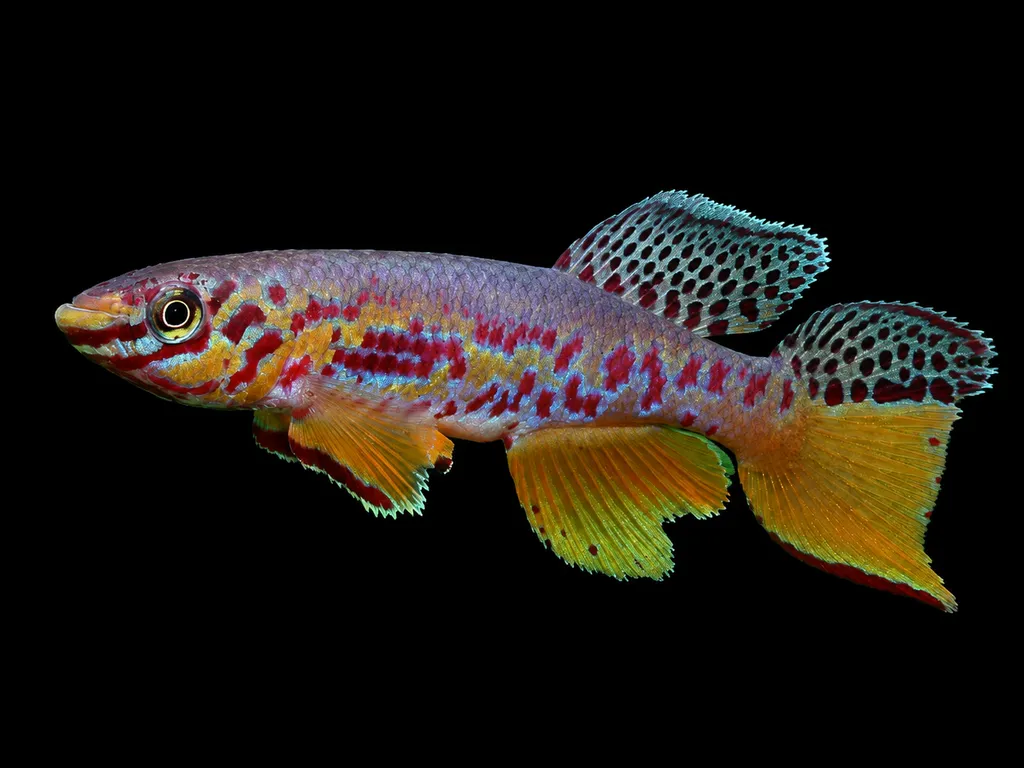
The steel blue killifish is an African species in the family Nothobranchiidae, reaching about 5.5 cm, with bright steel-blue males patterned in red spots and yellow-edged fins. Despite belonging to a family full of annual species, it is non-annual and does not need a dry season. The pair scatter eggs among plants and spawning mops, and the eggs hatch in water in roughly two to three weeks. Breeding is rated easy, which is why it is often the first killifish people spawn.
Did you know
The steel blue killifish is widely seen as a first killifish to try. It is not annual, so it breeds in a normal planted tank without any dry-storage of eggs, and a pair will often fill a spawning mop with eggs that simply hatch in water.
Weekly picks
Tank mates
Steel blue killifish is a mostly peaceful, social species that keeps to the middle. These picks share a community profile with it, are safe together in both directions, and overlap on water type, temperature and pH.
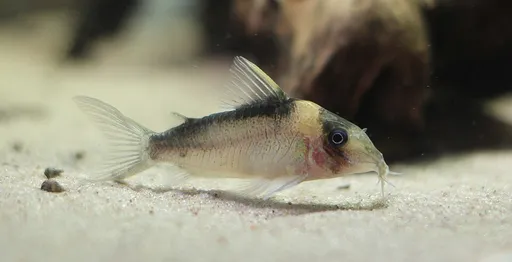
Imitator cory
Brochis imitator
Freshwater2.6 in (6.5 cm) · 21 gal (80 L)72–79°F (22–26°C)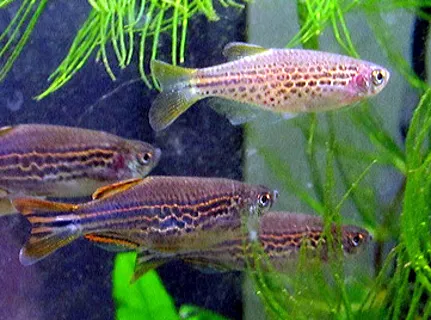
Orange-finned danio
Danio kyathit
Freshwater2 in (5 cm) · 20 gal (75 L)68–79°F (20–26°C)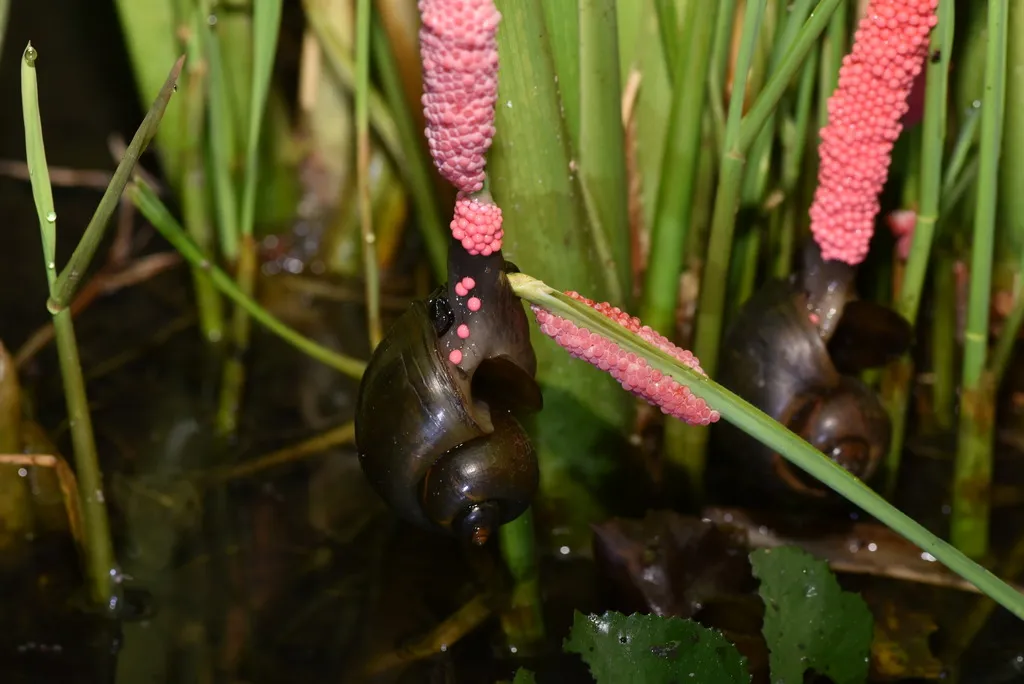
Apple snail
Pomacea canaliculata
Freshwater5.9 in (15 cm) · 21 gal (80 L)64–81°F (18–27°C)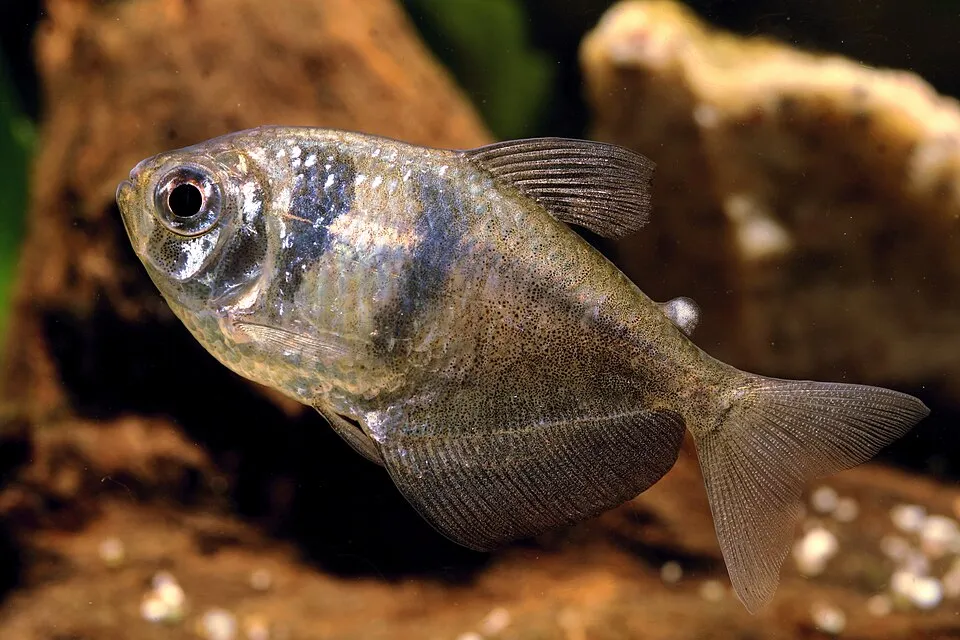
Black widow tetra
Gymnocorymbus ternetzi
Freshwater2.4 in (6 cm) · 20 gal (75 L)68–79°F (20–26°C)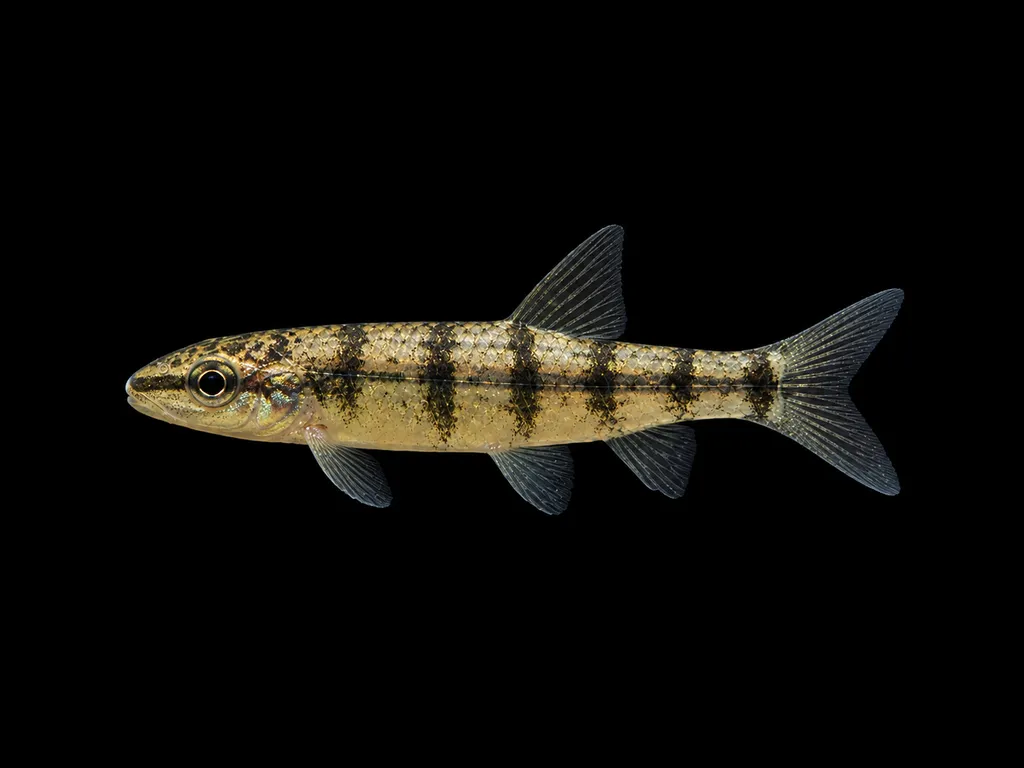
Banded darter tetra
Nannocharax fasciatus
Freshwater2.6 in (6.5 cm) · 21 gal (80 L)73–82°F (23–28°C)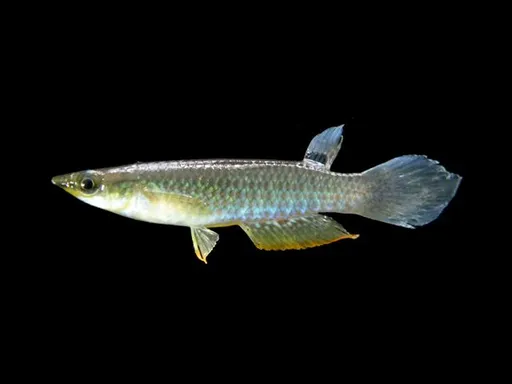
Blue panchax
Aplocheilus panchax
Freshwater3.5 in (9 cm) · 20 gal (75 L)72–82°F (22–28°C)
Common questions
What size tank does a Steel blue killifish need?
A Steel blue killifish needs at least 21 gal (80 L). It spends most of its time in the middle.
What temperature and pH does a Steel blue killifish need?
A Steel blue killifish is comfortable at 70–79°F (21–26°C) with a pH of 6.5–7.5.
How big does a Steel blue killifish get?
An adult Steel blue killifish reaches about 2.2 in (5.5 cm).
Related species
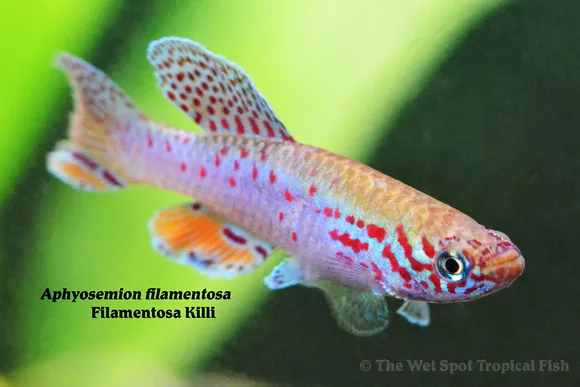 2.4 in (6 cm)20 gal (75 L)68–75°F (20–24°C)
Plumed lyretail
Fundulopanchax filamentosus
2.4 in (6 cm) · 20 gal (75 L)
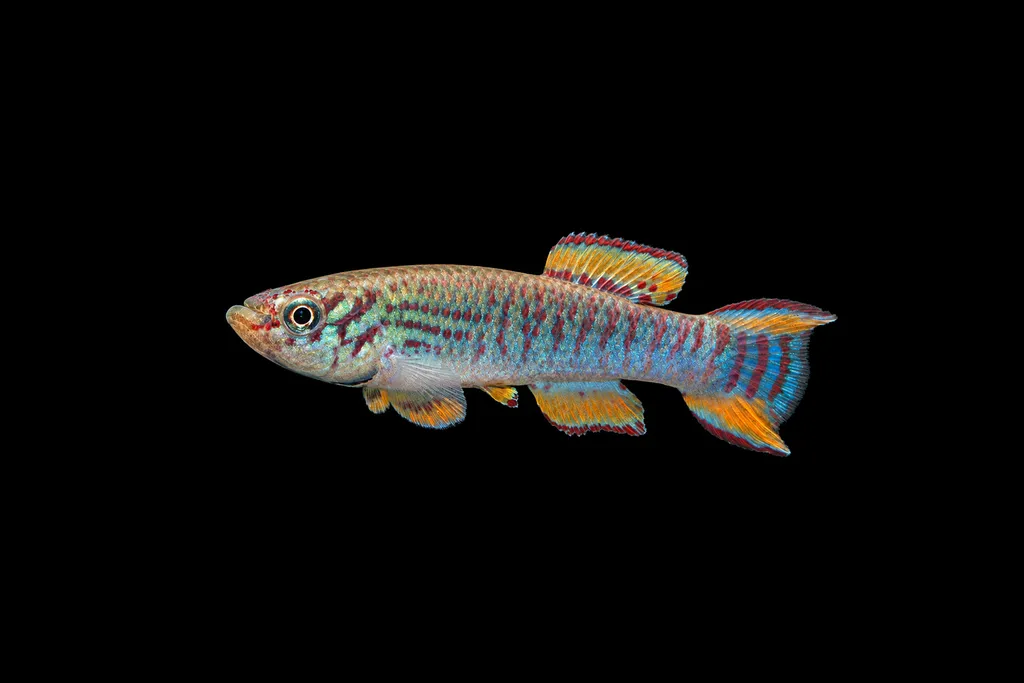 2.4 in (6 cm)14 gal (54 L)68–77°F (20–25°C)
Walker's killifish
Fundulopanchax walkeri
2.4 in (6 cm) · 14 gal (54 L)
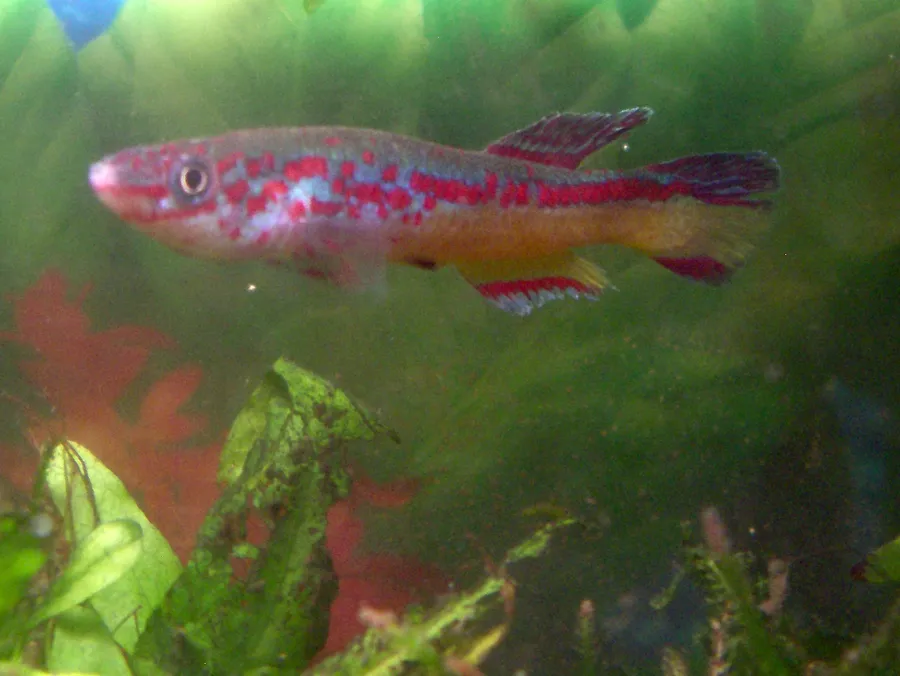 2.8 in (7 cm)14 gal (54 L)68–77°F (20–25°C)
Amiet's lyretail
Fundulopanchax amieti
2.8 in (7 cm) · 14 gal (54 L)
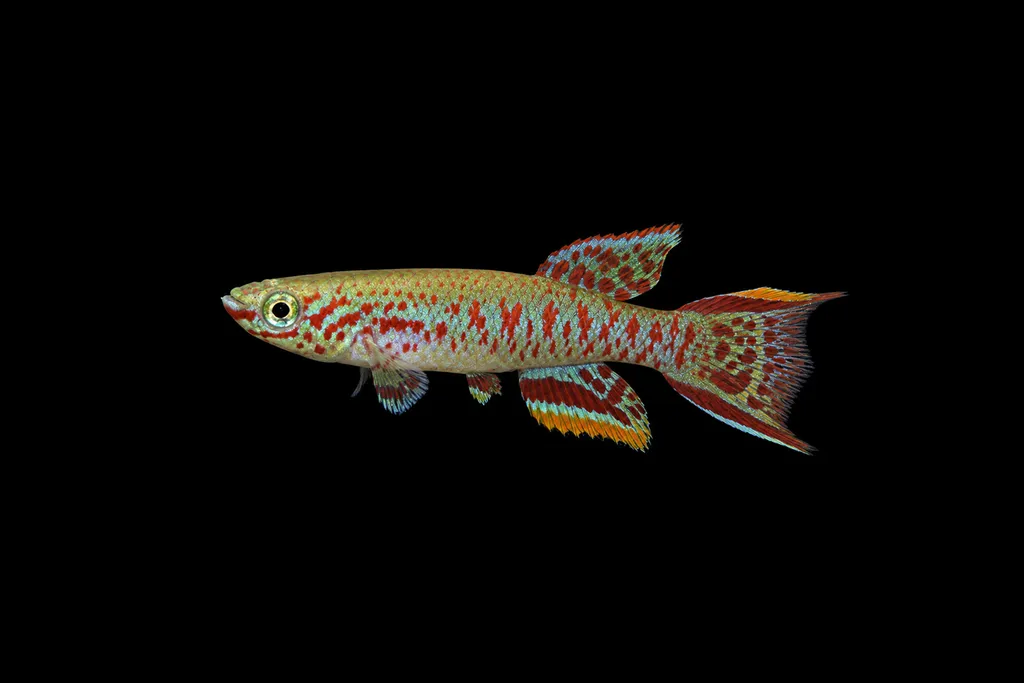 3 in (7.5 cm)14 gal (54 L)68–77°F (20–25°C)
Arnold's killifish
Fundulopanchax arnoldi
3 in (7.5 cm) · 14 gal (54 L)
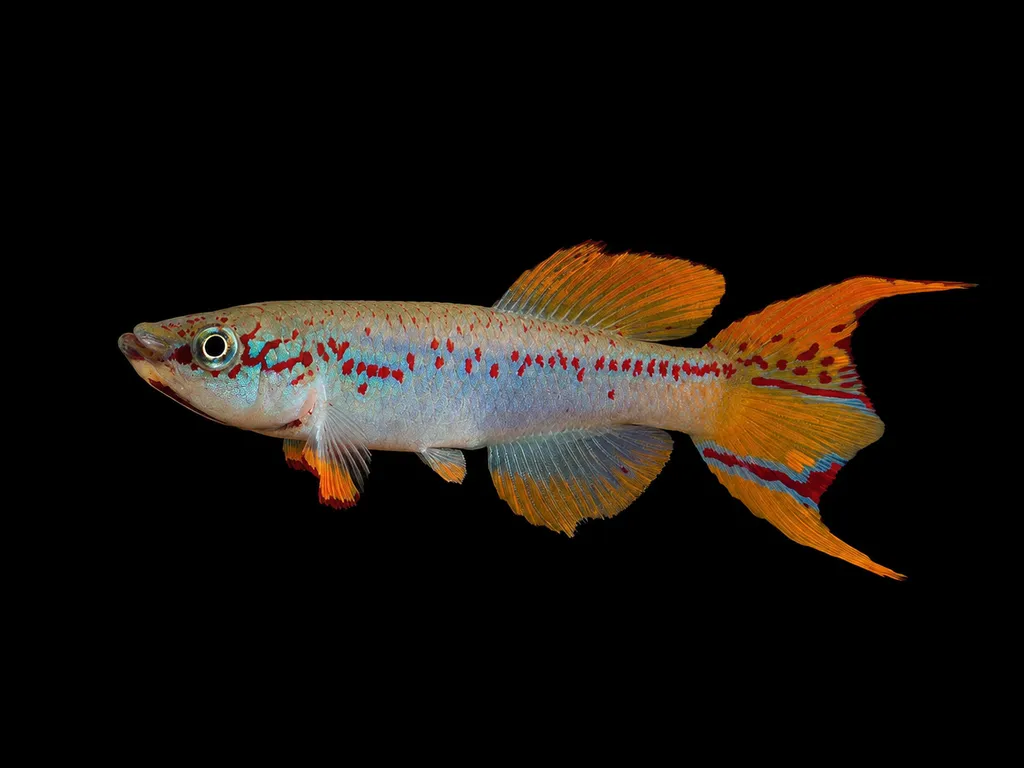 3.1 in (8 cm)14 gal (54 L)68–77°F (20–25°C)
Delta killifish
Fundulopanchax deltaensis
3.1 in (8 cm) · 14 gal (54 L)
 3.5 in (9 cm)14 gal (54 L)68–77°F (20–25°C)
Fallax killifish
Fundulopanchax fallax
3.5 in (9 cm) · 14 gal (54 L)