Plumed lyretail
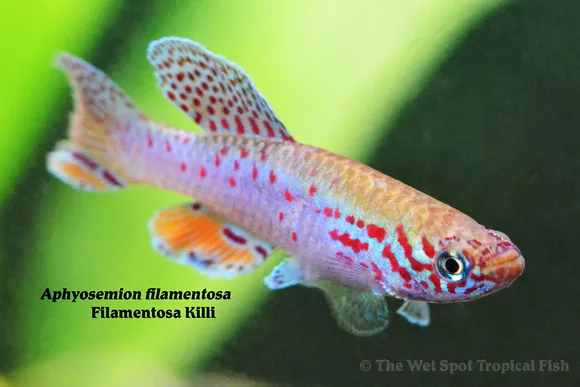
Fundulopanchax filamentosus
Also known as Plumed lyretail killifish, Filament killie, Aphyosemion filamentosum
FreshwaterFish
Care at a glance
- Temperature
- 68–75°F
- 20–24°C
- pH
- 6.0–7.0
- Adult size
- 2.4 in
- 6 cm
- Minimum tank
- 20 gal
- 75 L
- Temperament
- Mostly peaceful
- Social behavior
- Social
- Swim level
- Middle
- Difficulty
- Medium
- Breeding
- Medium
- Rarity
- Rare
- Family
- Nothobranchiidae
- Origin
- Native to shallow forest and savanna waters in Togo, Benin, and southwestern Nigeria in West Africa.
Overview
A trio or small harem does well in a planted 75 litre species tank at 20 to 24 C and soft, slightly acidic water around pH 6.0 to 7.0. Males show off to each other but rarely cause real harm when there is room and cover. Feed live and frozen foods such as bloodworm, white worm, brine shrimp, and daphnia, with some dry food accepted. Spawn on fine plants or coconut fibre and incubate the eggs damp.
In the wild
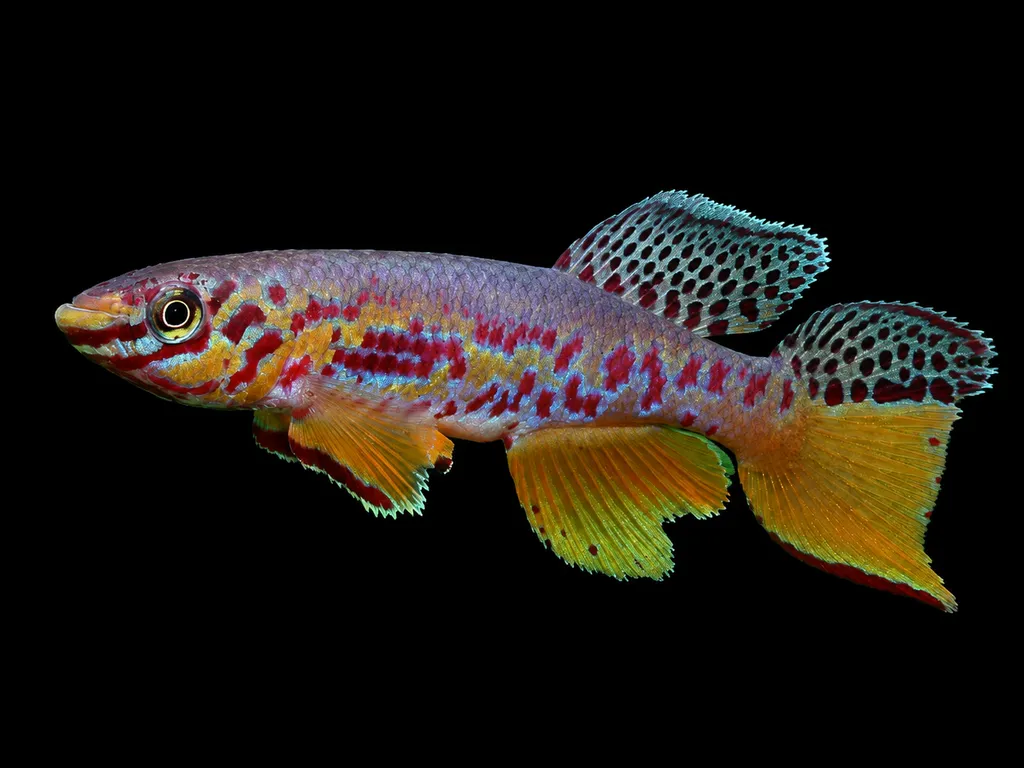
It occupies small, often shaded pools, ditches, and slow streams in the coastal lowlands of West Africa. Males are bright, with rows of red spots on a blue-green body and extended lyre-shaped tail points, while females are tan. Give it a well planted, dimly lit tank with floating cover and a firm lid.
Good to know
Fundulopanchax filamentosus is a non-annual killifish that lives longer than the true annual species and does not need its eggs to dry out completely. It is a switch spawner, able to lay eggs on plants or in the substrate depending on conditions. Eggs are usually incubated damp for six to ten weeks before wetting triggers hatching.
Did you know
It can spawn either on plants or buried in the bottom, hedging its bets so at least some eggs survive whether the pool dries out or not.
Weekly picks
Tank mates
Plumed lyretail is a mostly peaceful, social species that keeps to the middle. These picks share a community profile with it, are safe together in both directions, and overlap on water type, temperature and pH.
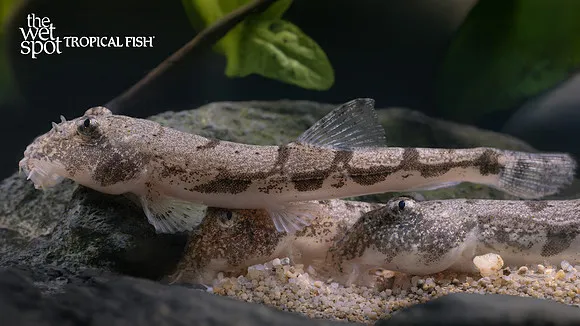
Chinese butterfly loach
Pseudogastromyzon cheni
Freshwater2.4 in (6 cm) · 20 gal (75 L)64–75°F (18–24°C)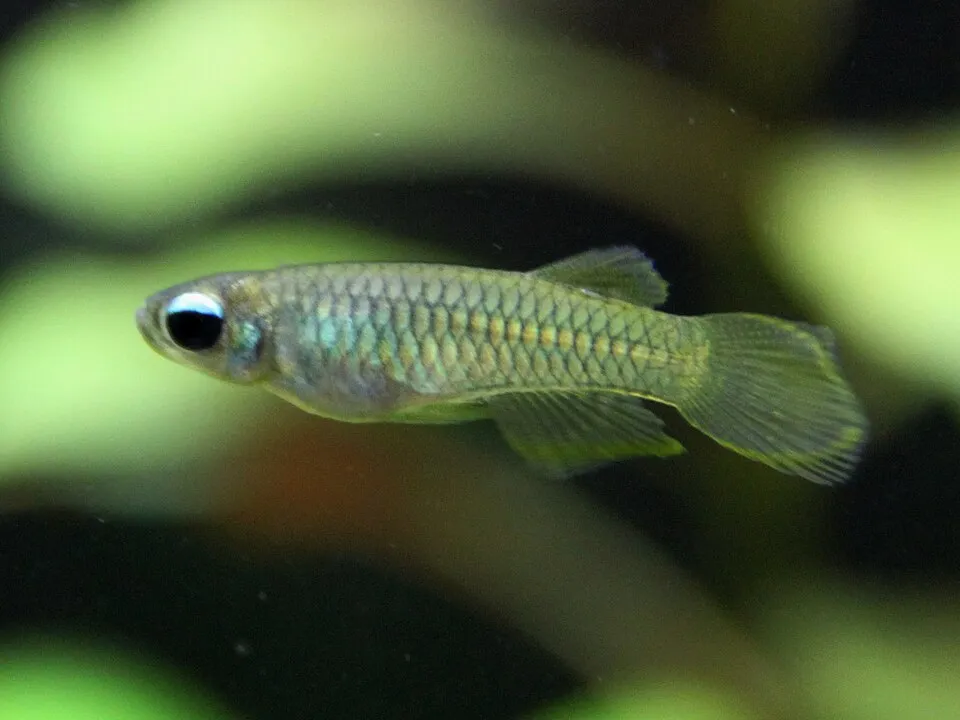
Norman's lampeye
Poropanchax normani
Freshwater1.6 in (4 cm) · 20 gal (75 L)72–79°F (22–26°C)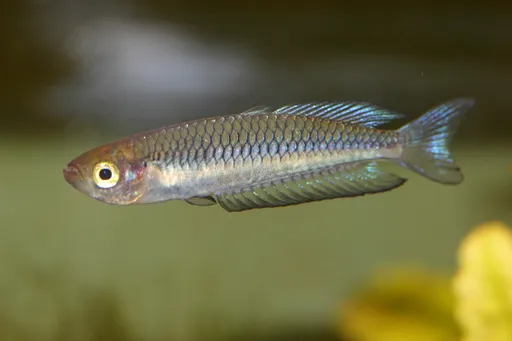
Ornate rainbowfish
Rhadinocentrus ornatus
Freshwater2.4 in (6 cm) · 20 gal (75 L)64–82°F (18–28°C)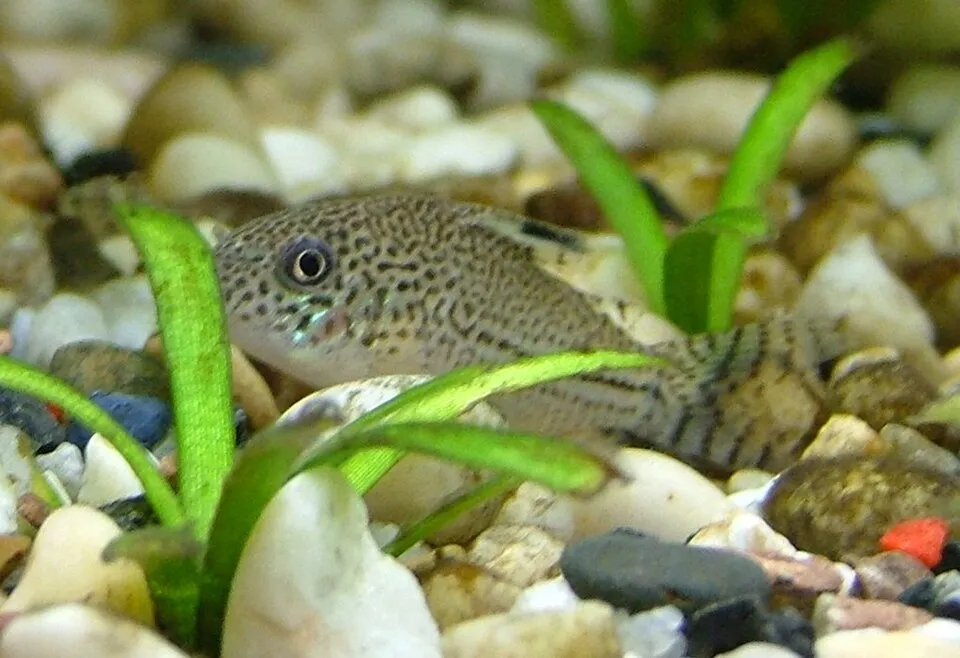
Julii cory
Hoplisoma julii
Freshwater2.2 in (5.5 cm) · 20 gal (75 L)68–79°F (20–26°C)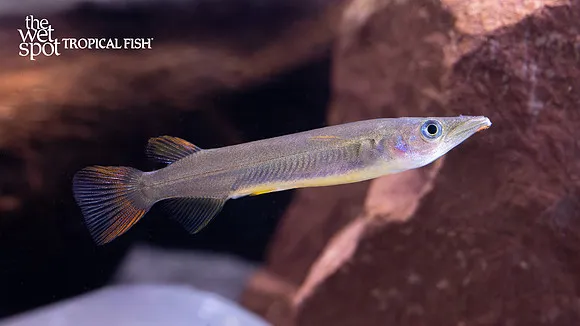
Rex halfbeak
Nomorhamphus rex
Freshwater2.2 in (5.5 cm) · 20 gal (75 L)72–79°F (22–26°C)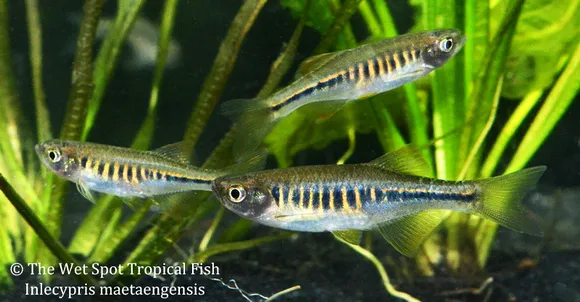
Fire bar danio
Devario maetaengensis
Freshwater2.4 in (6 cm) · 20 gal (75 L)64–77°F (18–25°C)
Common questions
What size tank does a Plumed lyretail need?
A Plumed lyretail needs at least 20 gal (75 L). It spends most of its time in the middle.
What temperature and pH does a Plumed lyretail need?
A Plumed lyretail is comfortable at 68–75°F (20–24°C) with a pH of 6.0–7.0.
How big does a Plumed lyretail get?
An adult Plumed lyretail reaches about 2.4 in (6 cm).
Related species
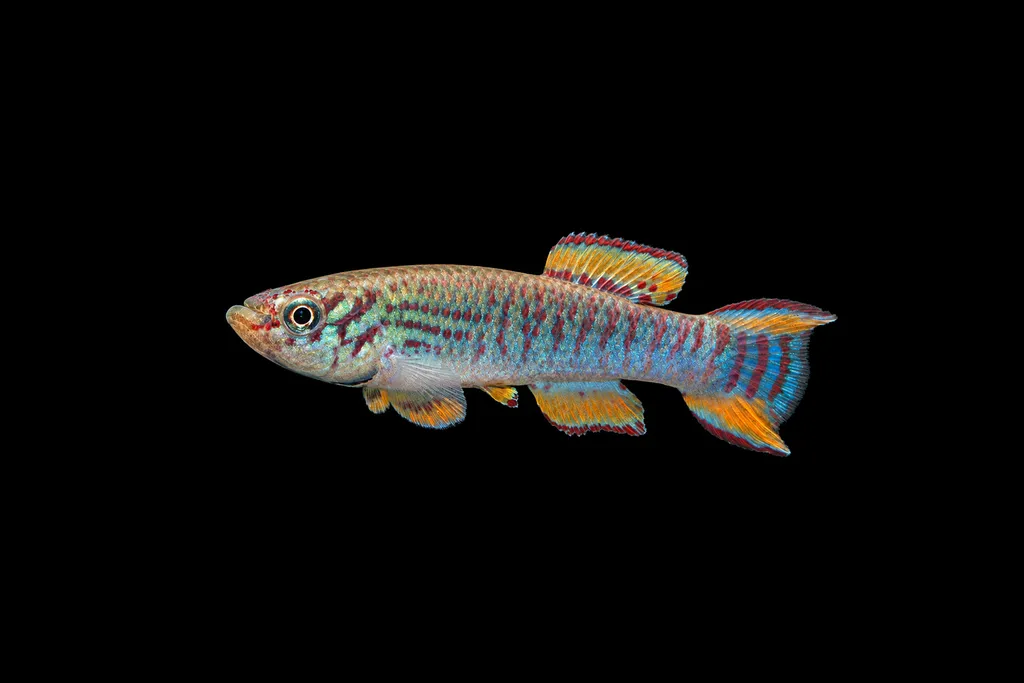 2.4 in (6 cm)14 gal (54 L)68–77°F (20–25°C)
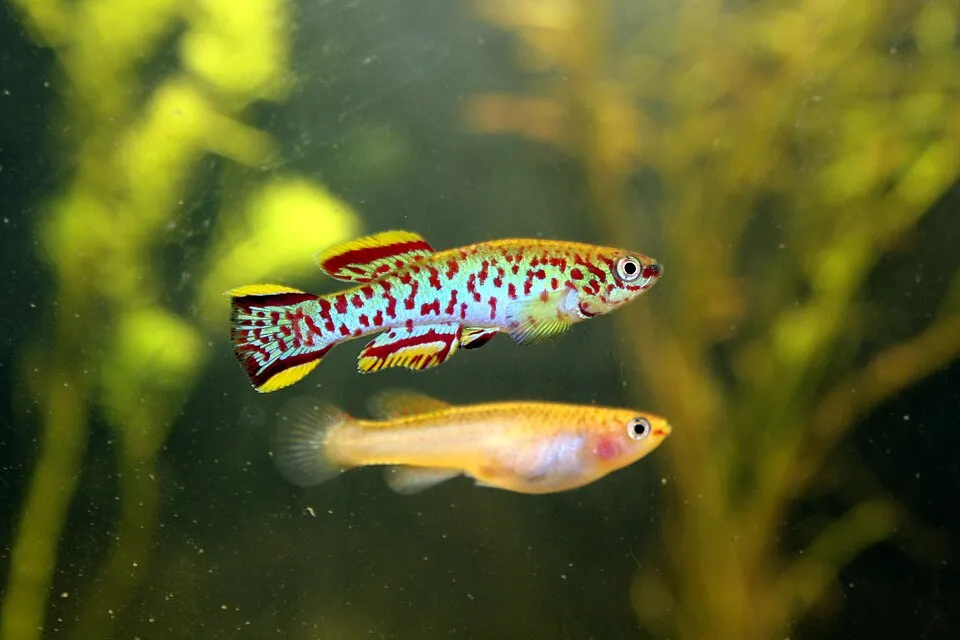
Walker's killifish
Fundulopanchax walkeri
2.4 in (6 cm) · 14 gal (54 L)
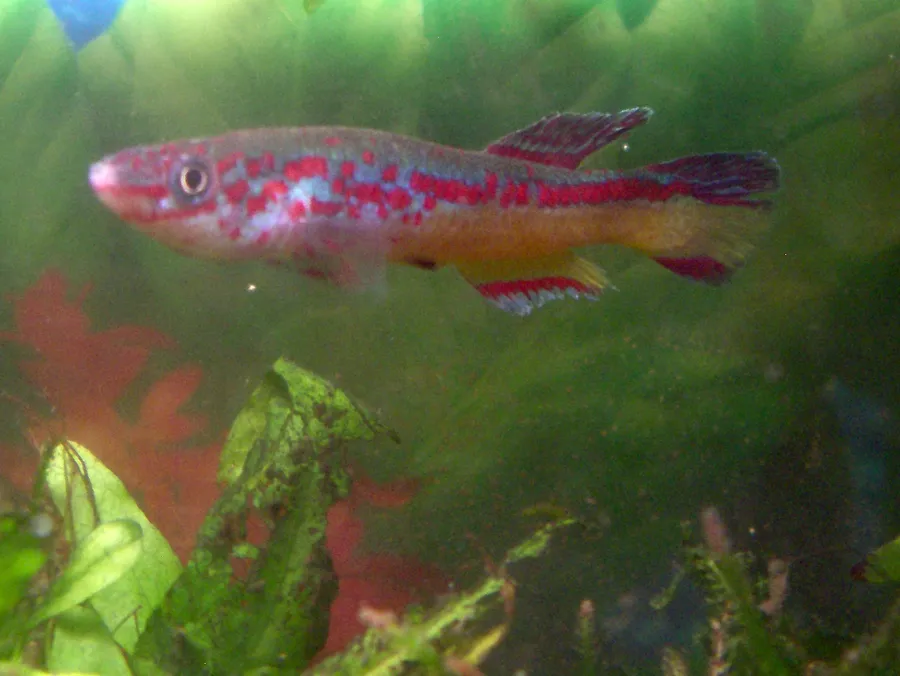
 2.2 in (5.5 cm)21 gal (80 L)70–79°F (21–26°C)
Steel blue killifish
Fundulopanchax gardneri
2.2 in (5.5 cm) · 21 gal (80 L)
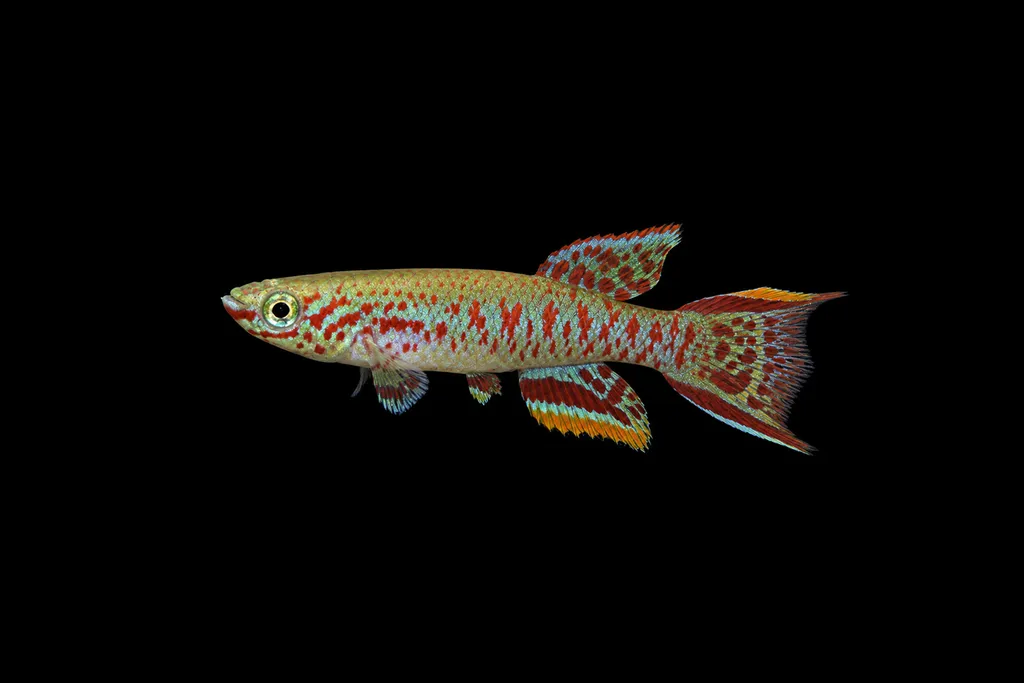
 2.8 in (7 cm)14 gal (54 L)68–77°F (20–25°C)
Amiet's lyretail
Fundulopanchax amieti
2.8 in (7 cm) · 14 gal (54 L)
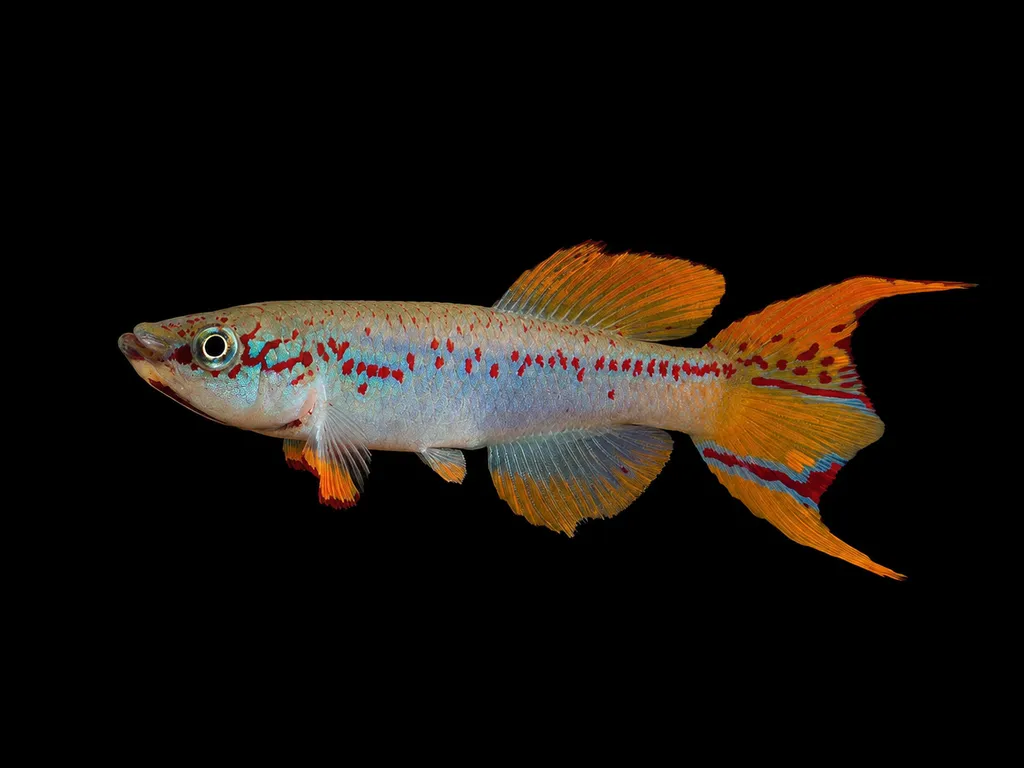
 3 in (7.5 cm)14 gal (54 L)68–77°F (20–25°C)
Arnold's killifish
Fundulopanchax arnoldi
3 in (7.5 cm) · 14 gal (54 L)
 3.1 in (8 cm)14 gal (54 L)68–77°F (20–25°C)
Delta killifish
Fundulopanchax deltaensis
3.1 in (8 cm) · 14 gal (54 L)
 3.5 in (9 cm)14 gal (54 L)68–77°F (20–25°C)
Fallax killifish
Fundulopanchax fallax
3.5 in (9 cm) · 14 gal (54 L)