Arnold's killifish
Fundulopanchax arnoldi
Also known as Arnoldi killi
FreshwaterFish
Care at a glance
- Temperature
- 68–77°F
- 20–25°C
- pH
- 5.5–7.0
- Adult size
- 3 in
- 7.5 cm
- Minimum tank
- 14 gal
- 54 L
- Temperament
- Mostly peaceful
- Social behavior
- Social
- Swim level
- Middle
- Difficulty
- Medium
- Breeding
- Egg burier · Medium
- Rarity
- Rare
- Family
- Nothobranchiidae
- Origin
- Niger Delta, Nigeria
Overview
Arnold's killifish is a robust, brightly colored killi for a dark, planted tank. It suits a keeper with a little experience.
Did you know
Arnold's killifish is named for Johann Paul Arnold, a German aquarist who helped popularize killifish keeping in the early twentieth century. The hobby around these fish is now more than a hundred years old.
Caring for the Arnold's killifish
A pair of Arnold's killifish does well in a tank of at least 14 gal (54 L), more if you keep several females. Use a dark, heavily planted tank with wood, plenty of cover and floating plants to soften the light. Keep the flow gentle. It is a determined jumper, so a tight cover is essential.
Aim for soft, acidic to neutral water at 68 to 77°F (20 to 25°C) and a pH of 5.5 to 7.0. Adding leaves or peat holds the color and chemistry it likes. Offer a varied diet of live and frozen brine shrimp, daphnia, bloodworm, tubifex and whiteworm, and it accepts some dry food too.
Keep a pair, or a small harem of one male to two or more females. It is mostly peaceful and keeps to the middle and lower levels among plants and wood. It suits a quiet species tank, or the company of small, gentle fish that will not outcompete it at feeding time.
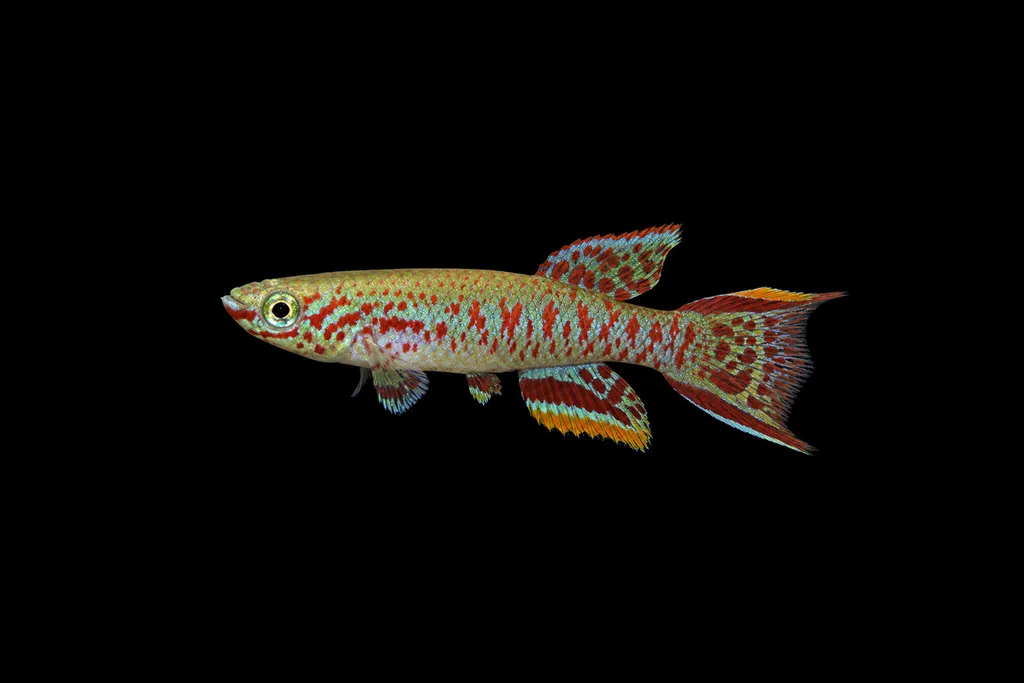
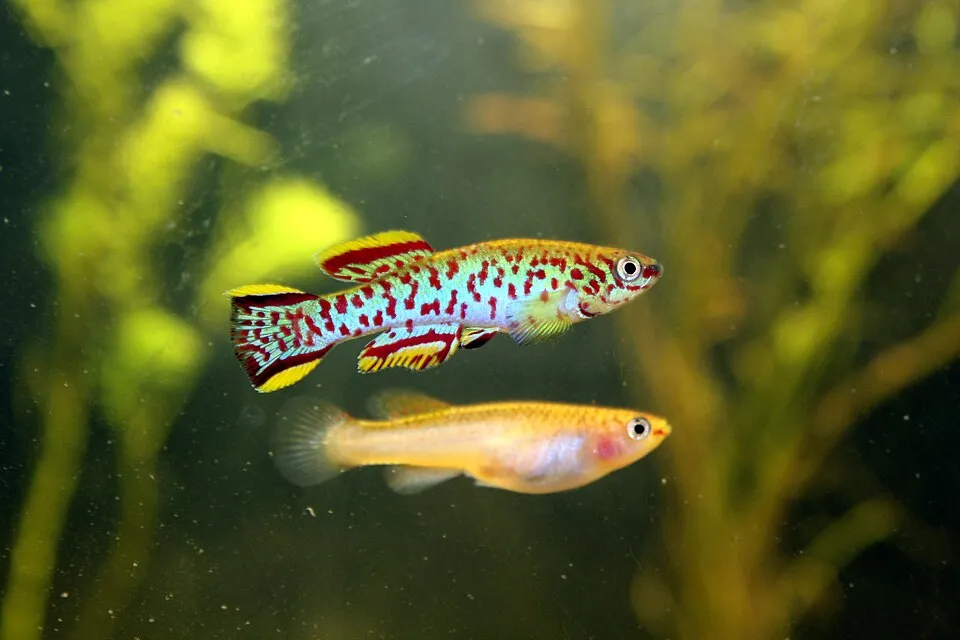
The male is far more colorful than the plainer female. Arnold's killifish is a semi-annual soil spawner, laying its eggs into peat. The eggs get a semi-dry incubation of several weeks before hatching, which puts breeding at a moderate level of effort.
Good to know
Fundulopanchax arnoldi is a member of the family Nothobranchiidae. Well-kept adults can live two to three years, which is long for a fish tied to seasonal water.
In the wild
Arnold's killifish is largely restricted to the swampy fringes of the Niger Delta in Nigeria. It lives in slow, soft, tannin-stained water over leaf litter.
Weekly picks
Tank mates
The Arnold's killifish is a mostly peaceful, social species that keeps to the middle. These picks share a community profile with it, are safe together in both directions, and overlap on water type, temperature and pH.
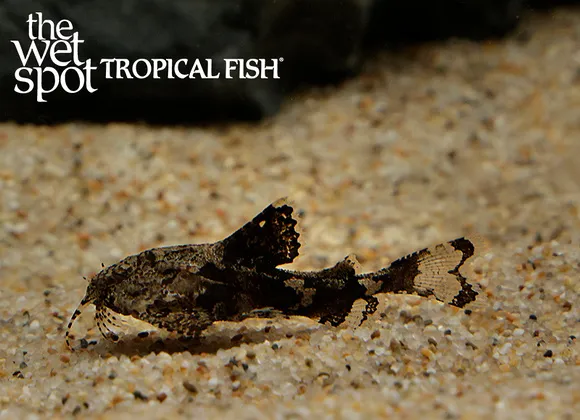
Butterfly hara catfish
Hara hara
Freshwater3.1 in (8 cm) · 14 gal (54 L)68–79°F (20–26°C)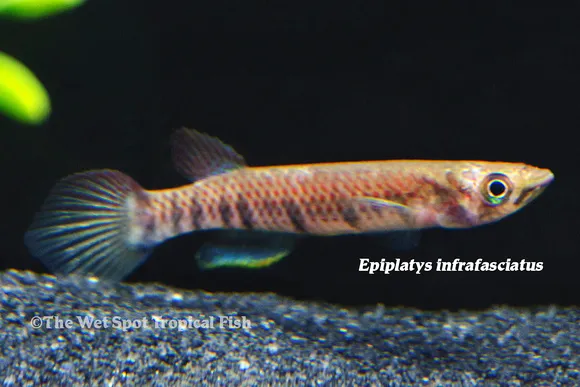
Infrafasciatus killifish
Epiplatys infrafasciatus
Freshwater2.4 in (6 cm) · 14 gal (54 L)68–77°F (20–25°C)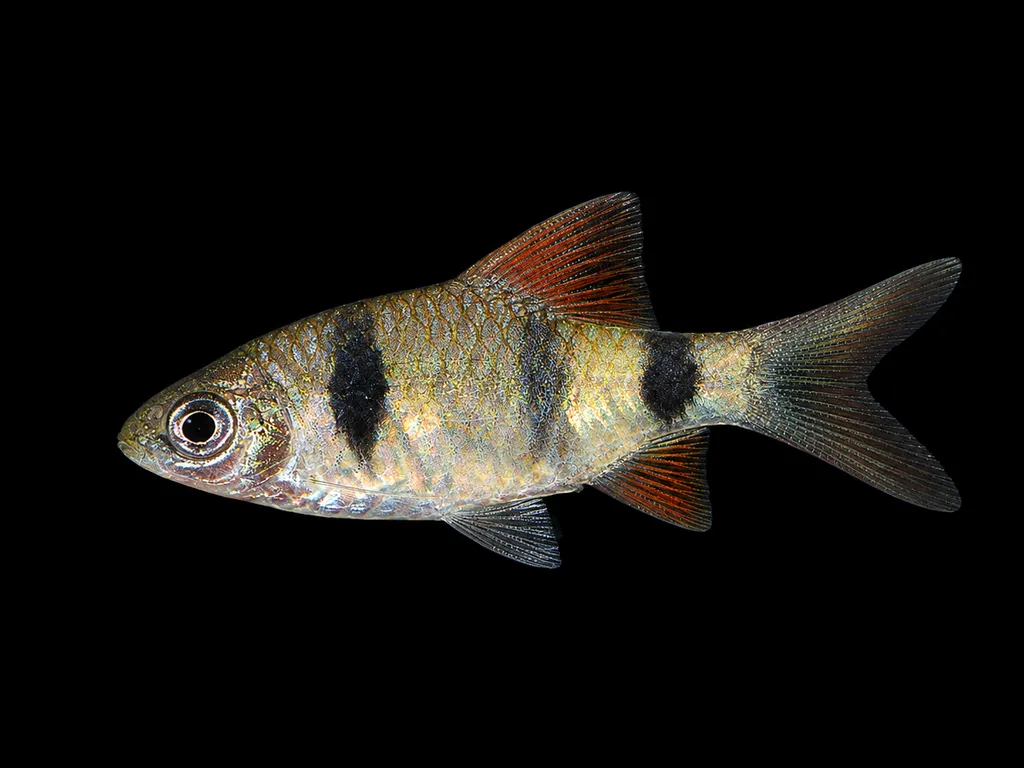
Narayan barb
Pethia narayani
Freshwater1.8 in (4.5 cm) · 14 gal (54 L)68–77°F (20–25°C)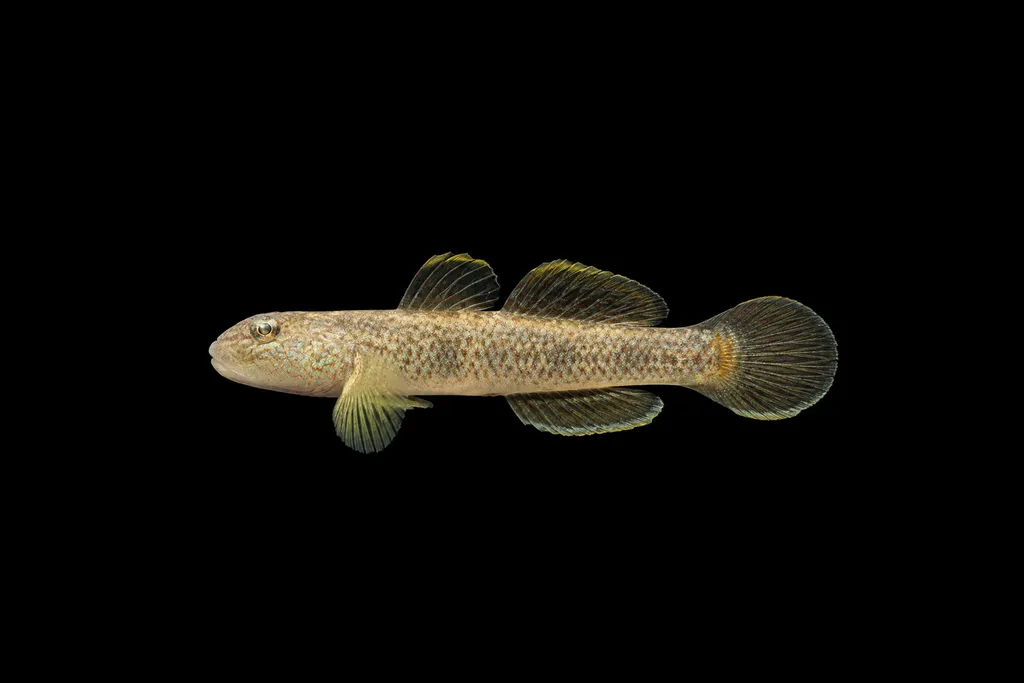
Yellow fin rhinogobius
Rhinogobius leavelli
Freshwater3.1 in (8 cm) · 14 gal (54 L)64–77°F (18–25°C)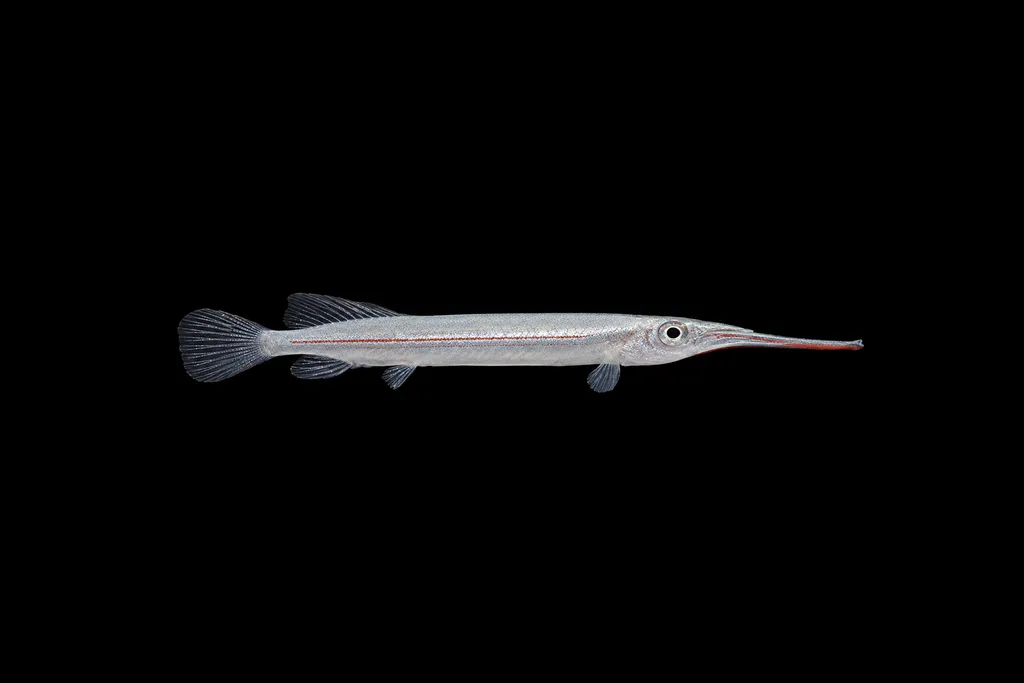
Fire halfbeak
Hemirhamphodon kapuasensis
Freshwater2.4 in (6 cm) · 14 gal (54 L)73–81°F (23–27°C)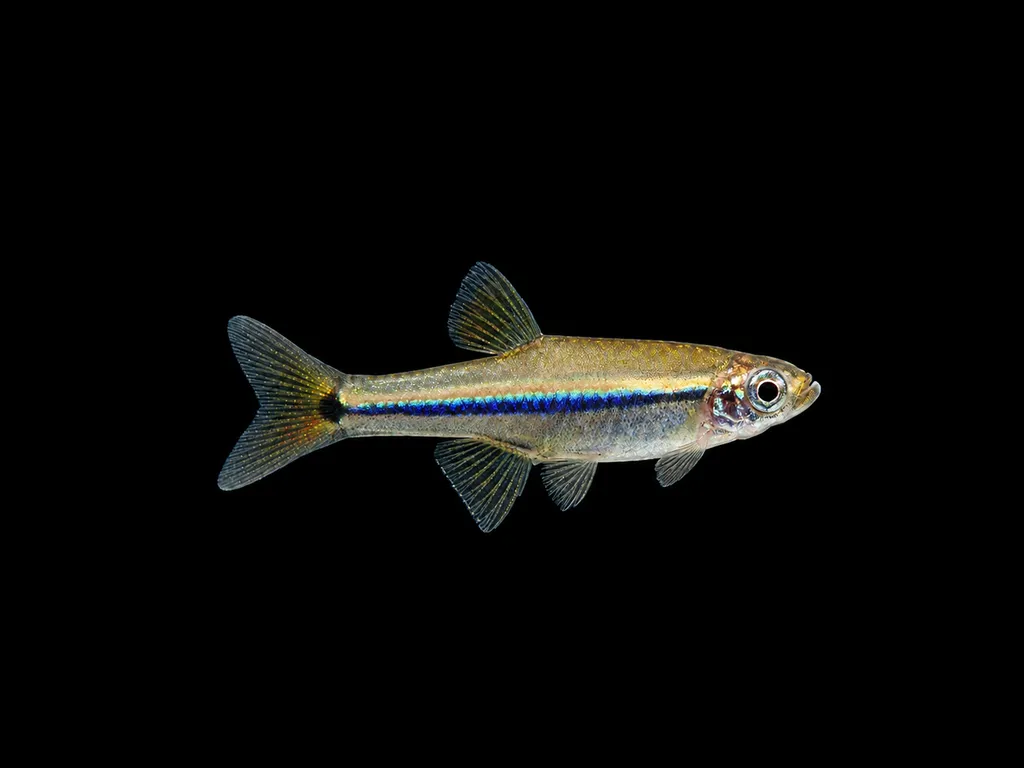
Thac Ba minnow
Tanichthys thacbaensis
Freshwater1.4 in (3.5 cm) · 14 gal (54 L)64–75°F (18–24°C)
Common questions
What size tank does an Arnold's killifish need?
An Arnold's killifish needs at least 14 gal (54 L). It spends most of its time in the middle.
What temperature and pH does an Arnold's killifish need?
An Arnold's killifish is comfortable at 68–77°F (20–25°C) with a pH of 5.5–7.0.
What does an Arnold's killifish eat?
An Arnold's killifish eats a varied diet of live and frozen brine shrimp, daphnia, bloodworm, tubifex and whiteworm. It accepts some dry food as well.
How big does an Arnold's killifish get?
An adult Arnold's killifish reaches about 3 in (7.5 cm).
How can you tell a male Arnold's killifish from a female?
Males are far more colorful than the plainer females.
How does an Arnold's killifish breed?
Arnold's killifish is a semi-annual soil spawner that lays its eggs into peat. The eggs get a semi-dry incubation of several weeks before hatching, so breeding takes a moderate level of effort.
Related species
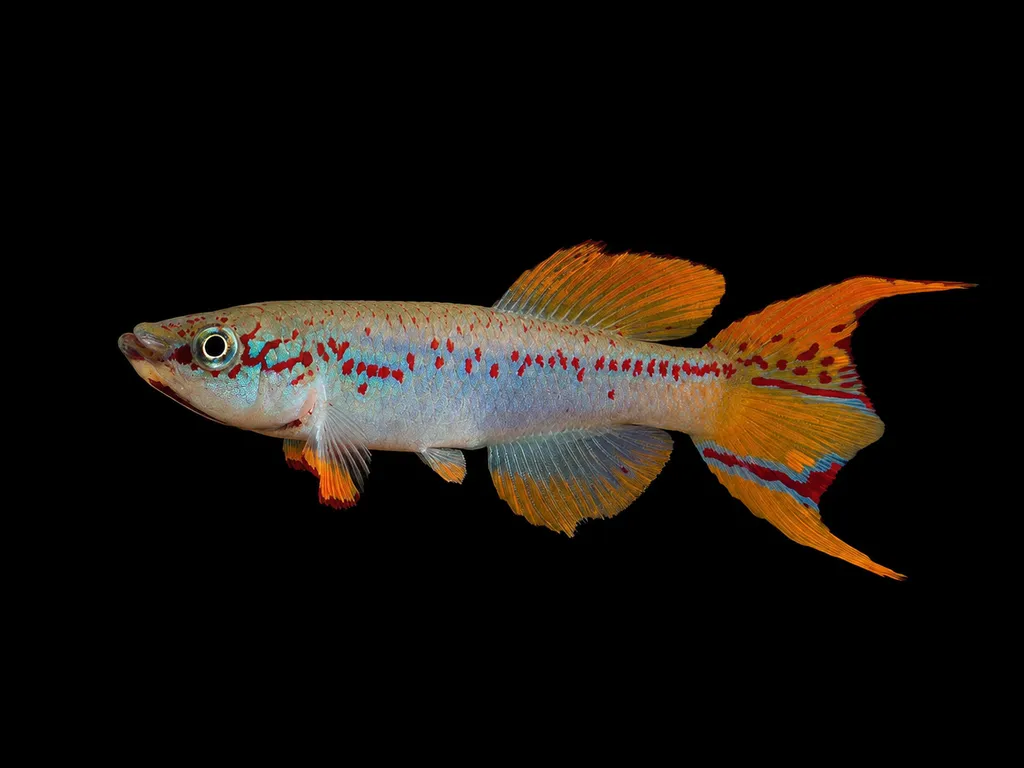 3.1 in (8 cm)14 gal (54 L)68–77°F (20–25°C)
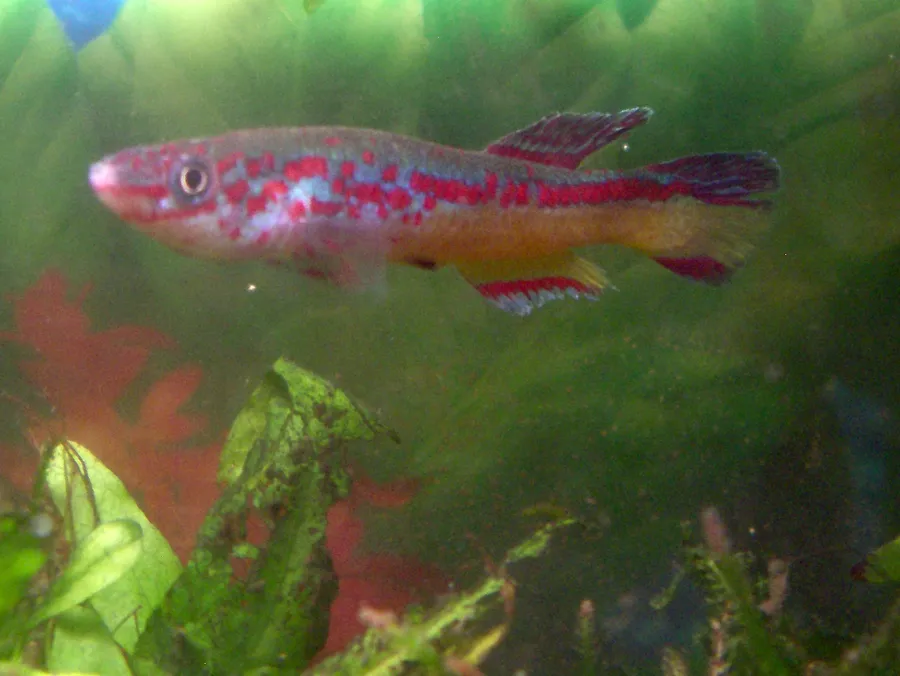
Delta killifish
Fundulopanchax deltaensis
3.1 in (8 cm) · 14 gal (54 L)
 2.8 in (7 cm)14 gal (54 L)68–77°F (20–25°C)
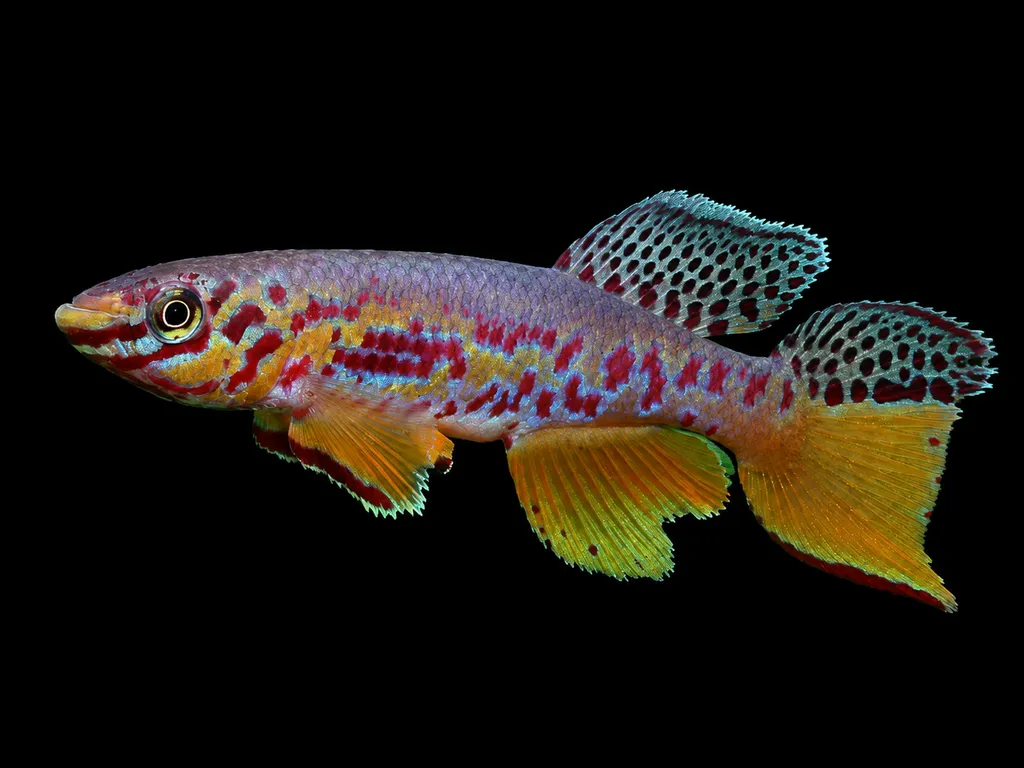
Amiet's lyretail
Fundulopanchax amieti
2.8 in (7 cm) · 14 gal (54 L)
 3.5 in (9 cm)14 gal (54 L)68–77°F (20–25°C)
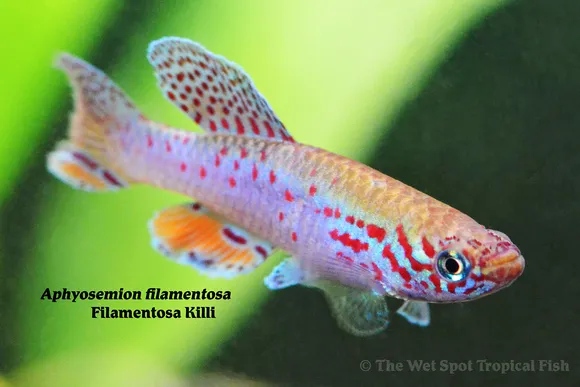
Fallax killifish
Fundulopanchax fallax
3.5 in (9 cm) · 14 gal (54 L)
 2.4 in (6 cm)20 gal (75 L)68–75°F (20–24°C)
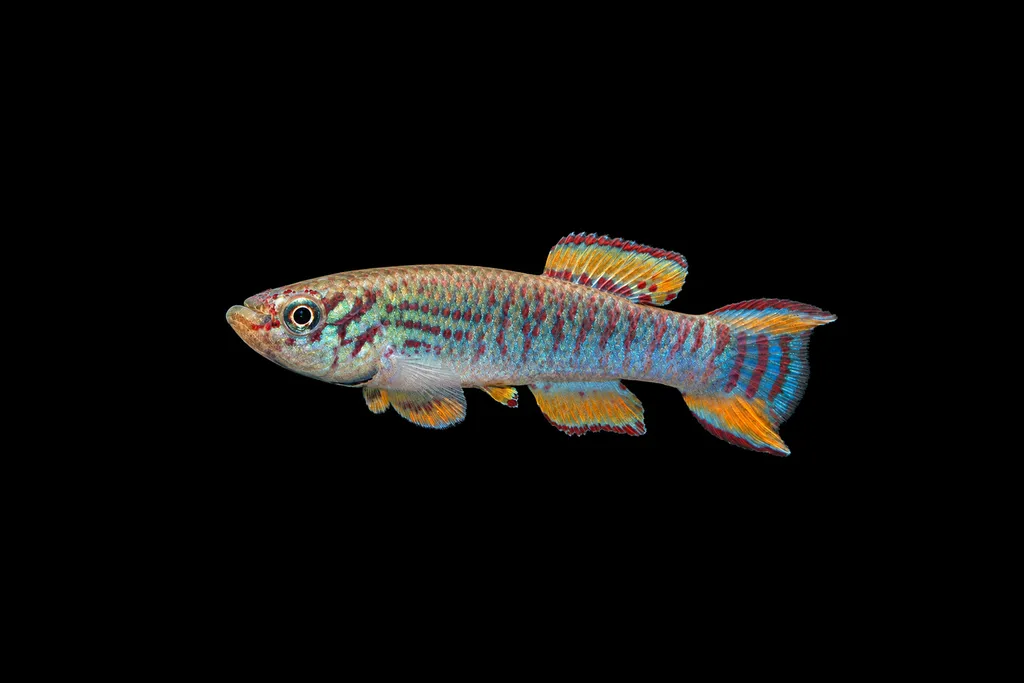
Plumed lyretail
Fundulopanchax filamentosus
2.4 in (6 cm) · 20 gal (75 L)
 2.4 in (6 cm)14 gal (54 L)68–77°F (20–25°C)
Walker's killifish
Fundulopanchax walkeri
2.4 in (6 cm) · 14 gal (54 L)
 2.2 in (5.5 cm)21 gal (80 L)70–79°F (21–26°C)
Steel blue killifish
Fundulopanchax gardneri
2.2 in (5.5 cm) · 21 gal (80 L)