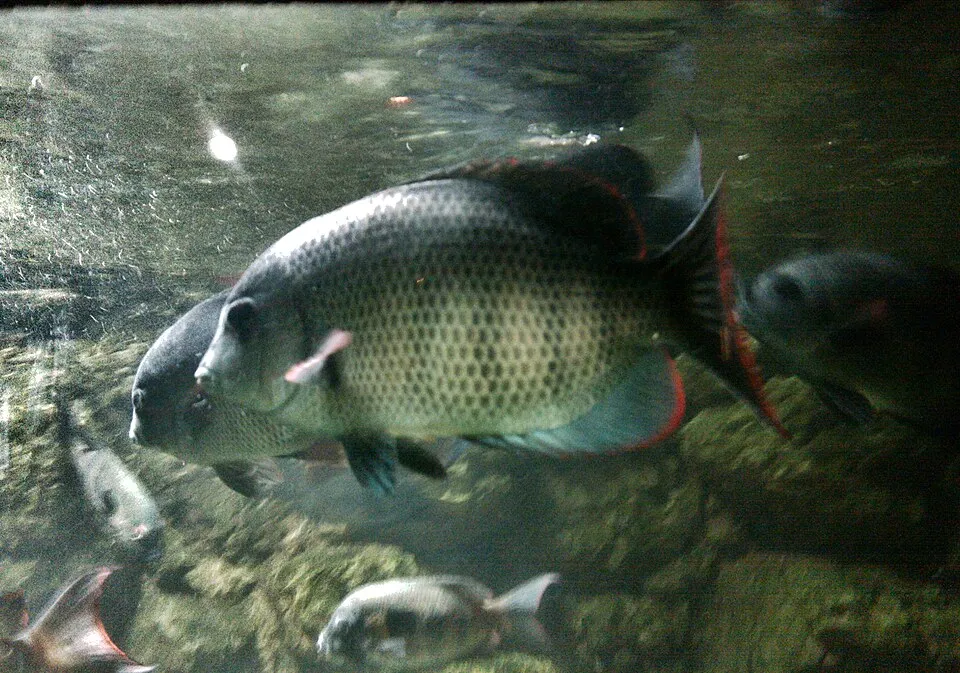
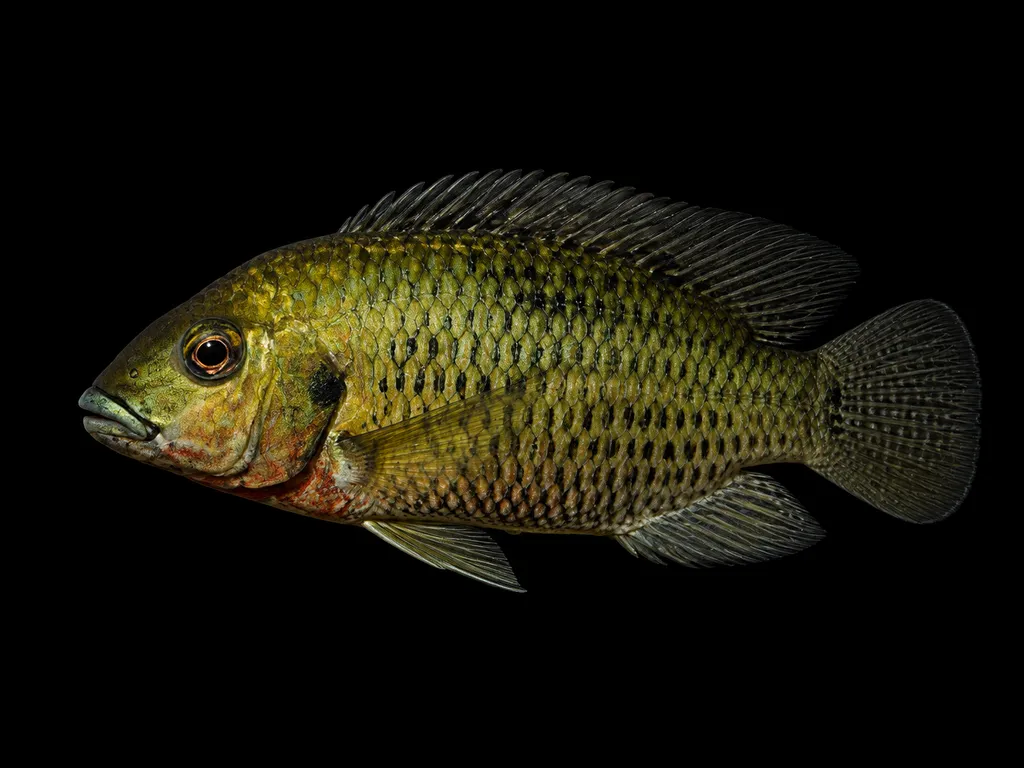
Pinstripe damba cichlid
Paretroplus menarambo
Also known as Pin stripe damba
FreshwaterFish
Care at a glance
- Temperature
- 79–84°F
- 26–29°C
- pH
- 7.0–8.5
- Adult size
- 9.8 in
- 25 cm
- Minimum tank
- 95 gal
- 360 L
- Temperament
- Mostly peaceful
- Social behavior
- Shoaling
- Swim level
- Middle
- Difficulty
- Difficult
- Breeding
- Hard
- Rarity
- Very rare
- Family
- Cichlidae
- Origin
- Madagascar
Overview
The pinstripe damba is a large, deep bodied Madagascan cichlid that lives in groups, so keep a shoal of five or six rather than a lone fish or a single pair. It is mostly peaceful outside of breeding, though a spawning pair will clear a territory, so give the group room and structure to spread out. Provide a tank of at least 360 liters with a soft sand bed, since these fish like to sift sand, plus smooth rock and driftwood. They produce a lot of waste and are sensitive to poor water, so strong filtration and regular changes are essential. Feed a varied diet with a good cichlid pellet, plus frozen foods, some vegetable matter, and occasional snails for these natural mollusc eaters.
In the wild
Paretroplus menarambo is found only in the floodplain lakes and slow rivers of the Sofia River system in northwestern Madagascar. Recreate warm, calm fresh water with a temperature of 26 to 29 degrees Celsius and a pH from 7 up to about 8.5, kept neutral to slightly alkaline and moderately hard. A deep sand bed lets the fish sift and forage the way they do in the wild, while smooth rocks and driftwood provide cover and spawning surfaces. Leave plenty of open water for such a large, tall fish, and rely on powerful filtration to cope with the waste these heavy feeders produce.
Good to know
The pinstripe damba belongs to the cichlid family, Cichlidae, and is one of the Paretroplus cichlids native to Madagascar. It is a large, silvery, deep bodied fish that reaches around 25 centimeters and carries fine dark pinstripes along its flanks. It is a biparental substrate spawner. A pair cleans a firm surface, lays its eggs there, and both fish guard the eggs and the resulting fry. It is listed as critically endangered in the wild, and pairing up and breeding these big, waste heavy fish in captivity is a demanding, space hungry undertaking.
Did you know
This fish was once classified as extinct in the wild before a surviving population was found in Lake Tseny. Much of what still swims is maintained by aquarists, public aquariums, and zoos, making the hobby part of an effort to keep the species alive.
Weekly picks
Tank mates
Pinstripe damba cichlid is a mostly peaceful, shoaling species that keeps to the middle. These picks share a community profile with it, are safe together in both directions, and overlap on water type, temperature and pH.
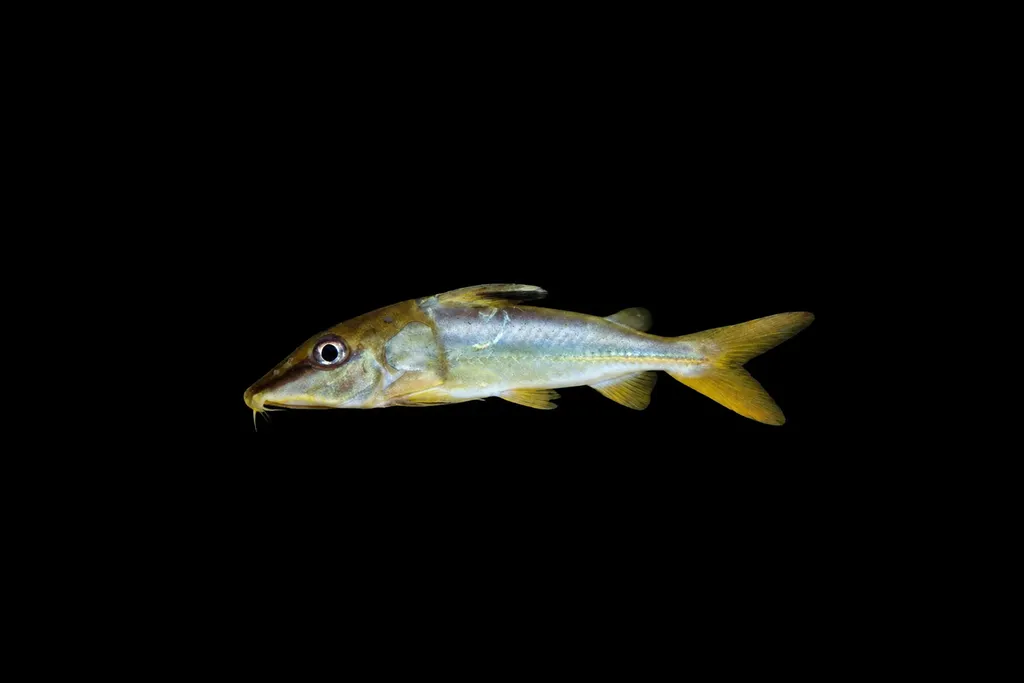
Wilder's mouse catfish
Hassar wilderi
Freshwater9.8 in (25 cm) · 106 gal (400 L)73–82°F (23–28°C)
Narrow hatchetfish
Triportheus angulatus
Freshwater9.8 in (25 cm) · 79 gal (300 L)73–82°F (23–28°C)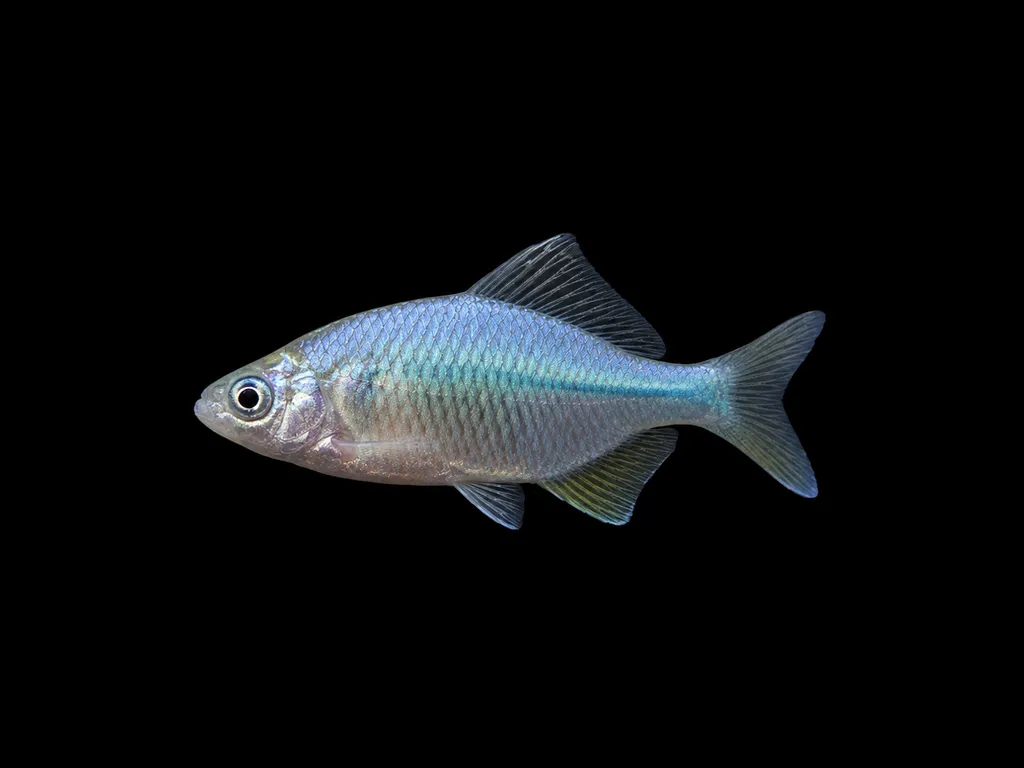
Rainbow bitterling
Acheilognathus macropterus
Freshwater10.6 in (27 cm) · 106 gal (400 L)57–79°F (14–26°C)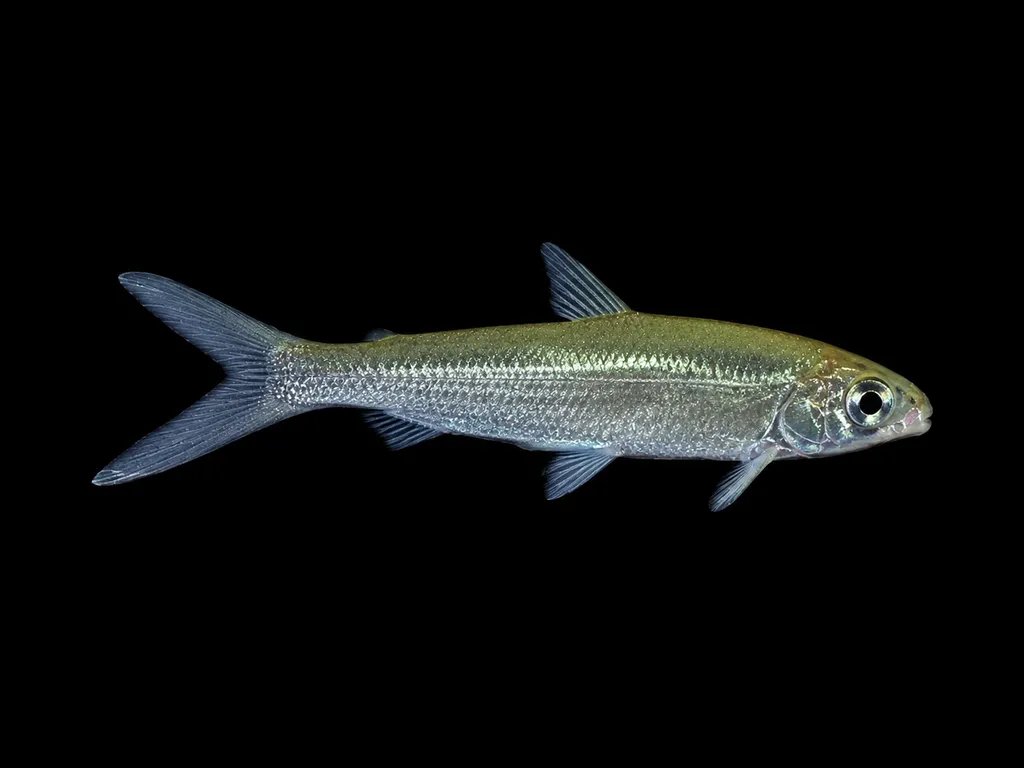
Fowler's hemiodus
Bivibranchia fowleri
Freshwater7.5 in (19 cm) · 106 gal (400 L)75–84°F (24–29°C)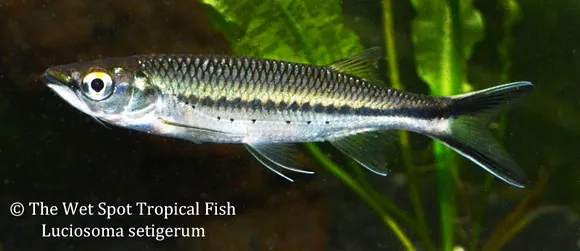
Apollo shark minnow
Luciosoma setigerum
Freshwater11.8 in (30 cm) · 106 gal (400 L)72–81°F (22–27°C)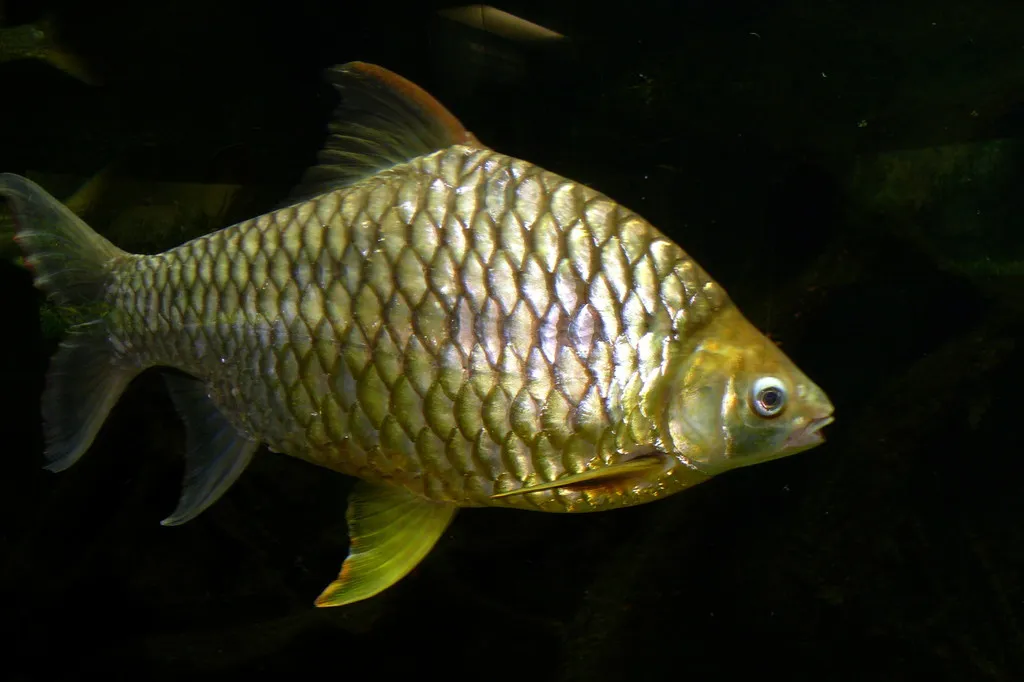
Lemon-fin barb
Hypsibarbus wetmorei
Freshwater9.8 in (25 cm) · 106 gal (400 L)72–82°F (22–28°C)
Common questions
What size tank does a Pinstripe damba cichlid need?
A Pinstripe damba cichlid needs at least 95 gal (360 L). It spends most of its time in the middle.
What temperature and pH does a Pinstripe damba cichlid need?
A Pinstripe damba cichlid is comfortable at 79–84°F (26–29°C) with a pH of 7.0–8.5.
How big does a Pinstripe damba cichlid get?
An adult Pinstripe damba cichlid reaches about 9.8 in (25 cm).
Does a Pinstripe damba cichlid need a group?
Yes. A Pinstripe damba cichlid is a shoaling species and should be kept in a group, not singly.
Related species
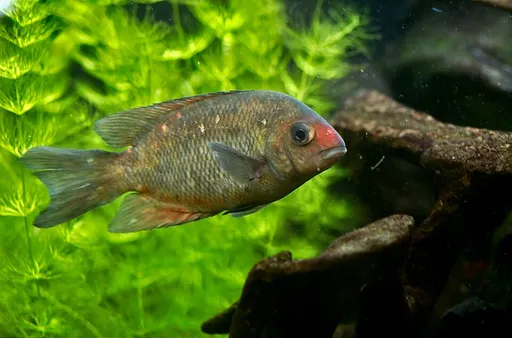 6.3 in (16 cm)74 gal (280 L)75–82°F (24–28°C)
Red-nosed Madagascar cichlid
Paretroplus kieneri
6.3 in (16 cm) · 74 gal (280 L)
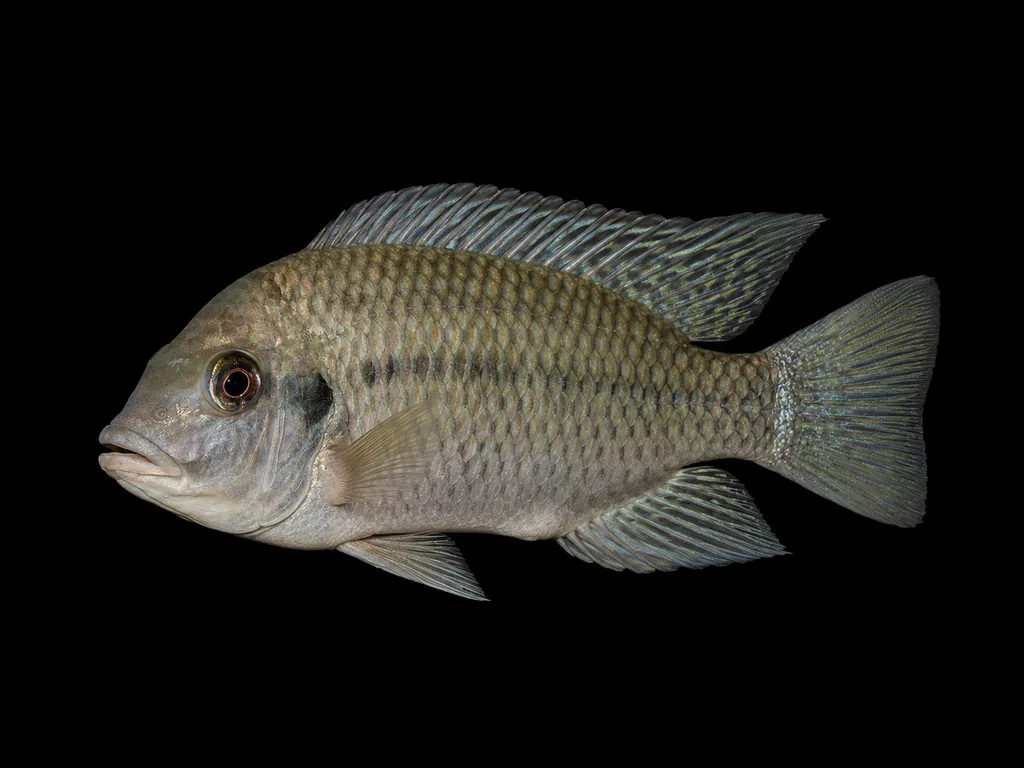 9.8 in (25 cm)106 gal (400 L)77–86°F (25–30°C)
Congo coptodon
Coptodon congica
9.8 in (25 cm) · 106 gal (400 L)
 9.8 in (25 cm)74 gal (280 L)75–82°F (24–28°C)
Livingston's cichlid
Nimbochromis livingstonii
9.8 in (25 cm) · 74 gal (280 L)
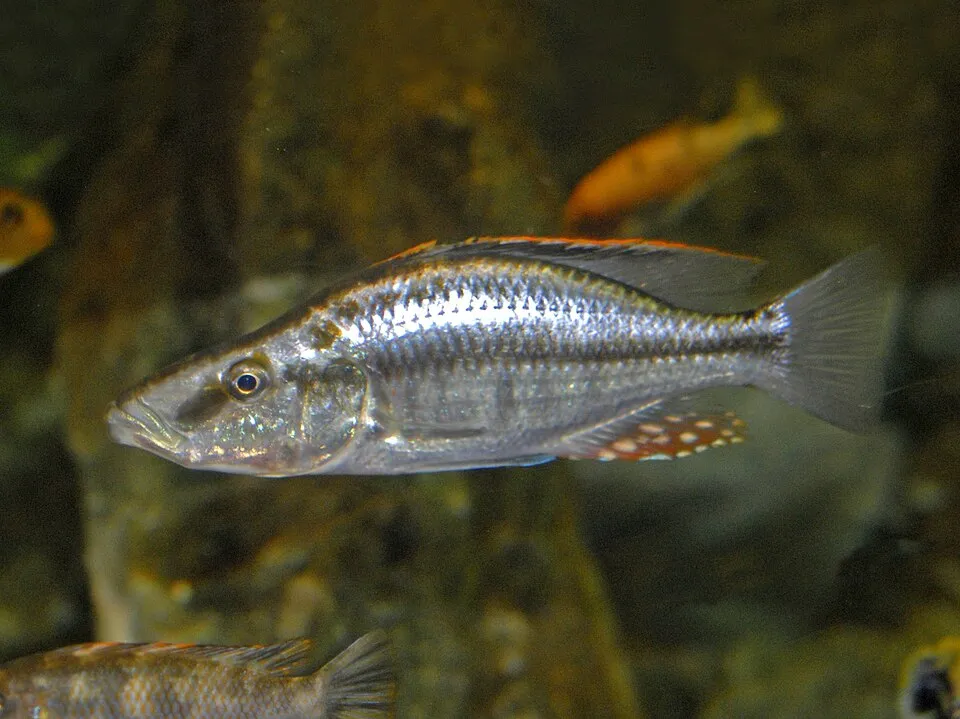 9.8 in (25 cm)66 gal (250 L)73–82°F (23–28°C)
Malawi eyebiter
Dimidiochromis compressiceps
9.8 in (25 cm) · 66 gal (250 L)
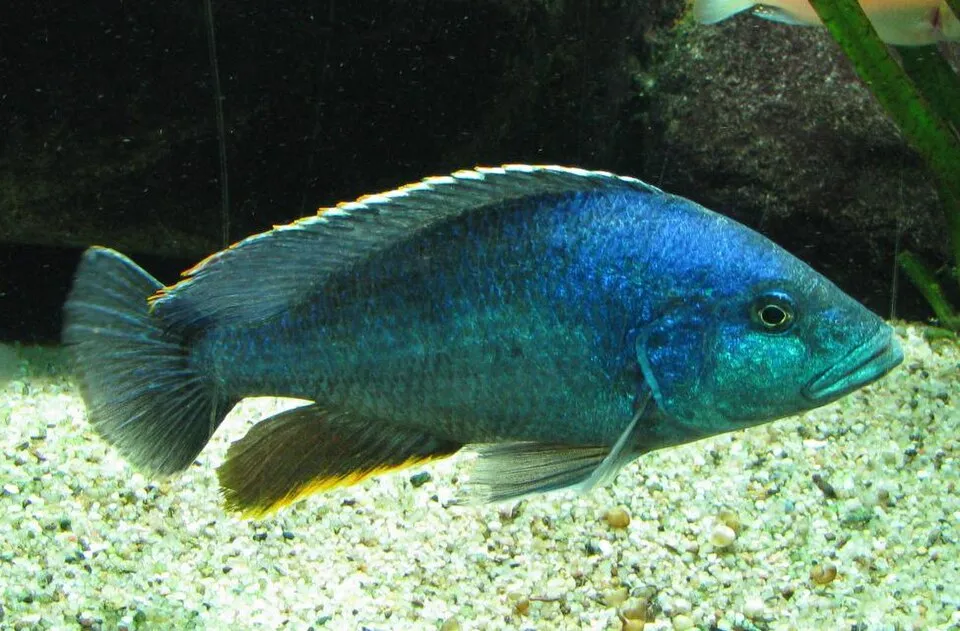 10.2 in (26 cm)74 gal (280 L)75–82°F (24–28°C)
Kaligono
Nimbochromis polystigma
10.2 in (26 cm) · 74 gal (280 L)
 9.1 in (23 cm)106 gal (400 L)77–86°F (25–30°C)
Blackcap coptodon
Coptodon discolor
9.1 in (23 cm) · 106 gal (400 L)