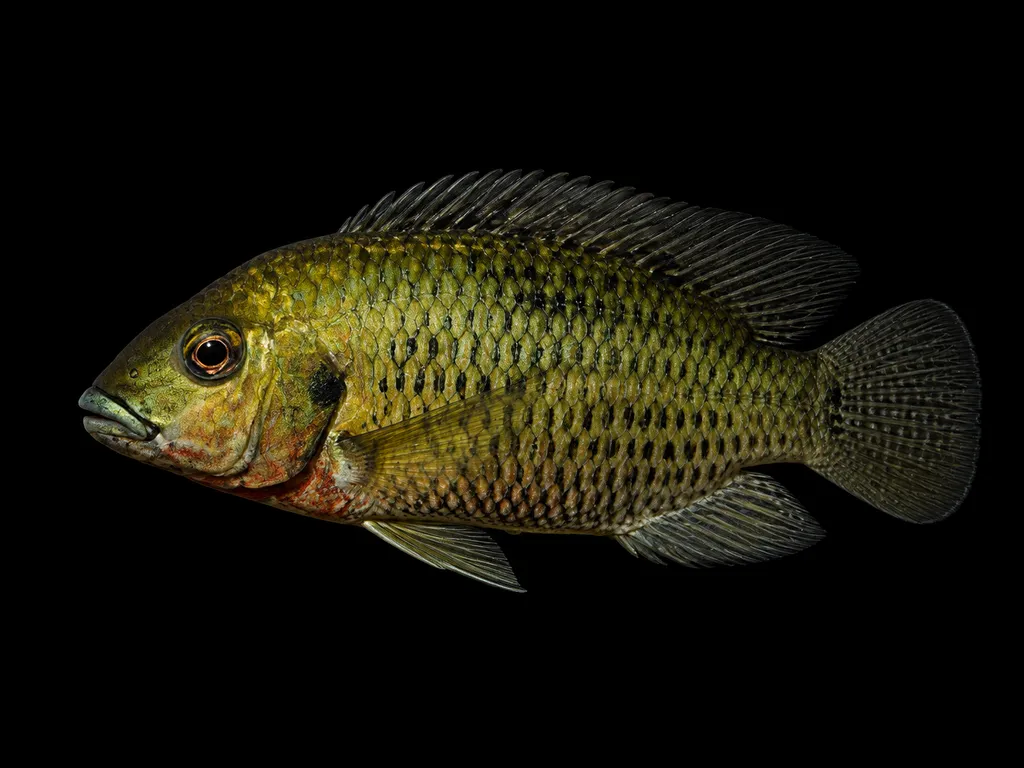
Blackcap coptodon
Coptodon discolor
Also known as Tilapia discolor, Volta tilapia
FreshwaterFish
Care at a glance
- Temperature
- 77–86°F
- 25–30°C
- pH
- 6.2–7.8
- Adult size
- 9.1 in
- 23 cm
- Minimum tank
- 106 gal
- 400 L
- Temperament
- Mostly peaceful
- Social behavior
- Solitary
- Tankmates
- With caution
- Swim level
- Middle
- Diet
- Omnivore
- Difficulty
- Medium
- Breeding
- Substrate spawner · Hard
- Rarity
- Rare
- Family
- Cichlidae
- Origin
- Bia, Tano and Pra basins and Lake Bosumtwi, Ghana
Overview
The blackcap coptodon is a West African tilapia of the calmer sort, a substrate-grazing cichlid with steadier nerves than many of its relatives. It is a step up from the easiest fish.
Did you know
Unlike the familiar tilapias, which brood their young in the mouth, the blackcap coptodon guards its eggs in the open. That is one reason Coptodon species behave more like typical New World cichlids.
Caring for the blackcap coptodon
A blackcap coptodon needs at least 106 gal (400 L), with open swimming room and some sturdy cover. Use a sand or fine gravel floor with driftwood and rock. Choose hardy or artificial plants, since a large tilapia tends to dig.
Give it a middle-ground setup at 77 to 86°F (25 to 30°C) and a pH of 6.2 to 7.8. It is an omnivore that leans vegetarian. Feed a quality plant-based flake or pellet, with some frozen foods and greens.
Keep a single fish or a bonded pair, since it pairs off rather than shoaling. It swims through the middle of the tank and is only moderately assertive for its size. Because it grows large and gets more territorial when spawning, choose tank mates with caution, such as other sturdy, similarly sized fish.
It is a substrate spawner that lays its eggs on a cleaned surface and guards its brood. Males grow a little larger than females. The species is not often bred in the aquarium, which makes it harder to reproduce.
Good to know
The blackcap coptodon is a member of the cichlid family. Its name discolor means of a different color, or variegated.
In the wild
The blackcap coptodon lives in rivers and a crater lake of southwest Ghana and neighboring Cote d'Ivoire. Its range covers the Bia, Tano and Pra drainages and Lake Bosumtwi. Conditions there run from soft, slightly acidic river water to harder lake water.
Common questions
What size tank does a blackcap coptodon need?
A blackcap coptodon needs at least 106 gal (400 L). It spends most of its time in the middle.
What temperature and pH does a blackcap coptodon need?
A blackcap coptodon is comfortable at 77–86°F (25–30°C) with a pH of 6.2–7.8.
What does a blackcap coptodon eat?
A blackcap coptodon is an omnivore that leans vegetarian. Feed it a quality plant-based flake or pellet, with some frozen foods and greens.
How big does a blackcap coptodon get?
An adult blackcap coptodon reaches about 9.1 in (23 cm).
How can you tell a male blackcap coptodon from a female?
Males grow a little larger than females.
How does a blackcap coptodon breed?
The blackcap coptodon is a substrate spawner. A pair lays its eggs on a cleaned surface and guards the brood. It is rarely bred in the aquarium, so breeding it is hard.
Related species
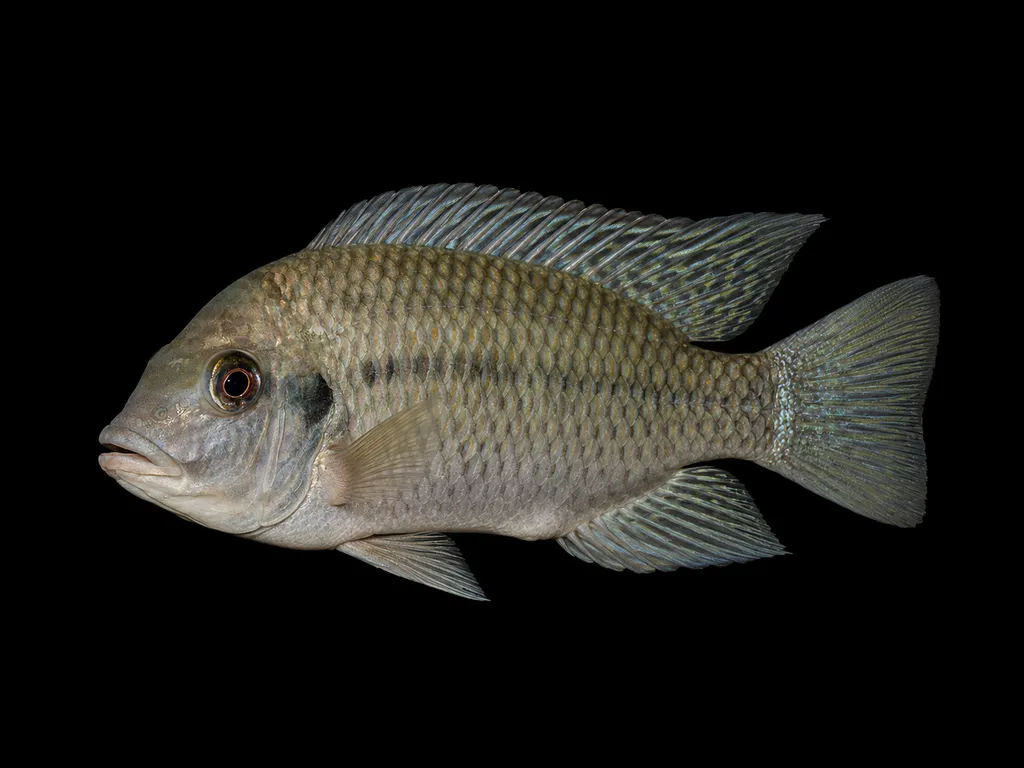 9.8 in (25 cm)106 gal (400 L)77–86°F (25–30°C)
Congo coptodon
Coptodon congica
9.8 in (25 cm) · 106 gal (400 L)
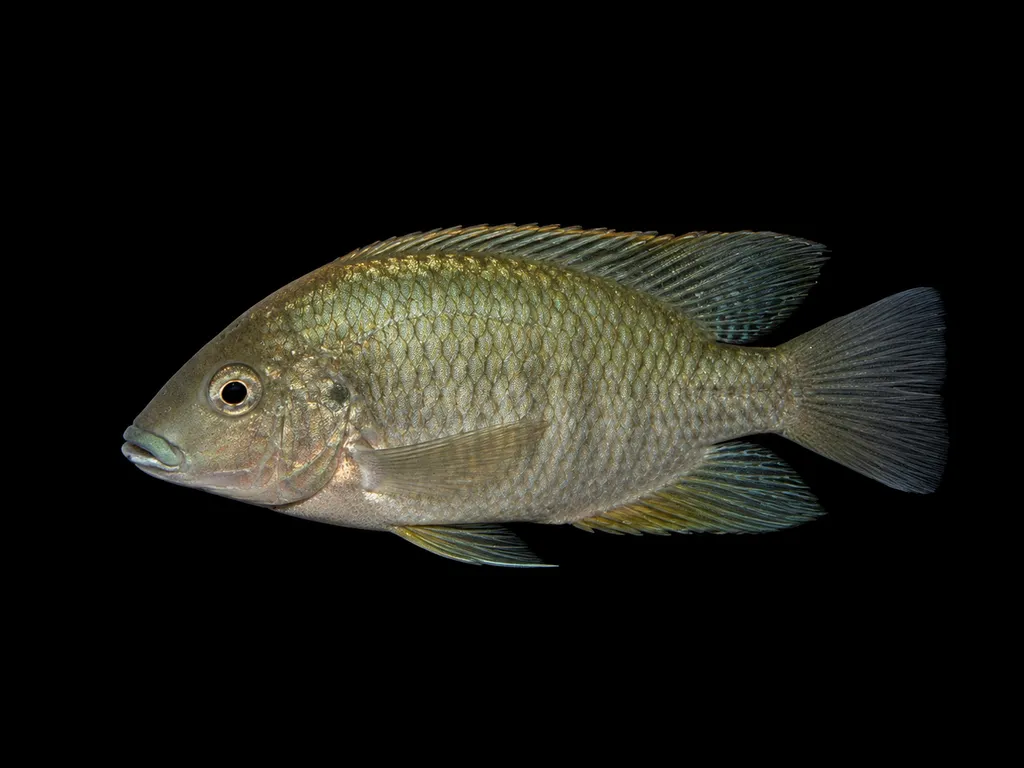 5.9 in (15 cm)66 gal (250 L)73–81°F (23–27°C)
Deepwater coptodon
Coptodon bythobates
5.9 in (15 cm) · 66 gal (250 L)
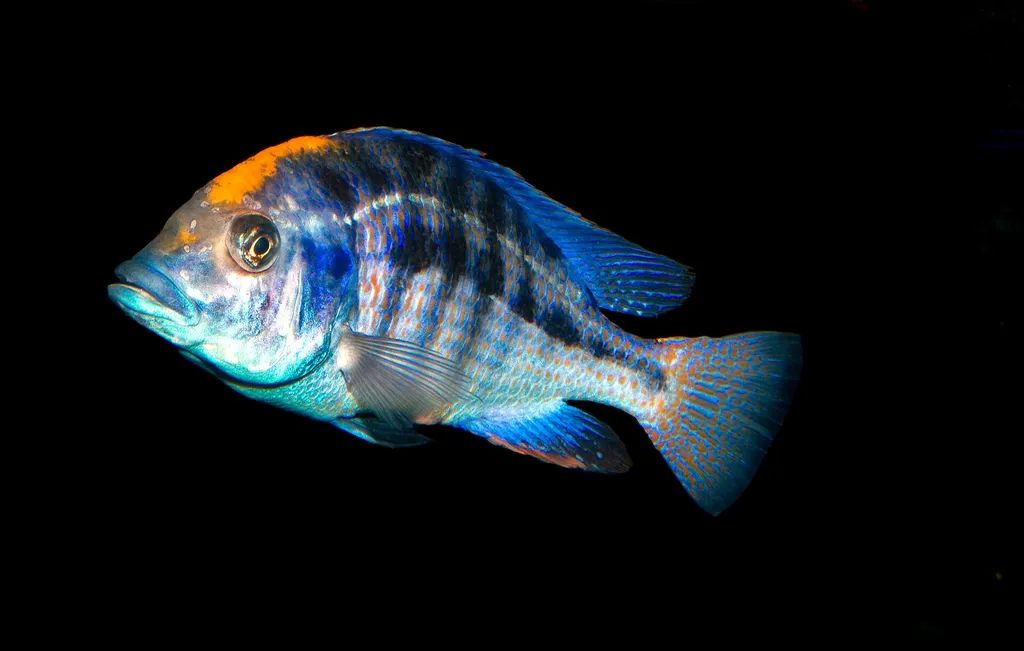 8.7 in (22 cm)119 gal (450 L)75–81°F (24–27°C)
Blue and yellow hap
Protomelas spilonotus
8.7 in (22 cm) · 119 gal (450 L)
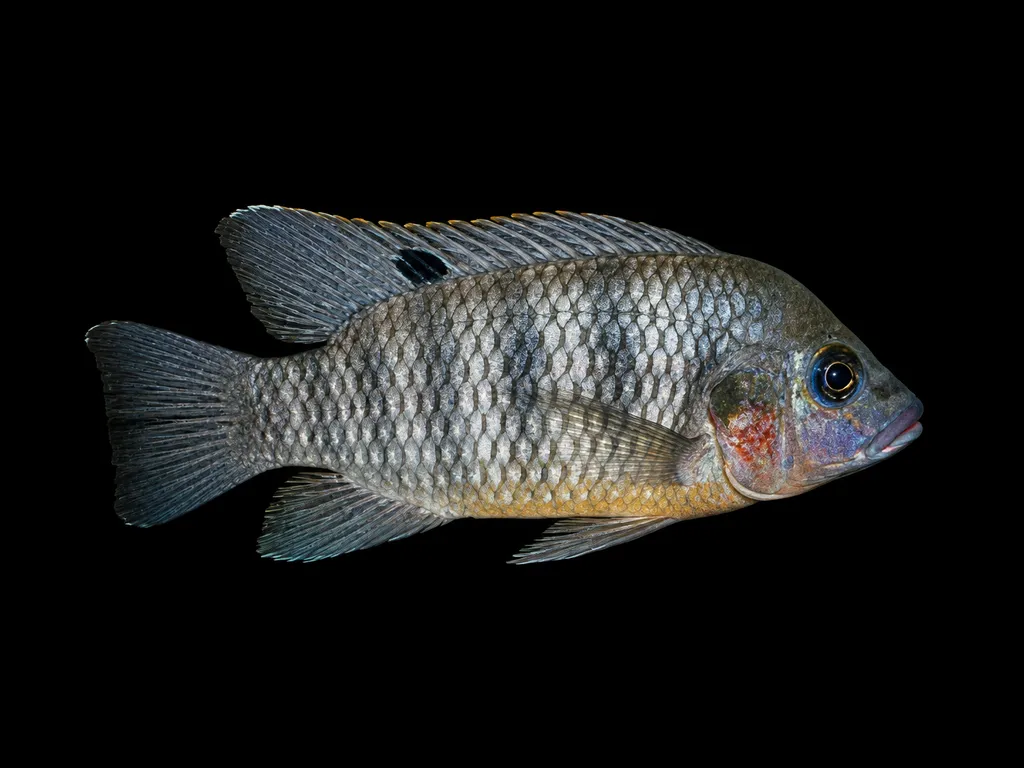 8.7 in (22 cm)79 gal (300 L)77–86°F (25–30°C)
Busumana tilapia
Tilapia busumana
8.7 in (22 cm) · 79 gal (300 L)
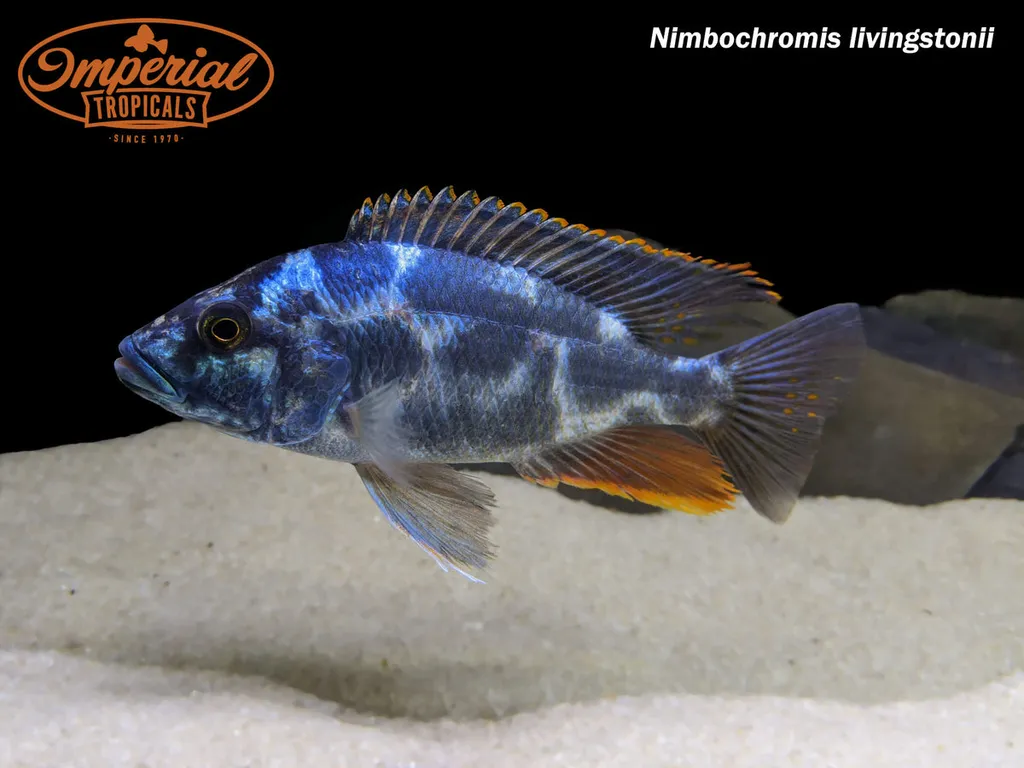 9.8 in (25 cm)74 gal (280 L)75–82°F (24–28°C)
Livingston's cichlid
Nimbochromis livingstonii
9.8 in (25 cm) · 74 gal (280 L)
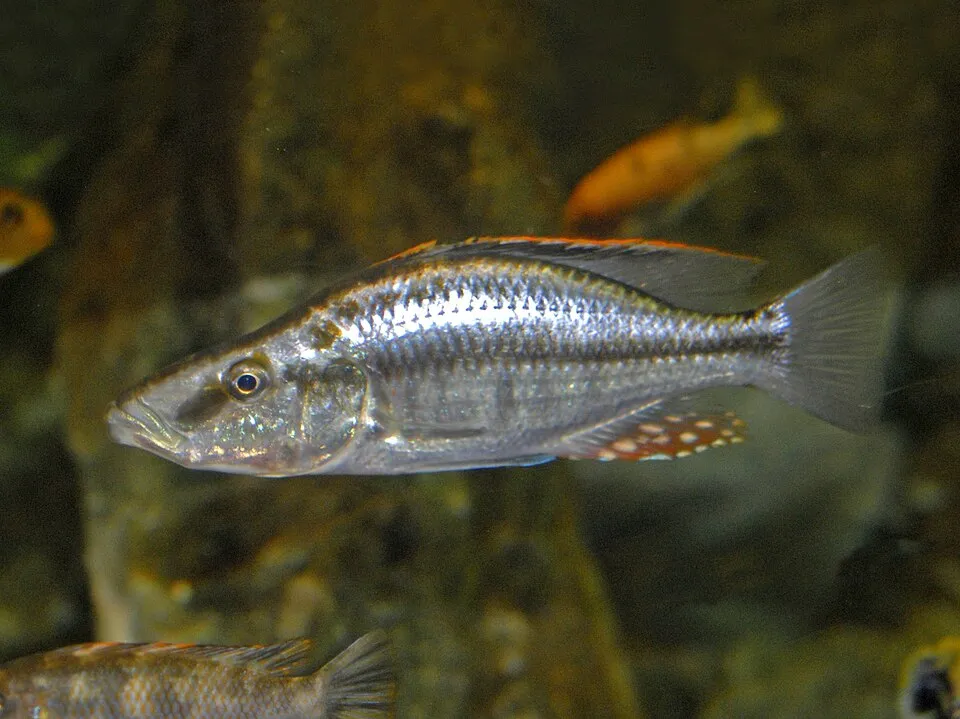 9.8 in (25 cm)66 gal (250 L)73–82°F (23–28°C)
Malawi eyebiter
Dimidiochromis compressiceps
9.8 in (25 cm) · 66 gal (250 L)