Mirabilis eartheater
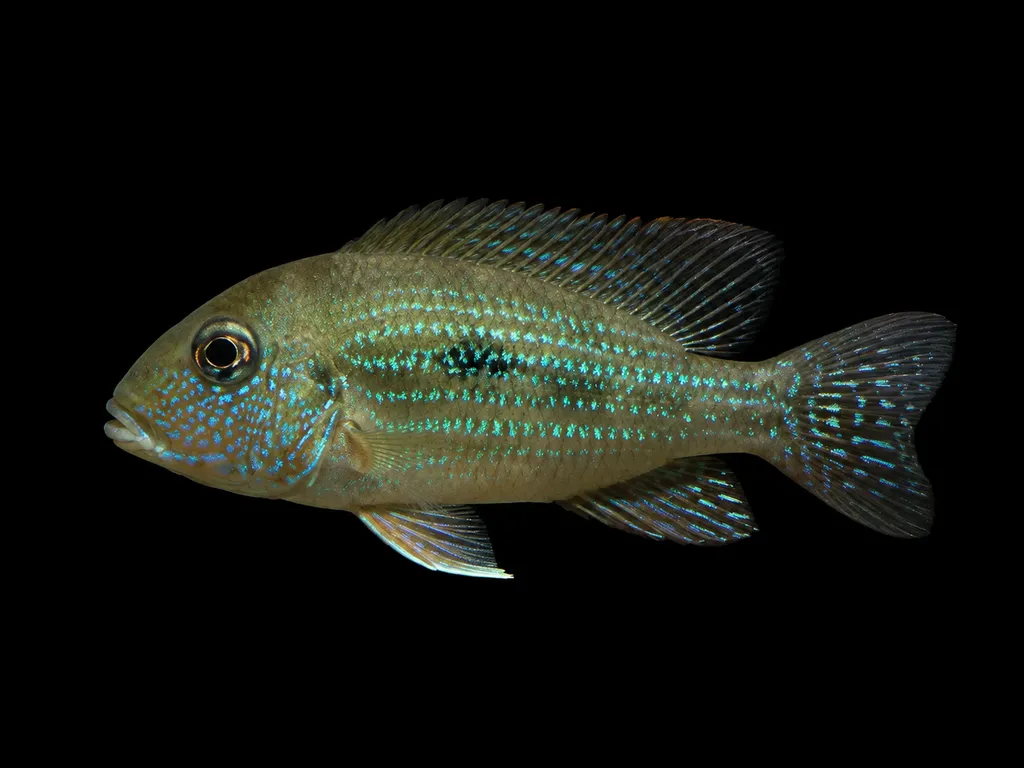
Geophagus mirabilis
Also known as Aripuana eartheater, Spotted-face eartheater
FreshwaterFish
Care at a glance
- Temperature
- 77–84°F
- 25–29°C
- pH
- 5.5–7.2
- Adult size
- 7.9 in
- 20 cm
- Minimum tank
- 106 gal
- 400 L
- Temperament
- Mostly peaceful
- Social behavior
- Social
- Swim level
- Bottom
- Difficulty
- Medium
- Breeding
- Mouthbrooder · Medium
- Rarity
- Common
- Family
- Cichlidae
- Origin
- Rio Aripuanã, Brazil
Overview
The Mirabilis eartheater is one of the most striking eartheaters, a sand-sifting cichlid for a long tank. It is best with a little experience.
Did you know
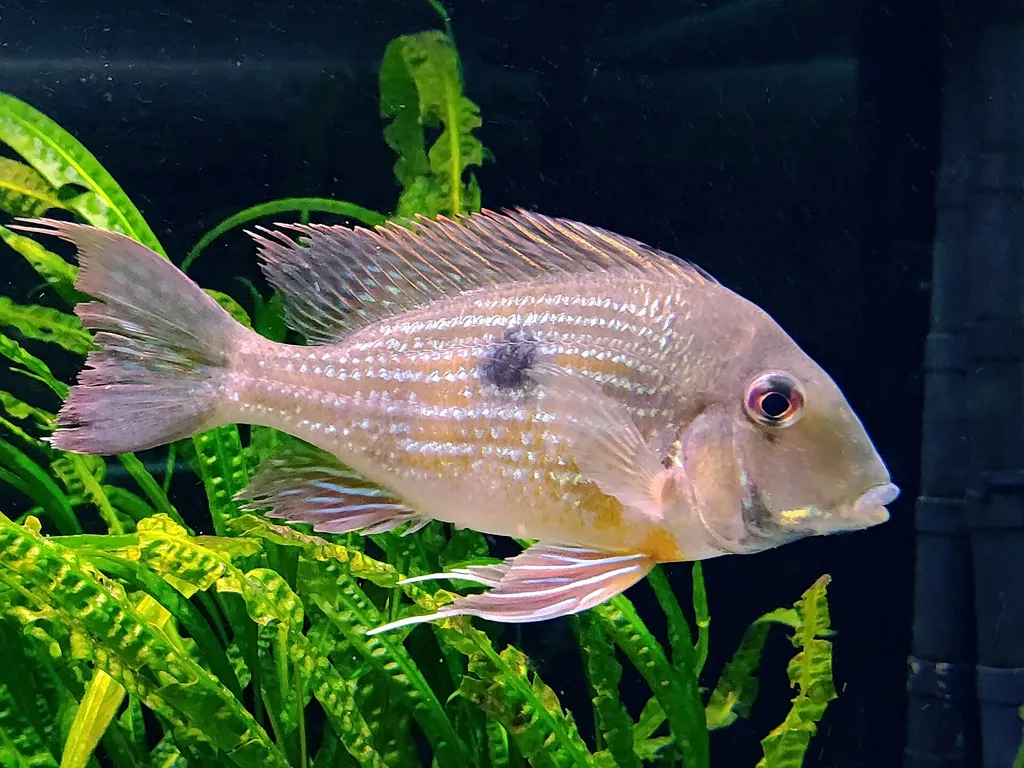
Mirabilis means wondrous, and the describers meant the star-map on the fish's cheeks.
Caring for the Mirabilis eartheater
Keep Mirabilis eartheaters in a group of five or six, in a tank of at least 106 gal (400 L). Give them a long, open floor of deep, fine sand.
Keep the water soft, warm and gently acidic, at 77 to 84°F (25 to 29°C) and a pH of 5.5 to 7.2. Soft, warm water and a dark substrate bring out the freckled pattern far better than bright sand and neutral water.
Mirabilis eartheaters eat by sorting sand more or less continuously through the day. Feed small sinking foods frequently, rather than in large amounts.
Give them calm, mid-sized company. They are delayed mouthbrooders, like the rest of the surinamensis group, and breeding them is of medium difficulty.
Good to know
Geophagus mirabilis belongs to the family Cichlidae and was described in 2014. The scattered iridescent freckling over its head and flanks is unique in the genus.
In the wild
Geophagus mirabilis sifts dark sand in the Rio Aripuanã, a clearwater tributary in the southern Amazon.
Weekly picks
Tank mates
The Mirabilis eartheater is a mostly peaceful, social species that keeps to the bottom. These picks share a community profile with it, are safe together in both directions, and overlap on water type, temperature and pH.
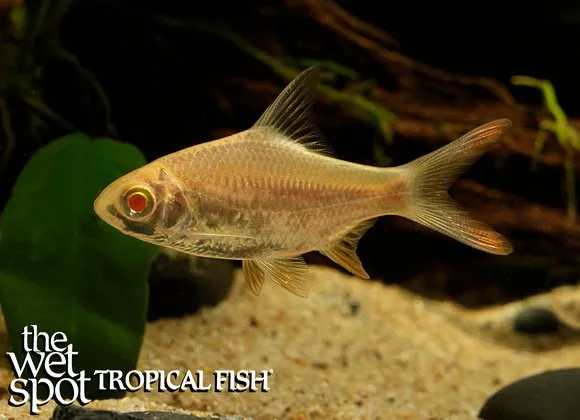
Red-tailed tinfoil barb
Barbonymus altus
Freshwater9.8 in (25 cm) · 106 gal (400 L)72–82°F (22–28°C)
Narrow hatchetfish
Triportheus angulatus
Freshwater9.8 in (25 cm) · 79 gal (300 L)73–82°F (23–28°C)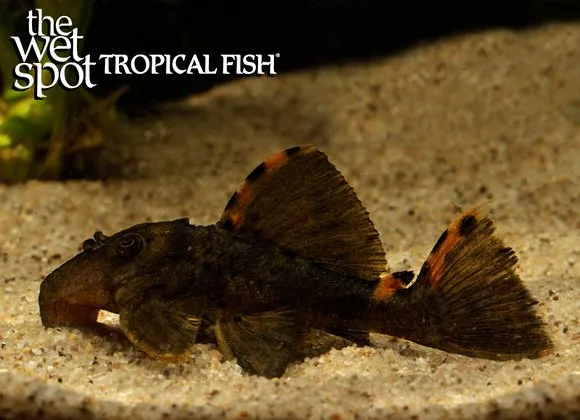
Three beacon pleco
Leporacanthicus triactis
Freshwater11 in (28 cm) · 106 gal (400 L)79–86°F (26–30°C)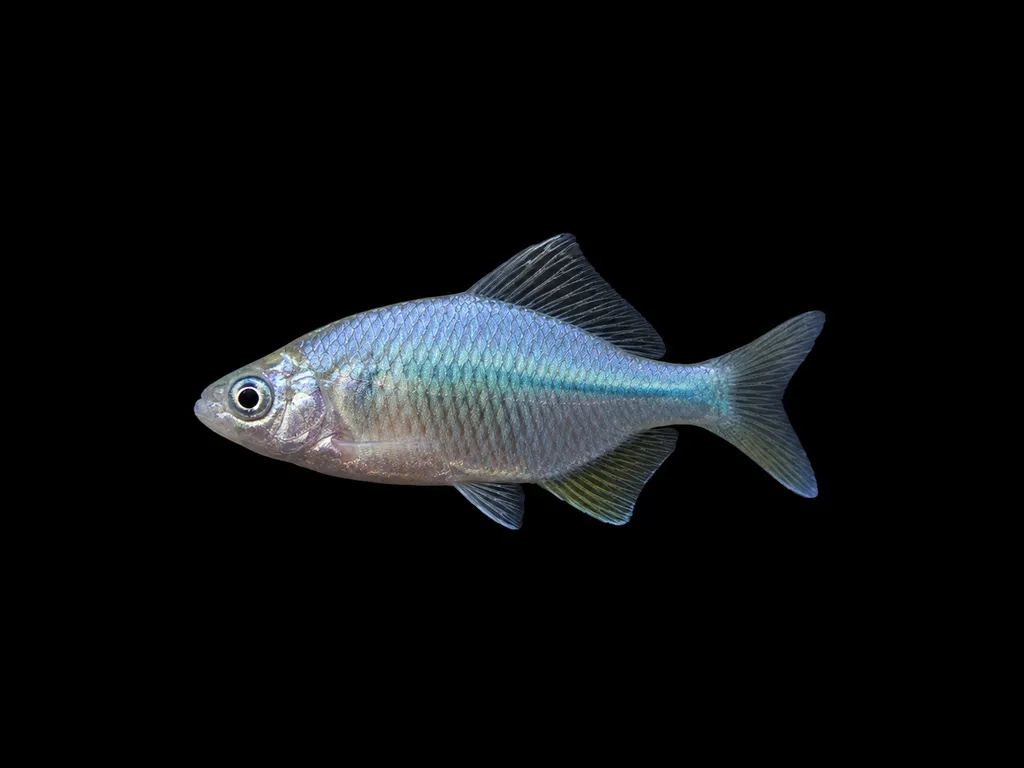
Rainbow bitterling
Acheilognathus macropterus
Freshwater10.6 in (27 cm) · 106 gal (400 L)57–79°F (14–26°C)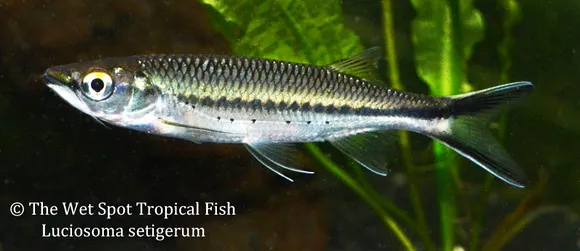
Apollo shark minnow
Luciosoma setigerum
Freshwater11.8 in (30 cm) · 106 gal (400 L)72–81°F (22–27°C)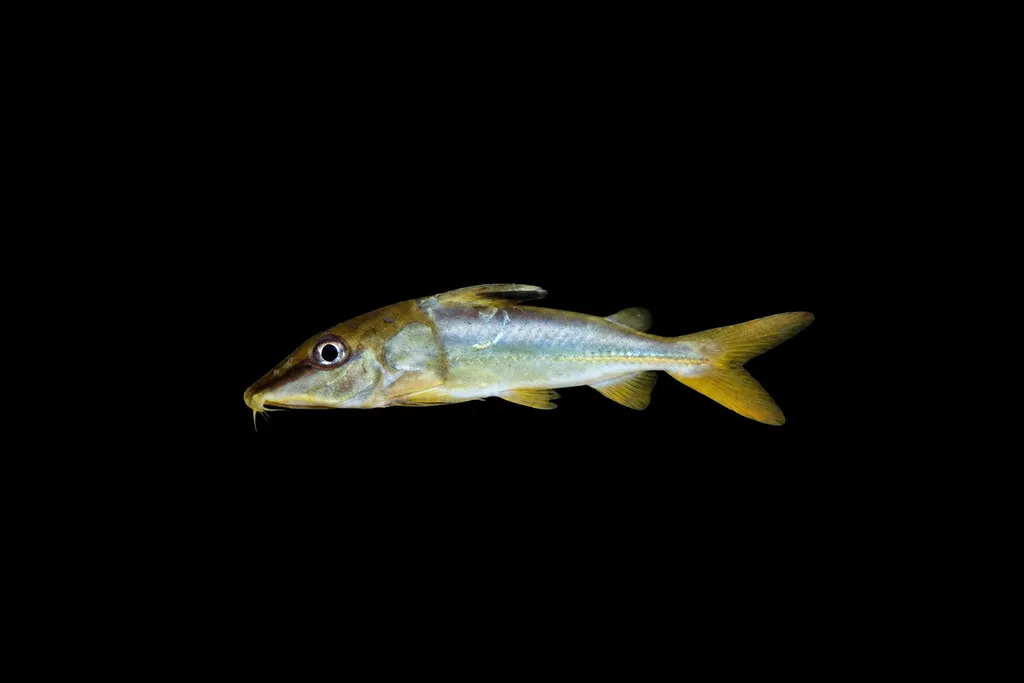
Wilder's mouse catfish
Hassar wilderi
Freshwater9.8 in (25 cm) · 106 gal (400 L)73–82°F (23–28°C)
Common questions
What size tank does a Mirabilis eartheater need?
A Mirabilis eartheater needs at least 106 gal (400 L). It spends most of its time in the bottom.
What temperature and pH does a Mirabilis eartheater need?
A Mirabilis eartheater is comfortable at 77–84°F (25–29°C) with a pH of 5.5–7.2.
What does a Mirabilis eartheater eat?
A Mirabilis eartheater eats by sorting sand almost all day. Feed it small sinking foods often, rather than in large amounts.
How big does a Mirabilis eartheater get?
An adult Mirabilis eartheater reaches about 7.9 in (20 cm).
How does a Mirabilis eartheater breed?
Mirabilis eartheaters are delayed mouthbrooders, like the rest of the surinamensis group. Breeding them is of medium difficulty.
Related species
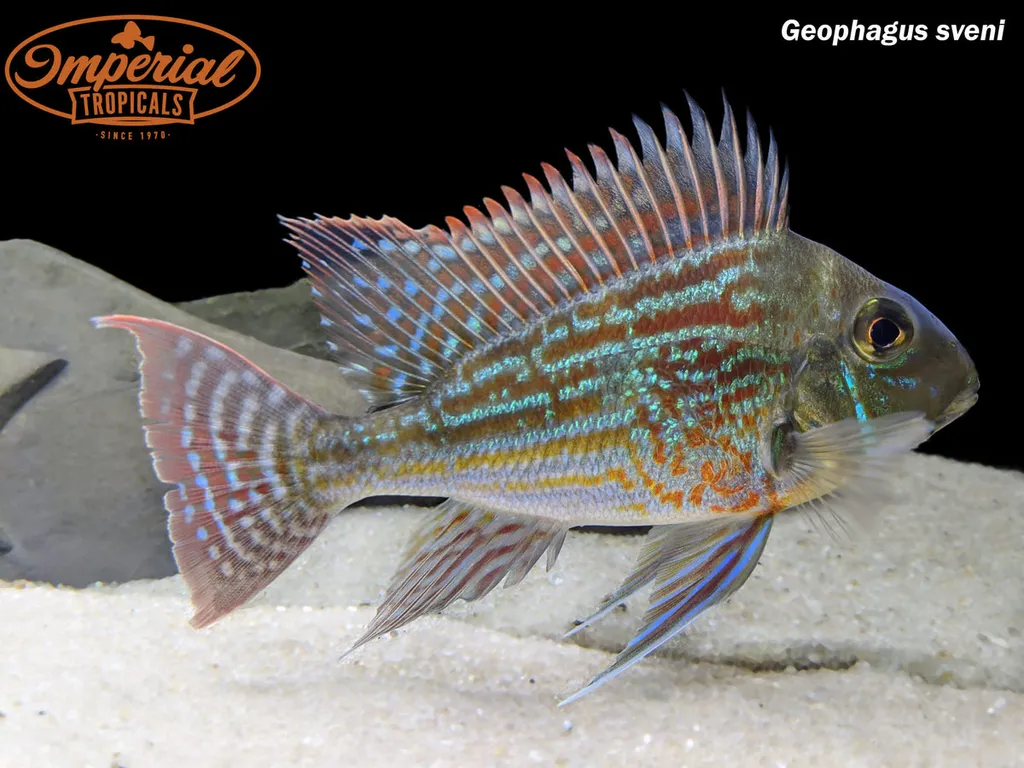 7.9 in (20 cm)119 gal (450 L)77–84°F (25–29°C)
Sveni eartheater
Geophagus sveni
7.9 in (20 cm) · 119 gal (450 L)
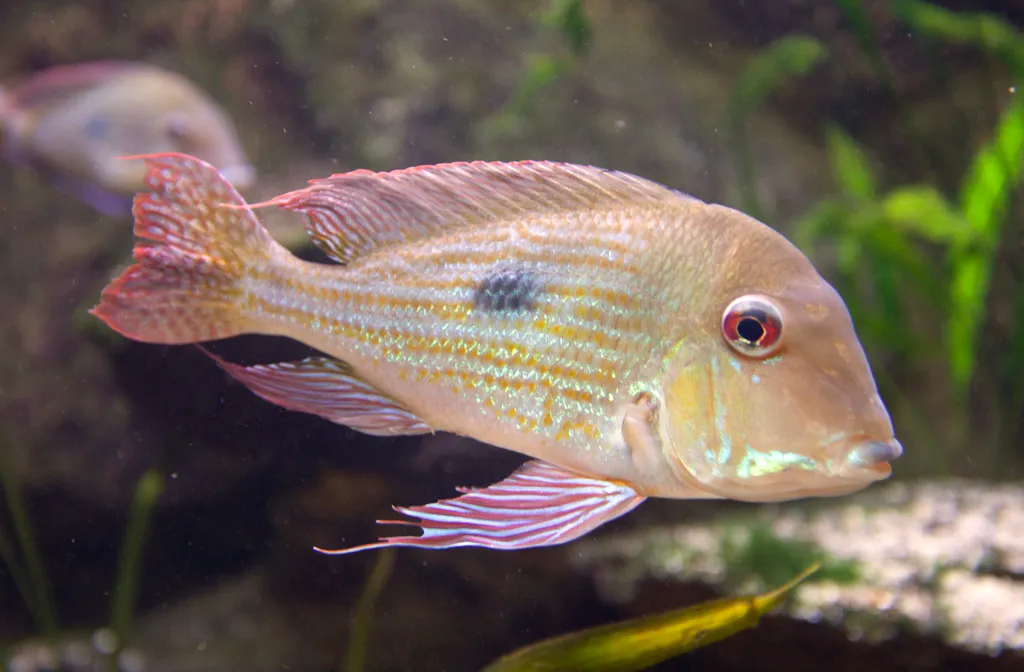 8.3 in (21 cm)119 gal (450 L)77–84°F (25–29°C)
Suriname eartheater
Geophagus surinamensis
8.3 in (21 cm) · 119 gal (450 L)
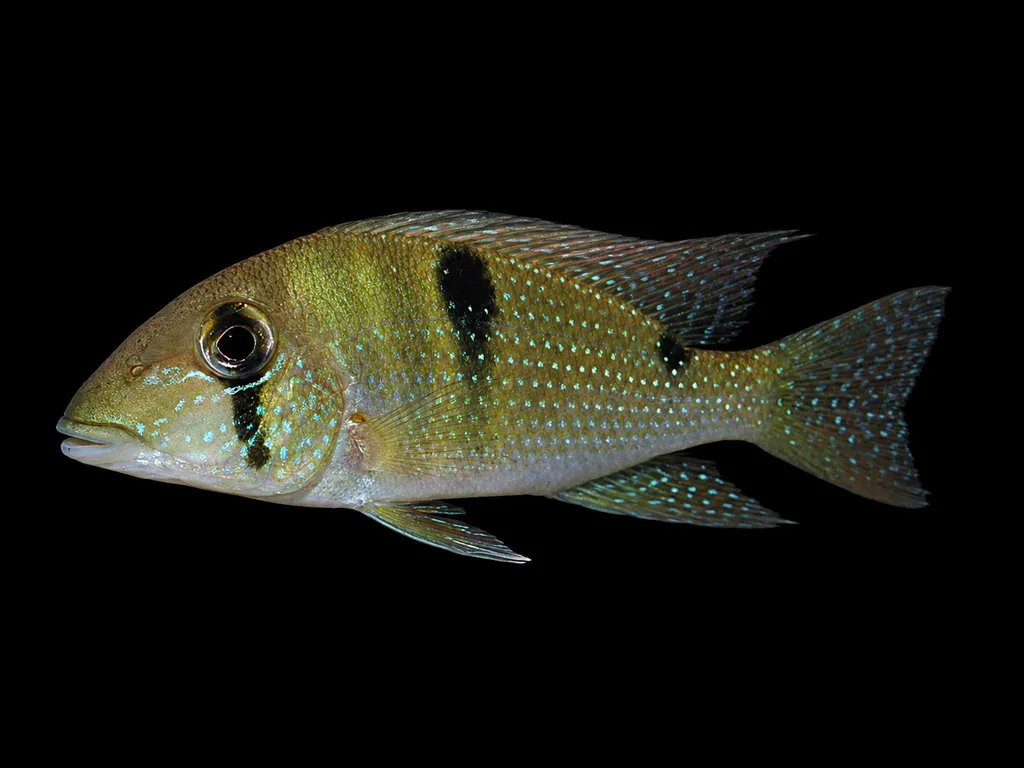 8.7 in (22 cm)119 gal (450 L)77–84°F (25–29°C)
Maroni eartheater
Geophagus harreri
8.7 in (22 cm) · 119 gal (450 L)
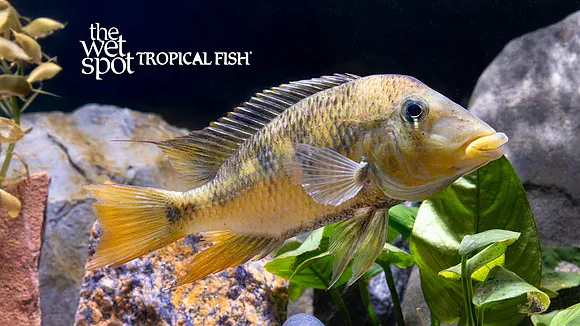 7.1 in (18 cm)106 gal (400 L)77–84°F (25–29°C)
Yellowhump eartheater
Geophagus pellegrini
7.1 in (18 cm) · 106 gal (400 L)
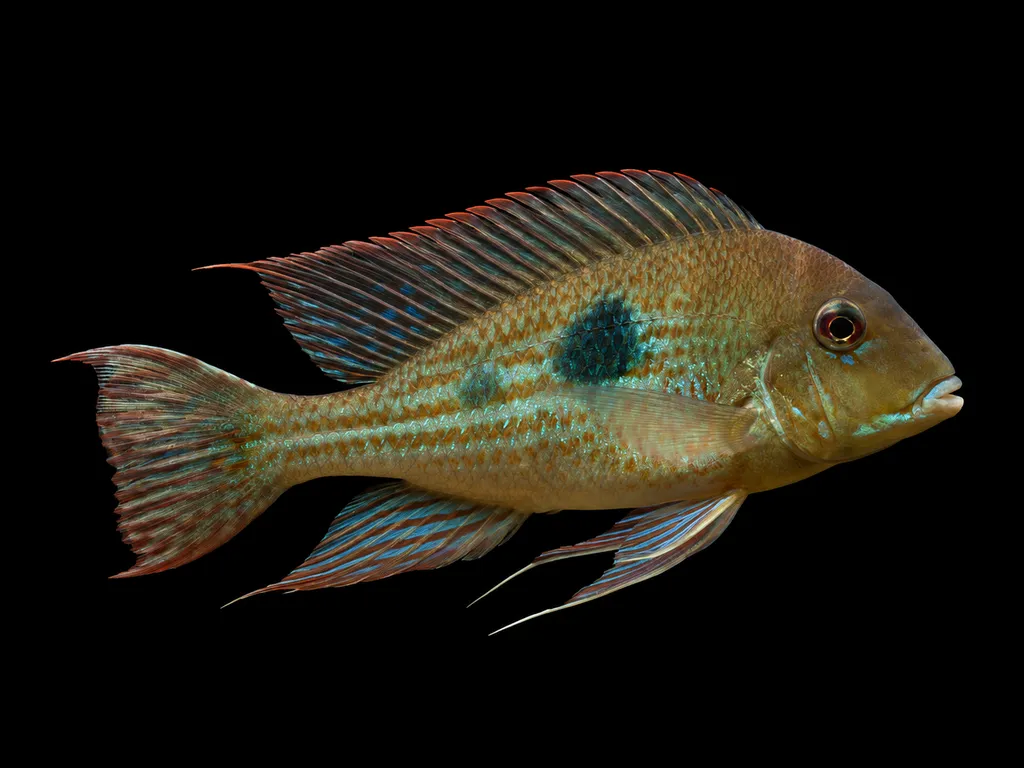 9.1 in (23 cm)172 gal (650 L)77–84°F (25–29°C)
Bigspot eartheater
Geophagus megasema
9.1 in (23 cm) · 172 gal (650 L)
 6.7 in (17 cm)106 gal (400 L)77–84°F (25–29°C)
Brachybranchus eartheater
Geophagus brachybranchus
6.7 in (17 cm) · 106 gal (400 L)