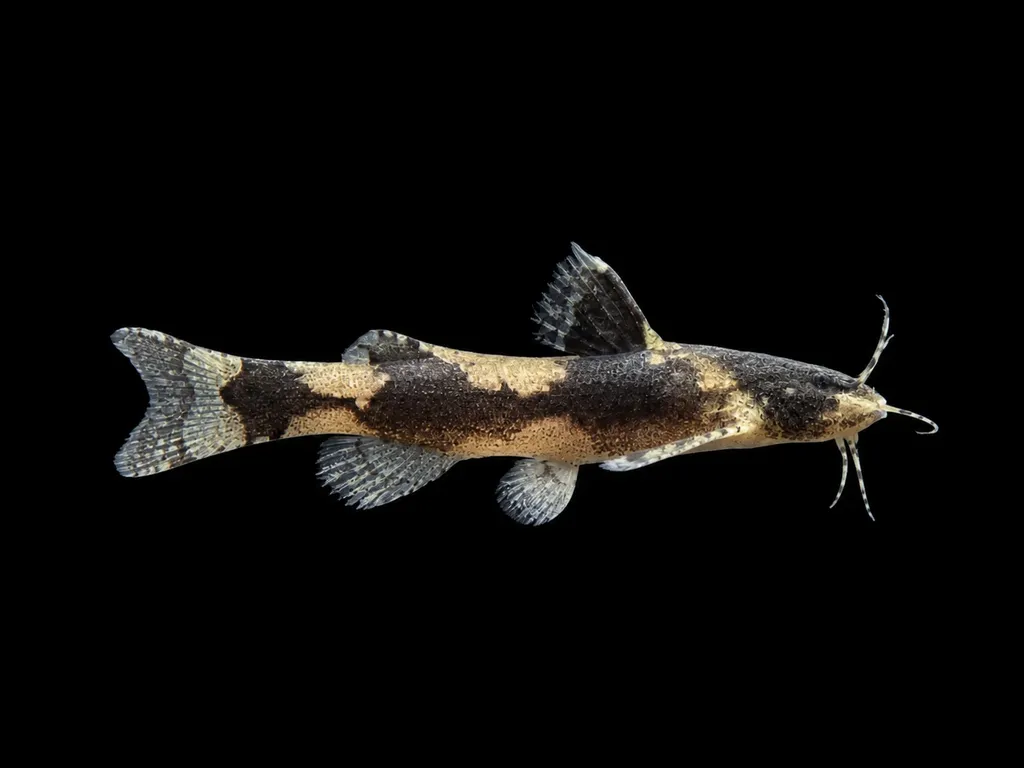
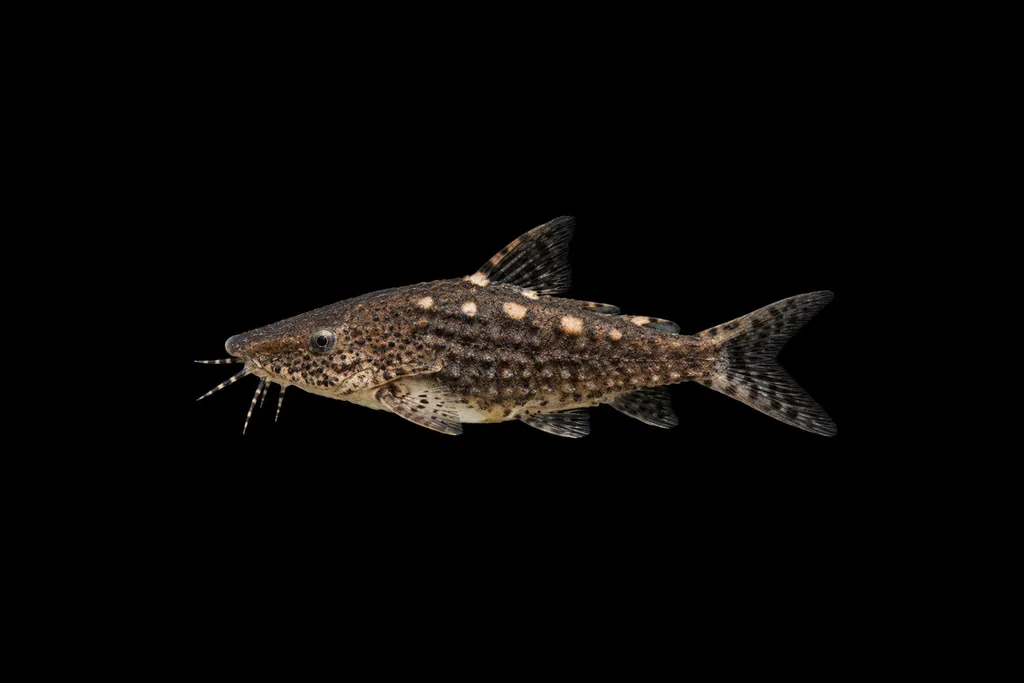
Hendrickson's bee catfish
Akysis hendricksoni
Also known as Hendricksoni akysis
FreshwaterFish
Care at a glance
- Temperature
- 72–79°F
- 22–26°C
- pH
- 6.0–7.5
- Adult size
- 2.4 in
- 6 cm
- Minimum tank
- 14 gal
- 54 L
- Temperament
- Peaceful
- Social behavior
- Social
- Swim level
- Bottom
- Diet
- Carnivore
- Difficulty
- Medium
- Breeding
- Egg layer
- Rarity
- Rare
- Family
- Akysidae
- Origin
- Peninsular Malaysia and peninsular Thailand
Overview
Hendrickson's bee catfish is a small, peaceful stream catfish for the bottom of a calm community tank. It is a step up from the easiest fish.
Did you know
Hendrickson's bee catfish carries the name of biologist John Hendrickson. He was a mentor to the scientist who described it in 1966, and he helped net the very first specimens used to name the species.
Caring for the Hendrickson's bee catfish
Give Hendrickson's bee catfish at least 14 gal (54 L) with a soft sand bed, smooth stones and wood. The sand is essential, since it hides by day buried in it or tucked under wood. It comes out to forage after dark.
As a stream fish it prefers the cooler side of tropical, at 72 to 79°F (22 to 26°C). Soft to neutral water with a pH of 6.0 to 7.5 suits it, kept stable, clean and well oxygenated. Give it a current, anywhere from gentle to brisk.
It is a nocturnal micropredator. Feed sinking foods in the evening, such as frozen and live bloodworm, daphnia and brine shrimp, and add small sinking pellets once it settles. It will not fight pushy tank mates for food.
Hendrickson's bee catfish is peaceful and community safe. Keep a small group of its own kind with other calm, modest-sized fish. Take care when netting it, as the fin spines can sting. It is an egg layer with no parental care, and its breeding is not recorded in aquaria.
Good to know
Hendrickson's bee catfish, Akysis hendricksoni, belongs to the Asian stream catfish family Akysidae. It is one of the larger bee catfishes.
In the wild
Hendrickson's bee catfish lives in forest streams of the Malay Peninsula, across northern Peninsular Malaysia and the far south of Thailand. It keeps to clear, flowing water over sand and gravel.
Weekly picks
Tank mates
The Hendrickson's bee catfish is a peaceful, social species that keeps to the bottom. These picks share a community profile with it, are safe together in both directions, and overlap on water type, temperature and pH.
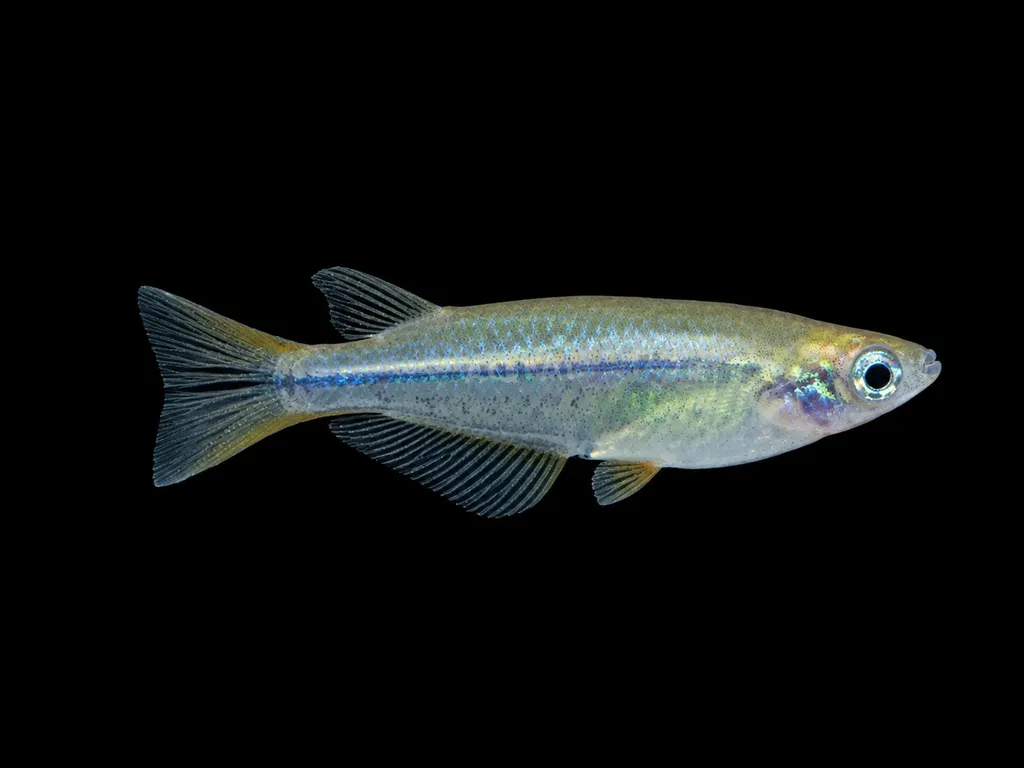
Celebes ricefish
Oryzias celebensis
Freshwater1.8 in (4.5 cm) · 14 gal (54 L)72–79°F (22–26°C)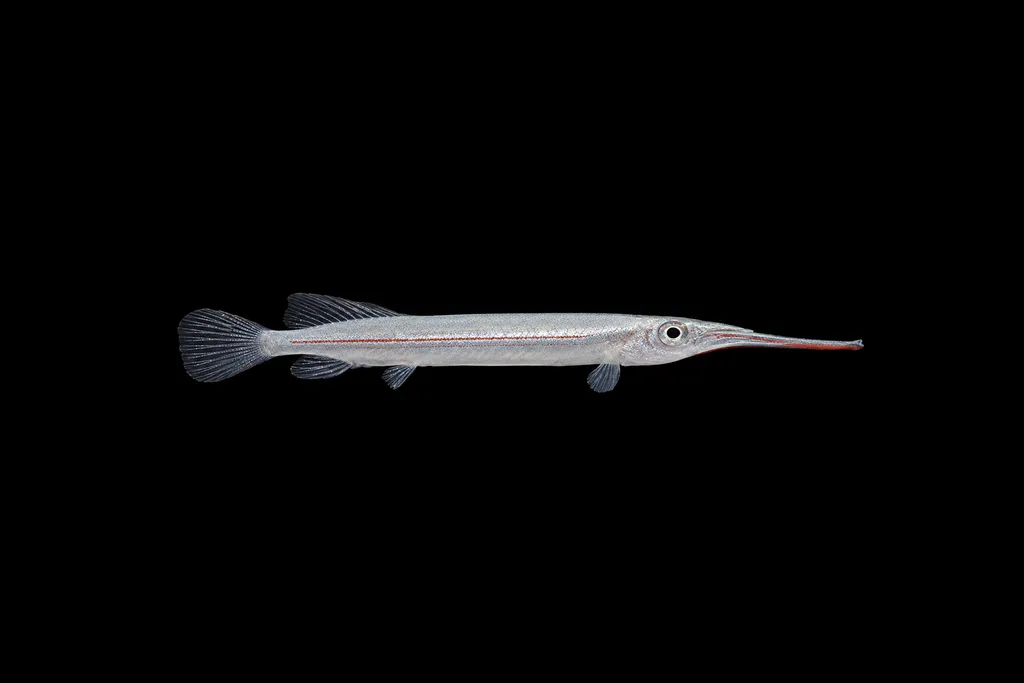
Fire halfbeak
Hemirhamphodon kapuasensis
Freshwater2.4 in (6 cm) · 14 gal (54 L)73–81°F (23–27°C)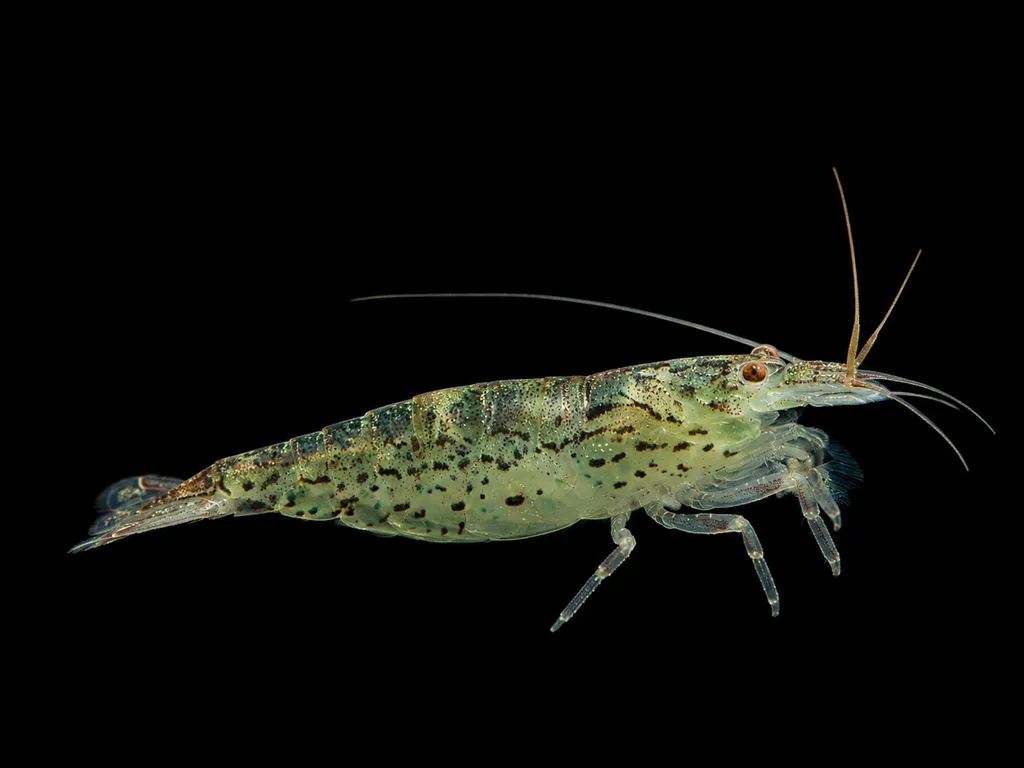
Green lace shrimp
Atyoida pilipes
Freshwater2.8 in (7 cm) · 14 gal (54 L)73–82°F (23–28°C)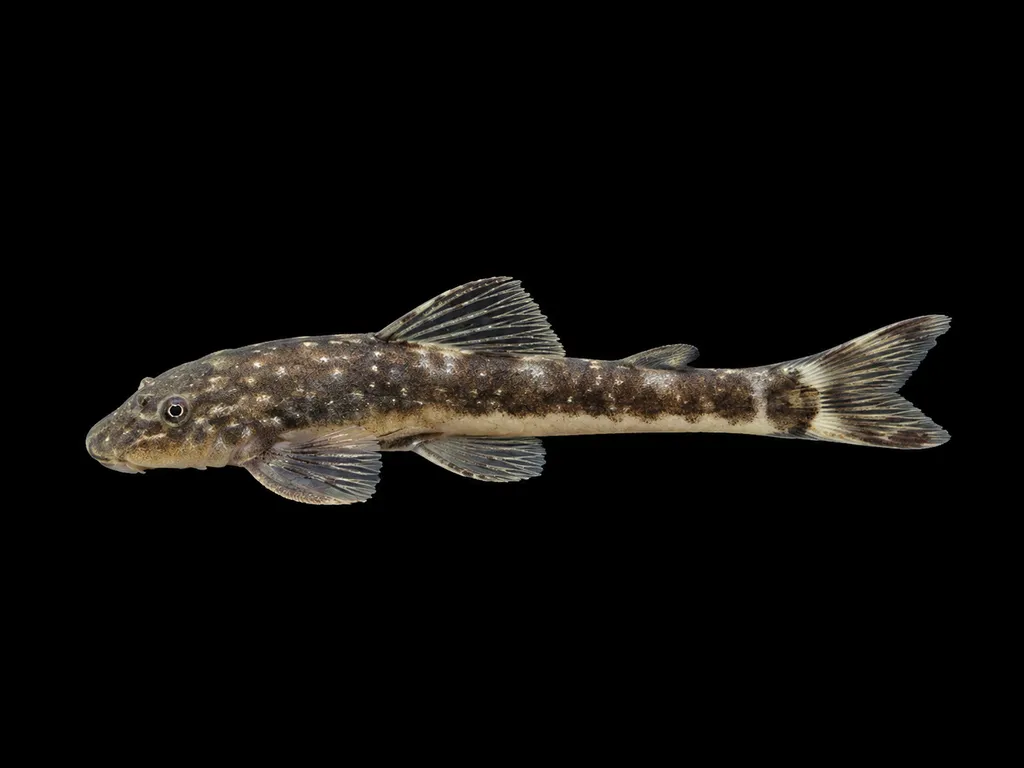
Ceará parotocinclus
Parotocinclus cearensis
Freshwater2 in (5 cm) · 14 gal (54 L)72–81°F (22–27°C)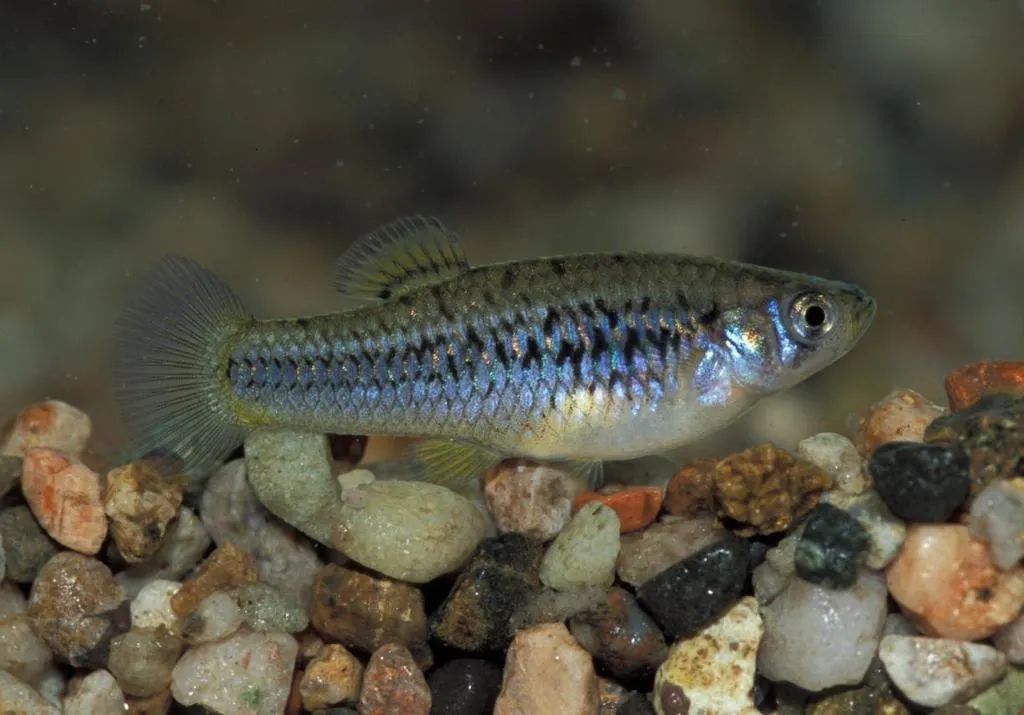
Crescent gambusia
Gambusia hurtadoi
Freshwater2 in (5 cm) · 14 gal (54 L)68–79°F (20–26°C)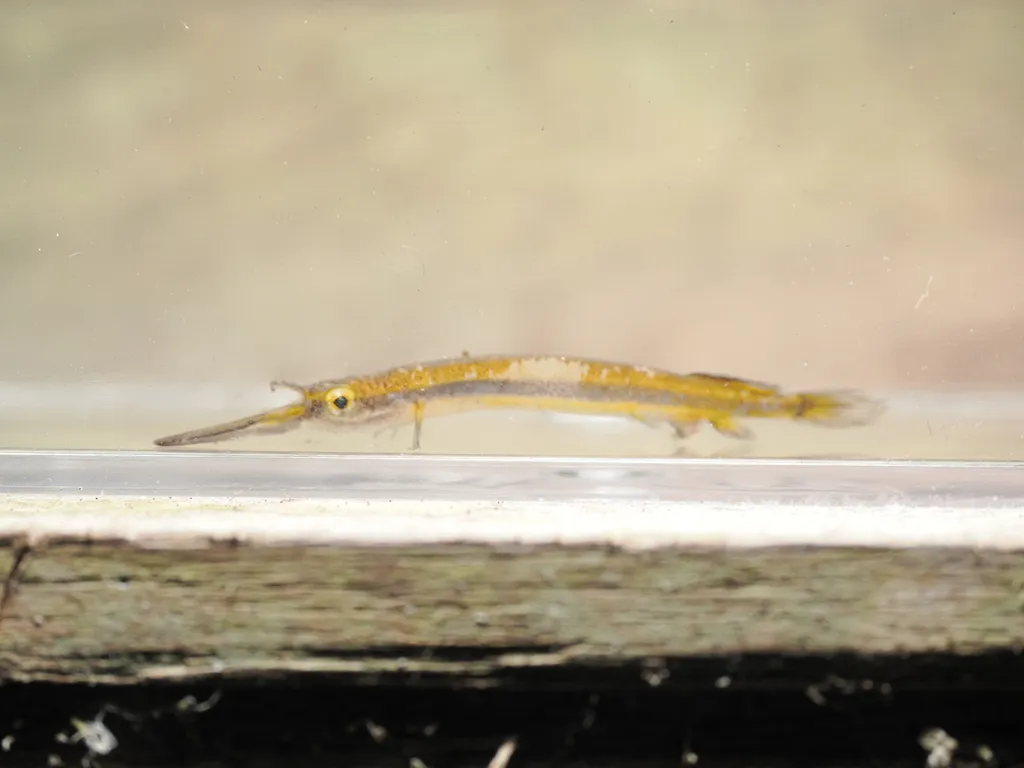
Gold-spotted halfbeak
Hemirhamphodon chrysopunctatus
Freshwater2.6 in (6.5 cm) · 14 gal (54 L)73–81°F (23–27°C)
Common questions
What size tank does a Hendrickson's bee catfish need?
A Hendrickson's bee catfish needs at least 14 gal (54 L). It spends most of its time in the bottom.
What temperature and pH does a Hendrickson's bee catfish need?
A Hendrickson's bee catfish is comfortable at 72–79°F (22–26°C) with a pH of 6.0–7.5.
What does a Hendrickson's bee catfish eat?
Hendrickson's bee catfish is a nocturnal micropredator. It eats sinking foods in the evening, such as frozen and live bloodworm, daphnia and brine shrimp, plus small sinking pellets once it settles.
How big does a Hendrickson's bee catfish get?
An adult Hendrickson's bee catfish reaches about 2.4 in (6 cm).
How does a Hendrickson's bee catfish breed?
Hendrickson's bee catfish lays eggs and gives them no parental care. Its breeding has not been recorded in aquaria.
Related species
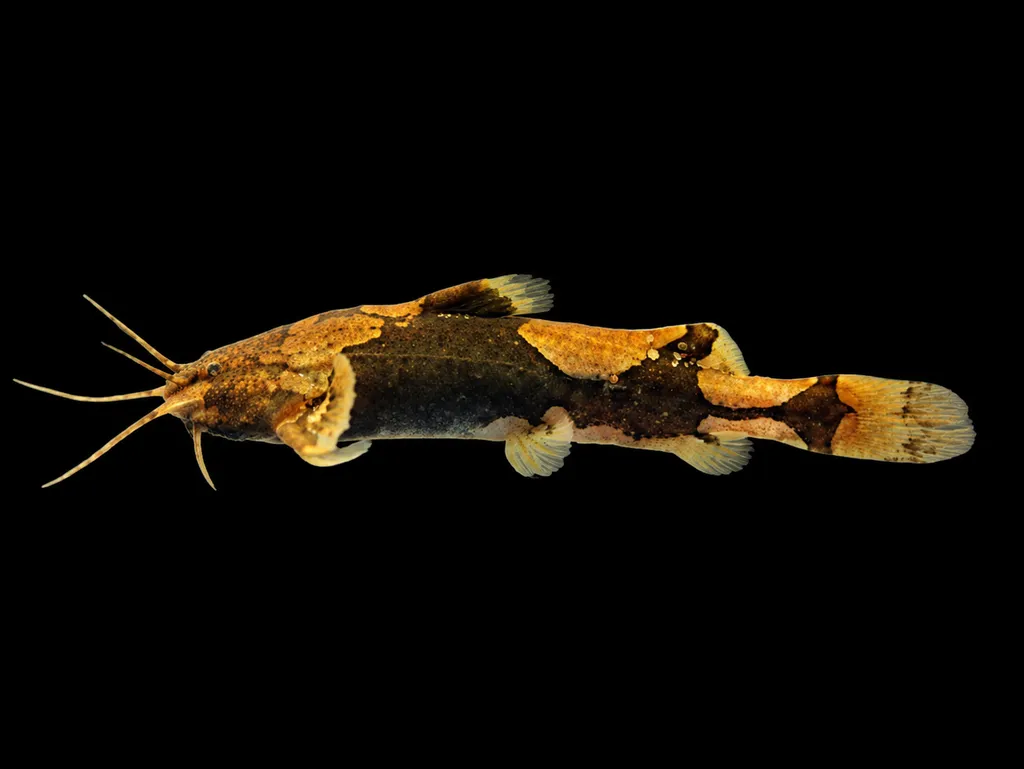 2.4 in (6 cm)14 gal (54 L)72–79°F (22–26°C)
Orange marble bee catfish
Akysis longifilis
2.4 in (6 cm) · 14 gal (54 L)
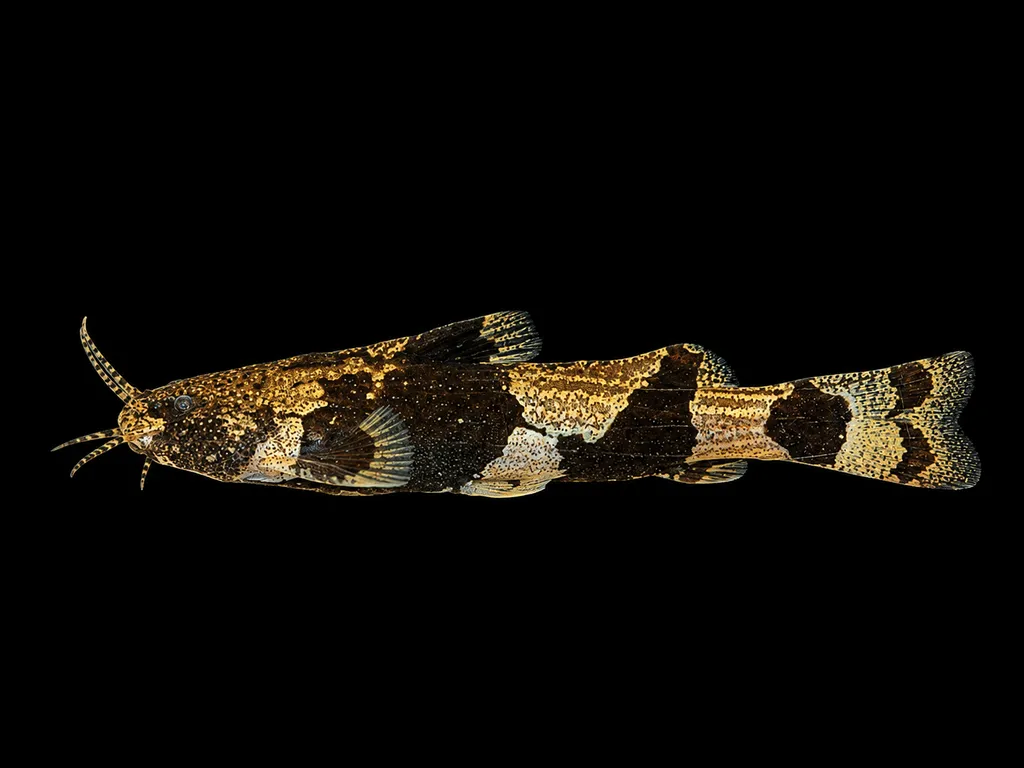 2.8 in (7 cm)14 gal (54 L)72–79°F (22–26°C)
Burmese marble bee catfish
Akysis prashadi
2.8 in (7 cm) · 14 gal (54 L)
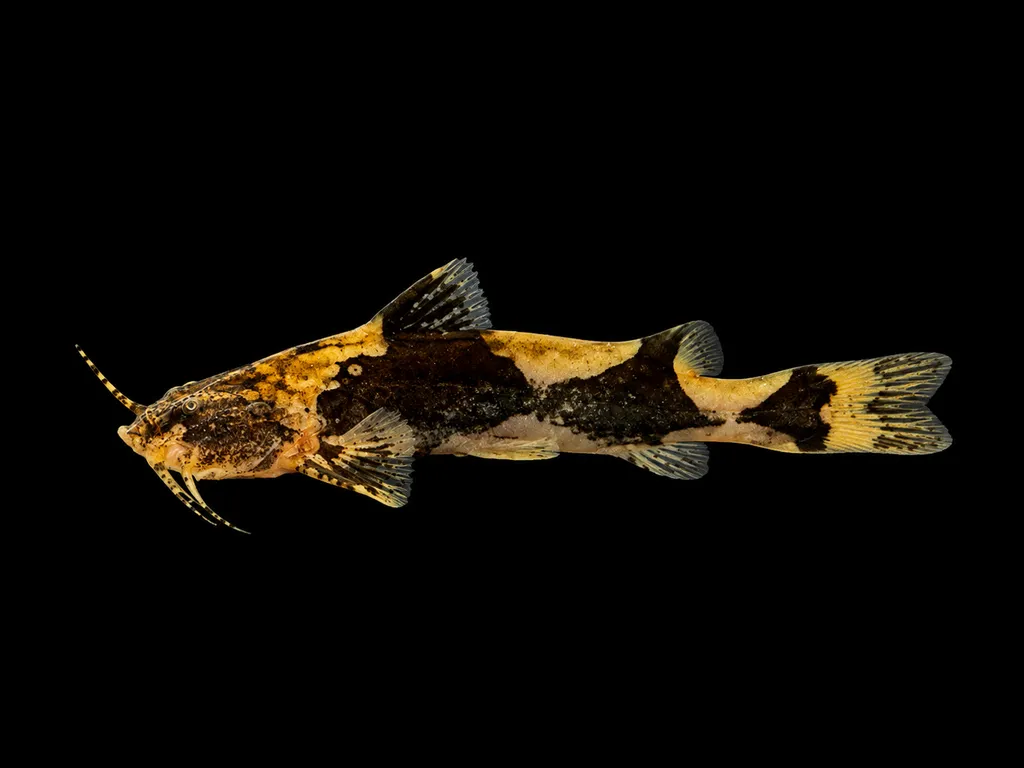 1.6 in (4 cm)14 gal (54 L)72–79°F (22–26°C)
Portellus bee catfish
Akysis portellus
1.6 in (4 cm) · 14 gal (54 L)
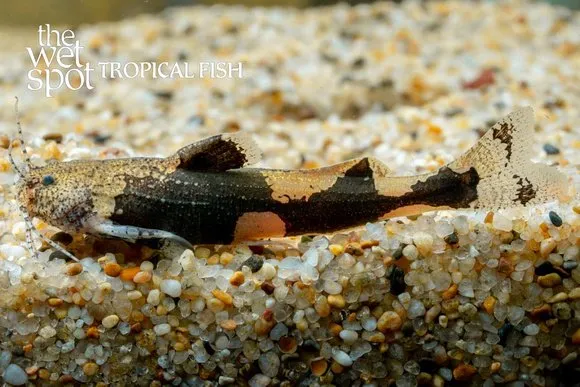 1.6 in (4 cm)11 gal (40 L)72–79°F (22–26°C)
Wasp bee catfish
Akysis vespa
1.6 in (4 cm) · 11 gal (40 L)
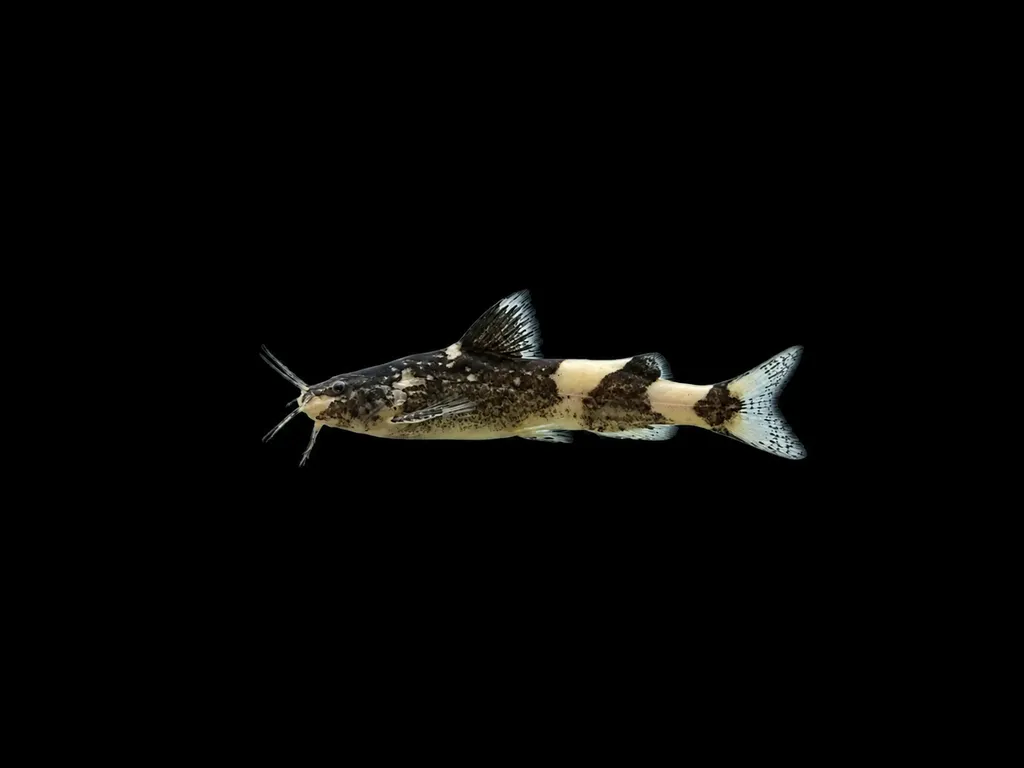 1.4 in (3.5 cm)11 gal (40 L)72–79°F (22–26°C)
Small-eyed bee catfish
Akysis microps
1.4 in (3.5 cm) · 11 gal (40 L)
 1 in (2.5 cm)11 gal (40 L)73–82°F (23–28°C)
Dwarf warty catfish
Parakysis notialis
1 in (2.5 cm) · 11 gal (40 L)