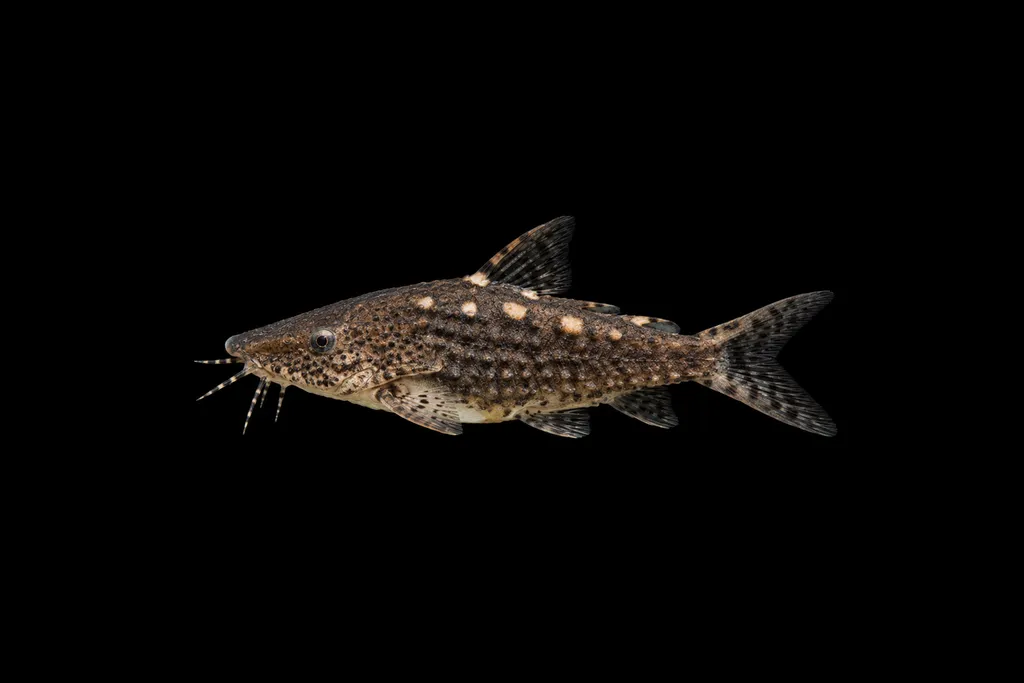
Orange marble bee catfish
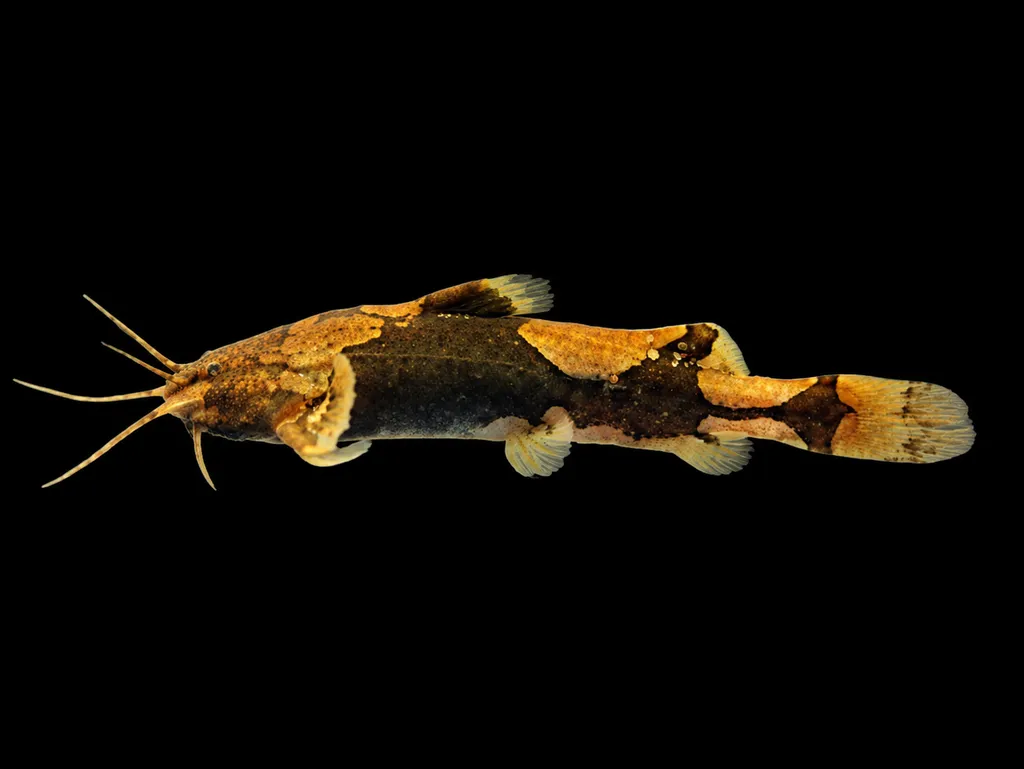
Akysis longifilis
Also known as Longifilis bee cat, Orange marble cat
FreshwaterFish
Care at a glance
- Temperature
- 72–79°F
- 22–26°C
- pH
- 6.0–7.5
- Adult size
- 2.4 in
- 6 cm
- Minimum tank
- 14 gal
- 54 L
- Temperament
- Peaceful
- Social behavior
- Social
- Swim level
- Bottom
- Diet
- Carnivore
- Difficulty
- Medium
- Breeding
- Egg layer
- Rarity
- Rare
- Family
- Akysidae
- Origin
- Sittaung basin, Myanmar
Overview
The orange marble bee catfish is a peaceful, sand-loving stream catfish for the bottom of a calm community tank. It is best with a little experience.
Did you know
The orange marble bee catfish reads its dark, sandy world mostly by touch. Its species name means long thread, after the extra-long barbels it trails over the bottom like fingers. They feel for food it never needs to see.
Caring for the orange marble bee catfish
Give the orange marble bee catfish around 14 gal (54 L) with fine sand, pebbles, smooth stones and wood. Fine sand is essential for burying, since it spends daylight hours buried or hidden and becomes active at night.
As a cool-stream fish it prefers 72 to 79°F (22 to 26°C) and soft to neutral water, with a pH of 6.0 to 7.5. It needs strong water movement, plenty of oxygen and excellent water quality, kept up with regular water changes.
Feed it after dark with sinking and frozen foods such as bloodworm, daphnia and brine shrimp. It is a slow, methodical feeder that struggles against greedy tank mates.
The orange marble bee catfish is peaceful and community safe. It settles well in a small group of its own kind alongside other calm, small fish. Its pectoral and dorsal spines can give a sting, so handle it gently. Like the rest of its genus it lays eggs without parental care, but its breeding is not recorded in the hobby.
Good to know
The orange marble bee catfish, Akysis longifilis, is a stream catfish in the family Akysidae. Pale saddle marks and yellowish bands pattern its brown body. It shares its home drainage with the closely related Akysis portellus.
In the wild
The orange marble bee catfish comes from the Sittaung river system of southern Myanmar. It lives in swift, clear streams over mixed sand, gravel and rock.
Weekly picks
Tank mates
The orange marble bee catfish is a peaceful, social species that keeps to the bottom. These picks share a community profile with it, are safe together in both directions, and overlap on water type, temperature and pH.
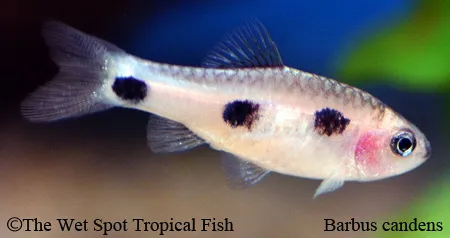
Glowing ember barb
Enteromius candens
Freshwater1.6 in (4 cm) · 14 gal (54 L)72–81°F (22–27°C)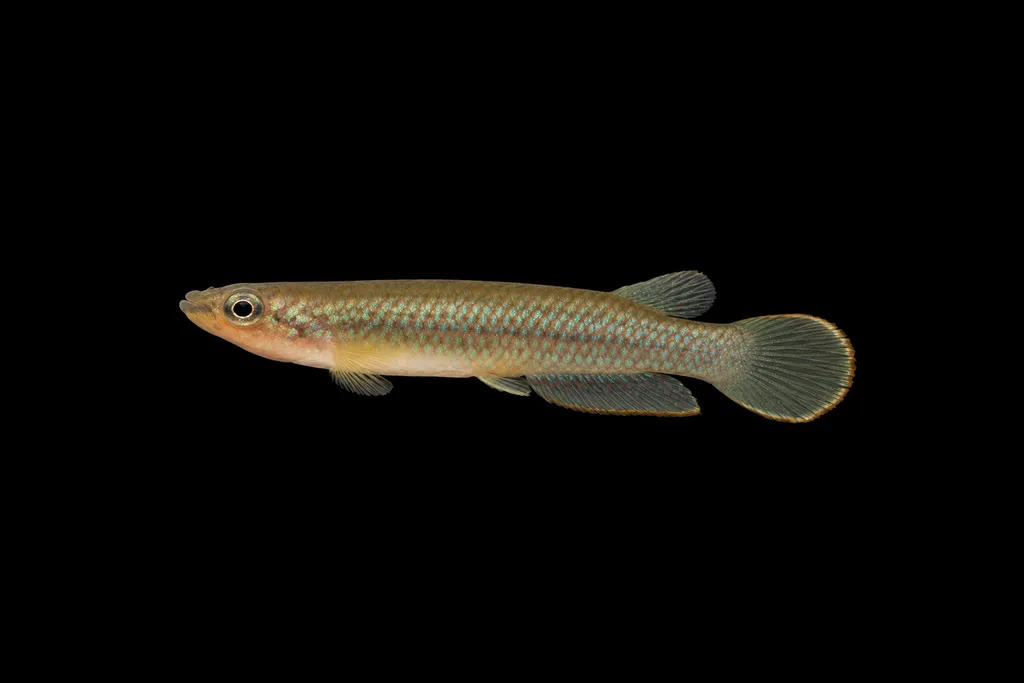
Guinean panchax
Epiplatys guineensis
Freshwater2.8 in (7 cm) · 14 gal (54 L)68–77°F (20–25°C)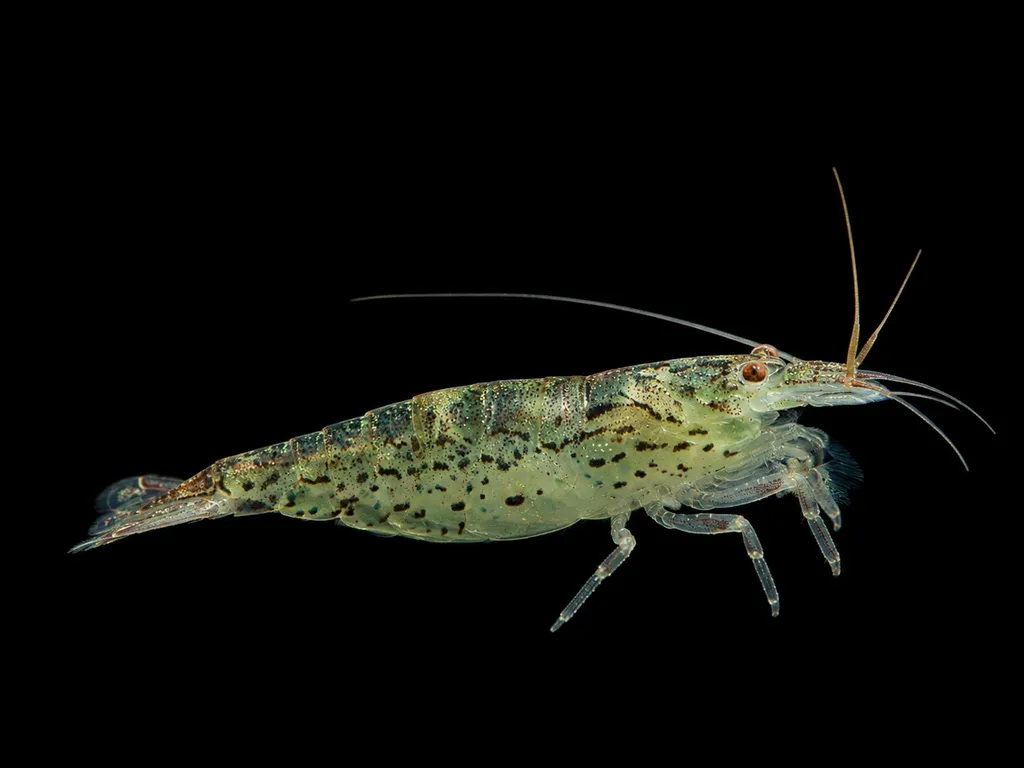
Green lace shrimp
Atyoida pilipes
Freshwater2.8 in (7 cm) · 14 gal (54 L)73–82°F (23–28°C)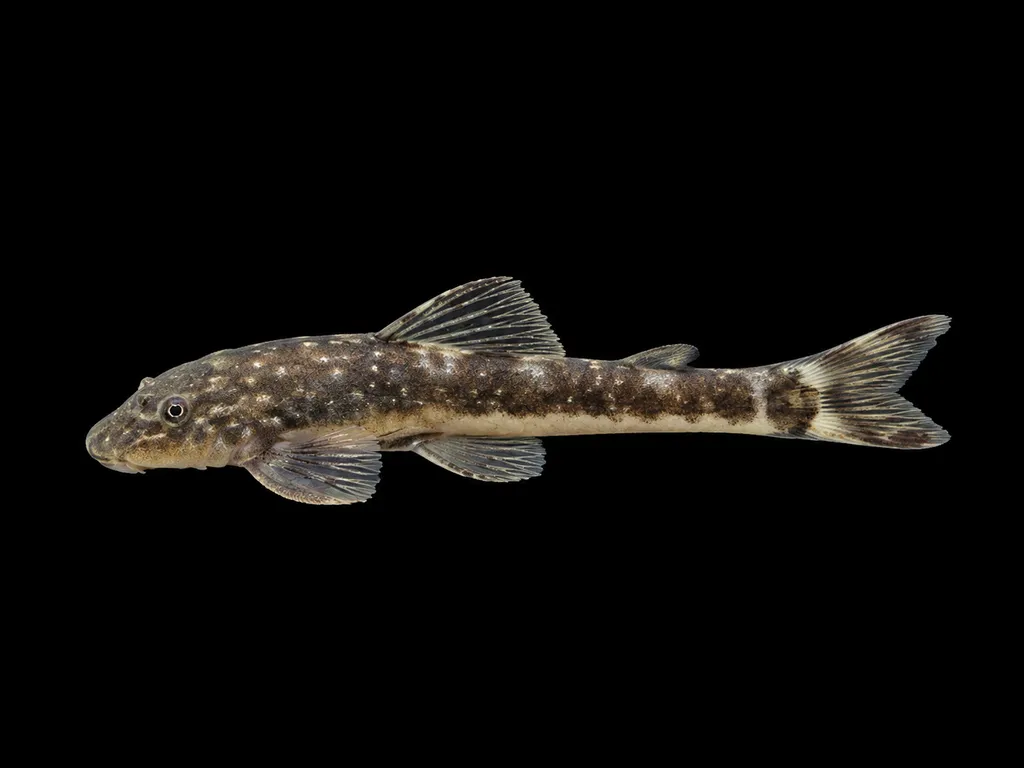
Ceará parotocinclus
Parotocinclus cearensis
Freshwater2 in (5 cm) · 14 gal (54 L)72–81°F (22–27°C)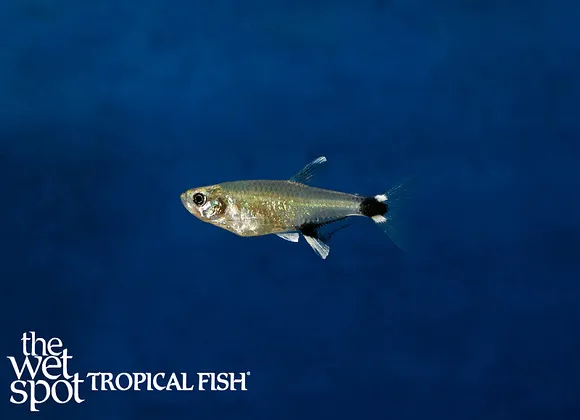
Panda darter tetra
Aphyocharax nattereri
Freshwater1.4 in (3.5 cm) · 14 gal (54 L)72–81°F (22–27°C)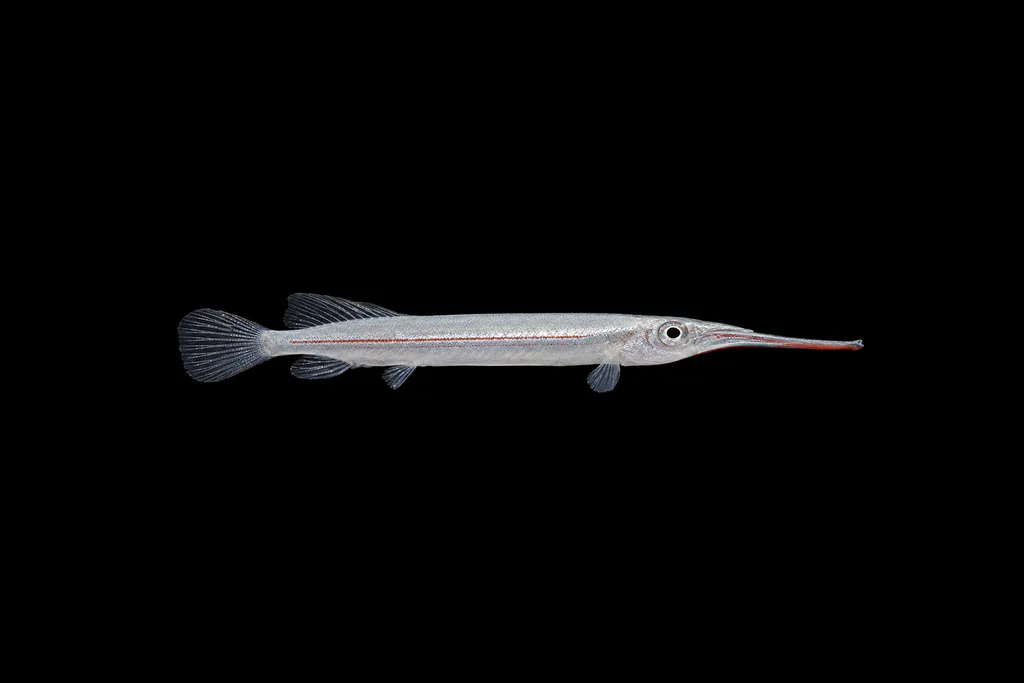
Fire halfbeak
Hemirhamphodon kapuasensis
Freshwater2.4 in (6 cm) · 14 gal (54 L)73–81°F (23–27°C)
Common questions
What size tank does an orange marble bee catfish need?
An orange marble bee catfish needs at least 14 gal (54 L). It spends most of its time in the bottom.
What temperature and pH does an orange marble bee catfish need?
An orange marble bee catfish is comfortable at 72–79°F (22–26°C) with a pH of 6.0–7.5.
What does an orange marble bee catfish eat?
An orange marble bee catfish eats sinking and frozen foods after dark, such as bloodworm, daphnia and brine shrimp. It feeds slowly and methodically.
How big does an orange marble bee catfish get?
An adult orange marble bee catfish reaches about 2.4 in (6 cm).
How does an orange marble bee catfish breed?
The orange marble bee catfish lays eggs and gives them no parental care. Its breeding is not recorded in the hobby.
Related species
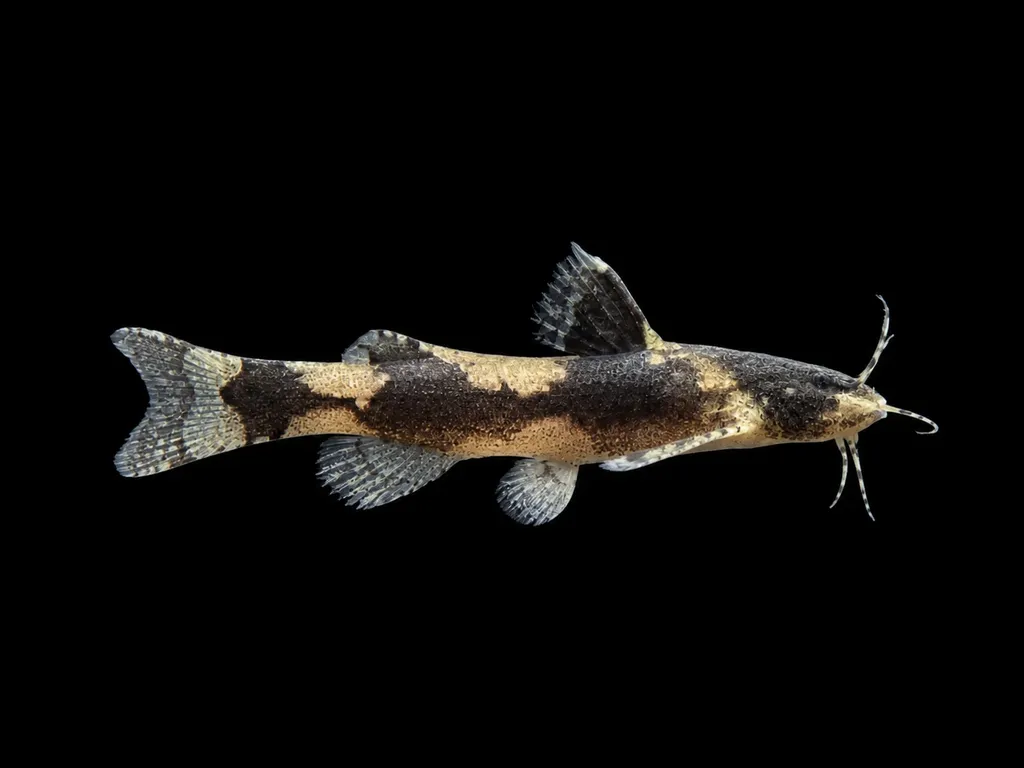 2.4 in (6 cm)14 gal (54 L)72–79°F (22–26°C)
Hendrickson's bee catfish
Akysis hendricksoni
2.4 in (6 cm) · 14 gal (54 L)
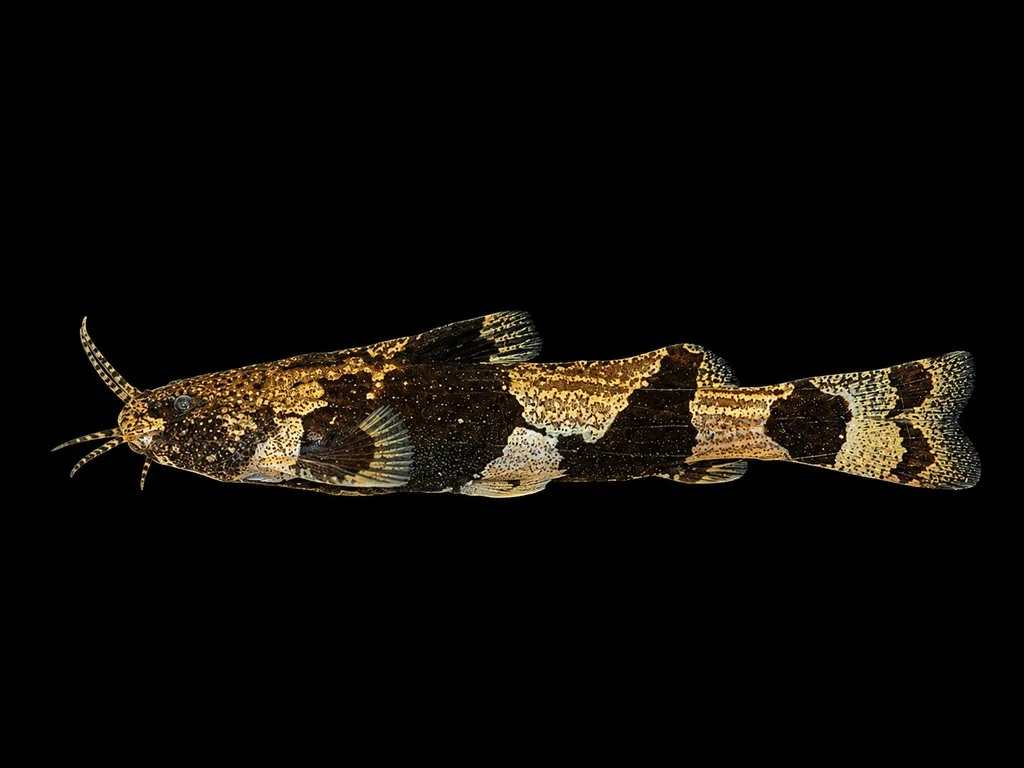 2.8 in (7 cm)14 gal (54 L)72–79°F (22–26°C)
Burmese marble bee catfish
Akysis prashadi
2.8 in (7 cm) · 14 gal (54 L)
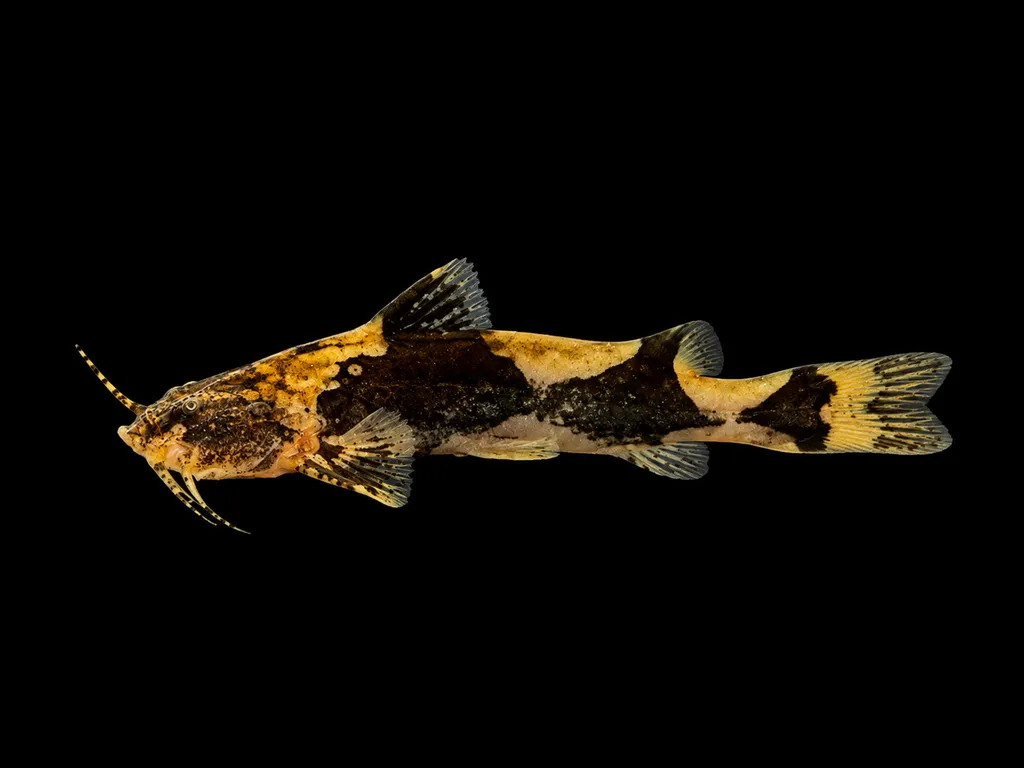 1.6 in (4 cm)14 gal (54 L)72–79°F (22–26°C)
Portellus bee catfish
Akysis portellus
1.6 in (4 cm) · 14 gal (54 L)
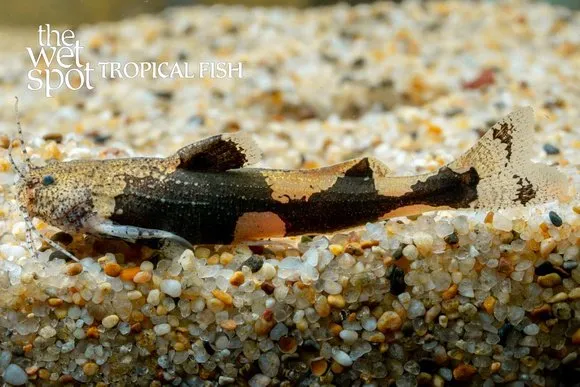 1.6 in (4 cm)11 gal (40 L)72–79°F (22–26°C)
Wasp bee catfish
Akysis vespa
1.6 in (4 cm) · 11 gal (40 L)
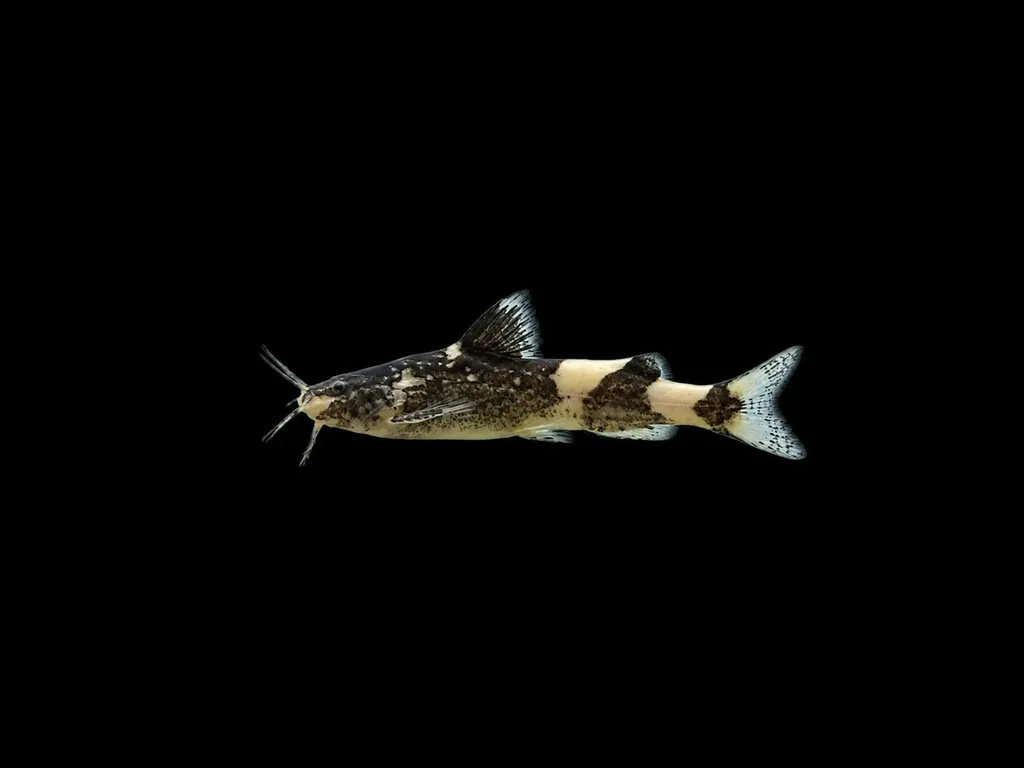 1.4 in (3.5 cm)11 gal (40 L)72–79°F (22–26°C)
Small-eyed bee catfish
Akysis microps
1.4 in (3.5 cm) · 11 gal (40 L)
 1 in (2.5 cm)11 gal (40 L)73–82°F (23–28°C)
Dwarf warty catfish
Parakysis notialis
1 in (2.5 cm) · 11 gal (40 L)