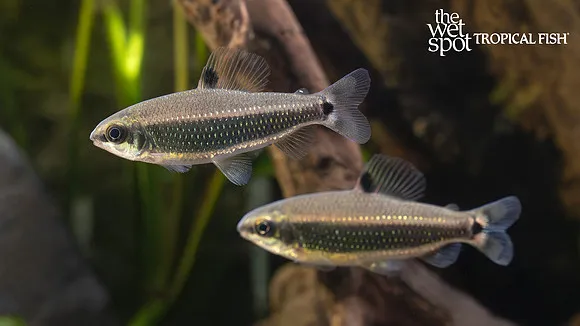
Axelrod's neolebias
Neolebias axelrodi
Also known as Axelrodi neolebias
FreshwaterFish
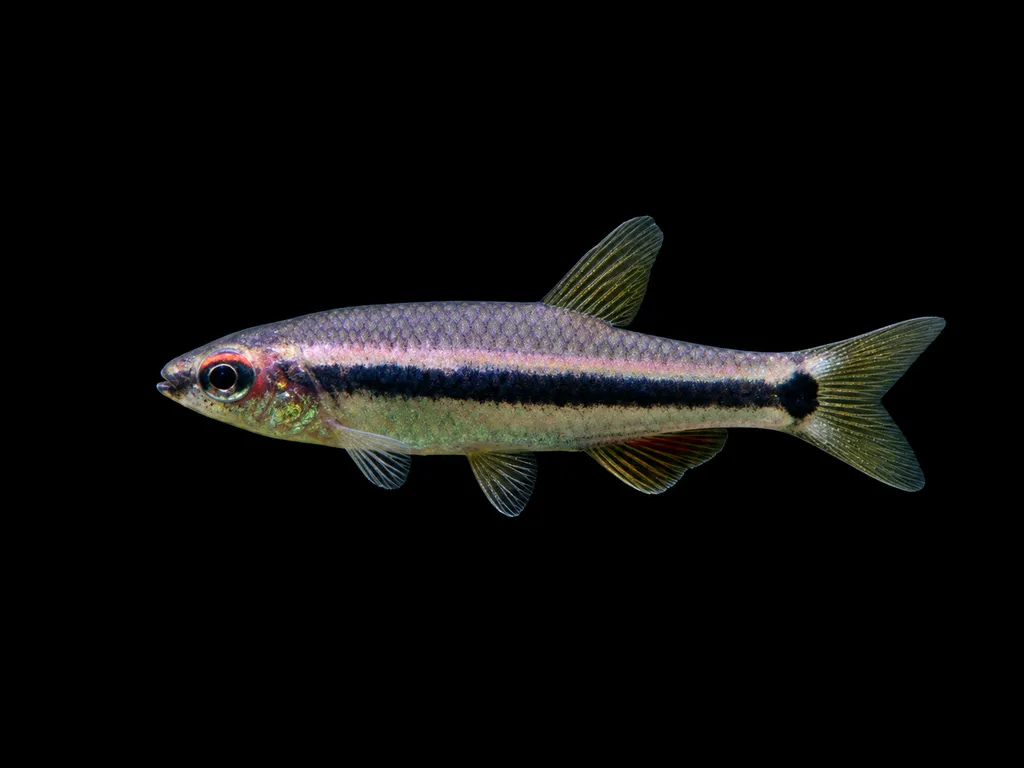
Care at a glance
- Temperature
- 73–81°F
- 23–27°C
- pH
- 5.5–6.8
- Adult size
- 0.9 in
- 2.2 cm
- Minimum tank
- 11 gal
- 40 L
- Temperament
- Peaceful
- Social behavior
- Schooling
- Swim level
- Middle
- Difficulty
- Medium
- Breeding
- No record
- Rarity
- Rare
- Family
- Distichodontidae
- Origin
- Coastal Nigeria
Overview
Axelrod's neolebias is a true nano fish, tiny and peaceful, for a soft, quiet tank. It is a step up from the easiest fish.
Did you know
Axelrod's neolebias is one of the smallest fish in its African family, the same family that holds the much larger distichodus.
Caring for the Axelrod's neolebias
Axelrod's neolebias needs a school to feel safe, so keep at least eight or ten together. A well-planted tank of 11 gal (40 L) holds a school comfortably. Use gentle filtration, plenty of plants, driftwood and leaf litter, all under dim light.
Keep the water soft and acidic, at 73 to 81°F (23 to 27°C) and a pH of 5.5 to 6.8. Stable, mature water matters more to this little fish than any single number.
It forages the plants and litter for the smallest morsels. Feed fine foods it can fit in its mouth, such as microworm, crushed flake, frozen cyclops and baby brine shrimp.
It is peaceful and belongs only with equally tiny, gentle species such as Barboides, small African tetras and dwarf shrimp. Anything larger will out-compete or intimidate it. Breeding is not established in aquariums.
Good to know
Neolebias axelrodi is a dwarf member of the family Distichodontidae. It is flushed with rose and marked with a fine gold line. It is one of many species named for Herbert Axelrod, the American publisher of aquarium books. His books put countless such species in front of hobbyists.
In the wild
Axelrod's neolebias comes from soft, shaded creeks along the coast of Nigeria. The water there is quiet blackwater, darkened by leaves and overhanging forest.
Weekly picks
Tank mates
The Axelrod's neolebias is a peaceful, schooling species that keeps to the middle. These picks share a community profile with it, are safe together in both directions, and overlap on water type, temperature and pH.
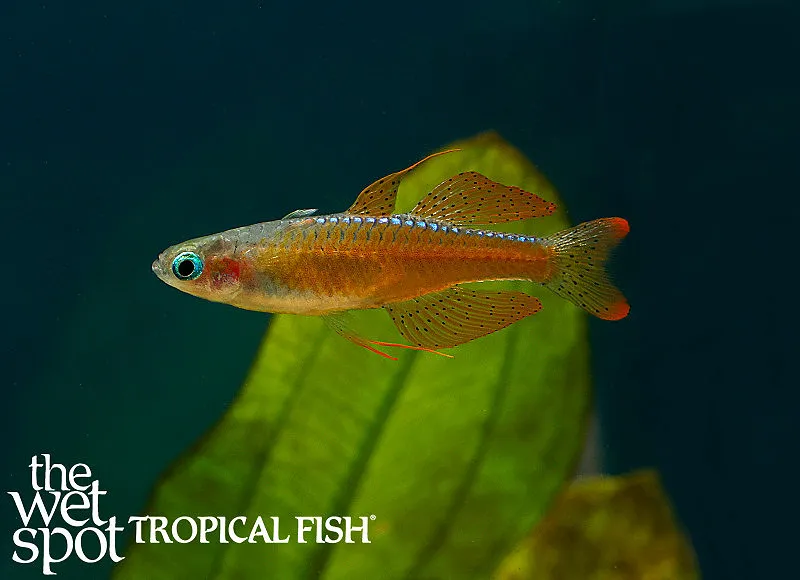
Red neon blue-eye
Pseudomugil luminatus
Freshwater1.4 in (3.5 cm) · 11 gal (40 L)72–81°F (22–27°C)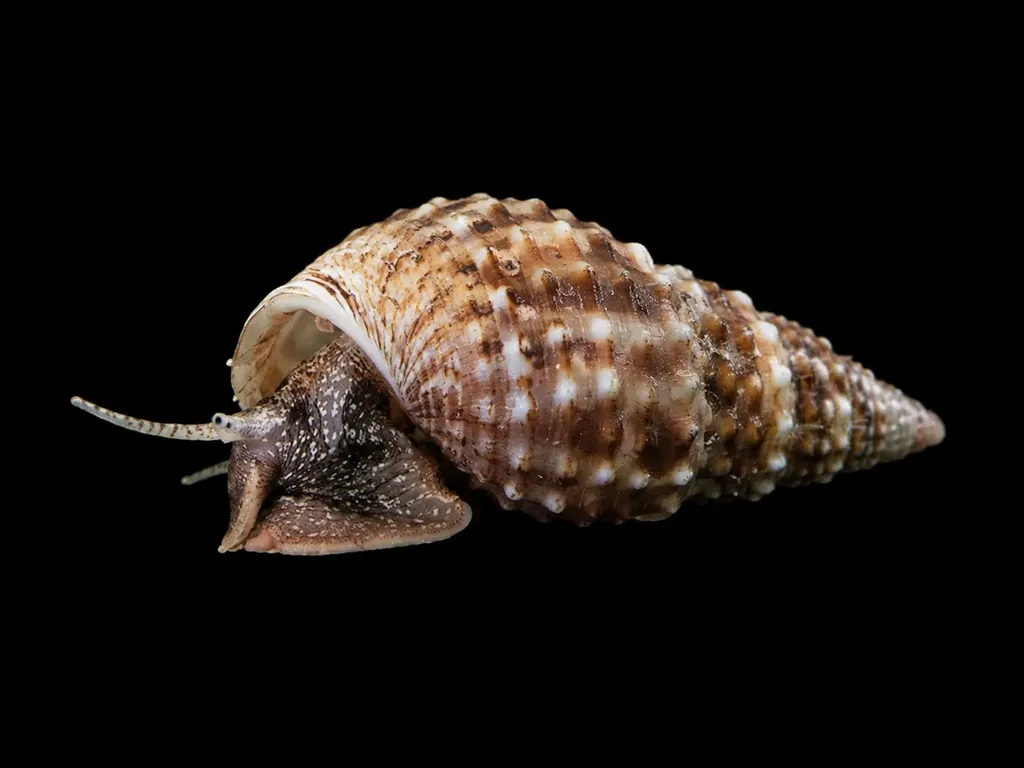
Prambanan snail
Thiara winteri
Freshwater1.6 in (4 cm) · 11 gal (40 L)73–82°F (23–28°C)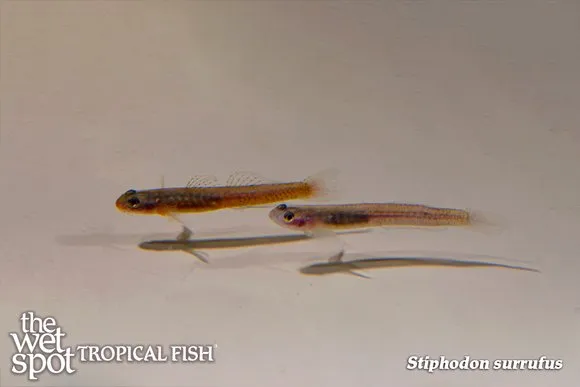
Birdsong goby
Stiphodon surrufus
Freshwater1 in (2.5 cm) · 11 gal (40 L)73–81°F (23–27°C)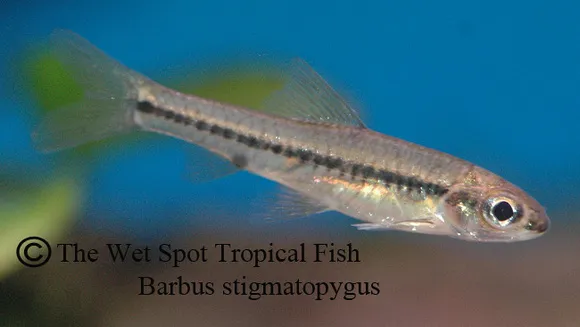
Blackspot dwarf barb
Enteromius stigmatopygus
Freshwater1.4 in (3.5 cm) · 11 gal (40 L)72–81°F (22–27°C)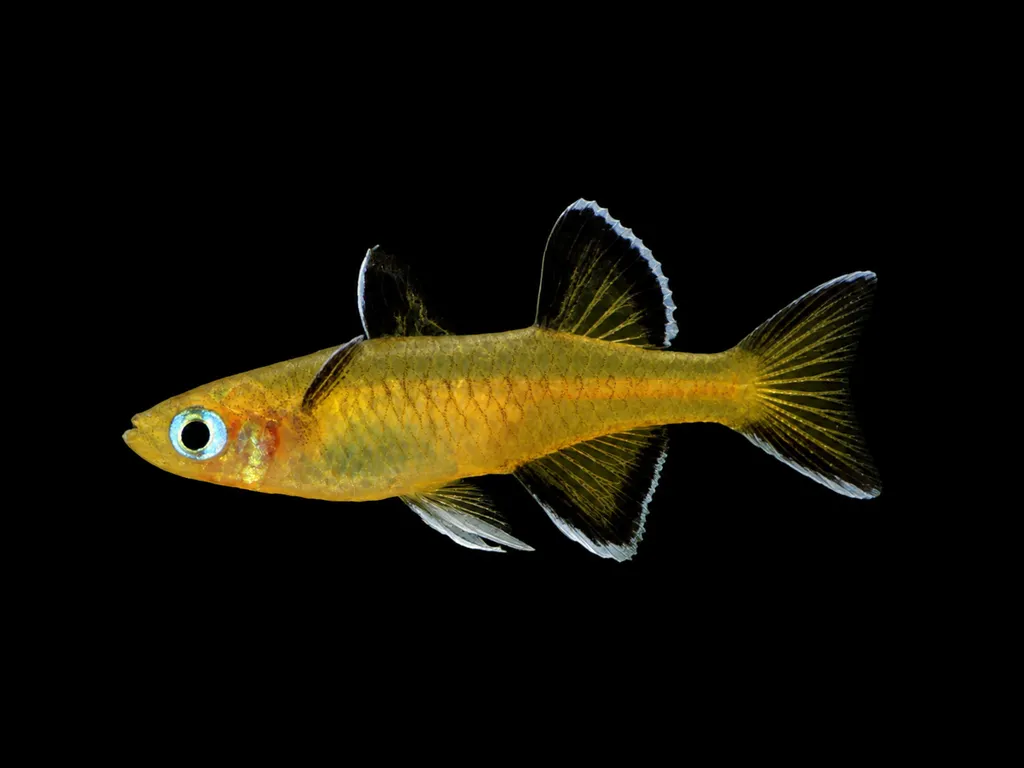
Honey blue-eye
Pseudomugil mellis
Freshwater1.4 in (3.5 cm) · 11 gal (40 L)68–82°F (20–28°C)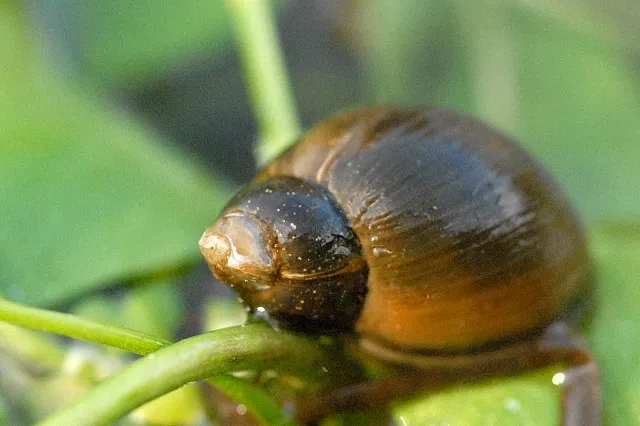
Wandering snail
Ampullaceana balthica
Freshwater0.8 in (2 cm) · 11 gal (40 L)50–84°F (10–29°C)
Common questions
What size tank does an Axelrod's neolebias need?
An Axelrod's neolebias needs at least 11 gal (40 L). It spends most of its time in the middle.
What temperature and pH does an Axelrod's neolebias need?
An Axelrod's neolebias is comfortable at 73–81°F (23–27°C) with a pH of 5.5–6.8.
What does an Axelrod's neolebias eat?
Axelrod's neolebias forages the plants and litter for the smallest morsels. Feed it fine foods that fit its mouth, such as microworm, crushed flake, frozen cyclops and baby brine shrimp.
How big does an Axelrod's neolebias get?
An adult Axelrod's neolebias reaches about 0.9 in (2.2 cm).
Does an Axelrod's neolebias need a group?
Yes. An Axelrod's neolebias is a schooling species and should be kept in a group, not singly.
Related species
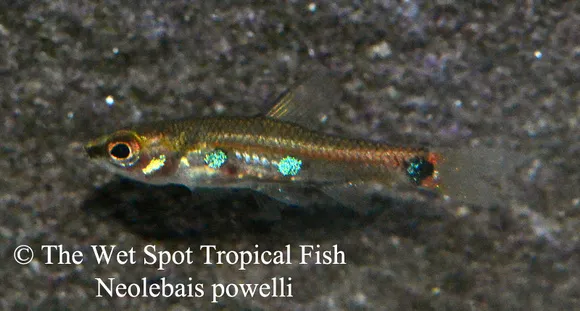 0.8 in (2 cm)11 gal (40 L)73–81°F (23–27°C)
Powell's neolebias
Neolebias powelli
0.8 in (2 cm) · 11 gal (40 L)
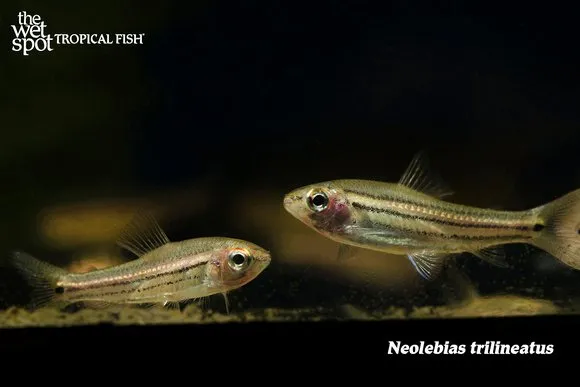 1.3 in (3.3 cm)14 gal (54 L)73–81°F (23–27°C)
Threeline neolebias
Neolebias trilineatus
1.3 in (3.3 cm) · 14 gal (54 L)
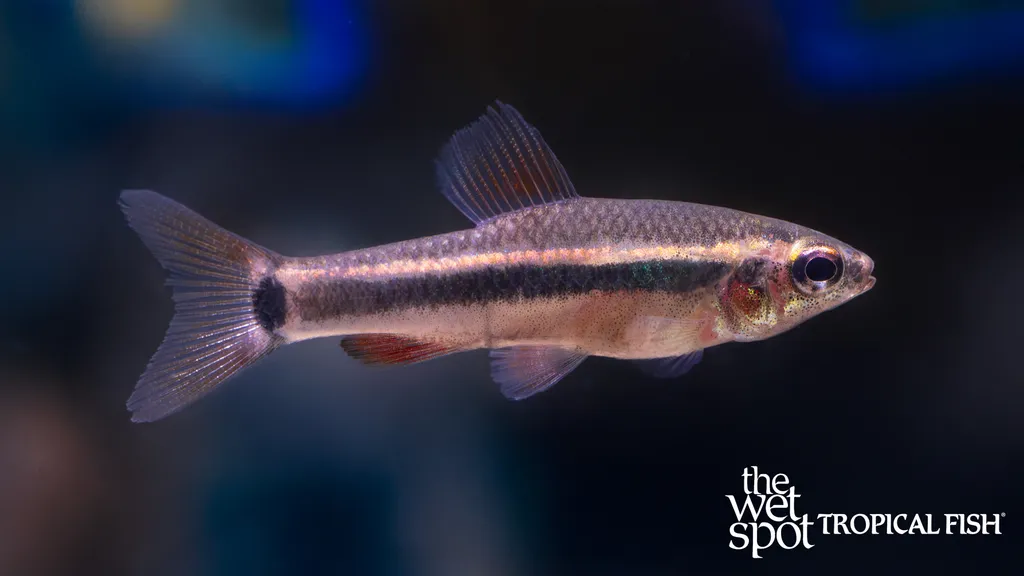 1.4 in (3.5 cm)11 gal (40 L)75–82°F (24–28°C)
Ansorge's neolebias
Neolebias ansorgii
1.4 in (3.5 cm) · 11 gal (40 L)
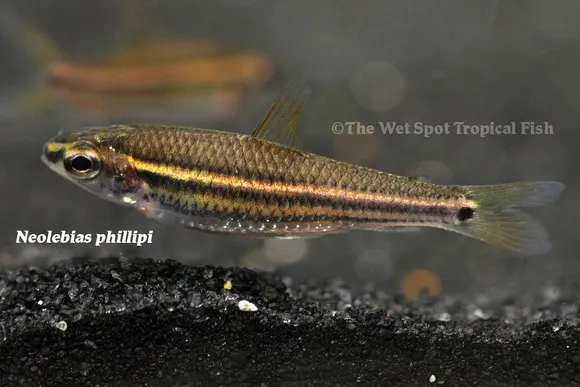 1.4 in (3.5 cm)11 gal (40 L)73–81°F (23–27°C)
Philippe's neolebias
Neolebias philippei
1.4 in (3.5 cm) · 11 gal (40 L)
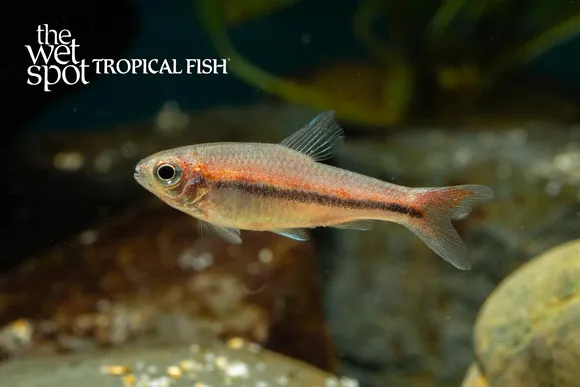 1.8 in (4.5 cm)14 gal (54 L)73–81°F (23–27°C)
Trewavas's neolebias
Neolebias trewavasae
1.8 in (4.5 cm) · 14 gal (54 L)
 2.4 in (6 cm)20 gal (75 L)72–79°F (22–26°C)
Green dwarf distichodus
Distichodus teugelsi
2.4 in (6 cm) · 20 gal (75 L)