Donut coral
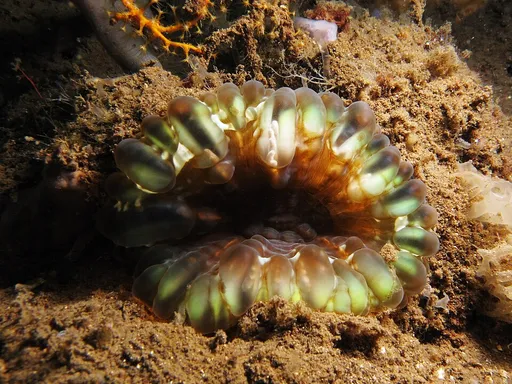
Acanthophyllia deshayesiana
Also known as Doughnut Coral, Meat Coral, Tooth Coral
SaltwaterCoral
Care at a glance
- Temperature
- 75–81°F
- 24–27°C
- pH
- 8.1–8.4
- Adult size
- 9.8 in
- 25 cm
- Minimum tank
- 11 gal
- 40 L
- Temperament
- Mostly peaceful
- Social behavior
- Solitary
- Swim level
- Bottom
- Difficulty
- Medium
- Breeding
- No record
- Rarity
- Rare
- Reef safe
- Reef safe
- Family
- Lobophylliidae
- Origin
- Australia and Indonesia, from deep inter-reef sand and rubble areas
Overview
Donut coral is only mildly aggressive, occasionally extending short feeder tentacles at night, so a few inches of clearance from neighbors is enough. It is one of the most dramatic feeders in the hobby, all but turning itself inside out to wrap around a piece of krill, silverside or LPS pellet, and spot feeding a couple of times a week noticeably speeds its growth. Because it is a single free-living polyp, it is not propagated by fragging, so nearly all specimens in the trade are wild collected, which keeps large, brightly colored pieces expensive. Handle it carefully out of water, since the spiky skeleton under the retracted flesh can scratch bare hands.
In the wild
Acanthophyllia deshayesiana comes mainly from deeper, soft inter-reef areas around Australia and Indonesia, where a single polyp sits loose on sand or fine rubble rather than cementing to rock. In the aquarium it wants low light, roughly 30 to 100 PAR, and low, gentle flow, since its skeleton is sharply spiked underneath the flesh and strong current can expose or damage the tissue. Place it directly on a soft sandbed in a shaded lower spot, away from sharp rock it could settle against. Keep temperature 24 to 27 C and pH 8.1 to 8.4.
Good to know
Acanthophyllia deshayesiana is a large polyp stony coral in the family Lobophylliidae and the only species in its genus, long sold and studied as Cynarina deshayesiana until a 2016 study separated Acanthophyllia back out as its own genus. That shared history is why hobby common names still overlap heavily with Cynarina and Homophyllia. Underneath its thick, fleshy tissue sits a distinctly spiky skeleton with long pointed septa, a strong contrast to the smoother skeleton of a button coral.
Did you know
A large donut coral can inflate to dinner plate size, several times the width of the compact skeleton hidden underneath, which is why a coral sold as a 4 or 5 inch skeleton can end up looking twice that size once it settles into a tank.
Common questions
What size tank does a Donut coral need?
A Donut coral needs at least 11 gal (40 L). It spends most of its time in the bottom.
What temperature and pH does a Donut coral need?
A Donut coral is comfortable at 75–81°F (24–27°C) with a pH of 8.1–8.4.
How big does a Donut coral get?
An adult Donut coral reaches about 9.8 in (25 cm).
Related species
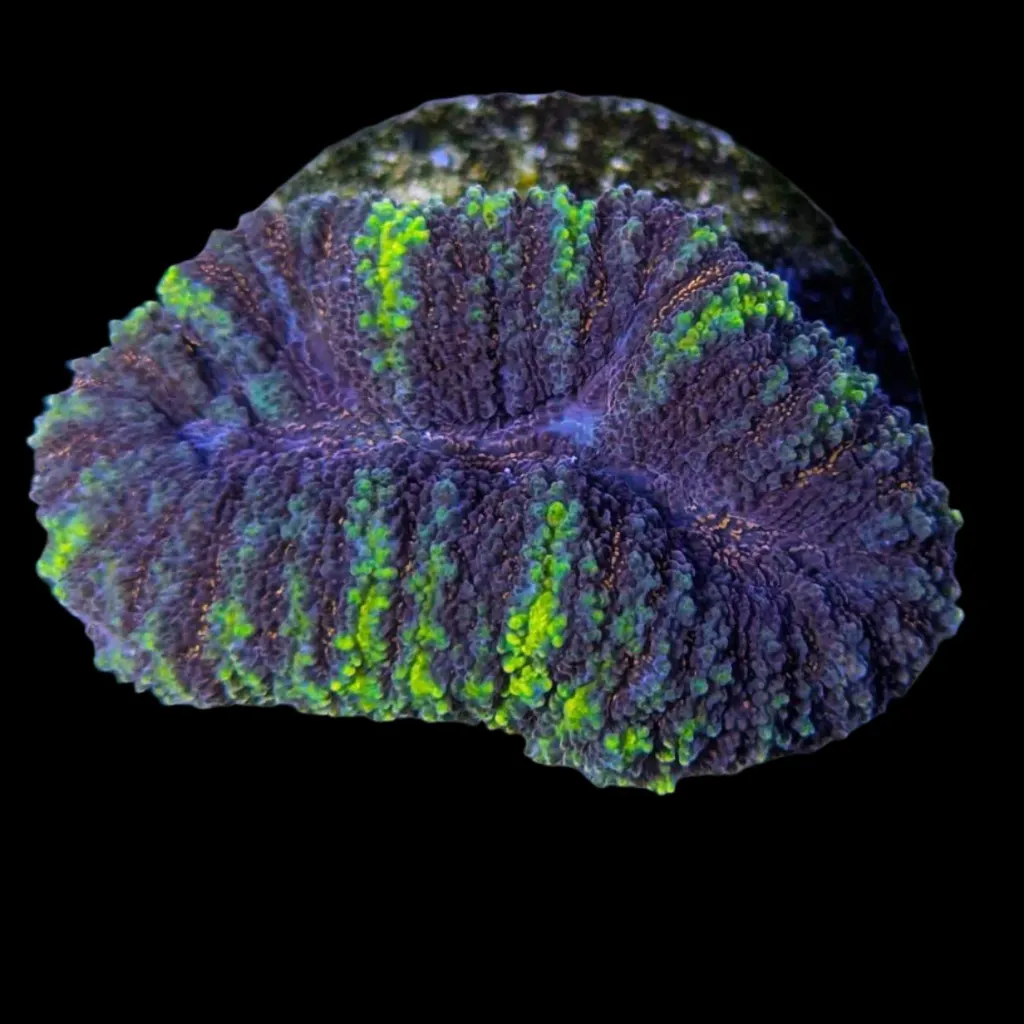 9.8 in (25 cm)26 gal (100 L)75–81°F (24–27°C)
Grooved brain coral
Lobophyllia recta
9.8 in (25 cm) · 26 gal (100 L)
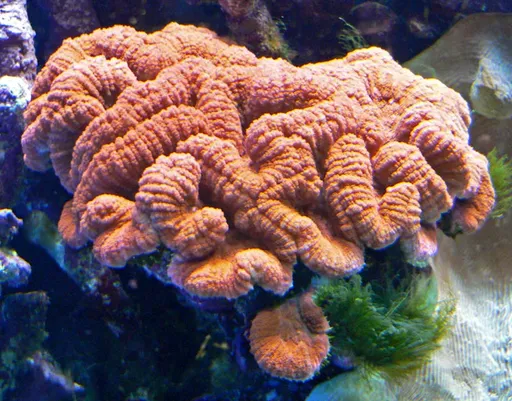 9.8 in (25 cm)20 gal (75 L)75–81°F (24–27°C)
Lobed brain coral
Lobophyllia
9.8 in (25 cm) · 20 gal (75 L)
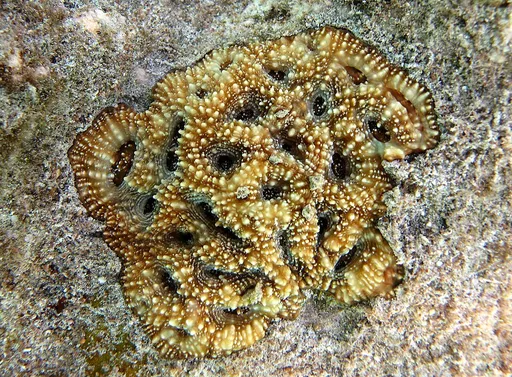 7.9 in (20 cm)11 gal (40 L)75–81°F (24–27°C)
Acan coral
Acanthastrea echinata
7.9 in (20 cm) · 11 gal (40 L)
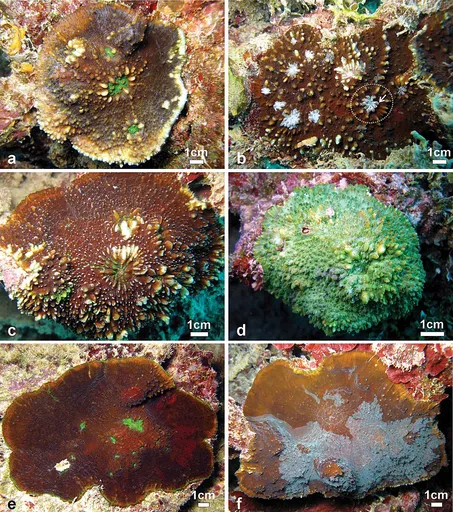 13.8 in (35 cm)20 gal (75 L)75–81°F (24–27°C)
Chalice coral
Echinophyllia
13.8 in (35 cm) · 20 gal (75 L)
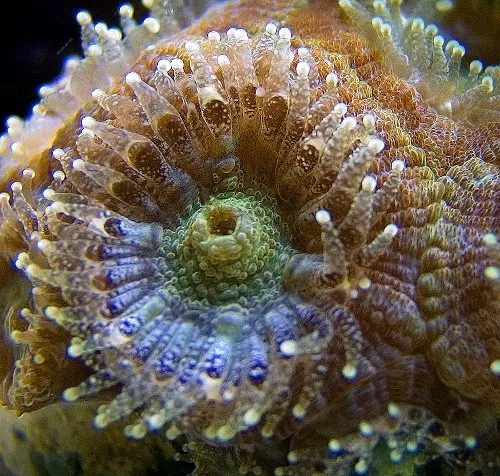 5.9 in (15 cm)11 gal (40 L)75–81°F (24–27°C)
Acan lord coral
Micromussa lordhowensis
5.9 in (15 cm) · 11 gal (40 L)
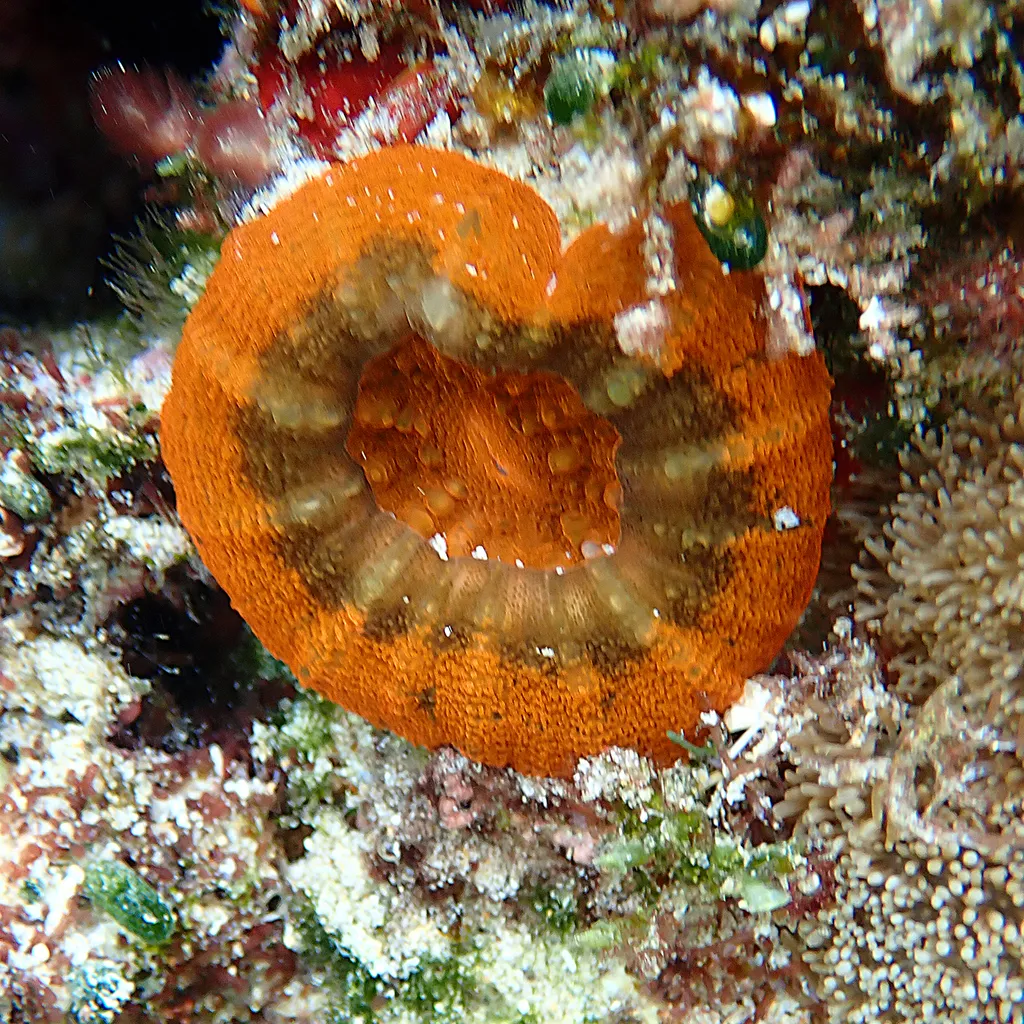 5.1 in (13 cm)11 gal (40 L)75–81°F (24–27°C)
Scoly coral
Homophyllia australis
5.1 in (13 cm) · 11 gal (40 L)