Button coral
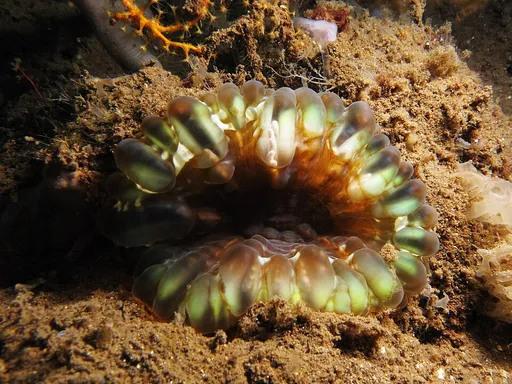
Cynarina lacrymalis
Also known as Meat Coral, Cat's Eye Coral, Doughnut Coral
SaltwaterCoral
Care at a glance
- Temperature
- 75–81°F
- 24–27°C
- pH
- 8.1–8.4
- Adult size
- 4.7 in
- 12 cm
- Minimum tank
- 11 gal
- 40 L
- Temperament
- Peaceful
- Social behavior
- Solitary
- Swim level
- Bottom
- Difficulty
- Medium
- Breeding
- No record
- Rarity
- Common
- Reef safe
- Reef safe
- Family
- Lobophylliidae
- Origin
- Western Indo-Pacific, from the Red Sea and East Africa to Japan, Indonesia and Australia
Overview
This is one of the more peaceful corals on this list, with no meaningful sweeper tentacles, so it is kept apart from aggressive neighbors mainly to protect its own delicate flesh rather than to stop it stinging anyone. Feed it minced meaty foods like mysis or brine shrimp roughly every week or two rather than more often, since overfeeding can trigger odd, uneven inflation. It is a single free-living polyp and is not fragged in practice, since cutting through its one shared mouth has a very low success rate, so it is best treated as a display piece rather than a propagation project. It is also listed as Near Threatened by the IUCN, one of relatively few corals with an individual conservation assessment.
In the wild
Cynarina lacrymalis lives across the western Indo-Pacific, from the Red Sea and East Africa to Japan, Indonesia and Australia, usually on soft substrate or sheltered reef slopes. In the aquarium it wants low to moderate light, roughly 50 to 120 PAR, and low to moderate flow, since strong or direct current can keep its balloon-like tissue from inflating fully. Place it on a stable sandbed or smooth rubble rather than sharp rock, since its fleshy mantle expands well past the skeleton and tears easily on rough edges. Keep temperature 24 to 27 C and pH 8.1 to 8.4.
Good to know
Cynarina lacrymalis is a large polyp stony coral in the family Lobophylliidae and the only member of its genus, identified by twelve pairs of broad white septa radiating out to a total of 96 inside a single translucent polyp. The species name lacrymalis is Latin for tearful, describing its watery, glassy-looking flesh. It relies mainly on zooxanthellae for energy, has no strong stinging tentacles, and instead engulfs food directly with its central mouth.
Did you know
A healthy button coral can inflate its translucent flesh to roughly twice the width of its own skeleton, and in dim light it will sometimes split part of its disc away to slowly grow into a second colony, an unusual backup method of reproduction for a coral with only one mouth.
Common questions
What size tank does a Button coral need?
A Button coral needs at least 11 gal (40 L). It spends most of its time in the bottom.
What temperature and pH does a Button coral need?
A Button coral is comfortable at 75–81°F (24–27°C) with a pH of 8.1–8.4.
How big does a Button coral get?
An adult Button coral reaches about 4.7 in (12 cm).
Related species
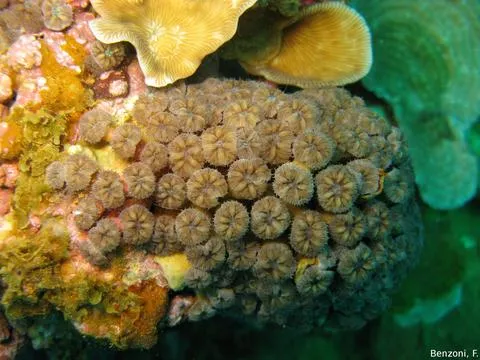 5.9 in (15 cm)11 gal (40 L)75–81°F (24–27°C)
Blastomussa
Blastomussa merletti
5.9 in (15 cm) · 11 gal (40 L)
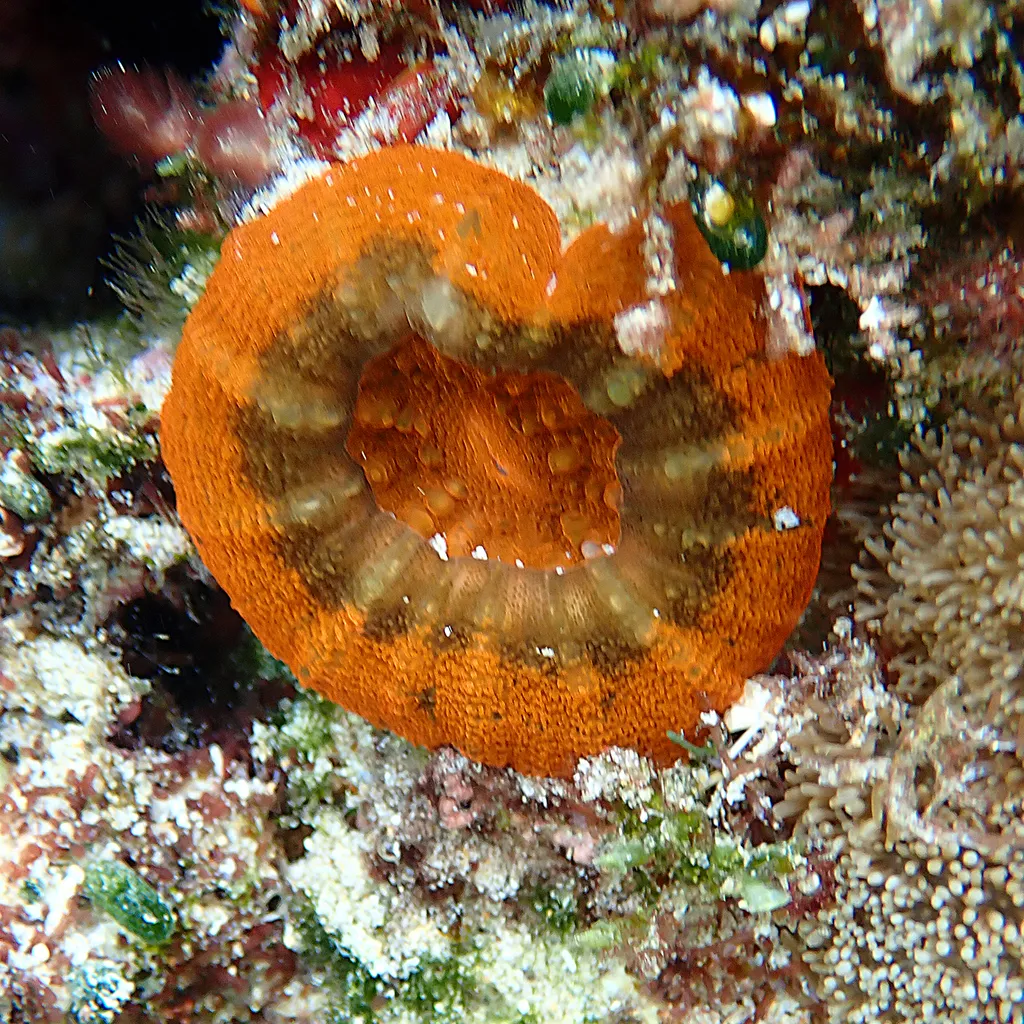 5.1 in (13 cm)11 gal (40 L)75–81°F (24–27°C)
Scoly coral
Homophyllia australis
5.1 in (13 cm) · 11 gal (40 L)
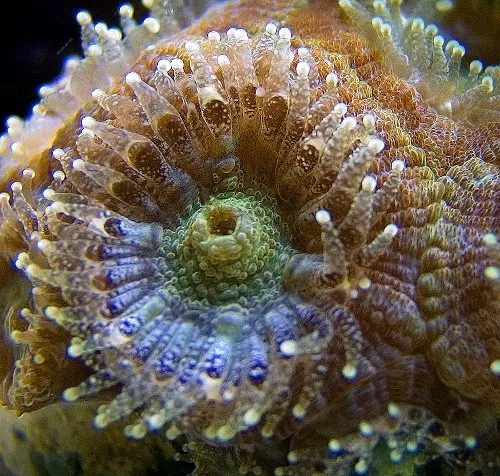 5.9 in (15 cm)11 gal (40 L)75–81°F (24–27°C)
Acan lord coral
Micromussa lordhowensis
5.9 in (15 cm) · 11 gal (40 L)
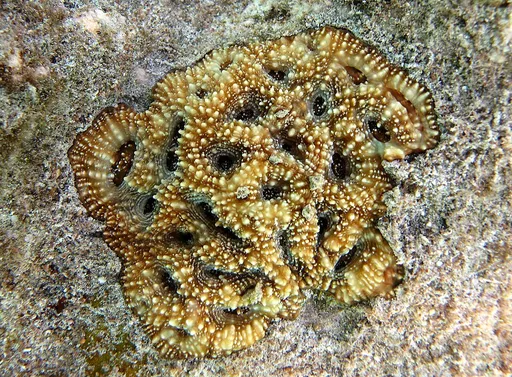 7.9 in (20 cm)11 gal (40 L)75–81°F (24–27°C)
Acan coral
Acanthastrea echinata
7.9 in (20 cm) · 11 gal (40 L)
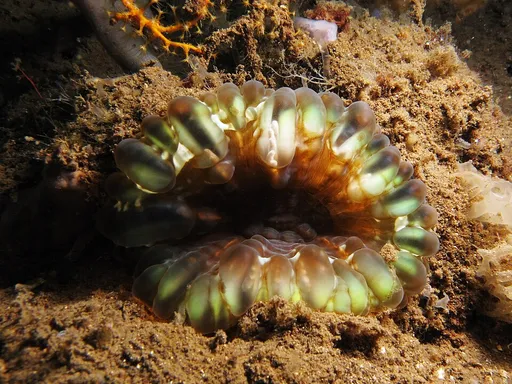 9.8 in (25 cm)11 gal (40 L)75–81°F (24–27°C)
Donut coral
Acanthophyllia deshayesiana
9.8 in (25 cm) · 11 gal (40 L)
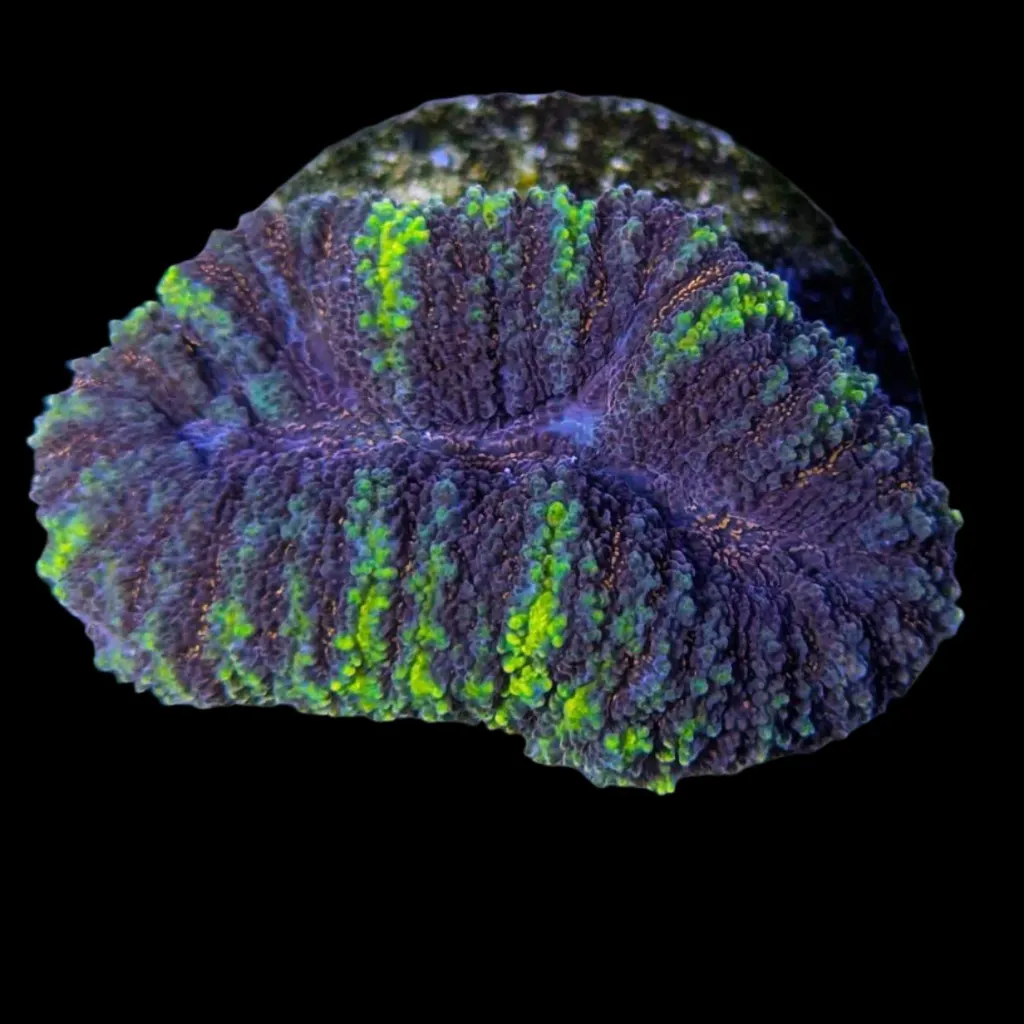 9.8 in (25 cm)26 gal (100 L)75–81°F (24–27°C)
Grooved brain coral
Lobophyllia recta
9.8 in (25 cm) · 26 gal (100 L)