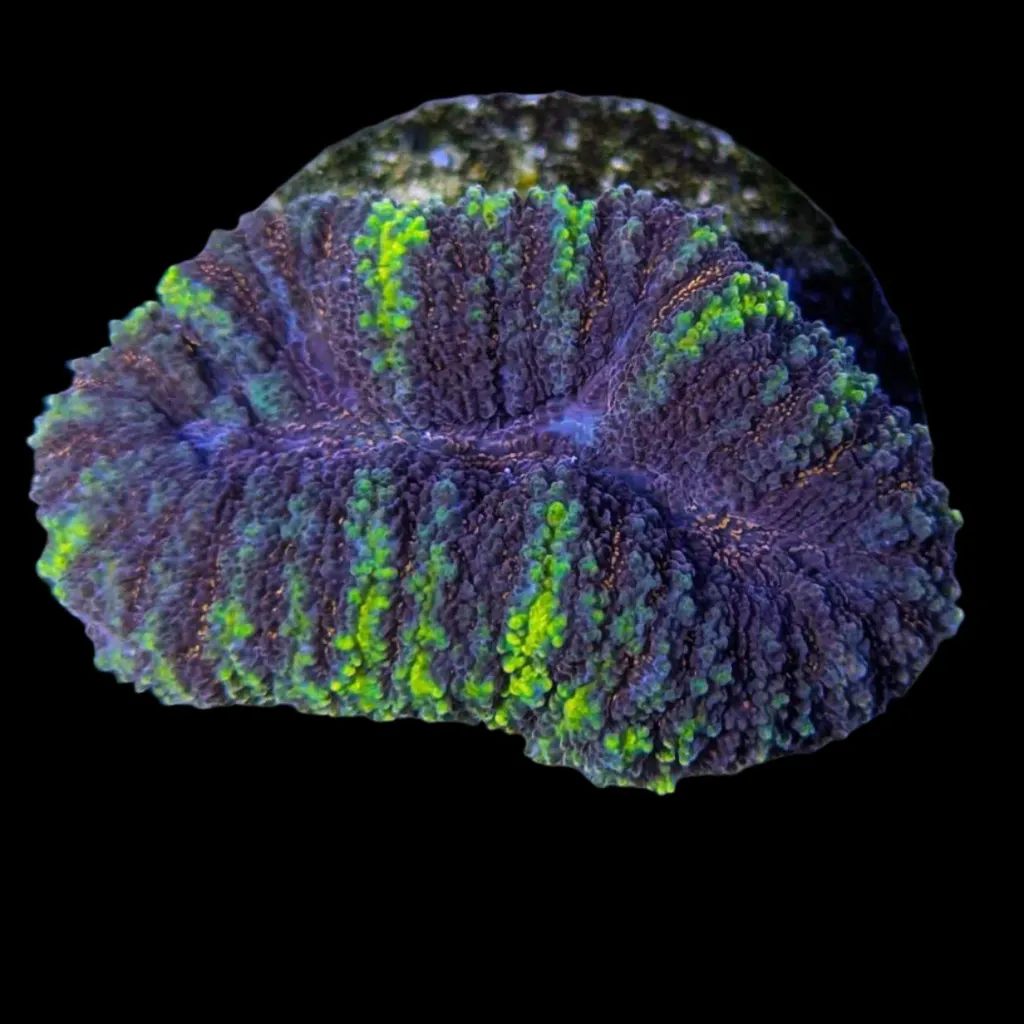
Grooved brain coral
Lobophyllia recta
Also known as Symphyllia, Symphyllia Brain Coral, Sinuous Cup Coral, Closed Brain Coral, Meat Brain Coral
SaltwaterCoral
Care at a glance
- Temperature
- 75–81°F
- 24–27°C
- pH
- 8.1–8.4
- Adult size
- 9.8 in
- 25 cm
- Minimum tank
- 26 gal
- 100 L
- Temperament
- Mostly peaceful
- Social behavior
- Solitary
- Swim level
- Bottom
- Diet
- Photosynthetic
- Difficulty
- Medium
- Breeding
- Hard
- Rarity
- Common
- Reef safe
- Reef safe
- Family
- Lobophylliidae
- Origin
- Found on shallow reef flats and slopes across the Indo-Pacific, from the Red Sea and Indian Ocean to the western Pacific.
Overview
The grooved brain coral is a fleshy large polyp coral for the lower part of a reef tank. It is not a beginner coral, but a keeper with some reef experience can manage it.
Did you know
Rainbow grooved brain corals, with contrasting red, green and orange grooves, are among the most prized brain corals in the hobby. They trade under premium designer names.
Caring for the grooved brain coral
Set the grooved brain coral on the sand or low rock, under moderate light with gentle to moderate flow. Avoid strong current, which would strip its swollen tissue. It needs at least 26 gal (100 L), at 75 to 81°F (24 to 27°C) and a pH of 8.1 to 8.4. Keep calcium, alkalinity and magnesium in reef range.
It hosts zooxanthellae and also captures food with its fleshy polyps. Its feeder tentacles come out at night, so place meaty pieces of mysis or chopped seafood on its surface then.
The grooved brain coral is mostly peaceful, but those night tentacles can sting corals placed too close. Leave a buffer around it.
Good to know
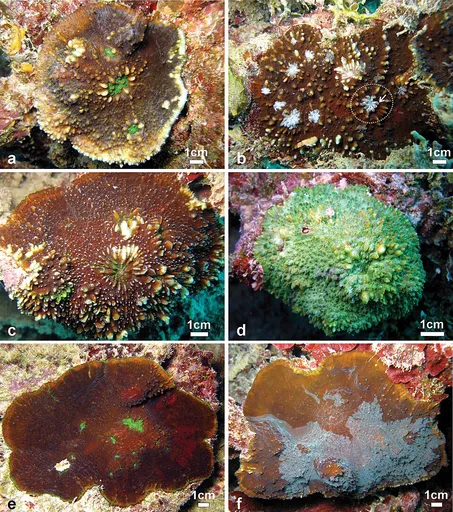
The grooved brain coral was long sold under the genus Symphyllia. Molecular studies merged Symphyllia into Lobophyllia, so its accepted name is now Lobophyllia recta. It sits in the family Lobophylliidae, alongside the lobed brain and acan corals. Its surface folds into long, winding valleys and ridges, pressed so tightly that the walls between grooves nearly touch. That sinuous, closed-groove look sets it apart from the more open, lobed brain corals. The thick tissue puffs up in the day and can show strongly contrasting colors between the ridges and the valley floors. Colonies grow into rounded domes or flattened plates.
In the wild
The grooved brain coral lives on shallow reef flats and slopes across the Indo-Pacific. Its range runs from the Red Sea and Indian Ocean to the western Pacific.
Common questions
What size tank does a grooved brain coral need?
A grooved brain coral needs at least 26 gal (100 L).
What temperature and pH does a grooved brain coral need?
A grooved brain coral is comfortable at 75–81°F (24–27°C) with a pH of 8.1–8.4.
What does a grooved brain coral eat?
A grooved brain coral hosts zooxanthellae and also catches food with its fleshy polyps. At night, place meaty pieces of mysis or chopped seafood on its surface.
How big does a grooved brain coral get?
An adult grooved brain coral reaches about 9.8 in (25 cm).
Related species
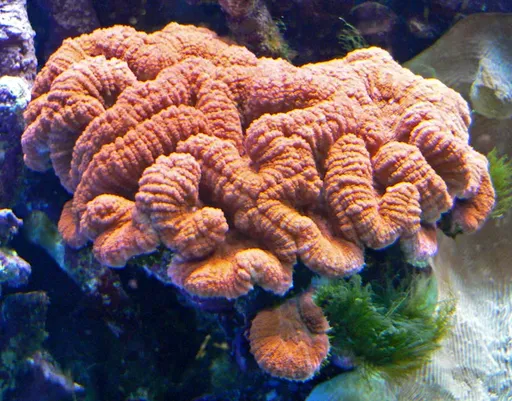 9.8 in (25 cm)20 gal (75 L)75–81°F (24–27°C)
Lobed brain coral
Lobophyllia
9.8 in (25 cm) · 20 gal (75 L)
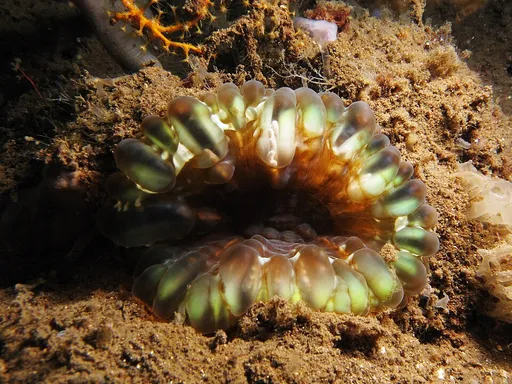 9.8 in (25 cm)11 gal (40 L)75–81°F (24–27°C)
Donut coral
Acanthophyllia deshayesiana
9.8 in (25 cm) · 11 gal (40 L)
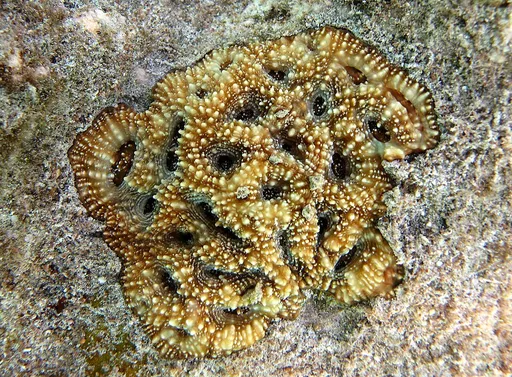 7.9 in (20 cm)11 gal (40 L)75–81°F (24–27°C)
Acan coral
Acanthastrea echinata
7.9 in (20 cm) · 11 gal (40 L)
 13.8 in (35 cm)20 gal (75 L)75–81°F (24–27°C)
Chalice coral
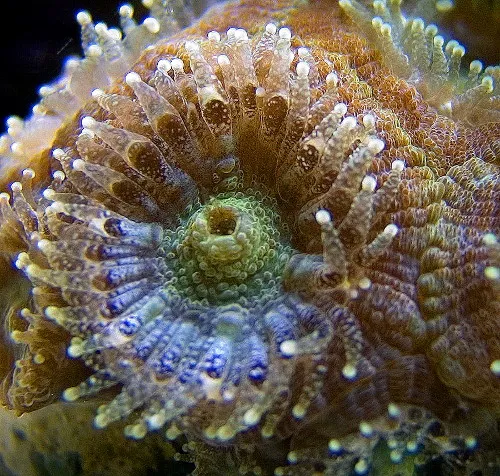
Echinophyllia
13.8 in (35 cm) · 20 gal (75 L)
 5.9 in (15 cm)11 gal (40 L)75–81°F (24–27°C)
Acan lord coral
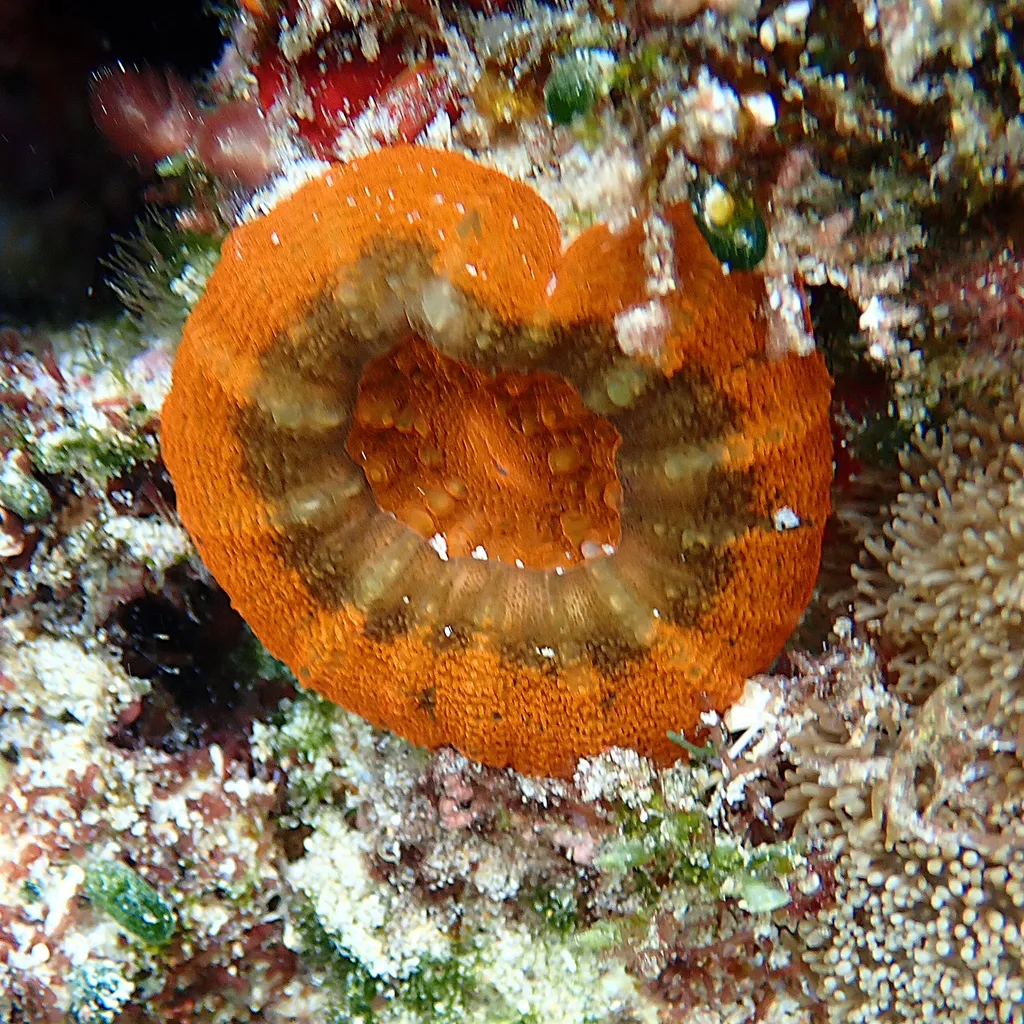
Micromussa lordhowensis
5.9 in (15 cm) · 11 gal (40 L)
 5.1 in (13 cm)11 gal (40 L)75–81°F (24–27°C)
Scoly coral
Homophyllia australis
5.1 in (13 cm) · 11 gal (40 L)