Acan lord coral
Micromussa lordhowensis
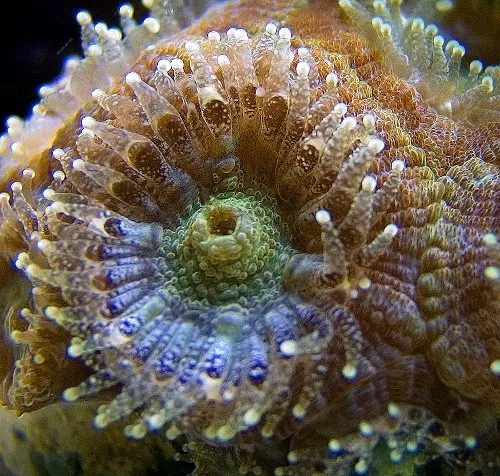
Also known as Acan, Acanthastrea lordhowensis, Lord Coral
SaltwaterCoral
Care at a glance
- Temperature
- 75–81°F
- 24–27°C
- pH
- 8.1–8.4
- Adult size
- 5.9 in
- 15 cm
- Minimum tank
- 11 gal
- 40 L
- Temperament
- Mostly peaceful
- Social behavior
- Solitary
- Swim level
- Bottom
- Difficulty
- Medium
- Breeding
- Medium
- Rarity
- Common
- Reef safe
- Reef safe
- Family
- Lobophylliidae
- Origin
- Australia and the western Pacific
Overview
A moderately aggressive but manageable LPS that can extend feeder tentacles and sting corals placed right against it, so give it a few inches of space. It responds dramatically to feeding with mysis, brine or coral foods once or twice a week, showing better color and faster growth. Prized for its color morphs and easily fragged polyp by polyp.
In the wild
Acan Lords come from reefs around Australia and the western Pacific and form encrusting mats of rounded, fleshy polyps in bright, high-contrast color combinations that make them one of the most collected LPS. They prefer lower light around 50 to 100 PAR and low to moderate indirect flow, since too much light bleaches them and too much flow keeps the polyps retracted. Place them on the sandbed, lower rock or a shaded overhang at 24 to 27 C and pH 8.1 to 8.4.
Good to know
Long known as Acanthastrea lordhowensis, this coral was reclassified in 2016 as Micromussa lordhowensis, though the trade name Acan stuck. It is a large polyp stony coral in the family Lobophylliidae that grows by adding new polyps to the mat. It is photosynthetic but a strong feeder that extends feeder tentacles at night.
Did you know
Single Acan polyps of rare color morphs have sold for eye-watering prices, making a fist-sized colony worth more per square inch than almost any other coral in the hobby.
Common questions
What size tank does an Acan lord coral need?
An Acan lord coral needs at least 11 gal (40 L). It spends most of its time in the bottom.
What temperature and pH does an Acan lord coral need?
An Acan lord coral is comfortable at 75–81°F (24–27°C) with a pH of 8.1–8.4.
How big does an Acan lord coral get?
An adult Acan lord coral reaches about 5.9 in (15 cm).
Related species
 5.1 in (13 cm)11 gal (40 L)75–81°F (24–27°C)
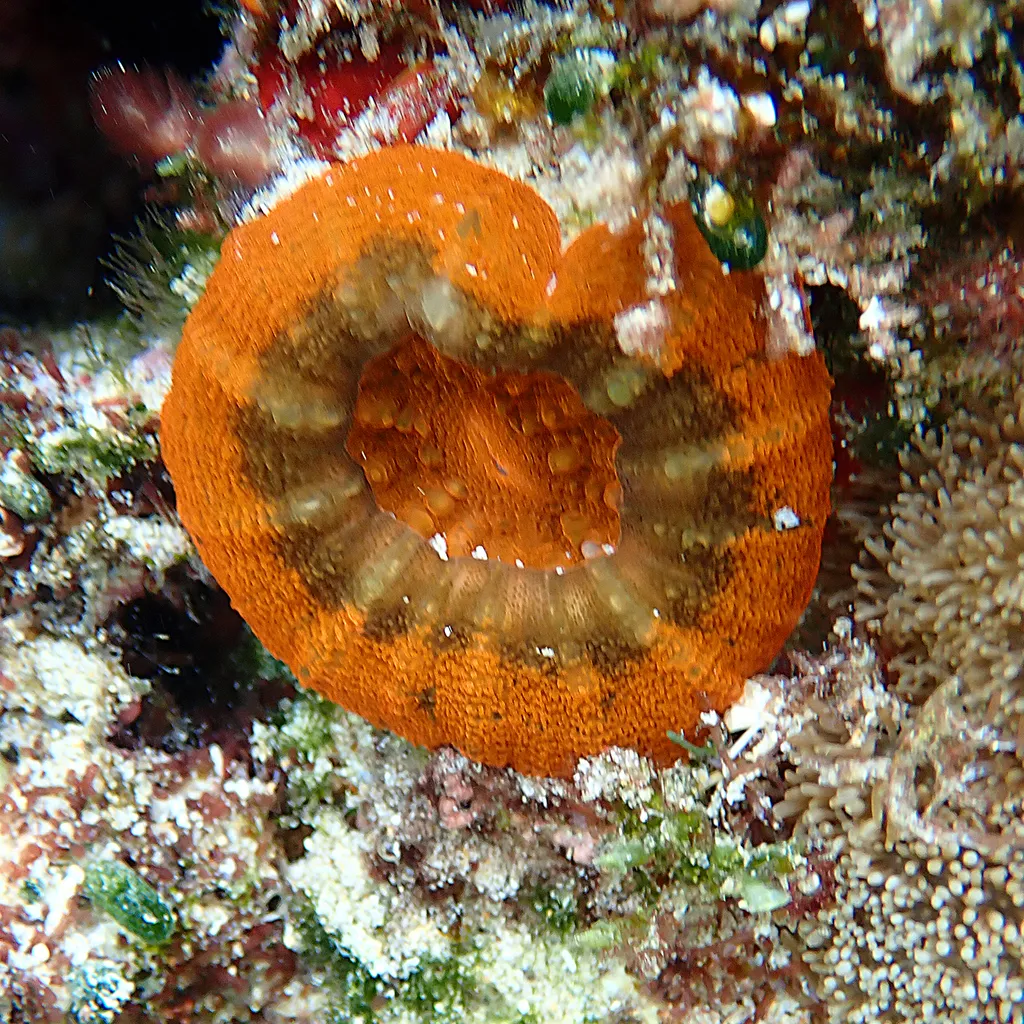
Scoly coral
Homophyllia australis
5.1 in (13 cm) · 11 gal (40 L)
 7.9 in (20 cm)11 gal (40 L)75–81°F (24–27°C)
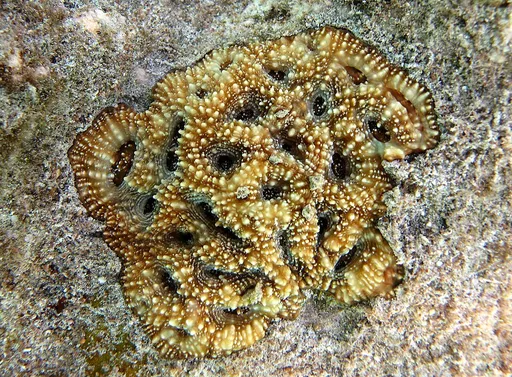
Acan coral
Acanthastrea echinata
7.9 in (20 cm) · 11 gal (40 L)
 5.9 in (15 cm)11 gal (40 L)75–81°F (24–27°C)
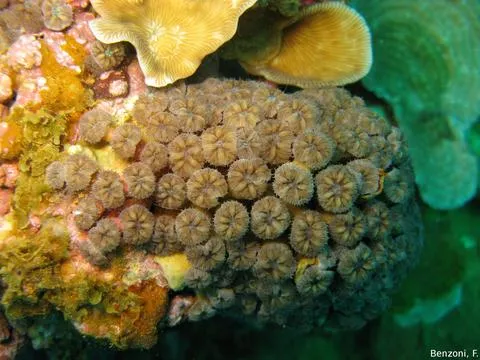
Blastomussa
Blastomussa merletti
5.9 in (15 cm) · 11 gal (40 L)
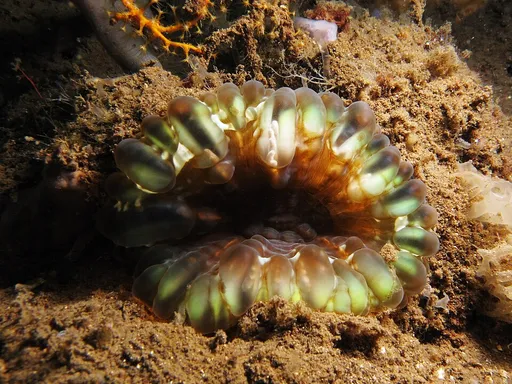 9.8 in (25 cm)11 gal (40 L)75–81°F (24–27°C)
Donut coral
Acanthophyllia deshayesiana
9.8 in (25 cm) · 11 gal (40 L)
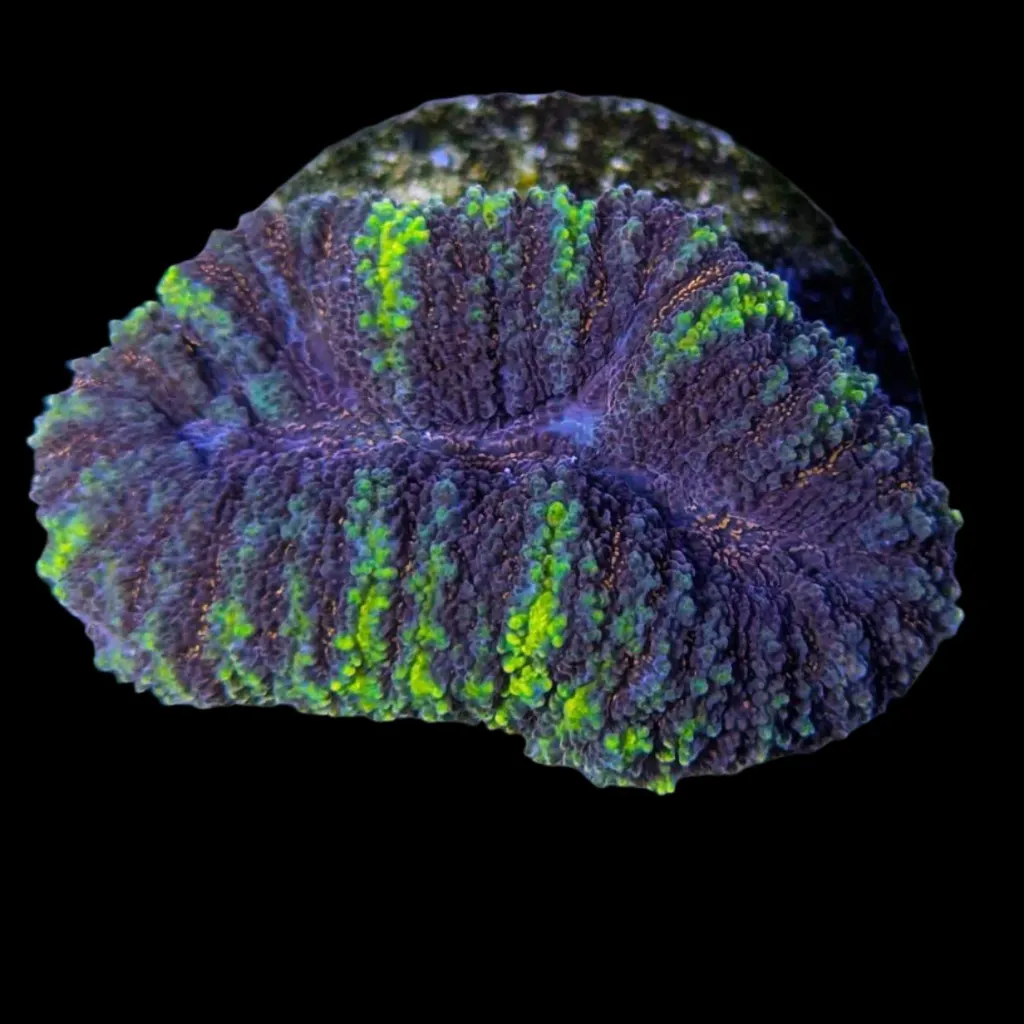 9.8 in (25 cm)26 gal (100 L)75–81°F (24–27°C)
Grooved brain coral
Lobophyllia recta
9.8 in (25 cm) · 26 gal (100 L)
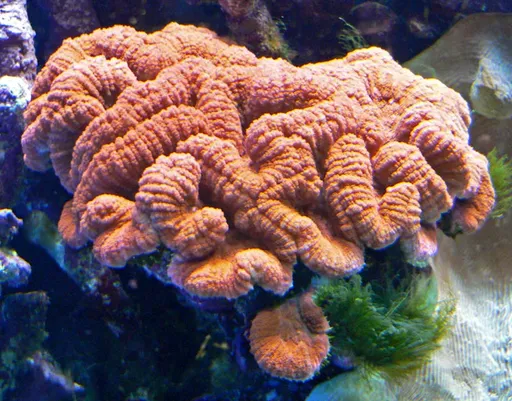 9.8 in (25 cm)20 gal (75 L)75–81°F (24–27°C)
Lobed brain coral
Lobophyllia
9.8 in (25 cm) · 20 gal (75 L)