Acan coral
Acanthastrea echinata
Also known as Acan Echinata, Starry Cup Coral, Acan Brain Coral
SaltwaterCoral
Care at a glance
- Temperature
- 75–81°F
- 24–27°C
- pH
- 8.1–8.4
- Adult size
- 7.9 in
- 20 cm
- Minimum tank
- 11 gal
- 40 L
- Temperament
- Mostly peaceful
- Social behavior
- Solitary
- Swim level
- Bottom
- Difficulty
- Medium
- Breeding
- Medium
- Rarity
- Common
- Reef safe
- Reef safe
- Family
- Lobophylliidae
- Origin
- Indo-Pacific, from Indonesia and Australia to Tonga
Overview
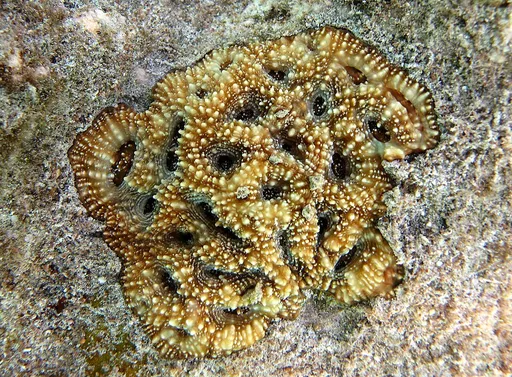
This is a voracious, competitively aggressive coral that extends feeding and digestive filaments at night to sting and consume tissue on any coral placed too close, so leave at least 4 to 6 inches of open water around it. Target feeding minced meaty foods or zooplankton once or twice a week improves both color and growth. Acans are also more prone than most LPS to brown jelly infection when stressed by rough handling, poor acclimation or a light shock, so introduce new pieces to lower light and increase gradually. It frags easily polyp by polyp along the mat, making it one of the more commonly propagated collector LPS.
In the wild
Acanthastrea echinata forms encrusting colonies in shallow, protected lagoons and reef flats across the Indo-Pacific, from Indonesia and Australia to Tonga, usually to about 20 meters deep. In the aquarium it does well under low to moderate light, roughly 50 to 150 PAR, and low to moderate indirect flow, since strong light or flow can bleach or tear the fleshy polyps. Place it low to mid on shaded rockwork and acclimate it slowly, moving it higher only after it settles in. Keep temperature 24 to 27 C and pH 8.1 to 8.4.
Good to know
Acanthastrea echinata is a large polyp stony coral in the family Lobophylliidae and is now considered the only widely kept true Acanthastrea in the hobby, since its old tankmate the acan lord was reclassified as Micromussa lordhowensis in a 2012 revision of the group. It forms a mat of fleshy, rounded polyps over a shared skeleton and is photosynthetic but a strong nighttime feeder, extending mesenterial filaments to capture prey and digest anything within reach. Its genus name comes from Greek for thorn and star, describing the spiny septa inside each corallite.
Did you know
Acan colonies are prized for showing many different colors and patterns on the same mat, since neighboring polyps can vary widely even though they share one skeleton, which is why a single large colony is sometimes cut into dozens of individually named frags.
Common questions
What size tank does an Acan coral need?
An Acan coral needs at least 11 gal (40 L). It spends most of its time in the bottom.
What temperature and pH does an Acan coral need?
An Acan coral is comfortable at 75–81°F (24–27°C) with a pH of 8.1–8.4.
How big does an Acan coral get?
An adult Acan coral reaches about 7.9 in (20 cm).
Related species
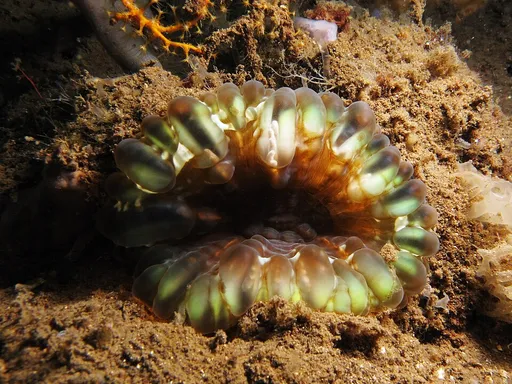 9.8 in (25 cm)11 gal (40 L)75–81°F (24–27°C)
Donut coral
Acanthophyllia deshayesiana
9.8 in (25 cm) · 11 gal (40 L)
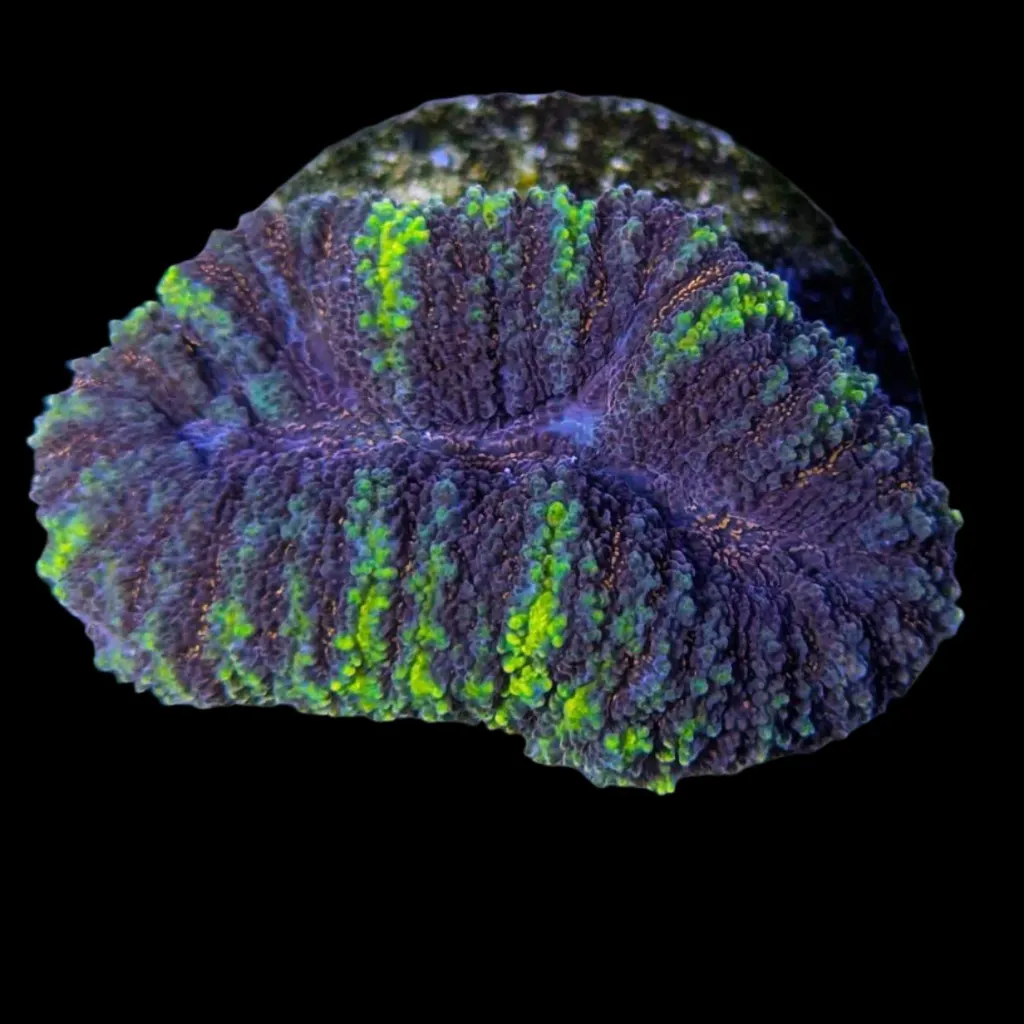 9.8 in (25 cm)26 gal (100 L)75–81°F (24–27°C)
Grooved brain coral
Lobophyllia recta
9.8 in (25 cm) · 26 gal (100 L)
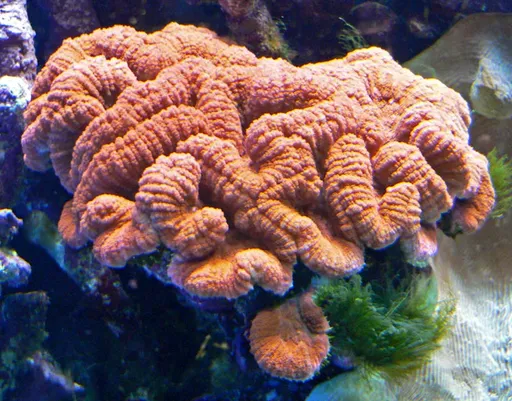 9.8 in (25 cm)20 gal (75 L)75–81°F (24–27°C)
Lobed brain coral
Lobophyllia
9.8 in (25 cm) · 20 gal (75 L)
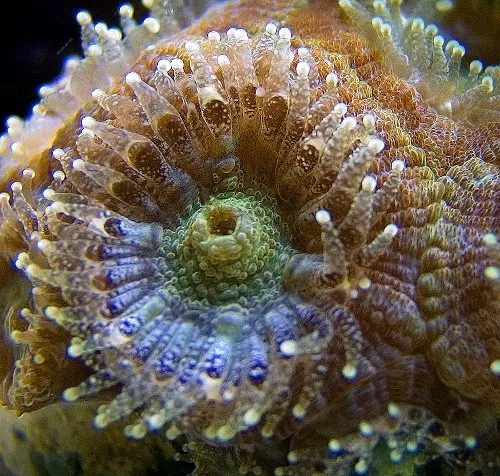 5.9 in (15 cm)11 gal (40 L)75–81°F (24–27°C)
Acan lord coral
Micromussa lordhowensis
5.9 in (15 cm) · 11 gal (40 L)
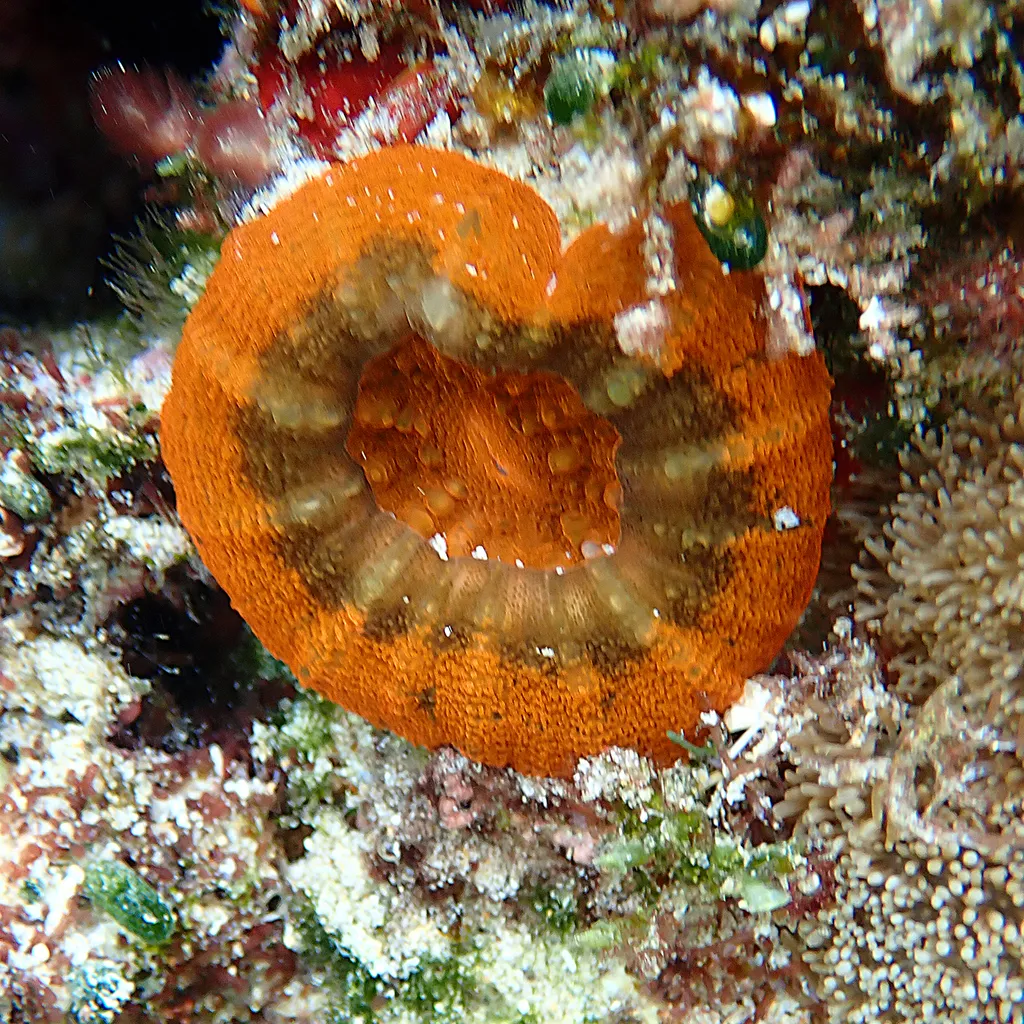 5.1 in (13 cm)11 gal (40 L)75–81°F (24–27°C)
Scoly coral
Homophyllia australis
5.1 in (13 cm) · 11 gal (40 L)
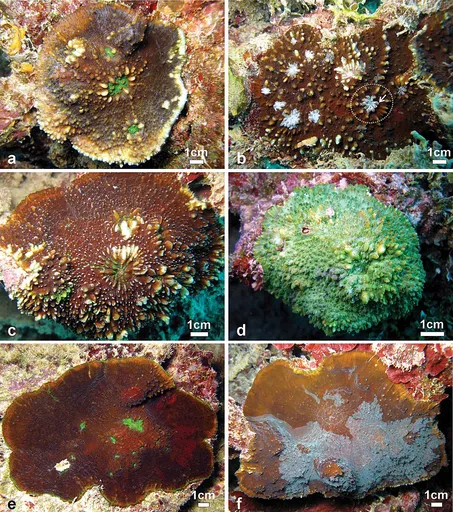 13.8 in (35 cm)20 gal (75 L)75–81°F (24–27°C)
Chalice coral
Echinophyllia
13.8 in (35 cm) · 20 gal (75 L)