Watermelon fiddler crab
Paraleptuca crassipes
Also known as Thick-legged fiddler crab, Estuary fiddler crab, Watermelon crab, Uca crassipes
BrackishCrab
Care at a glance
- Temperature
- 75–84°F
- 24–29°C
- pH
- 7.8–8.4
- Adult size
- 1.2 in
- 3 cm
- Minimum tank
- 11 gal
- 40 L
- Temperament
- Mostly peaceful
- Social behavior
- Social
- Tankmates
- With caution
- Swim level
- Bottom
- Difficulty
- Medium
- Breeding
- Hard
- Rarity
- Rare
- Family
- Ocypodidae
- Origin
- Indo-West Pacific mangroves, Taiwan and the Ryukyus to Indonesia, Australia and Polynesia
Overview
Keep a group with more females than males on the beach of a brackish paludarium, where they dig, wave, and sort sand all day at ground level. Males spar but rarely hurt each other, and they ignore anything they cannot catch, which is nearly everything. They pick algae and detritus out of the sand, so feed sinking pellets, algae wafers, blanched vegetables, and a little frozen food on the beach or at the water's edge, plus cuttlebone for calcium. Brackish snails are safe company; fish are a poor match for a setup that is mostly sand.
In the wild
The watermelon fiddler crab lives on the muddy sand of mangrove edges, lagoons, and river mouths across the western Pacific, from Taiwan and the southern islands of Japan down through the Philippines and Indonesia to eastern Australia and the Pacific islands. Like every fiddler it spends most of its time out of the water, so it needs a paludarium with a deep sand beach, a shallow pool, and a tight lid. It is sold as a freshwater crab and lasts a while in fresh water, but it is a brackish animal, so mix marine salt to a specific gravity of 1.005 to 1.015. Keep it warm at 24 to 29 C with a pH of 7.8 to 8.4, and give a small group a footprint of 40 liters or more.
Good to know
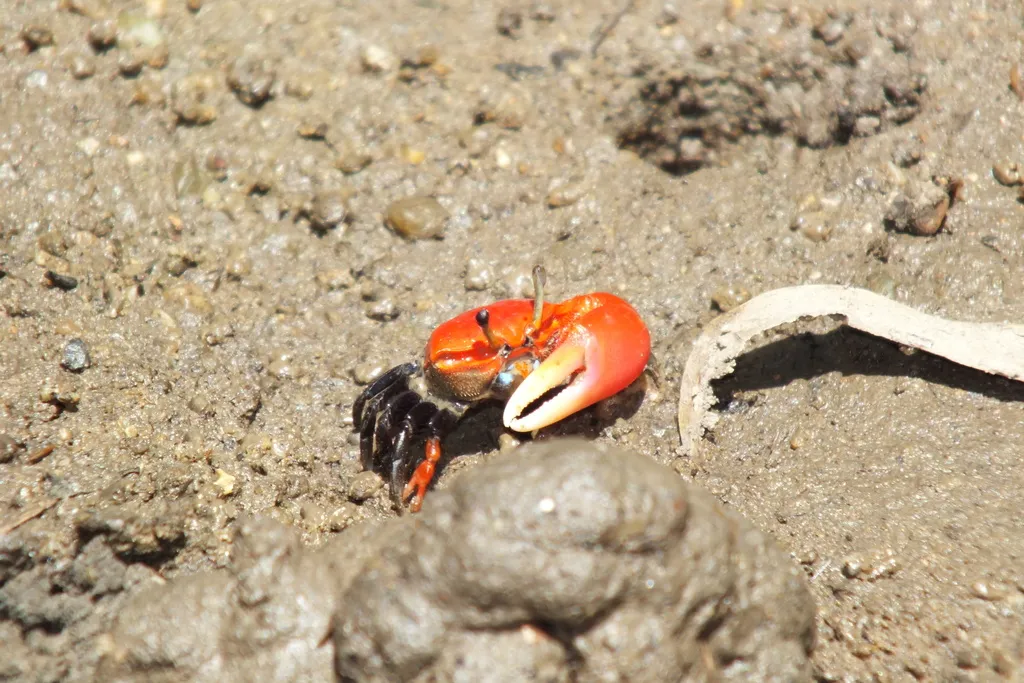
This is Paraleptuca crassipes in the family Ocypodidae, described by White in 1847 as Gelasimus crassipes and known in the trade as Uca crassipes until the 2016 revision. The carapace is usually about 2.5 cm across, with the largest crabs a little over 3 cm. The colors that earned the trade name are a crimson red carapace with black patches, a pink red claw on the male, and sky blue patches on the face and around the leg bases. It changes shade with the tide, darker by day and paler at night. The larvae develop in the sea, so it does not breed in captivity.
Did you know
In Japan fiddler crabs are called shiomaneki, roughly the tide beckoners, because a beach of waving males looks like it is calling the water back in. This species is beni-shiomaneki, the red one.
Common questions
What size tank does a Watermelon fiddler crab need?
A Watermelon fiddler crab needs at least 11 gal (40 L). It spends most of its time in the bottom.
What temperature and pH does a Watermelon fiddler crab need?
A Watermelon fiddler crab is comfortable at 75–84°F (24–29°C) with a pH of 7.8–8.4.
How big does a Watermelon fiddler crab get?
An adult Watermelon fiddler crab reaches about 1.2 in (3 cm).
Related species
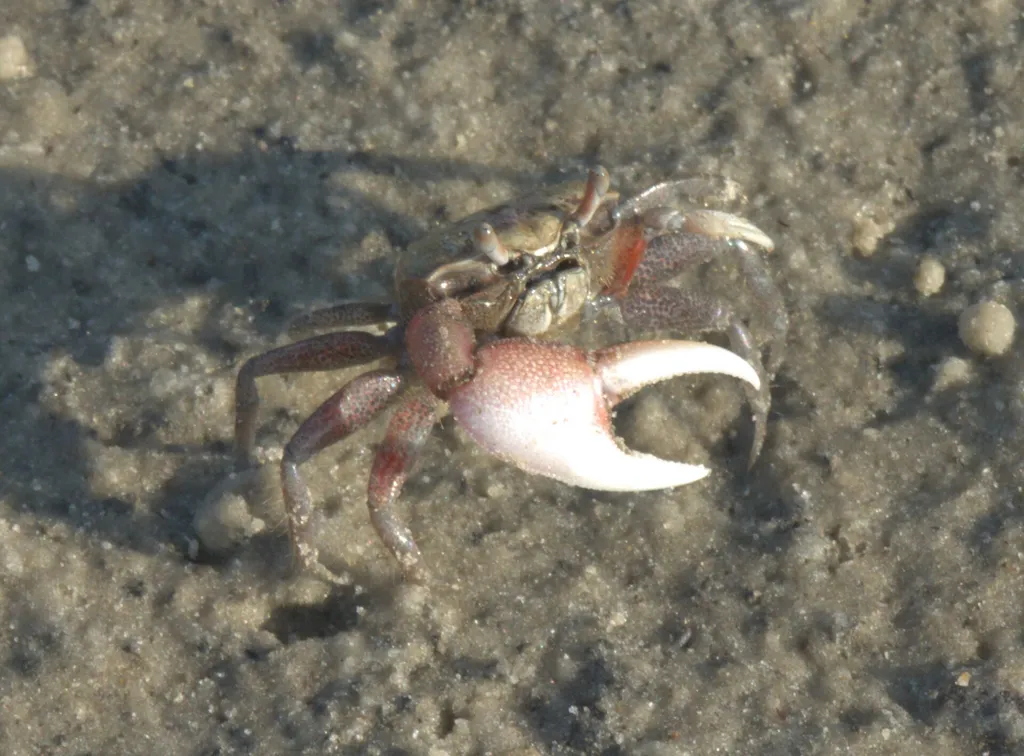 1 in (2.5 cm)11 gal (40 L)68–82°F (20–28°C)
Atlantic sand fiddler crab
Leptuca pugilator
1 in (2.5 cm) · 11 gal (40 L)
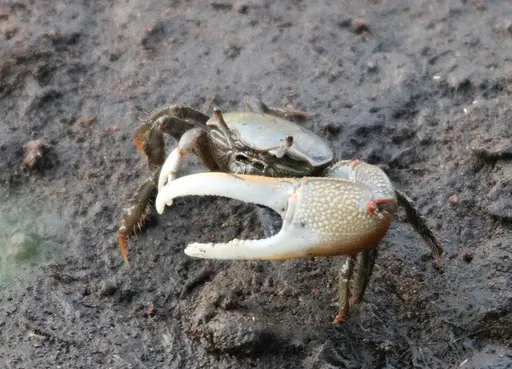 1.6 in (4 cm)10 gal (38 L)75–82°F (24–28°C)
Fiddler crab
Minuca minax
1.6 in (4 cm) · 10 gal (38 L)
- 1 in (2.5 cm)11 gal (40 L)72–82°F (22–28°C)
Batik crab
Metasesarma obesum
1 in (2.5 cm) · 11 gal (40 L)
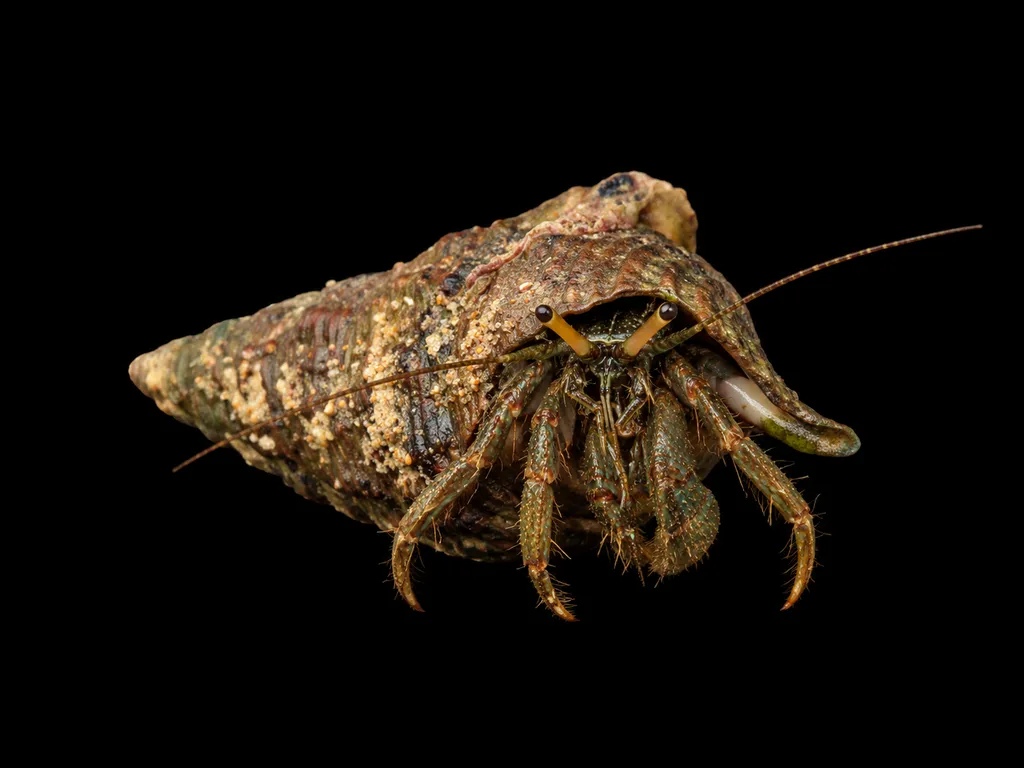 2 in (5 cm)16 gal (60 L)75–84°F (24–29°C)
Brackish hermit crab
Clibanarius longitarsus
2 in (5 cm) · 16 gal (60 L)
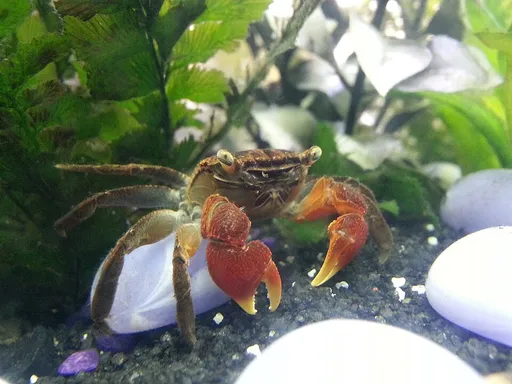 2 in (5 cm)10 gal (38 L)72–82°F (22–28°C)
Red claw crab
Parasesarma bidens
2 in (5 cm) · 10 gal (38 L)
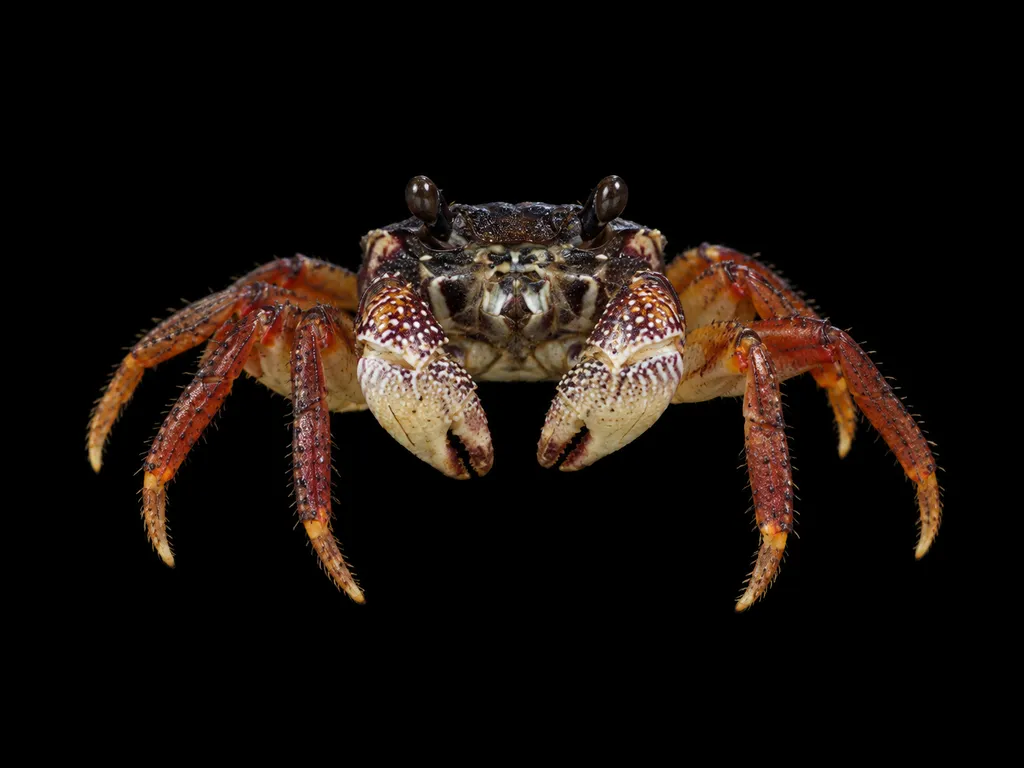 2.4 in (6 cm)24 gal (90 L)75–86°F (24–30°C)
African mangrove crab
Goniopsis pelii
2.4 in (6 cm) · 24 gal (90 L)