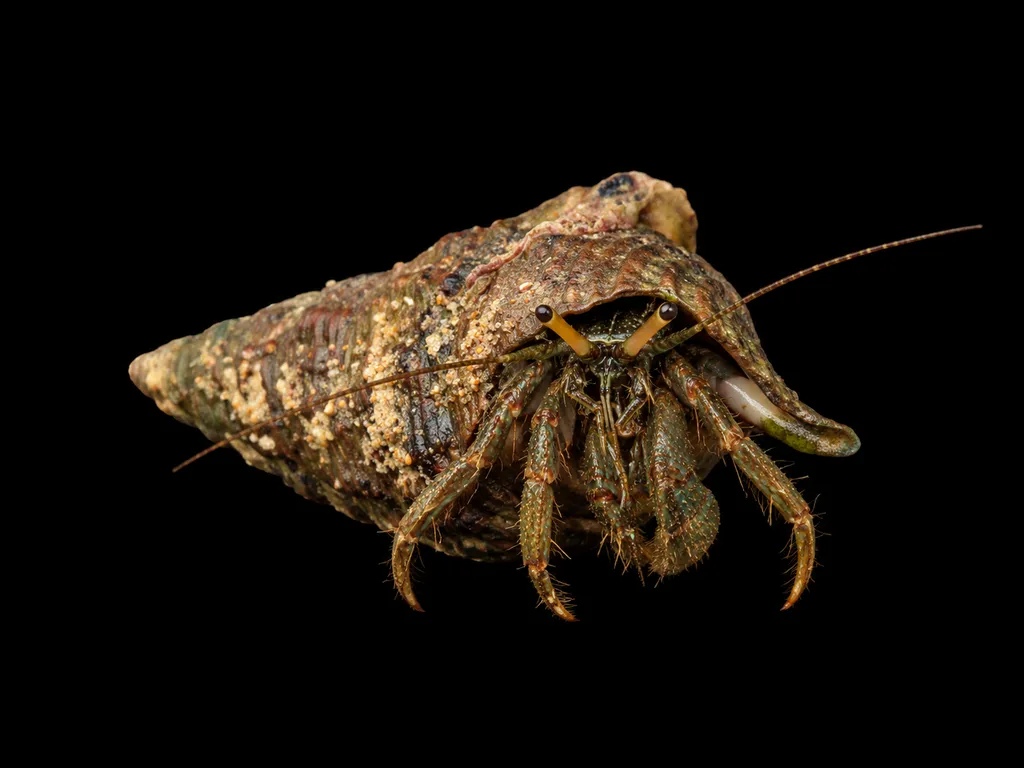
Brackish hermit crab
Clibanarius longitarsus
Also known as Javanese freshwater hermit crab, Freshwater hermit crab, Blue-striped hermit crab, Mangrove hermit crab
BrackishCrab
Care at a glance
- Temperature
- 75–84°F
- 24–29°C
- pH
- 7.6–8.4
- Adult size
- 2 in
- 5 cm
- Minimum tank
- 16 gal
- 60 L
- Temperament
- Mostly peaceful
- Social behavior
- Social
- Tankmates
- With caution
- Swim level
- Bottom
- Difficulty
- Medium
- Breeding
- No record
- Rarity
- Rare
- Family
- Diogenidae
- Origin
- Indo-West Pacific mangroves and estuaries, Red Sea to Japan and Australia
Overview
A busy scavenger that works the sand for algae, detritus, and leftovers all day, so it earns its keep cleaning a brackish tank of gobies or mollies. It is mostly peaceful, but a hungry one grabs small fish and any hermit will kill a snail for its shell, so keep spare shells on hand and skip snails you care about. Keep a group, since they get along when there are enough shells, and males squabble over the best ones. Feed algae wafers, sinking pellets, and frozen foods on top of what it finds, and let some algae grow.
In the wild
This hermit crab lives in mangroves, on mudflats and sandy shores, and in seagrass and the lower reaches of rivers across the Indo-West Pacific, in water that swings from nearly fresh to full sea with the tide. Shops sell it as a freshwater hermit crab, and it will hang on in fresh water for a few months, but it is a brackish animal and slowly fails without salt. Mix marine salt to a specific gravity of 1.005 to 1.015, keep it at 24 to 29 C and pH 7.6 to 8.4, and give a few crabs a tank of 60 liters or more with a sand bed, roots, and a tight lid. Most of all, keep a pile of empty snail shells in a range of sizes on the bottom, because a hermit crab with no bigger shell to move into is stuck.
Good to know
Clibanarius longitarsus is a hermit crab in the family Diogenidae with two pincers of about equal size, described by De Haan in 1849 and found from the Red Sea and East Africa to Japan, the Philippines, Indonesia, and Australia. The body is pale, the pincers olive brown with blue green bumps, and the legs carry two dark stripes, which is why it is the blue-striped hermit crab in Singapore. Wild crabs on Singapore shores are 1 to 2 cm long, while tank animals reach around 5 cm in their shells. The larvae develop in the sea, and there is no record of it breeding in captivity.
Did you know
There is only one true freshwater hermit crab in the world, Clibanarius fonticola from a single spring fed pool on Espiritu Santo, Vanuatu. Every hermit crab sold as a freshwater pet anywhere else is a brackish or marine animal, and this one is the species most often behind the label.
Common questions
What size tank does a Brackish hermit crab need?
A Brackish hermit crab needs at least 16 gal (60 L). It spends most of its time in the bottom.
What temperature and pH does a Brackish hermit crab need?
A Brackish hermit crab is comfortable at 75–84°F (24–29°C) with a pH of 7.6–8.4.
How big does a Brackish hermit crab get?
An adult Brackish hermit crab reaches about 2 in (5 cm).
Related species
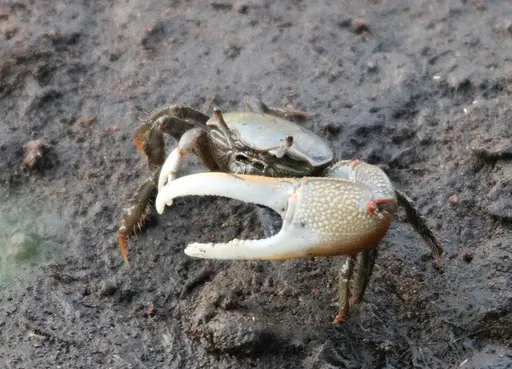 1.6 in (4 cm)10 gal (38 L)75–82°F (24–28°C)
Fiddler crab
Minuca minax
1.6 in (4 cm) · 10 gal (38 L)
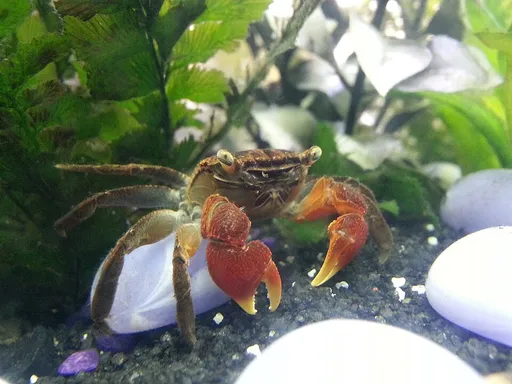 2 in (5 cm)10 gal (38 L)72–82°F (22–28°C)
Red claw crab
Parasesarma bidens
2 in (5 cm) · 10 gal (38 L)
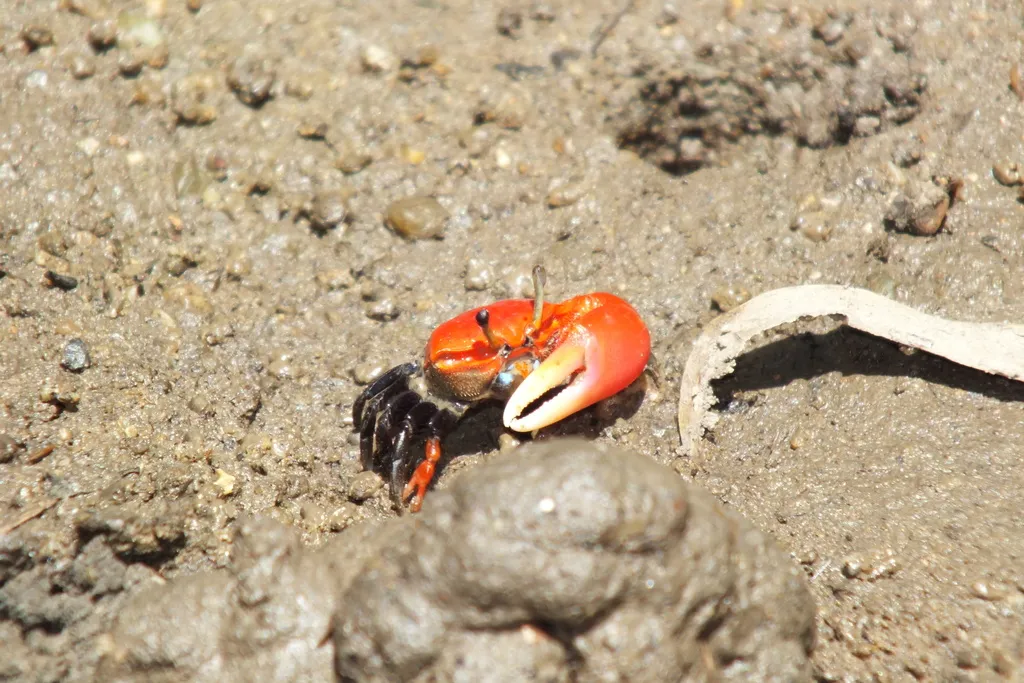 1.2 in (3 cm)11 gal (40 L)75–84°F (24–29°C)
Watermelon fiddler crab
Paraleptuca crassipes
1.2 in (3 cm) · 11 gal (40 L)
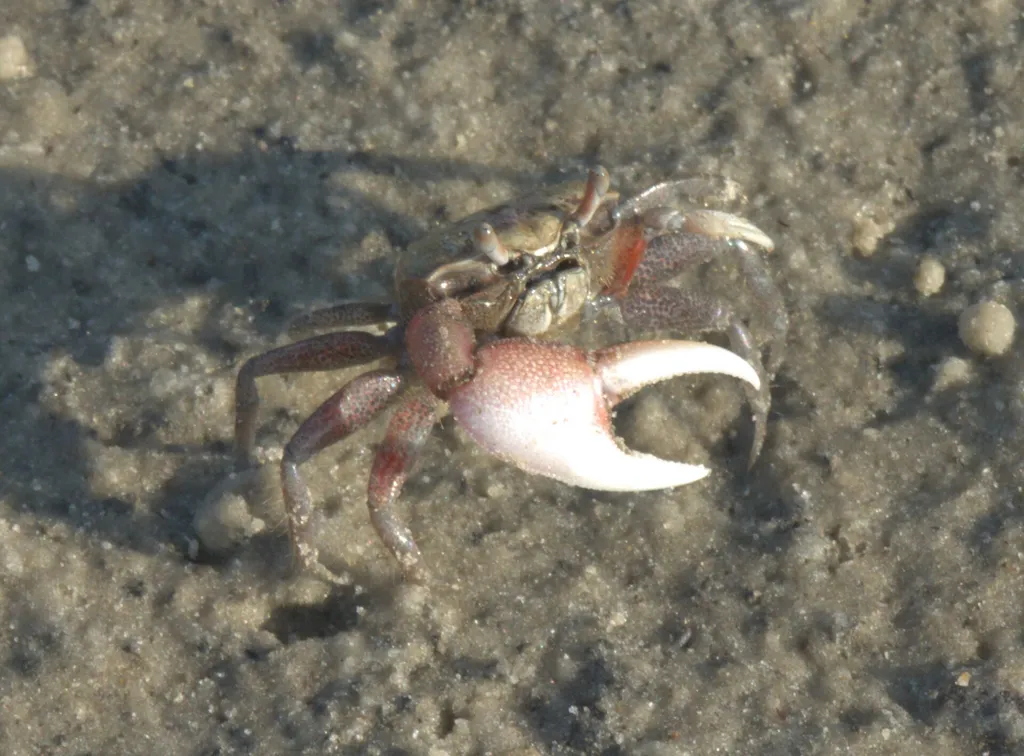 1 in (2.5 cm)11 gal (40 L)68–82°F (20–28°C)
Atlantic sand fiddler crab
Leptuca pugilator
1 in (2.5 cm) · 11 gal (40 L)
- 1 in (2.5 cm)11 gal (40 L)72–82°F (22–28°C)
Batik crab
Metasesarma obesum
1 in (2.5 cm) · 11 gal (40 L)
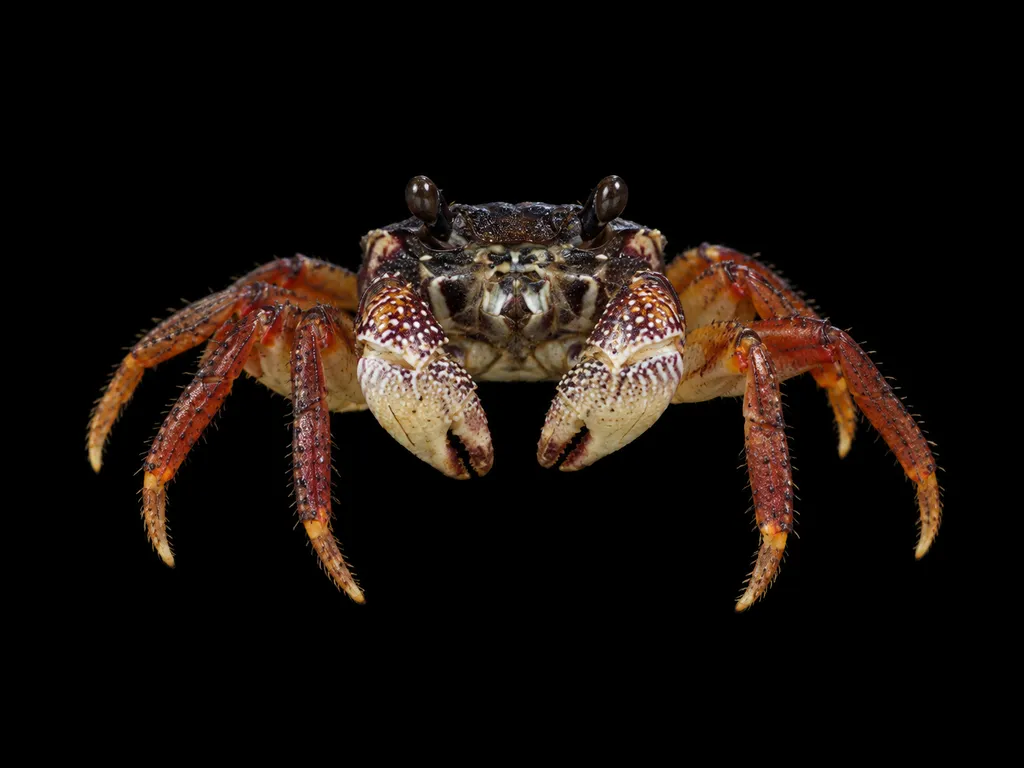 2.4 in (6 cm)24 gal (90 L)75–86°F (24–30°C)
African mangrove crab
Goniopsis pelii
2.4 in (6 cm) · 24 gal (90 L)