Atlantic sand fiddler crab
Leptuca pugilator
Also known as Pink Atlantic sand fiddler crab, Sand fiddler crab, Calico fiddler crab, Uca pugilator
BrackishCrab
Care at a glance
- Temperature
- 68–82°F
- 20–28°C
- pH
- 7.8–8.4
- Adult size
- 1 in
- 2.5 cm
- Minimum tank
- 11 gal
- 40 L
- Temperament
- Mostly peaceful
- Social behavior
- Social
- Tankmates
- With caution
- Swim level
- Bottom
- Difficulty
- Medium
- Breeding
- Hard
- Rarity
- Common
- Family
- Ocypodidae
- Origin
- US Atlantic and Gulf coasts, Massachusetts to Texas
Overview
Fiddler crabs are colony animals that are peaceful apart from males sparring over burrows, so keep a group with more females than males on the beach of a brackish paludarium. They spend their time on the sand and at the water's edge and will not use a deep tank at all. Shops sell them as freshwater crabs, but in fresh water they fade over a few months, so use marine salt. Feed sinking pellets, algae wafers, blanched vegetables, and frozen bloodworm, and leave cuttlebone in the water for the molt. Brackish snails are the only easy company; most fish do not fit a beach setup.
In the wild
The Atlantic sand fiddler crab lives on sandy and muddy shores from Cape Cod to Texas, digging burrows above the waterline along tidal creeks and salt marsh edges, often in colonies of thousands. It is a shore animal, not an aquatic one, and it drowns in a tank with no way out of the water. Set it up as a brackish paludarium with a sloped sand beach several centimeters deep for burrowing, a shallow pool, and a tight lid. Mix marine salt to a specific gravity of 1.005 to 1.015, keep the water at 20 to 28 C and pH 7.8 to 8.4, and give a group a footprint of at least 40 liters.
Good to know
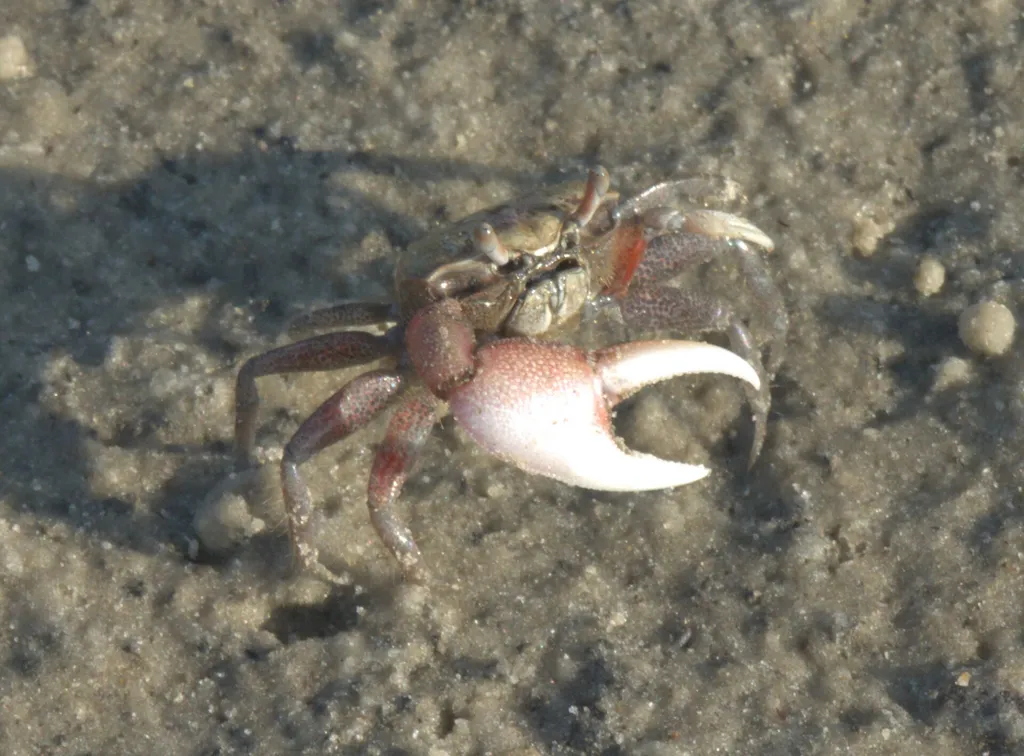
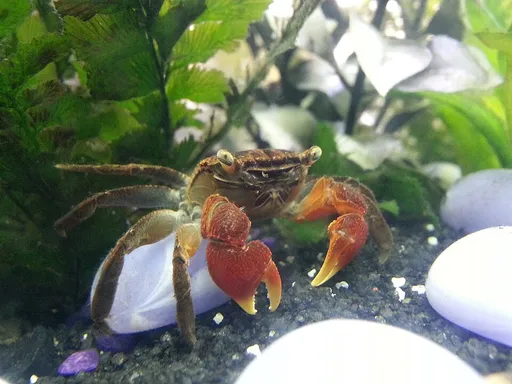
This is Leptuca pugilator in the family Ocypodidae, sold for decades as Uca pugilator until the 2016 revision moved it to Leptuca. The carapace reaches about 2.5 cm across, and a male's large claw can be 4 cm long, on either the left or the right side. It feeds by scooping up sand and sorting out algae and detritus with its mouthparts, then dropping the cleaned sand as little pellets. The larvae drift in the sea as plankton for weeks, so it does not breed in captivity, and a fiddler crab lives only about one to three years.
Did you know
Each male is left or right handed, with one huge claw and one small feeding claw. If he loses the big claw in a fight, he regrows a big claw on the same side over the next molts, smaller and weaker than the original, and the small feeding claw stays small. The old story that the crab switches hands is a myth.
Common questions
What size tank does an Atlantic sand fiddler crab need?
An Atlantic sand fiddler crab needs at least 11 gal (40 L). It spends most of its time in the bottom.
What temperature and pH does an Atlantic sand fiddler crab need?
An Atlantic sand fiddler crab is comfortable at 68–82°F (20–28°C) with a pH of 7.8–8.4.
How big does an Atlantic sand fiddler crab get?
An adult Atlantic sand fiddler crab reaches about 1 in (2.5 cm).
Related species
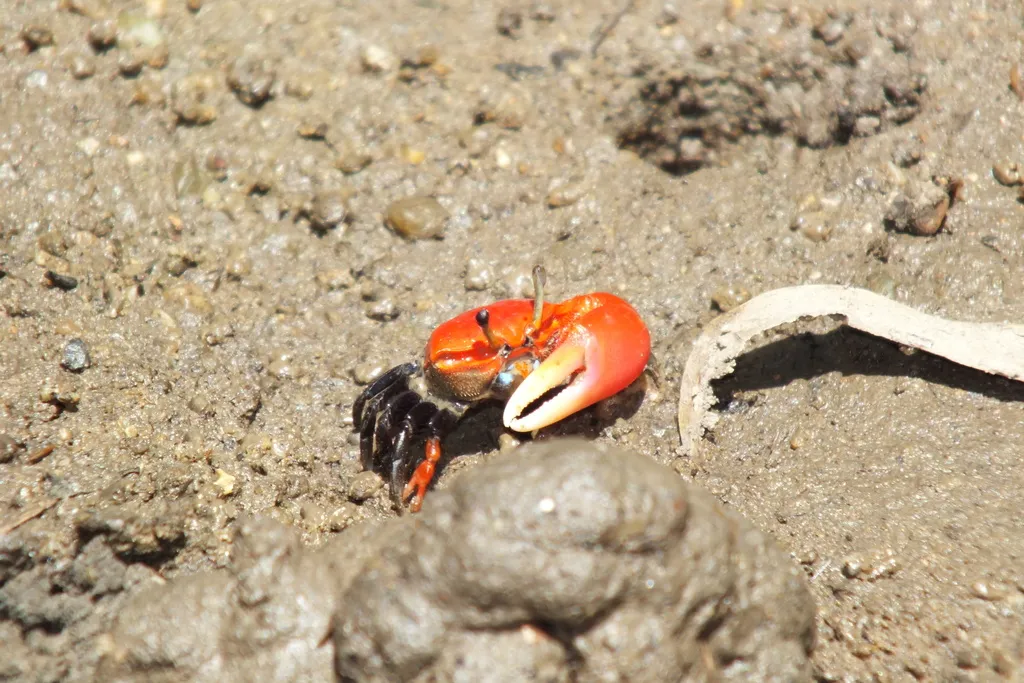 1.2 in (3 cm)11 gal (40 L)75–84°F (24–29°C)
Watermelon fiddler crab
Paraleptuca crassipes
1.2 in (3 cm) · 11 gal (40 L)
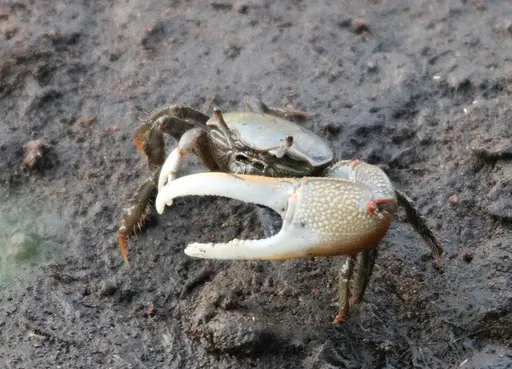 1.6 in (4 cm)10 gal (38 L)75–82°F (24–28°C)
Fiddler crab
Minuca minax
1.6 in (4 cm) · 10 gal (38 L)
- 1 in (2.5 cm)11 gal (40 L)72–82°F (22–28°C)
Batik crab
Metasesarma obesum
1 in (2.5 cm) · 11 gal (40 L)
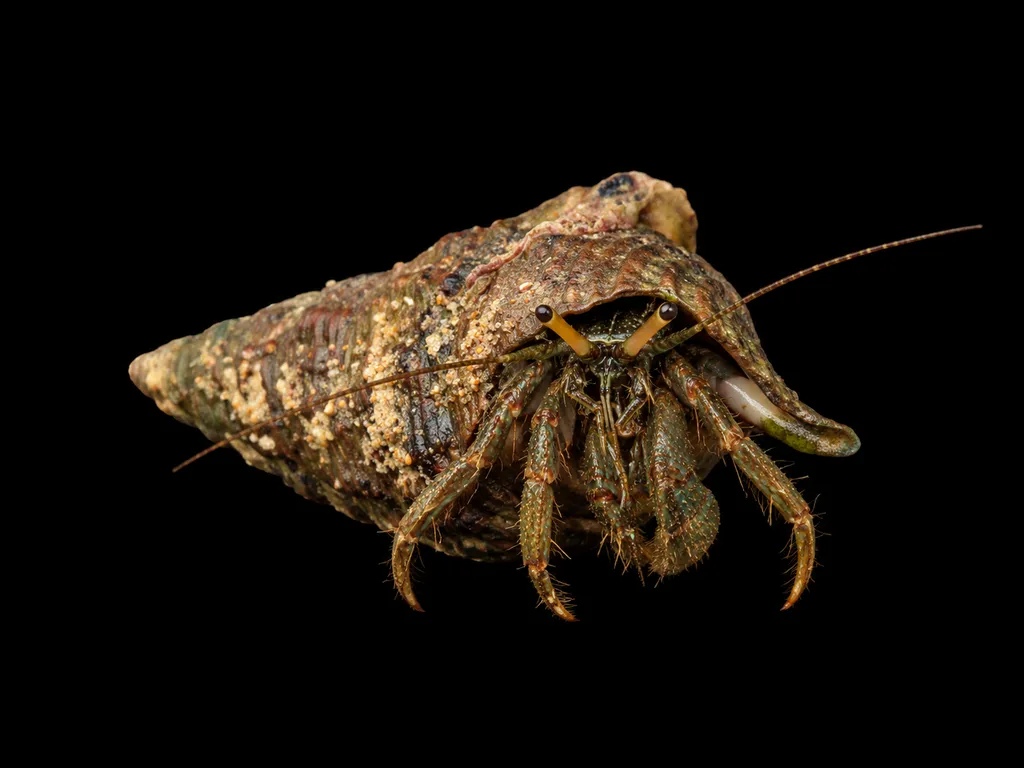 2 in (5 cm)16 gal (60 L)75–84°F (24–29°C)
Brackish hermit crab
Clibanarius longitarsus
2 in (5 cm) · 16 gal (60 L)
 2 in (5 cm)10 gal (38 L)72–82°F (22–28°C)
Red claw crab
Parasesarma bidens
2 in (5 cm) · 10 gal (38 L)