Batik crab
Metasesarma obesum
Also known as Marble crab, Marble batik crab, Mottled crab, Batik vampire crab, Emerald land crab
FreshwaterBrackishCrab
Care at a glance
- Temperature
- 72–82°F
- 22–28°C
- pH
- 7.0–8.0
- Adult size
- 1 in
- 2.5 cm
- Minimum tank
- 11 gal
- 40 L
- Temperament
- Mostly peaceful
- Social behavior
- Social
- Tankmates
- With caution
- Swim level
- Bottom
- Difficulty
- Medium
- Breeding
- No record
- Rarity
- Rare
- Family
- Sesarmidae
- Origin
- Indo-Pacific beaches, Indonesia to East Africa
Overview
Batik crabs are sociable and can live as a group of three to five if the terrarium has enough space and hides; males grapple over territory when crowded. They are mostly peaceful toward each other and hunt and eat white isopods and springtails, but a fish tank is the wrong setup and no aquatic tank mates apply. Keep the air warm and humid, 22 to 28 C, and the fresh water dish at pH 7 to 8 with a brackish dish on the side; never use copper. They lean carnivorous, taking bits of fish, worms, crickets, shrimp and crab pellets, with fruit and vegetables a few times a week, plus cuttlebone for calcium. Expect 2 to 3 years.
In the wild
Batik crabs live on tropical beaches around the Indian and western Pacific Oceans, from Indonesia and the Philippines to Madagascar and Zanzibar, above the tide line where the sand meets forest, hiding under stones, driftwood, leaf litter and coral rubble. This is a land crab that drowns in deep water, so keep it in a humid terrarium, not an aquarium: 40 liters or more with about 90 percent land, damp sand and coco fibre, bark and leaf litter, and a shallow dish of fresh water it can climb out of easily. Many keepers add a second dish of brackish to salt water at a specific gravity of 1.005 to 1.015, and the crabs use both. Keep the air at 22 to 28 C and 70 to 90 percent humidity with a tight lid.
Good to know
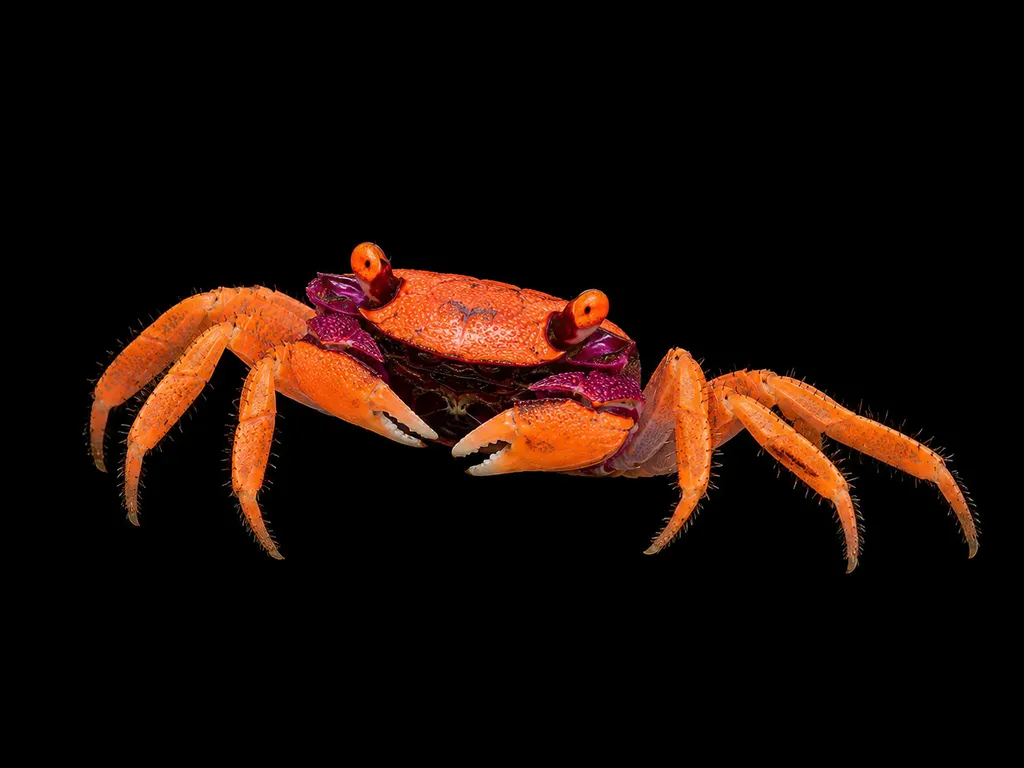
Metasesarma obesum is a sesarmid crab described by Dana in 1851; it is the sister species of the red apple crab, Metasesarma aubryi. The carapace reaches about 2.5 cm across with a legspan of 4 to 5 cm, and the marbled brown, cream and green pattern varies from crab to crab, hence the trade names batik and marble crab. Unlike vampire crabs it is a shore animal with a marine larval stage: females carry hundreds of tiny eggs and walk to the sea to release planktonic larvae, so every crab in the trade is wild caught. It is sold as a freshwater crab, and it does fine with a freshwater dish, but its home is the brackish and salt edge of the beach.
Did you know
A batik crab mother cannot raise her young at home. Her eggs hatch into tiny planktonic larvae that need the sea, so she carries the clutch down the beach to release them into the surf, and no one has yet reared those larvae to crabs in captivity, which is why the hobby depends entirely on wild imports.
Common questions
What size tank does a Batik crab need?
A Batik crab needs at least 11 gal (40 L). It spends most of its time in the bottom.
What temperature and pH does a Batik crab need?
A Batik crab is comfortable at 72–82°F (22–28°C) with a pH of 7.0–8.0.
How big does a Batik crab get?
An adult Batik crab reaches about 1 in (2.5 cm).
Related species
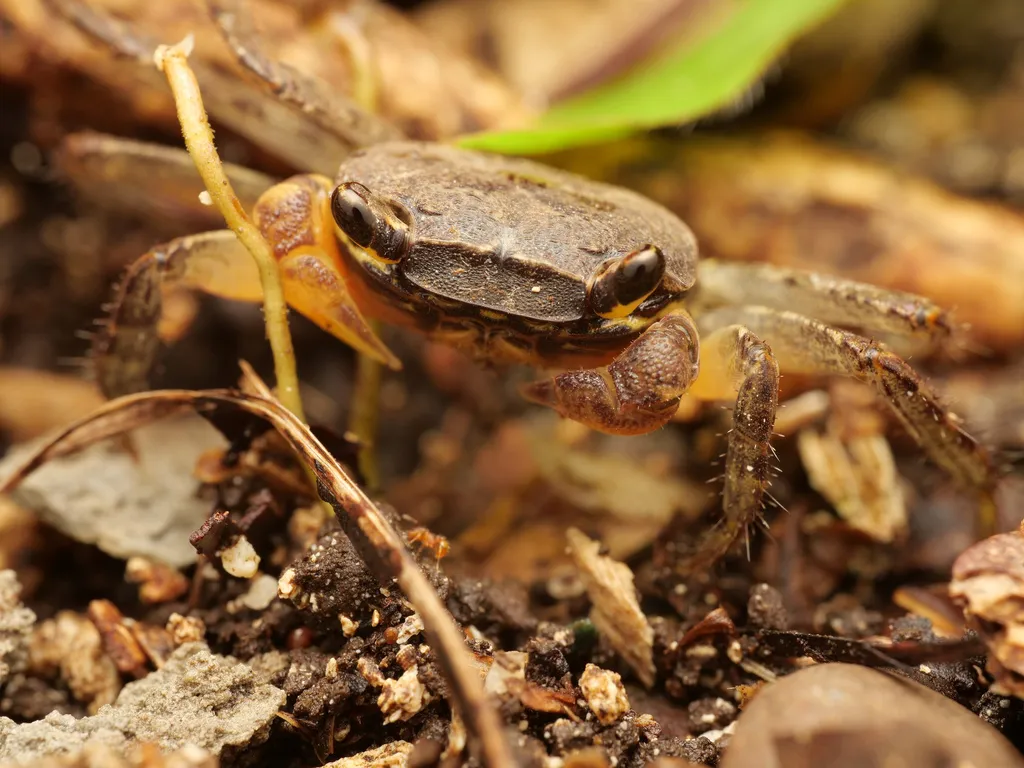 1.6 in (4 cm)11 gal (40 L)75–82°F (24–28°C)
Red apple crab
Metasesarma aubryi
1.6 in (4 cm) · 11 gal (40 L)
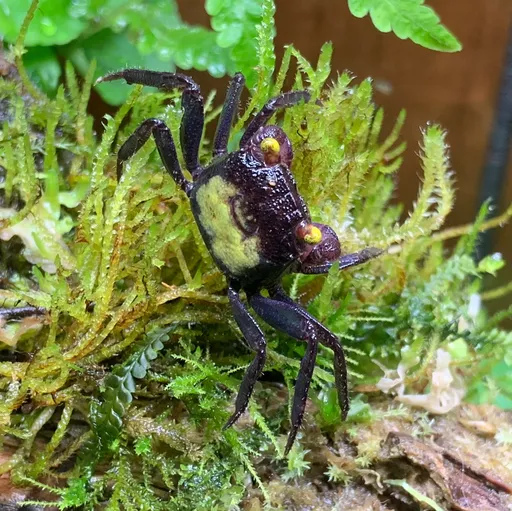 1 in (2.5 cm)10 gal (38 L)75–82°F (24–28°C)
Purple vampire crab
Geosesarma dennerle
1 in (2.5 cm) · 10 gal (38 L)
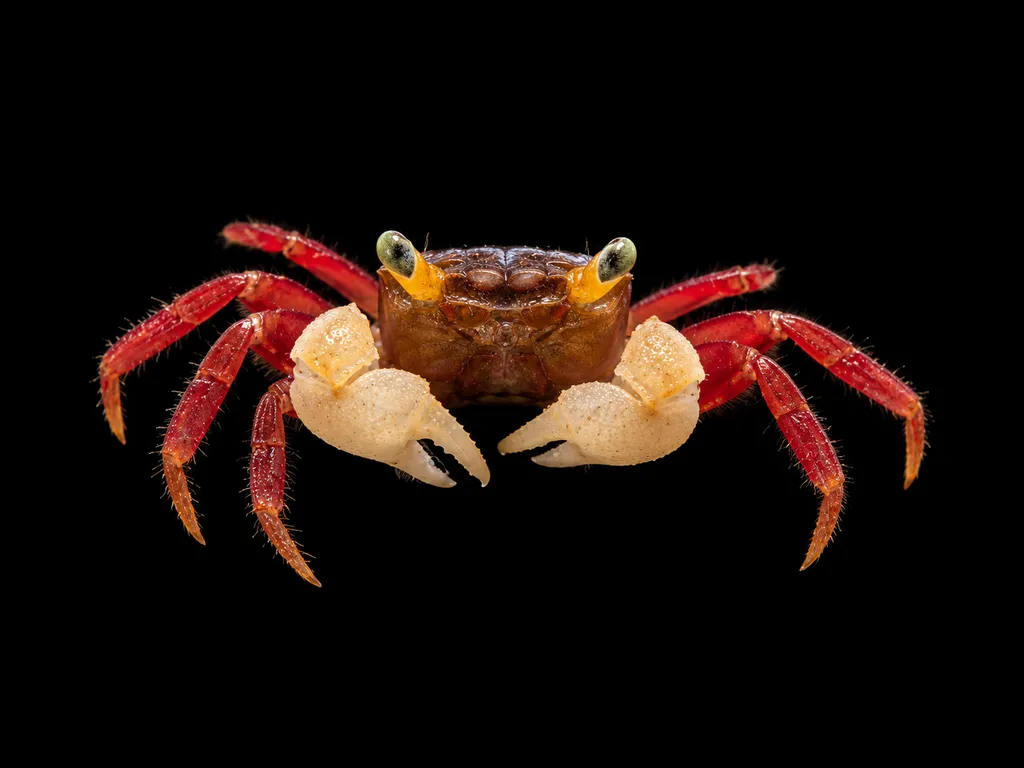 0.6 in (1.5 cm)10 gal (38 L)72–82°F (22–28°C)
White mandarin vampire crab
Geosesarma pontianak
0.6 in (1.5 cm) · 10 gal (38 L)
- 0.6 in (1.5 cm)10 gal (38 L)75–82°F (24–28°C)
Purple arm vampire crab
Geosesarma noduliferum
0.6 in (1.5 cm) · 10 gal (38 L)
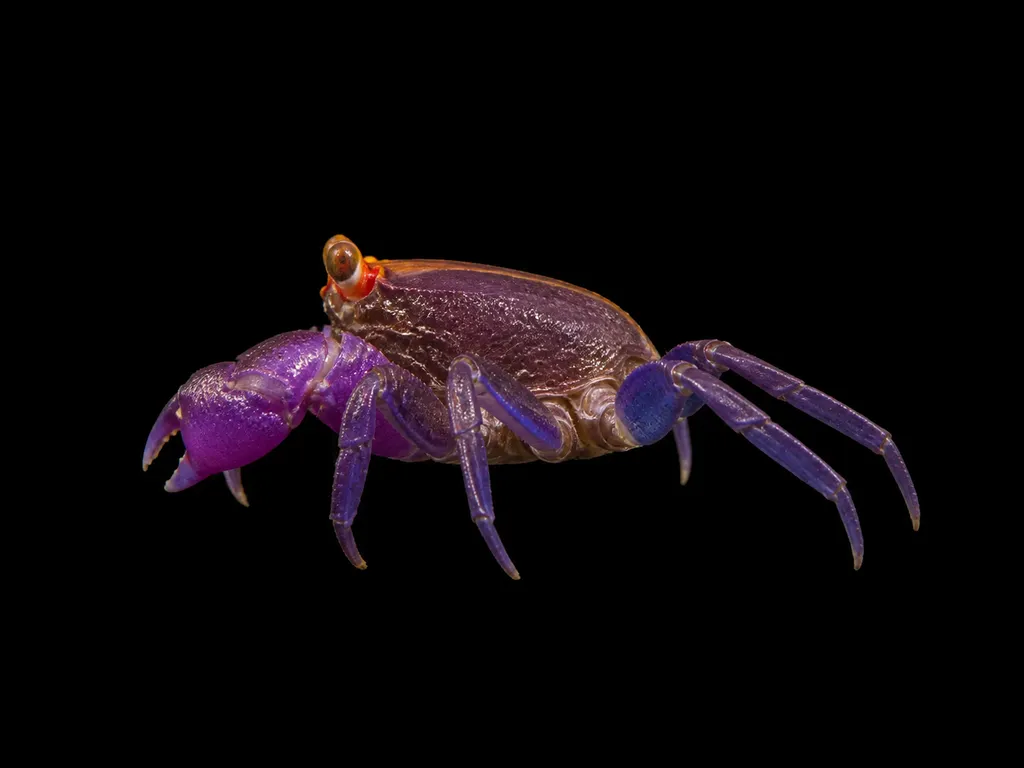 2 in (5 cm)10 gal (38 L)75–82°F (24–28°C)
Blue-leg vampire crab
Geosesarma bicolor
2 in (5 cm) · 10 gal (38 L)
 2 in (5 cm)11 gal (40 L)72–82°F (22–28°C)
Orange vampire crab
Geosesarma tiomanicum
2 in (5 cm) · 11 gal (40 L)