Blue-leg vampire crab
Geosesarma bicolor
Also known as Vampire crab
FreshwaterCrab
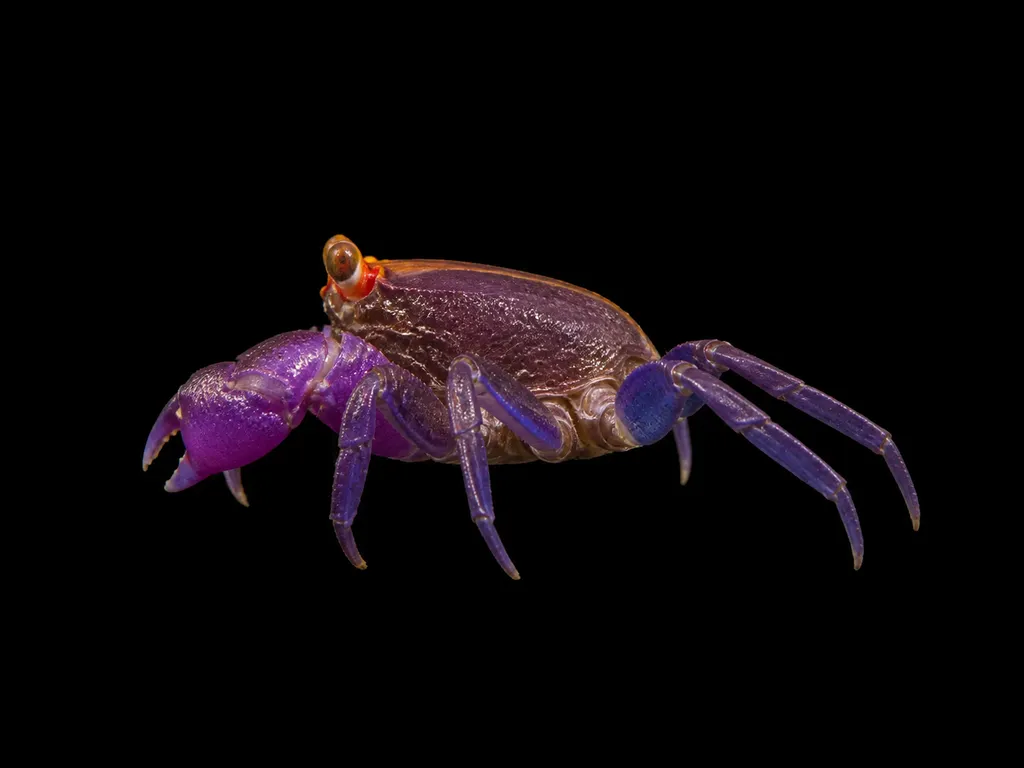
Care at a glance
- Temperature
- 75–82°F
- 24–28°C
- pH
- 7.5–8.0
- Adult size
- 2 in
- 5 cm
- Minimum tank
- 10 gal
- 38 L
- Temperament
- Mostly peaceful
- Social behavior
- Social
- Tankmates
- With caution
- Swim level
- Bottom
- Difficulty
- Medium
- Breeding
- Hard
- Rarity
- Common
- Family
- Sesarmidae
- Origin
- Java, Indonesia (forested streams/ponds)
Overview
Keep them in a colony, ideally one male to two females, in a planted paludarium of about 38 liters with plenty of land and hiding spots. They are aggressive, peaceful enough toward their own kind but hard on other crab species, and they are opportunistic scavengers and hunters that will catch and eat dwarf shrimp, snails, and small fish, so choose tankmates with that in mind. Keep the water warm at 24 to 28 C and alkaline at pH 7.5 to 8, with high ambient humidity. Feed a mixed diet of sinking pellets, dried leaves, blanched veg, and the odd protein treat like bloodworm. Never release unwanted crabs into local waterways, and check your local rules before keeping non-native species.
In the wild
Blue-leg vampire crabs come from forested streams and ponds on Java, Indonesia, where they spend most of their time out of the water on damp banks and leaf litter. They are semi-terrestrial, so do not keep them in a normal tank. Set up a paludarium of about 38 liters with roughly 80 percent land to 20 percent water, 50/50 at the very least, and only 10 to 15 cm of shallow water with an easy exit, since they will drown if kept fully submerged. Plant both the land and water heavily, give them fine sand to burrow in, and keep a tight lid with humidity around 75 percent. Water should run warm, 24 to 28 C, and on the hard alkaline side at pH 7.5 to 8.
Good to know
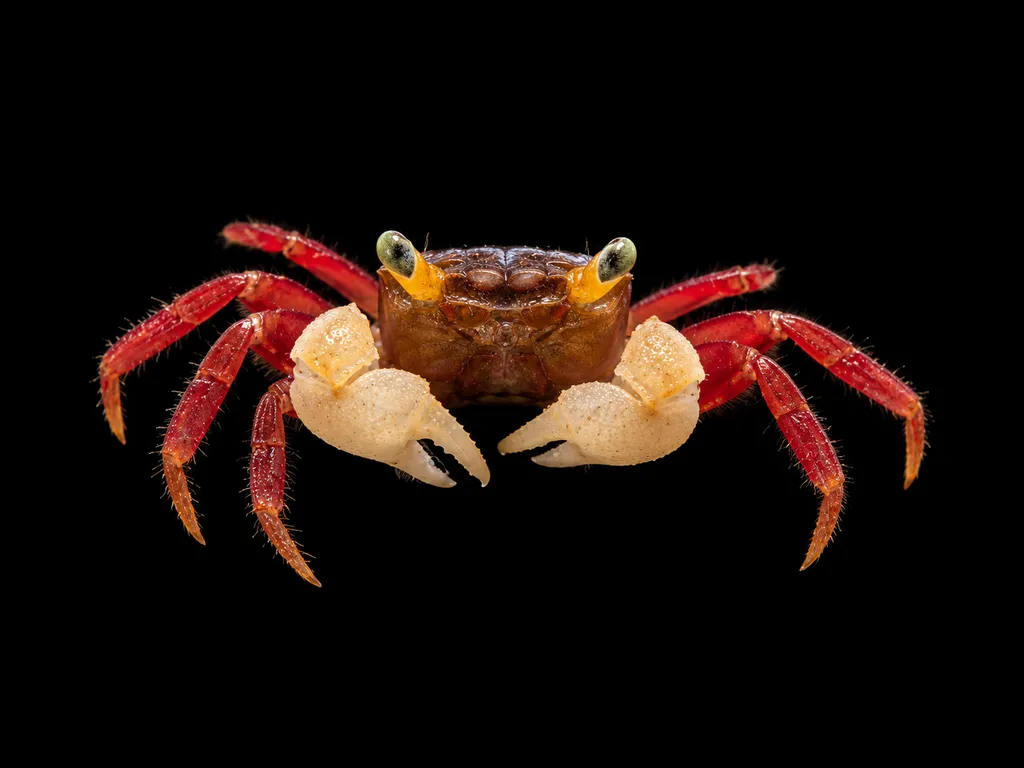
This is a crab in the family Sesarmidae, reaching about 5 cm across the legs, with a carapace only around 1.5 to 2.5 cm wide. Unlike most crabs it breeds in plain freshwater with no saltwater larval stage, releasing tiny fully formed young, so no brackish water is needed. Geosesarma names are muddled in the trade, and stock sold as G. bicolor is often confused with relatives like G. dennerle, but their care is the same.
Did you know
Most crabs send their young out to sea as drifting larvae, but this one skips that step entirely and hatches miniature crabs straight into freshwater. That is why a colony can slowly build up in a home paludarium without any marine setup, something almost no other crab in the hobby manages.
Common questions
What size tank does a Blue-leg vampire crab need?
A Blue-leg vampire crab needs at least 10 gal (38 L). It spends most of its time in the bottom.
What temperature and pH does a Blue-leg vampire crab need?
A Blue-leg vampire crab is comfortable at 75–82°F (24–28°C) with a pH of 7.5–8.0.
How big does a Blue-leg vampire crab get?
An adult Blue-leg vampire crab reaches about 2 in (5 cm).
Related species
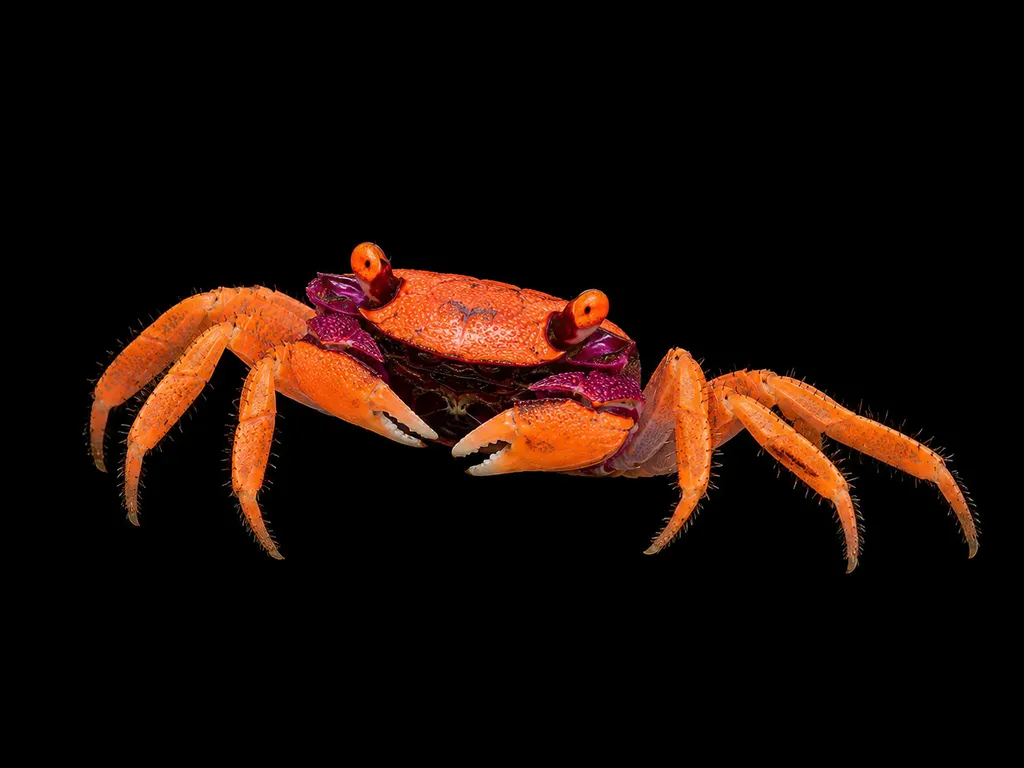 2 in (5 cm)11 gal (40 L)72–82°F (22–28°C)
Orange vampire crab
Geosesarma tiomanicum
2 in (5 cm) · 11 gal (40 L)
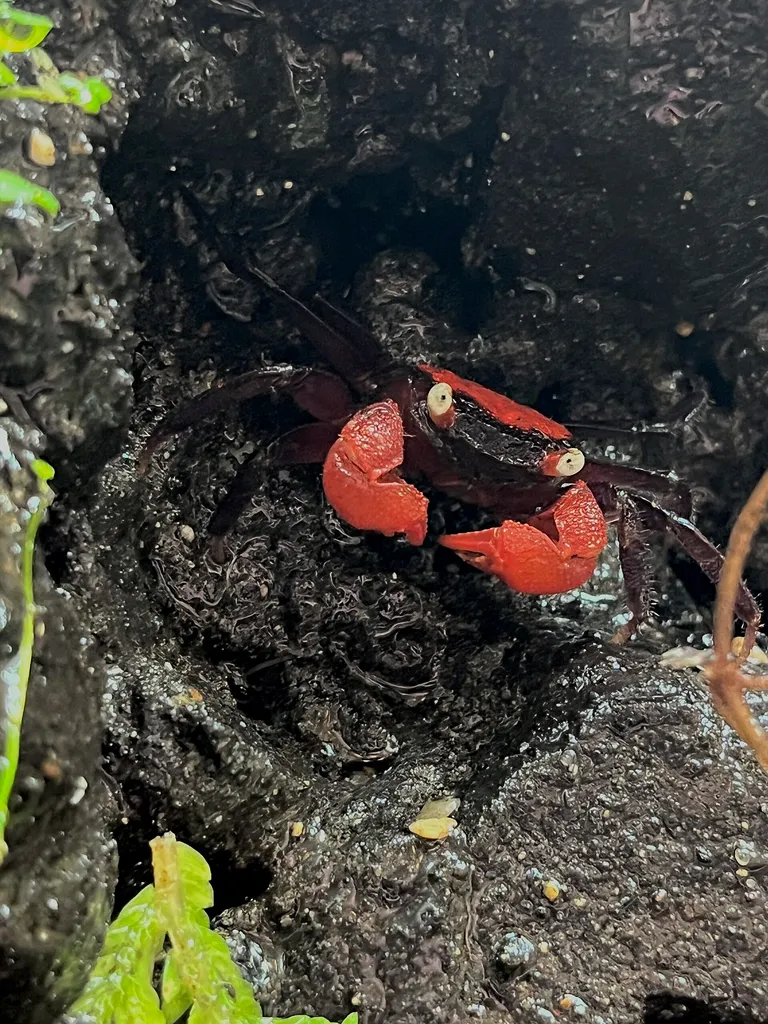 2 in (5 cm)10 gal (38 L)72–82°F (22–28°C)
Red vampire crab
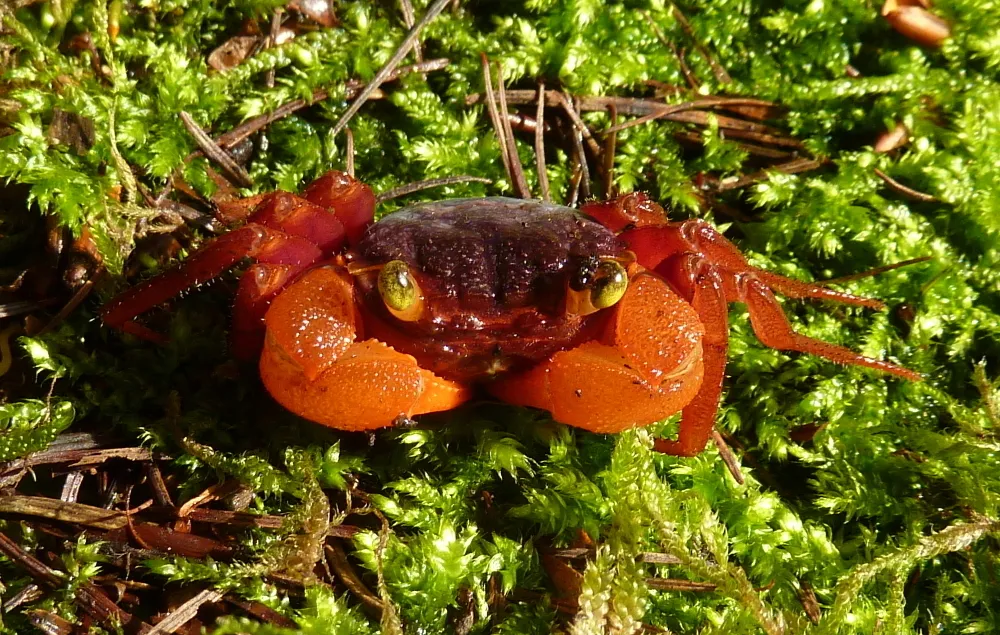
Geosesarma hagen
2 in (5 cm) · 10 gal (38 L)
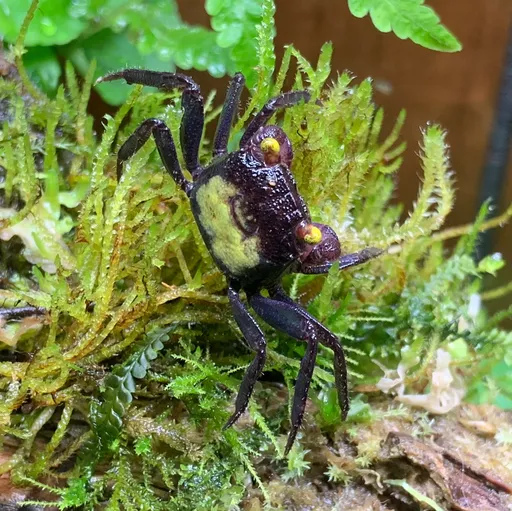 1 in (2.5 cm)10 gal (38 L)75–82°F (24–28°C)
Purple vampire crab
Geosesarma dennerle
1 in (2.5 cm) · 10 gal (38 L)
 0.6 in (1.5 cm)10 gal (38 L)72–82°F (22–28°C)
White mandarin vampire crab
Geosesarma pontianak
0.6 in (1.5 cm) · 10 gal (38 L)
- 0.6 in (1.5 cm)10 gal (38 L)75–82°F (24–28°C)
Purple arm vampire crab
Geosesarma noduliferum
0.6 in (1.5 cm) · 10 gal (38 L)
 0.6 in (1.5 cm)16 gal (60 L)72–81°F (22–27°C)
Mandarin vampire crab
Geosesarma notophorum
0.6 in (1.5 cm) · 16 gal (60 L)