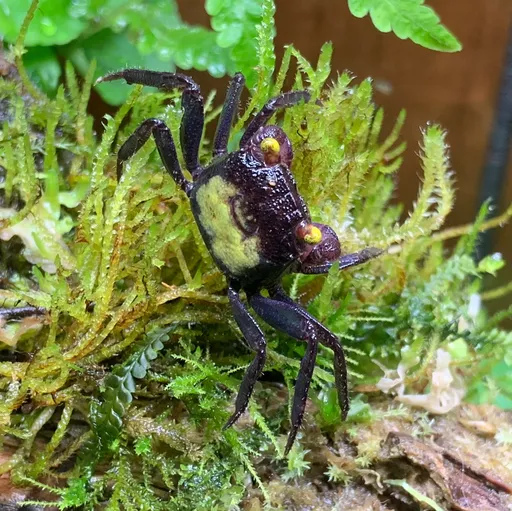
Purple vampire crab
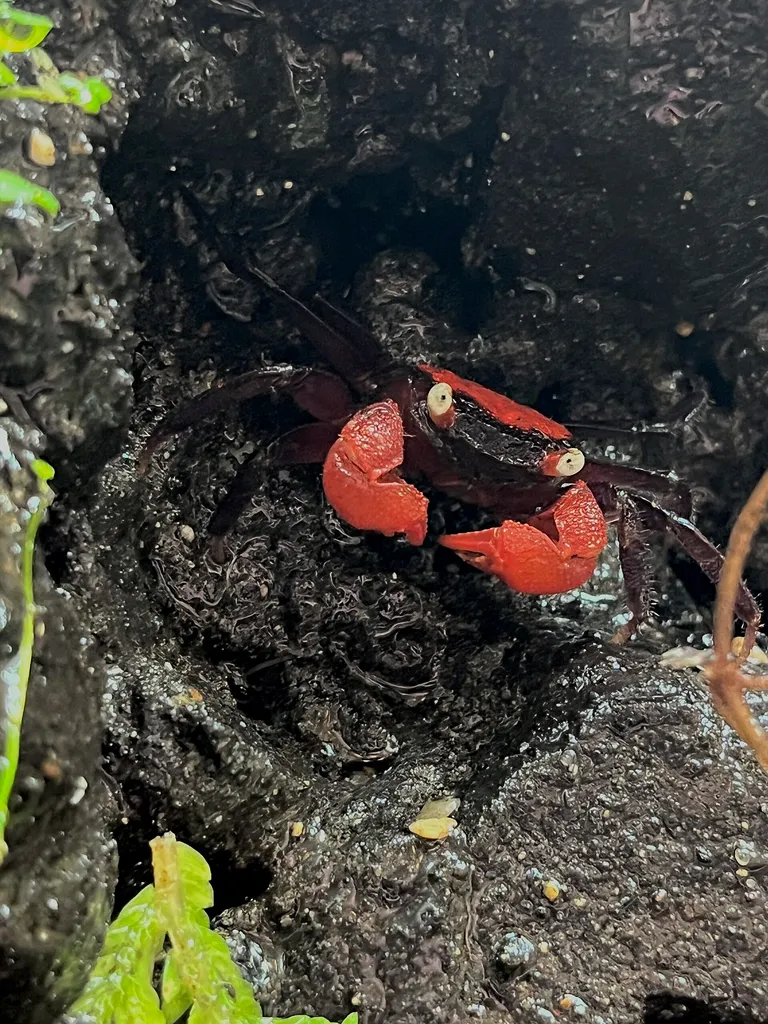
Geosesarma dennerle
Also known as Vampire crab
FreshwaterCrab
Care at a glance
- Temperature
- 75–82°F
- 24–28°C
- pH
- 7.5–8.0
- Adult size
- 1 in
- 2.5 cm
- Minimum tank
- 10 gal
- 38 L
- Temperament
- Mostly peaceful
- Social behavior
- Social
- Tankmates
- With caution
- Swim level
- Bottom
- Difficulty
- Medium
- Breeding
- Medium
- Rarity
- Very common
- Family
- Sesarmidae
- Origin
- Central Java, Indonesia
Overview
Keep them as a species setup, several females per male, in a paludarium of 38 liters or larger with mostly land. They are bottom dwellers that spend their time on the substrate and climbing bark and plants, and they are aggressive and territorial. They are predatory toward other species and cannibalistic toward their own young, so do not mix them with fish, shrimp, or other crabs. Hold the water warm at 24 to 28 C, hard, and alkaline at pH 7.5 to 8. Feed a mix of dried foods, blanched vegetables, and protein like bloodworms or small bits of fish, and offer cuttlebone or another calcium source for molting.
In the wild
Purple vampire crabs come from Central Java, Indonesia, where they live along stream banks and damp forest floor more than in the water itself. They are semi-terrestrial, so set them up in a paludarium that is roughly 80 percent land with a shallow water area, not a normal aquarium. Give them fine sand for burrowing, dense plants, and bark hides, plus high humidity and a tight lid to hold it in. The water stays warm at 24 to 28 C and should be hard and alkaline, with a pH of 7.5 to 8. Plan for a footprint of at least 38 liters.
Good to know
This is Geosesarma dennerle, a small land crab in the family Sesarmidae. The body reaches about 2.5 cm, with a legspan of 4 to 5 cm. Unusually for a crab, it breeds in fresh water and releases fully formed young, skipping the ocean-going larval stage that most marine and brackish crabs depend on. Most stock in the trade is wild collected.
Did you know
Most crabs have to release their larvae into salt water, where the babies drift as plankton before settling. Vampire crabs skip all of that. Females hold a small clutch of eggs and release tiny, fully formed crabs straight into fresh water, which is why a colony can keep breeding in a tank with no ocean access at all.
Common questions
What size tank does a Purple vampire crab need?
A Purple vampire crab needs at least 10 gal (38 L). It spends most of its time in the bottom.
What temperature and pH does a Purple vampire crab need?
A Purple vampire crab is comfortable at 75–82°F (24–28°C) with a pH of 7.5–8.0.
How big does a Purple vampire crab get?
An adult Purple vampire crab reaches about 1 in (2.5 cm).
Related species
 0.6 in (1.5 cm)10 gal (38 L)72–82°F (22–28°C)
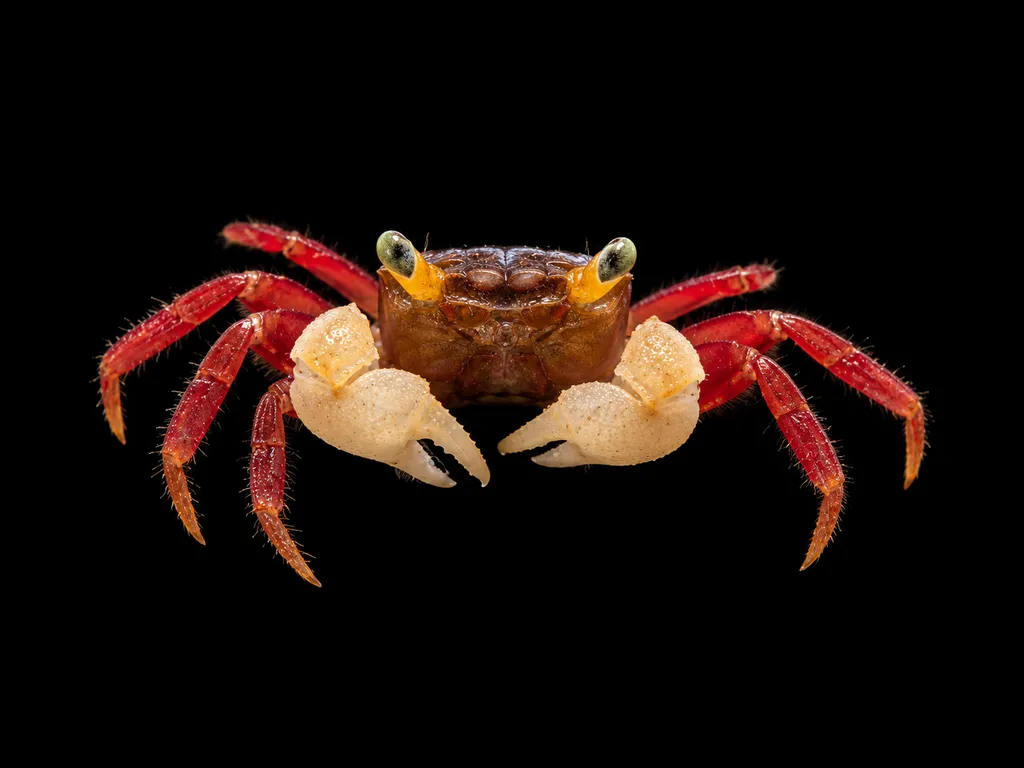
White mandarin vampire crab
Geosesarma pontianak
0.6 in (1.5 cm) · 10 gal (38 L)
- 0.6 in (1.5 cm)10 gal (38 L)75–82°F (24–28°C)
Purple arm vampire crab
Geosesarma noduliferum
0.6 in (1.5 cm) · 10 gal (38 L)
 2 in (5 cm)10 gal (38 L)75–82°F (24–28°C)
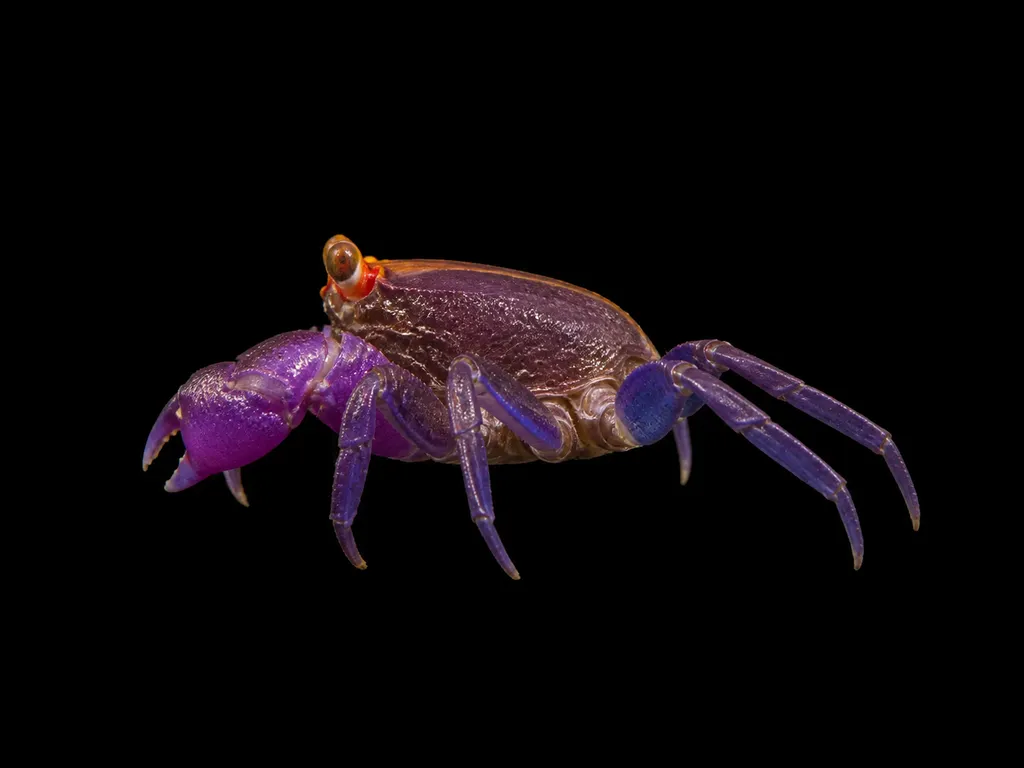
Blue-leg vampire crab
Geosesarma bicolor
2 in (5 cm) · 10 gal (38 L)
 2 in (5 cm)11 gal (40 L)72–82°F (22–28°C)
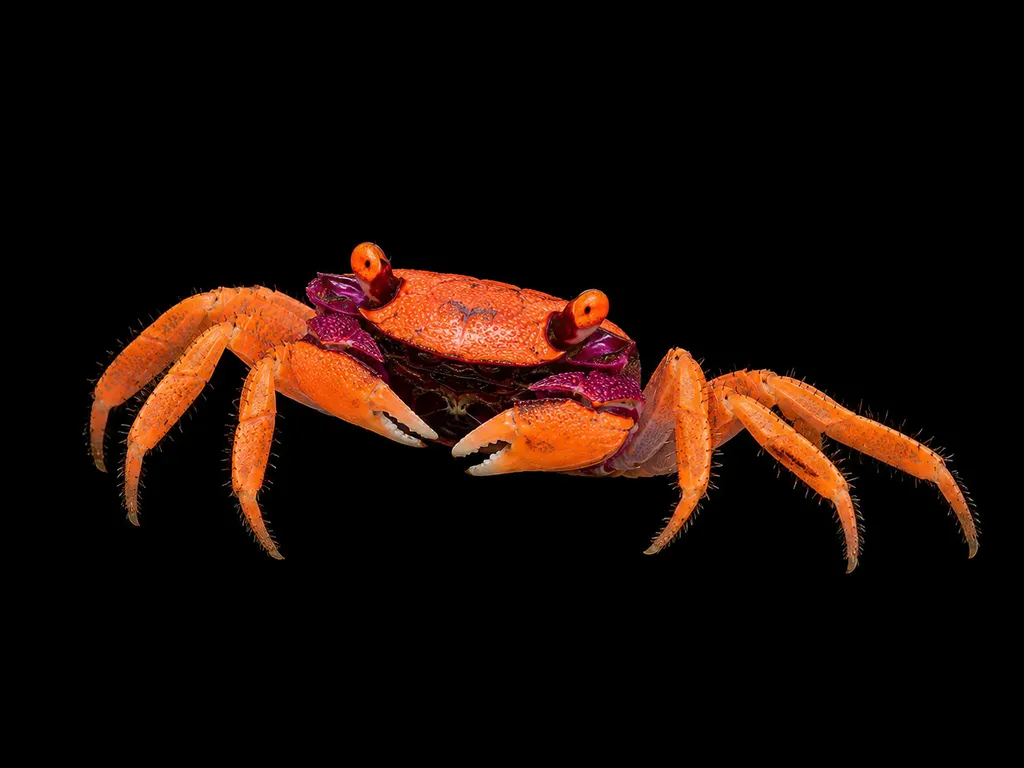
Orange vampire crab
Geosesarma tiomanicum
2 in (5 cm) · 11 gal (40 L)
 2 in (5 cm)10 gal (38 L)72–82°F (22–28°C)
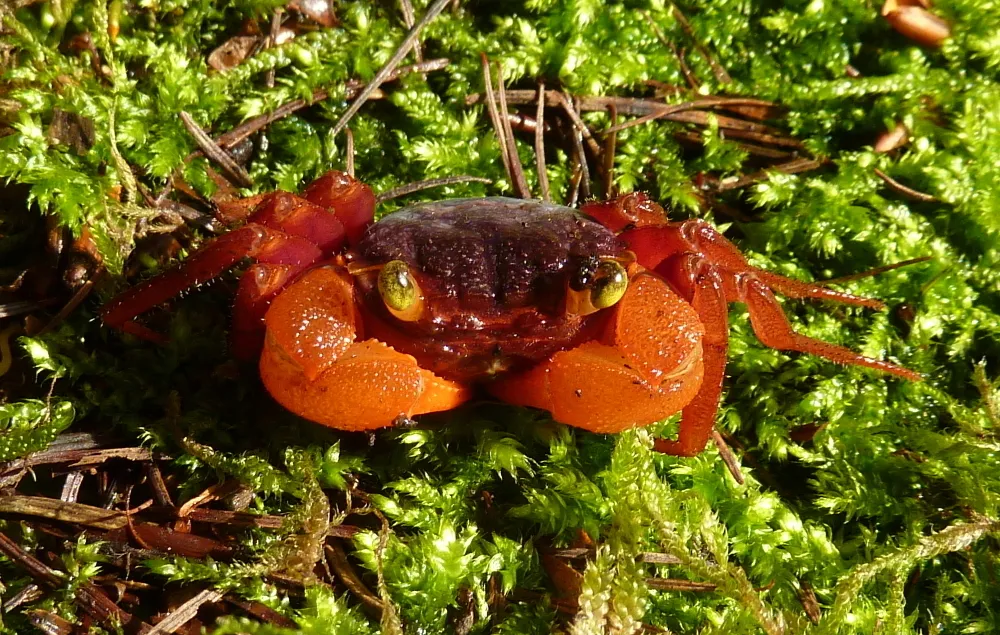
Red vampire crab
Geosesarma hagen
2 in (5 cm) · 10 gal (38 L)
 0.6 in (1.5 cm)16 gal (60 L)72–81°F (22–27°C)
Mandarin vampire crab
Geosesarma notophorum
0.6 in (1.5 cm) · 16 gal (60 L)