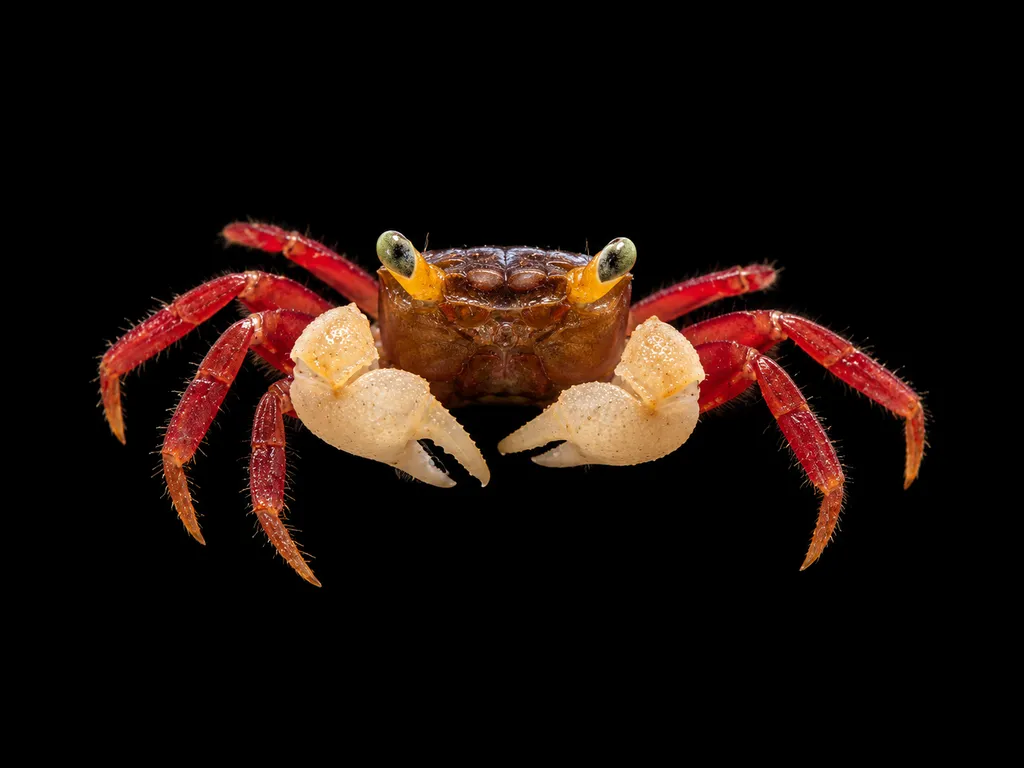
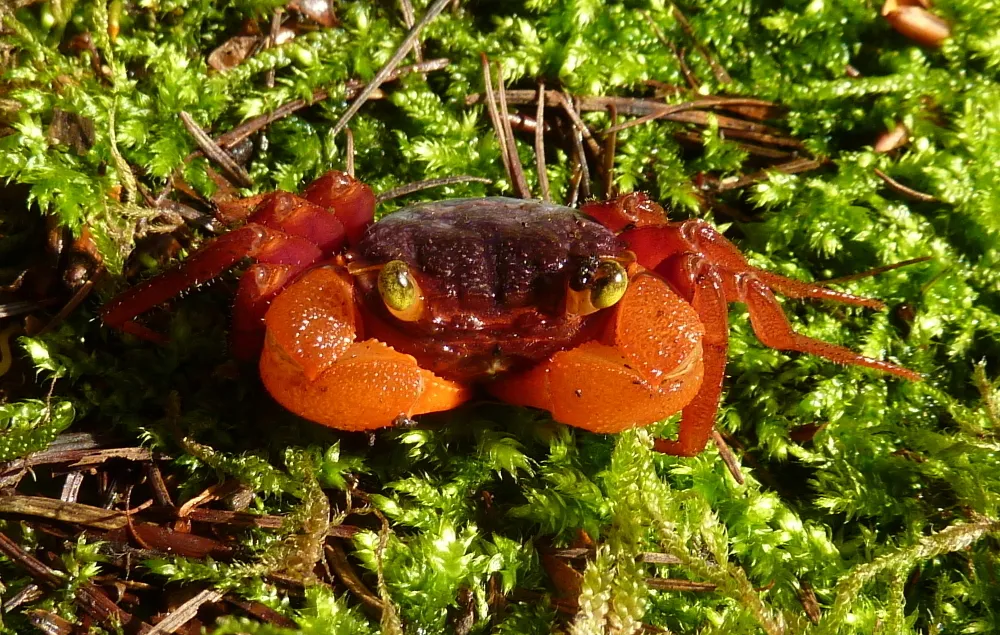
Orange vampire crab
Geosesarma tiomanicum
Also known as Disco vampire crab, Vampire crab
FreshwaterCrab
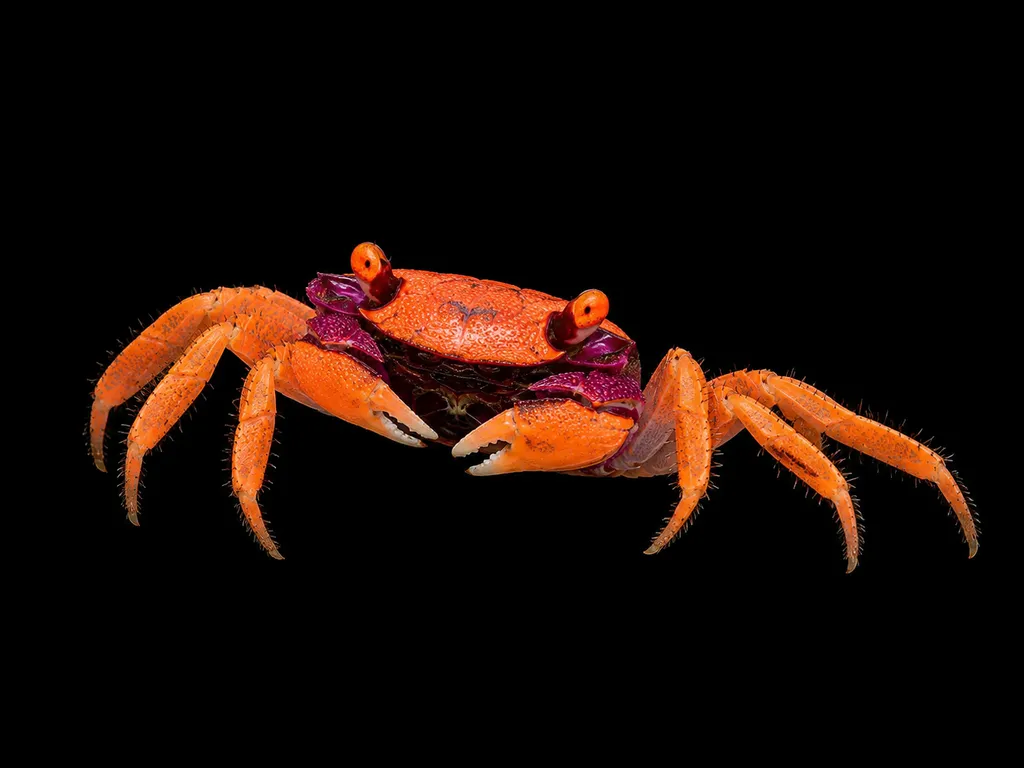
Care at a glance
- Temperature
- 72–82°F
- 22–28°C
- pH
- 7.5–8.0
- Adult size
- 2 in
- 5 cm
- Minimum tank
- 11 gal
- 40 L
- Temperament
- Mostly peaceful
- Social behavior
- Social
- Tankmates
- With caution
- Swim level
- Bottom
- Diet
- Omnivore
- Difficulty
- Medium
- Breeding
- Egg carrier · Medium
- Rarity
- Common
- Family
- Sesarmidae
- Origin
- Pulau Tioman, Malaysia
Overview
The orange vampire crab is a social, semi-terrestrial crab for a humid paludarium. It is a step up from the easiest crabs.
Did you know
The orange vampire crab, like other vampire crabs, never sends tiny floating larvae out to sea as most crabs do. That is why these forest-stream crabs can complete their whole life cycle far from the ocean.
Caring for the orange vampire crab
Orange vampire crabs are not fully aquatic, so keep them in a paludarium of at least 11 gal (40 L). Make it roughly 80 percent land over a shallow water area. They are one of the larger vampire crabs, so give them extra floor space. Build the land out with bark, leaf litter, moss and plenty of hides, under a tight lid that holds in high humidity.
Keep the water warm, hard and alkaline, at 72 to 82°F (22 to 28°C) and a pH of 7.5 to 8.0. They spend their time on the land and along the bottom, foraging through leaf litter and moss. Feed a mix of pellets, dried leaves, frozen foods and the occasional bit of protein.
Orange vampire crabs are social and mostly peaceful, but the males are territorial. Stock more females than males to spread out the aggression. They will eat shrimp and small fish, so choose any tank mates with caution. Never house them with anything small enough to catch.
The female holds the eggs until they hatch as fully formed miniature crabs. That makes captive breeding more practical than for most crabs, though it is moderately difficult.
Good to know
The orange vampire crab, Geosesarma tiomanicum, is a member of the family Sesarmidae. With good care, it lives a few years.
In the wild
Orange vampire crabs come from Pulau Tioman, an island off the east coast of Malaysia. They live semi-terrestrial lives along shaded, humid forest streams.
Common questions
What size tank does an orange vampire crab need?
An orange vampire crab needs at least 11 gal (40 L). It spends most of its time in the bottom.
What temperature and pH does an orange vampire crab need?
An orange vampire crab is comfortable at 72–82°F (22–28°C) with a pH of 7.5–8.0.
What does an orange vampire crab eat?
An orange vampire crab eats a mix of pellets, dried leaves, frozen foods and the occasional bit of protein. It will also eat shrimp and small fish.
How big does an orange vampire crab get?
An adult orange vampire crab reaches about 2 in (5 cm).
How does an orange vampire crab breed?
A female orange vampire crab holds her eggs until they hatch as fully formed miniature crabs. That makes captive breeding more practical than for most crabs, though it is moderately difficult.
Related species
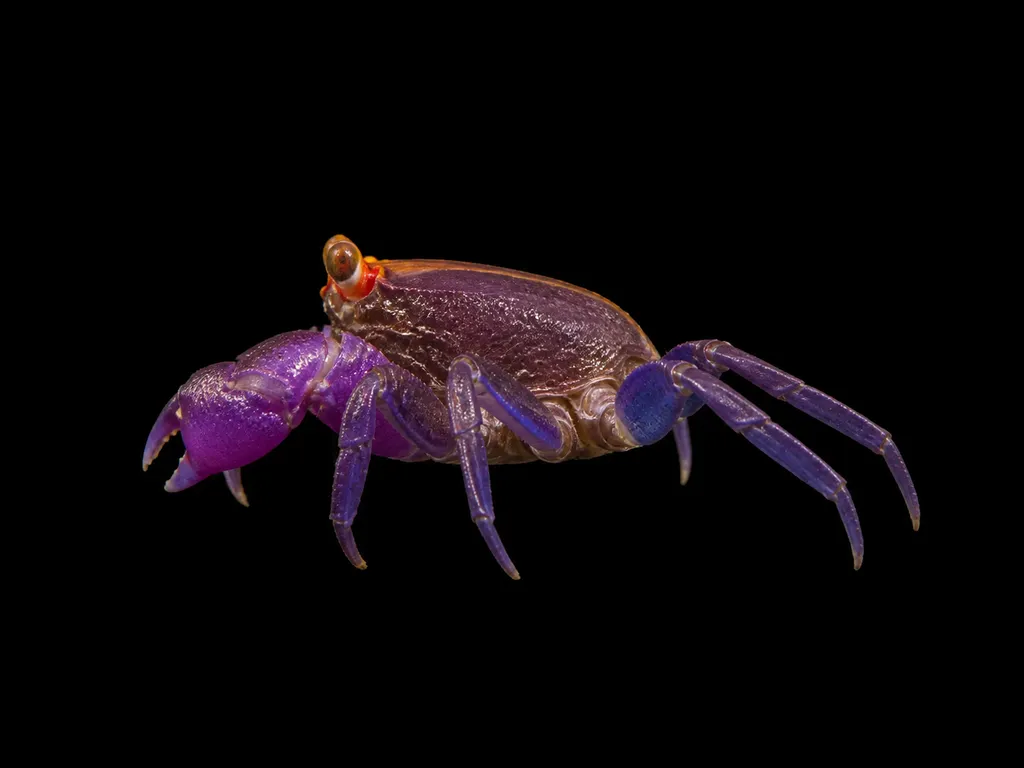 2 in (5 cm)10 gal (38 L)75–82°F (24–28°C)
Blue-leg vampire crab
Geosesarma bicolor
2 in (5 cm) · 10 gal (38 L)
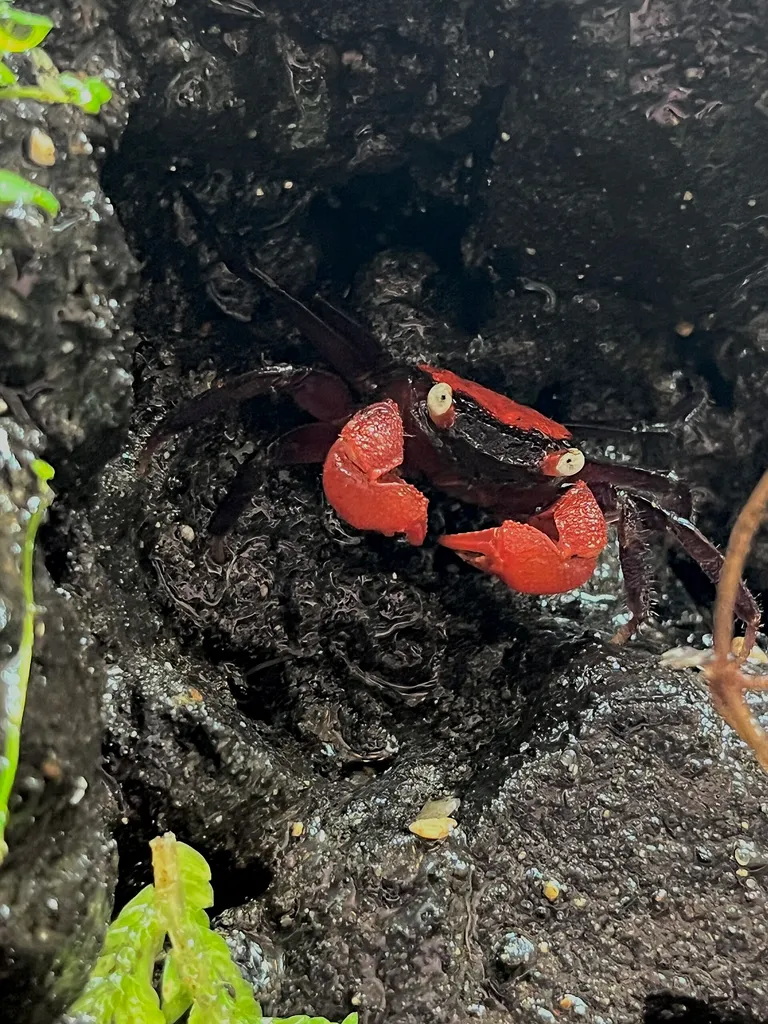 2 in (5 cm)10 gal (38 L)72–82°F (22–28°C)
Red vampire crab
Geosesarma hagen
2 in (5 cm) · 10 gal (38 L)
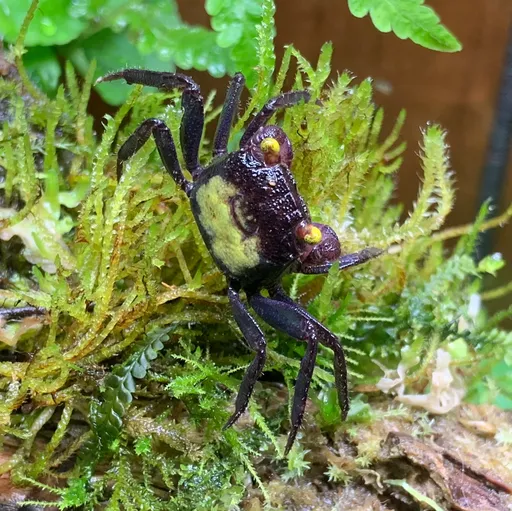 1 in (2.5 cm)10 gal (38 L)75–82°F (24–28°C)
Purple vampire crab
Geosesarma dennerle
1 in (2.5 cm) · 10 gal (38 L)
 0.6 in (1.5 cm)10 gal (38 L)72–82°F (22–28°C)
White mandarin vampire crab
Geosesarma pontianak
0.6 in (1.5 cm) · 10 gal (38 L)
- 0.6 in (1.5 cm)10 gal (38 L)75–82°F (24–28°C)
Purple arm vampire crab
Geosesarma noduliferum
0.6 in (1.5 cm) · 10 gal (38 L)
 0.6 in (1.5 cm)16 gal (60 L)72–81°F (22–27°C)
Mandarin vampire crab
Geosesarma notophorum
0.6 in (1.5 cm) · 16 gal (60 L)