Red claw crab
Parasesarma bidens
BrackishCrab
Care at a glance
- Temperature
- 72–82°F
- 22–28°C
- pH
- 7.5–8.5
- Adult size
- 2 in
- 5 cm
- Minimum tank
- 10 gal
- 38 L
- Temperament
- Aggressive
- Social behavior
- Solitary
- Own kind
- One male per tank
- Tankmates
- With caution
- Swim level
- Bottom
- Difficulty
- Medium
- Breeding
- Hard
- Rarity
- Very common
- Family
- Sesarmidae
- Origin
- Indo-Pacific coastal mangroves and estuaries
Overview
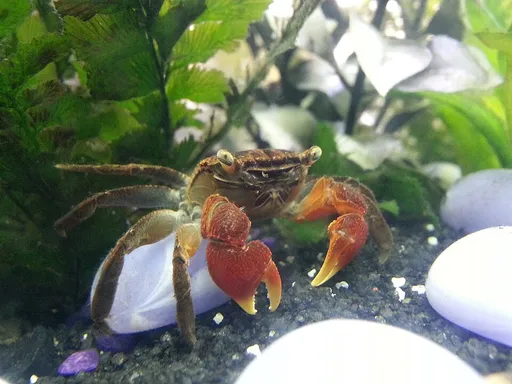
Keep one crab on its own, or one male with several females, in a low-water setup of 38 liters or larger with a tight lid, since they are determined escape artists. They are aggressive and territorial bottom dwellers, especially the males, and they will turn cannibalistic, so do not crowd them. Hold the water at 22 to 28 C, pH 7.5 to 8.5, and slightly brackish with marine salt around 1.005 specific gravity. Feed them a mixed diet of sinking pellets, blanched vegetables, frozen foods, and the occasional bit of protein. Skip fish and shrimp tankmates, since the crab will go after anything it can catch.
In the wild
Red claw crabs come from coastal mangroves and estuaries across the Indo-Pacific, where they spend as much time out of the water as in it. They are brackish and semi-terrestrial, not a freshwater animal, even though shops often mislabel them. Set up a paludarium of at least 38 liters with shallow brackish water, plus land or perches sitting above the surface so they can climb out. Keep the water slightly brackish with marine salt at a specific gravity around 1.005, warm at 22 to 28 C, and on the alkaline side at pH 7.5 to 8.5, since pure fresh water shortens their life.
Good to know
This is Parasesarma bidens, a small crab in the family Sesarmidae, with a carapace reaching about 5 cm across. It is a marine breeder whose larvae need full ocean salinity to develop, so it does not breed in home tanks. Most crabs in the trade are wild-caught from coastal habitats rather than captive-bred. With good care they live a few years.
Did you know
These crabs breathe air as readily as water and will drown if they cannot climb out, which is why the land area matters as much as the pool. They are also strong, persistent climbers that work along silicone seams and cords to escape, so a gap in the lid usually means a crab somewhere on your floor.
Common questions
What size tank does a Red claw crab need?
A Red claw crab needs at least 10 gal (38 L). It spends most of its time in the bottom.
What temperature and pH does a Red claw crab need?
A Red claw crab is comfortable at 72–82°F (22–28°C) with a pH of 7.5–8.5.
How big does a Red claw crab get?
An adult Red claw crab reaches about 2 in (5 cm).
Related species
- 1 in (2.5 cm)11 gal (40 L)72–82°F (22–28°C)
Batik crab
Metasesarma obesum
1 in (2.5 cm) · 11 gal (40 L)
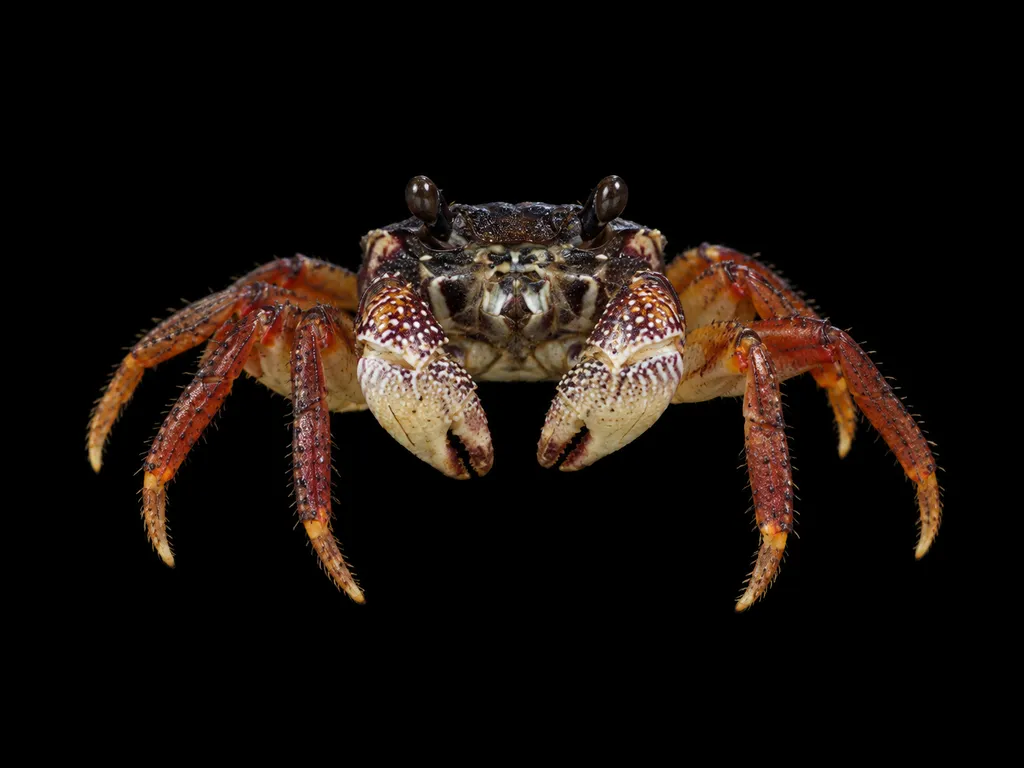 2.4 in (6 cm)24 gal (90 L)75–86°F (24–30°C)
African mangrove crab
Goniopsis pelii
2.4 in (6 cm) · 24 gal (90 L)
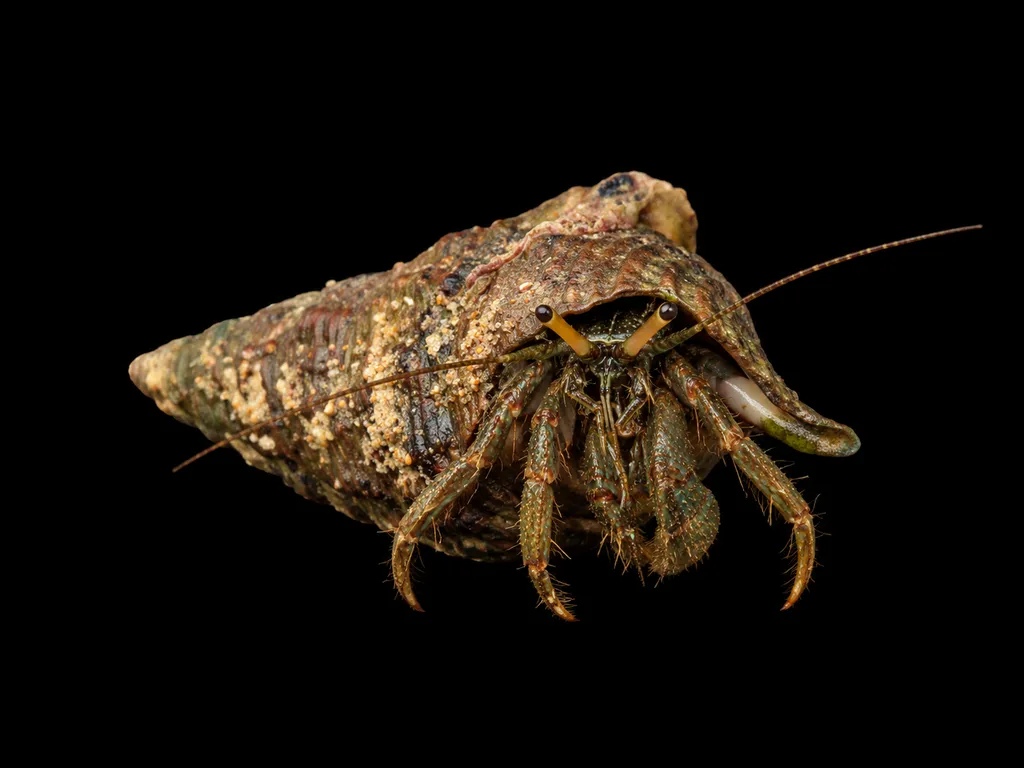 2 in (5 cm)16 gal (60 L)75–84°F (24–29°C)
Brackish hermit crab
Clibanarius longitarsus
2 in (5 cm) · 16 gal (60 L)
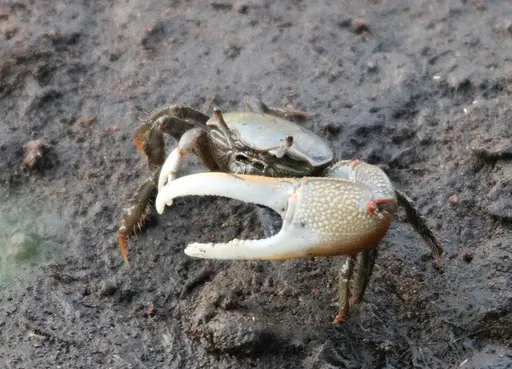 1.6 in (4 cm)10 gal (38 L)75–82°F (24–28°C)
Fiddler crab
Minuca minax
1.6 in (4 cm) · 10 gal (38 L)
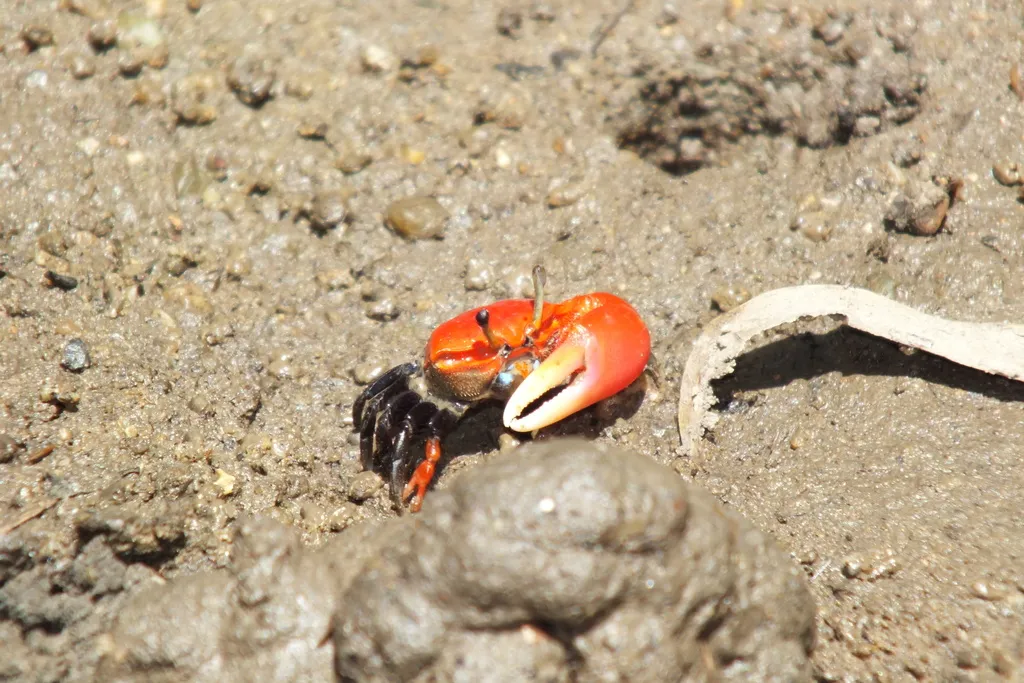 1.2 in (3 cm)11 gal (40 L)75–84°F (24–29°C)
Watermelon fiddler crab
Paraleptuca crassipes
1.2 in (3 cm) · 11 gal (40 L)
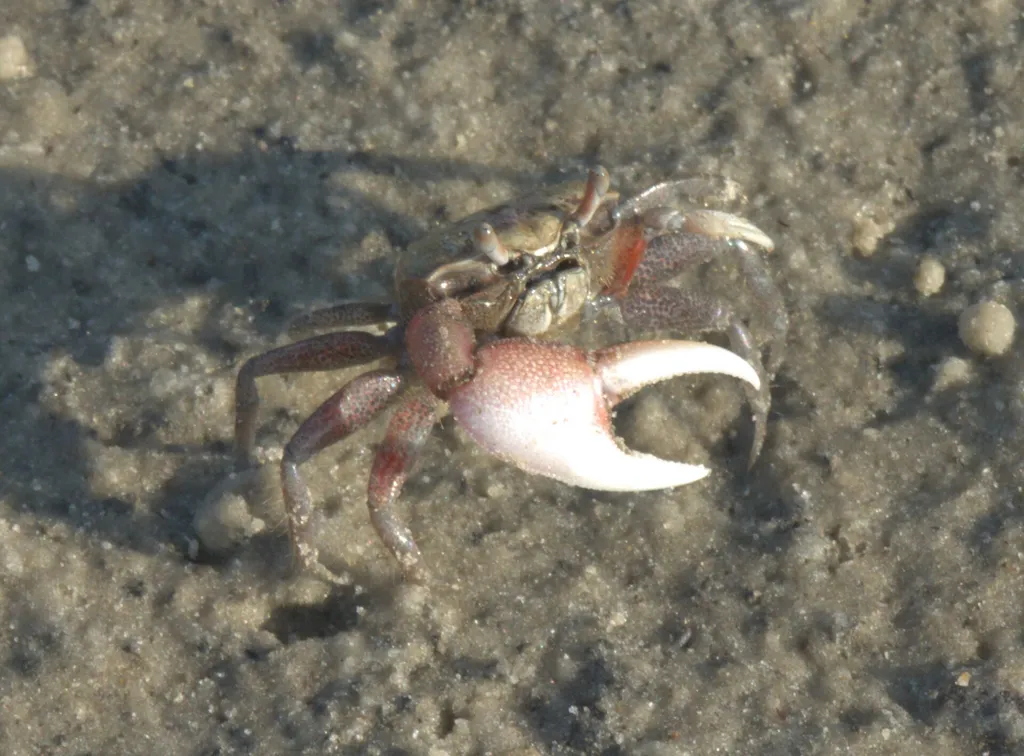 1 in (2.5 cm)11 gal (40 L)68–82°F (20–28°C)
Atlantic sand fiddler crab
Leptuca pugilator
1 in (2.5 cm) · 11 gal (40 L)