African mangrove crab
Goniopsis pelii
Also known as Purple mangrove crab, Violet mangrove crab, West African mangrove crab
BrackishCrab
Care at a glance
- Temperature
- 75–86°F
- 24–30°C
- pH
- 7.5–8.4
- Adult size
- 2.4 in
- 6 cm
- Minimum tank
- 24 gal
- 90 L
- Temperament
- Aggressive
- Social behavior
- Solitary
- Own kind
- One male per tank
- Tankmates
- With caution
- Swim level
- Bottom
- Difficulty
- Medium
- Breeding
- Hard
- Rarity
- Very rare
- Family
- Grapsidae
- Origin
- West African mangroves, Senegal to Angola
Overview
This is a big, fast, aggressive crab that catches fish, shrimp, snails, and smaller crabs, so it gets no tank mates at all. Keep one, or one male with a female or two in a very large paludarium with plenty of hides, because males fight. It is an omnivore that roams the roots and mud at low tide, so feed frozen foods in the water and vegetables, leaves, and dried foods on land, with cuttlebone for the molt. It is mostly a land animal at ground level and only visits the pool, so the land, not the water, is the point of the setup.
In the wild
The African mangrove crab lives in the mangrove swamps and brackish lagoons of West Africa from Senegal to Angola, on muddy to sandy ground among the roots and reeds, where groups dig tunnel systems under the trees that flood at high tide. It is mostly a land animal that dips into the water, so set it up as a paludarium that is mostly land, with bogwood, stones, and sand to dig in, high humidity, and a shallow pool of brackish water mixed with marine salt to a specific gravity of 1.005 to 1.015. Keep it warm at 24 to 30 C with a pH of 7.5 to 8.4, and give one crab a footprint of at least 90 liters. The lid must be heavy and tight, because this is a fast climber that finds every gap.
Good to know
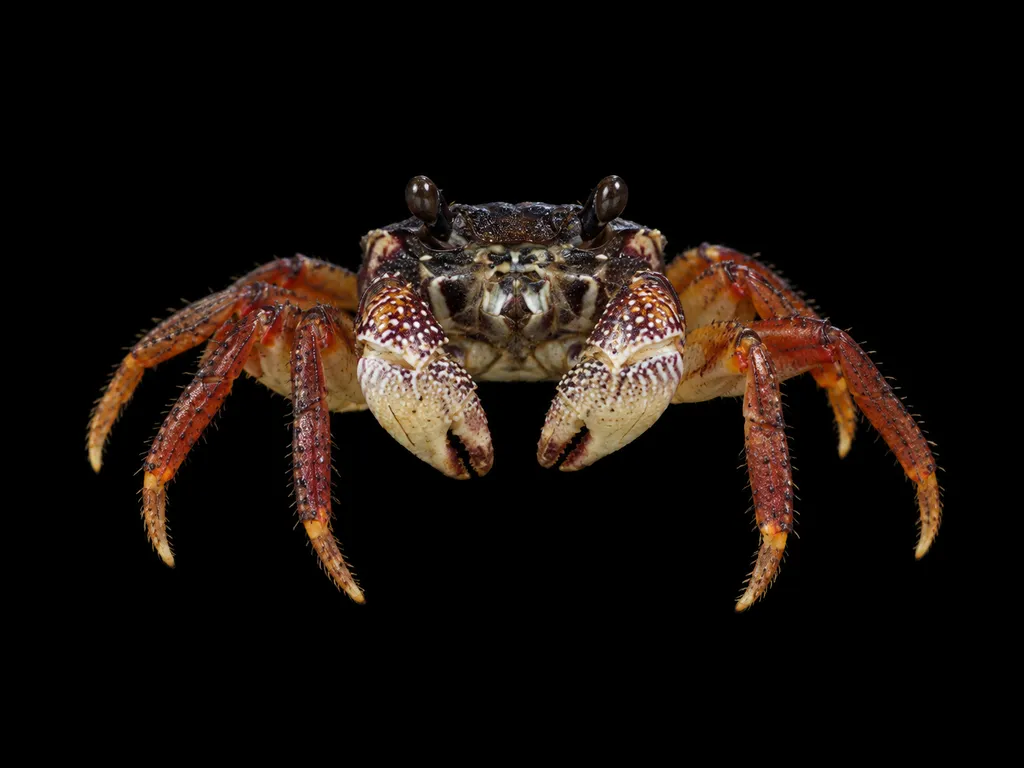
Goniopsis pelii is a shore crab in the family Grapsidae, described by Herklots in 1851 and first placed in Grapsus. The squarish carapace reaches about 5 to 6 cm across on a dark purple body, with orange and blue claws, hairy legs, and white bands across the leg joints. Nigerian fishery studies measure adults at 2.5 to 4.9 cm carapace length and 11 to 37 g. Its larvae develop in the sea, so it does not breed in captivity, and every crab in the trade is wild collected.
Did you know
In its mangroves it lives in groups whose shared tunnel systems disappear under water twice a day. The crabs wait out the high tide below and come out to work the mud and roots when it drains.
Common questions
What size tank does an African mangrove crab need?
An African mangrove crab needs at least 24 gal (90 L). It spends most of its time in the bottom.
What temperature and pH does an African mangrove crab need?
An African mangrove crab is comfortable at 75–86°F (24–30°C) with a pH of 7.5–8.4.
How big does an African mangrove crab get?
An adult African mangrove crab reaches about 2.4 in (6 cm).
Related species
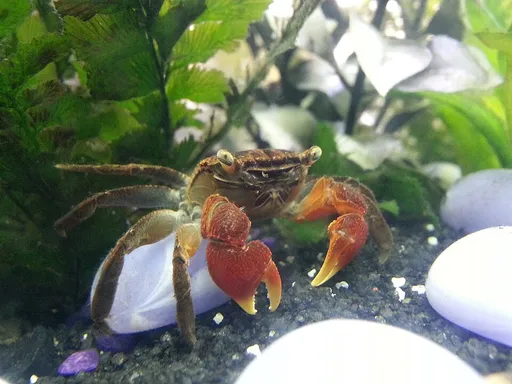 2 in (5 cm)10 gal (38 L)72–82°F (22–28°C)
Red claw crab
Parasesarma bidens
2 in (5 cm) · 10 gal (38 L)
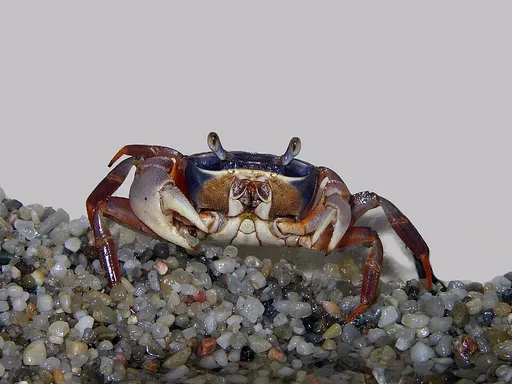 4.7 in (12 cm)24 gal (90 L)75–84°F (24–29°C)
Rainbow land crab
Cardisoma armatum
4.7 in (12 cm) · 24 gal (90 L)
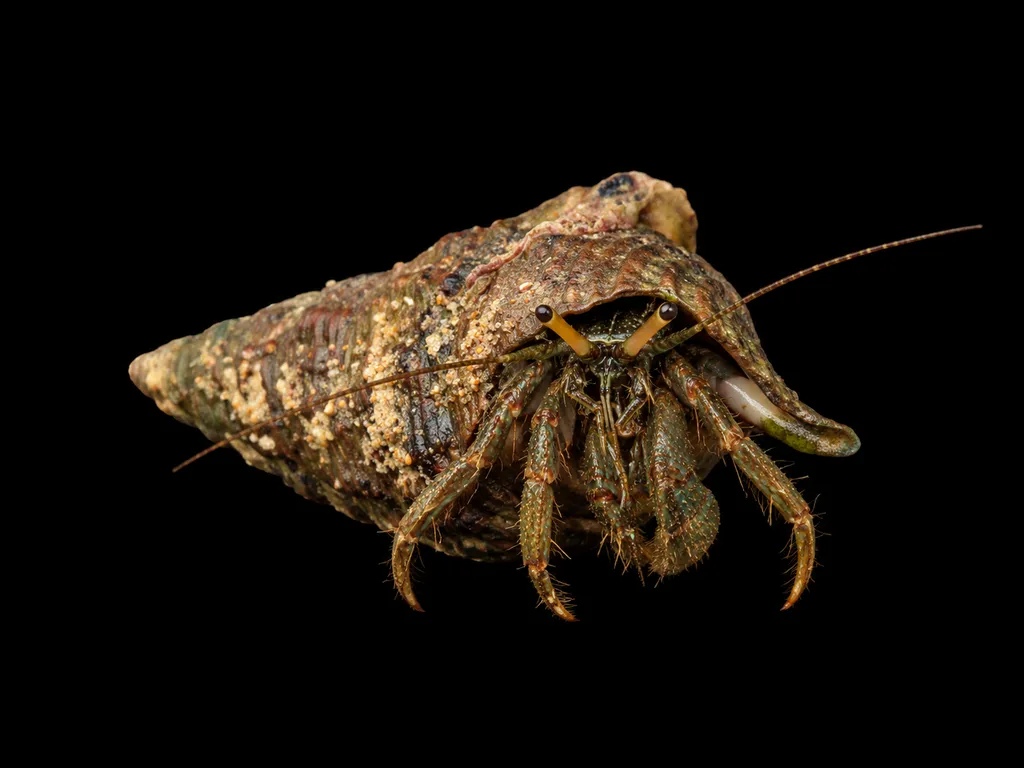 2 in (5 cm)16 gal (60 L)75–84°F (24–29°C)
Brackish hermit crab
Clibanarius longitarsus
2 in (5 cm) · 16 gal (60 L)
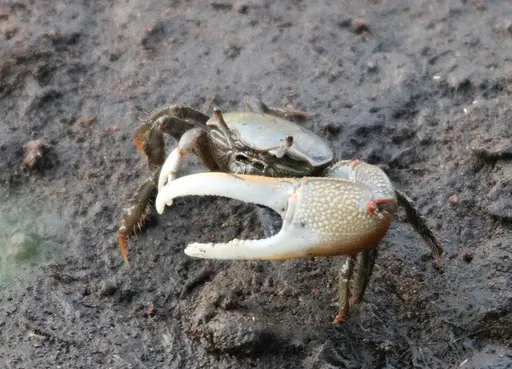 1.6 in (4 cm)10 gal (38 L)75–82°F (24–28°C)
Fiddler crab
Minuca minax
1.6 in (4 cm) · 10 gal (38 L)
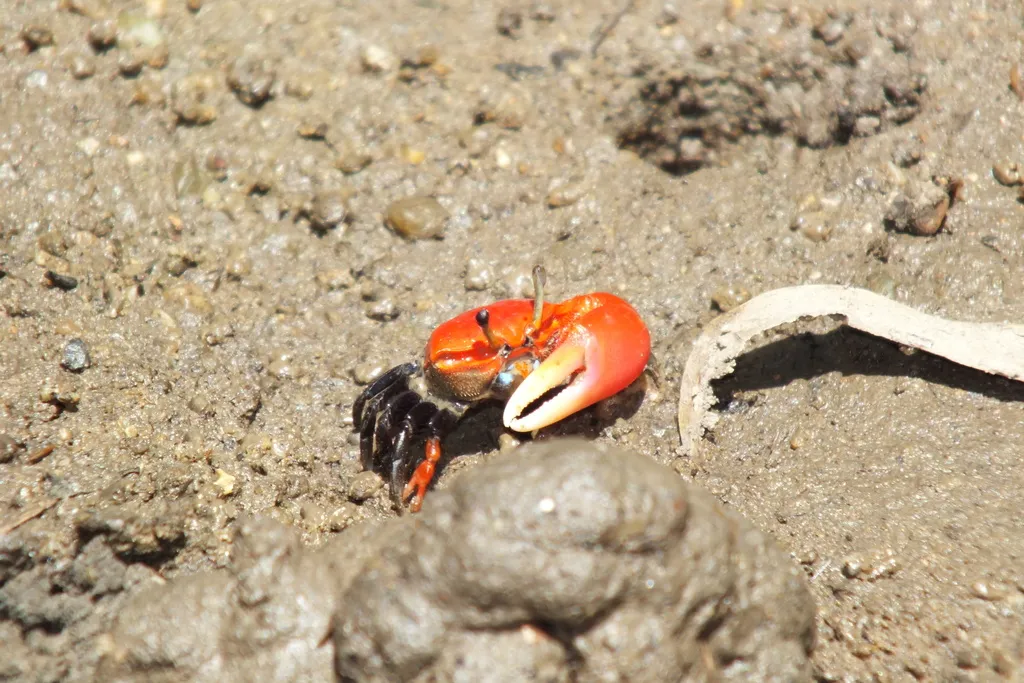 1.2 in (3 cm)11 gal (40 L)75–84°F (24–29°C)
Watermelon fiddler crab
Paraleptuca crassipes
1.2 in (3 cm) · 11 gal (40 L)