Violet goby
Gobioides broussonnetii
BrackishFish
Care at a glance
- Temperature
- 72–79°F
- 22–26°C
- pH
- 6.5–8.5
- Adult size
- 21.7 in
- 55 cm
- Minimum tank
- 119 gal
- 450 L
- Temperament
- Aggressive
- Social behavior
- Solitary
- Tankmates
- With caution
- Swim level
- Bottom
- Difficulty
- Difficult
- Breeding
- No record
- Rarity
- Rare
- Family
- Gobiidae
- Origin
- United States, Mexico, South America
Overview
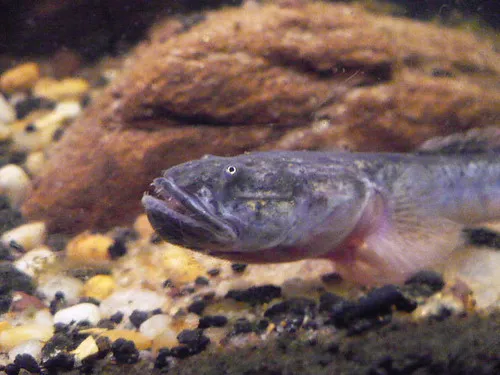
Keep it on its own or with calm, larger brackish tankmates, since it does not socialize and can be testy in close quarters. It stays on the bottom, burrowing and sifting mouthfuls of sand for food. Feed sinking foods like frozen bloodworms, brine shrimp, and meaty bits it can suck up off the substrate. This is a difficult fish overall because of its size, brackish needs, and feeding habits.
In the wild
The violet goby lives in brackish estuaries, mangrove channels, and muddy river mouths along the Atlantic coast from the southern US down through South America. It burrows in soft bottoms, so it needs a deep, fine sand bed it can dig into. It does best in brackish water, and the tank needs to be very large, around 450 liters, because of its size.
Good to know
This is an eel-shaped goby in the family Gobiidae, and it gets big, up to about 55 cm. Despite the fierce, fanged look, its mouth and gill rakers are built for filter and sift feeding rather than tearing prey. It has tiny eyes and poor vision, relying on smell and taste to find food. Breeding it in captivity is essentially undocumented.
Did you know
That mouthful of long, sharp-looking teeth is misleading. The goby uses them more like a scraper and rake, taking in mouthfuls of substrate and straining out algae and tiny invertebrates rather than biting prey. The scary grin is mostly for show.
Common questions
What size tank does a Violet goby need?
A Violet goby needs at least 119 gal (450 L). It spends most of its time in the bottom.
What temperature and pH does a Violet goby need?
A Violet goby is comfortable at 72–79°F (22–26°C) with a pH of 6.5–8.5.
How big does a Violet goby get?
An adult Violet goby reaches about 21.7 in (55 cm).
Related species
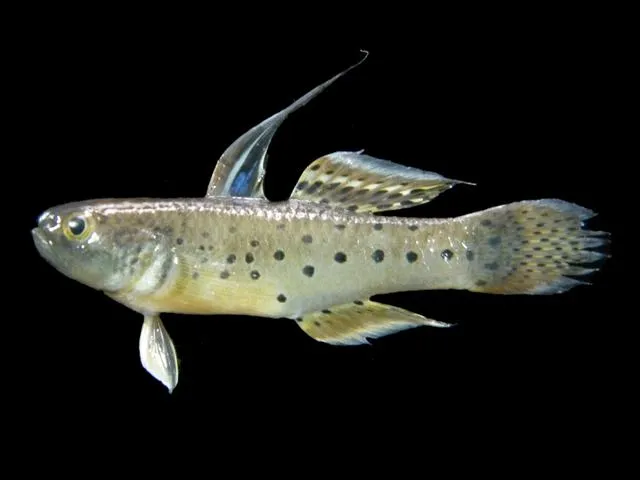 3.5 in (9 cm)21 gal (80 L)68–79°F (20–26°C)
Knight goby
Stigmatogobius sadanundio
3.5 in (9 cm) · 21 gal (80 L)
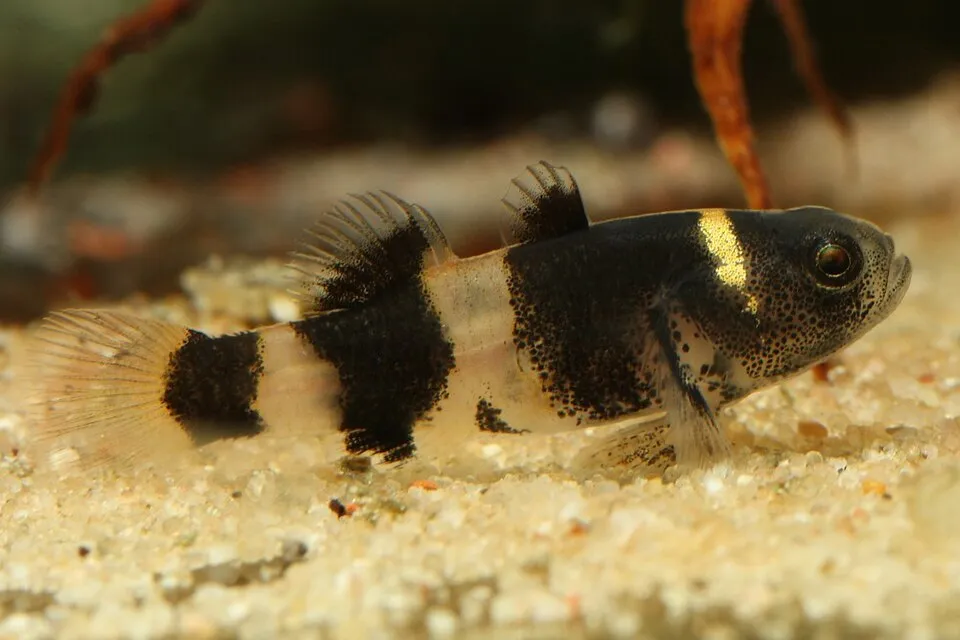 1.6 in (4 cm)12 gal (45 L)72–82°F (22–28°C)
Bumblebee goby
Brachygobius doriae
1.6 in (4 cm) · 12 gal (45 L)
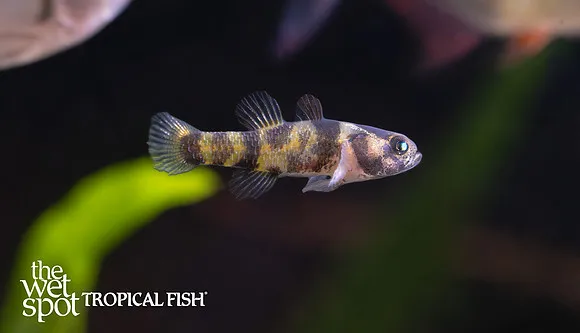 1 in (2.5 cm)5 gal (20 L)73–82°F (23–28°C)
Micro bumblebee goby
Brachygobius nunus
1 in (2.5 cm) · 5 gal (20 L)
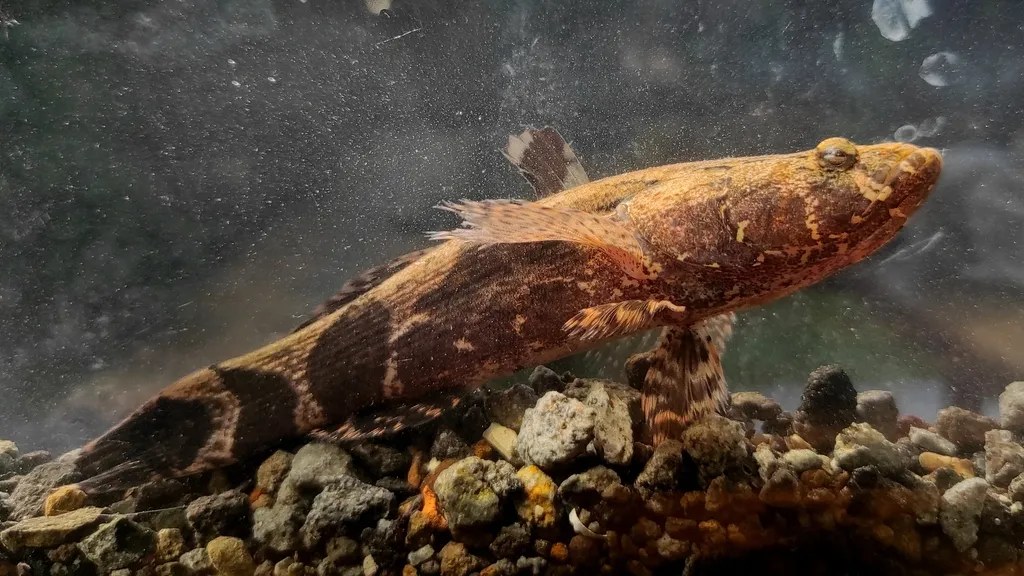 23.6 in (60 cm)145 gal (550 L)72–82°F (22–28°C)
Marbled goby
Oxyeleotris marmorata
23.6 in (60 cm) · 145 gal (550 L)
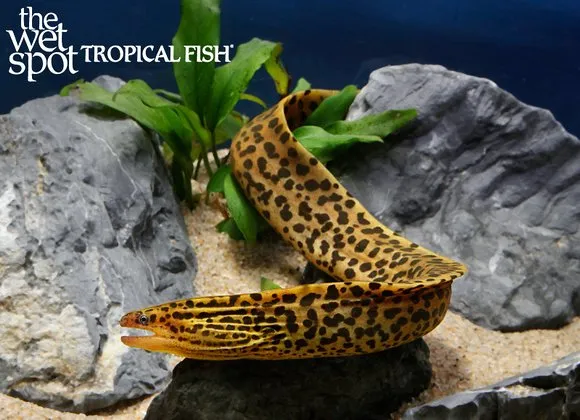 35.4 in (90 cm)159 gal (600 L)73–82°F (23–28°C)
Freshwater moray eel
Gymnothorax polyuranodon
35.4 in (90 cm) · 159 gal (600 L)
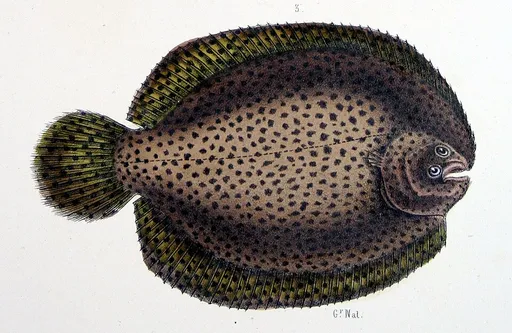 14.6 in (37 cm)98 gal (370 L)77–86°F (25–30°C)
Drab sole
Achirus achirus
14.6 in (37 cm) · 98 gal (370 L)