Drab sole
Achirus achirus
FreshwaterBrackishFish
Care at a glance
- Temperature
- 77–86°F
- 25–30°C
- pH
- 6.0–7.5
- Adult size
- 14.6 in
- 37 cm
- Minimum tank
- 98 gal
- 370 L
- Temperament
- Peaceful
- Social behavior
- Solitary
- Tankmates
- With caution
- Swim level
- Bottom
- Difficulty
- Medium
- Breeding
- No record
- Rarity
- Very rare
- Family
- Achiridae
- Origin
- South America
Overview
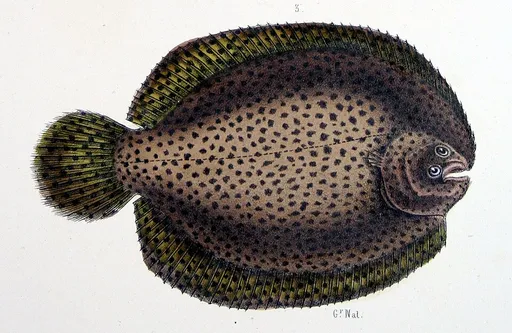
The drab sole is a peaceful, solitary bottom-dweller that spends the day buried in soft sand with only its eyes showing and comes out to feed after dark. It bothers nothing it cannot eat, but small fish and shrimp resting on the bottom may be taken at night, so choose tankmates that use the upper water and are not tiny. Give it a large area of fine, soft sand to bury into and gentle water flow. Feed sinking meaty foods such as bloodworms, tubifex, chopped prawn, and mussel, ideally in the evening. It grows large and needs floor space, so a broad tank of around 370 liters or more suits it. It stays healthiest with a little marine salt in the water.
In the wild
The drab sole ranges through the coastal rivers, estuaries, and lagoons of tropical South America and beyond, moving between fresh and brackish water along the lower reaches of rivers. It is often sold as a freshwater fish, and it can live in fresh water, but most keepers find it does best with a little salt added, at a low-end brackish strength. Give it warm water from 25 to 30 C, a pH between 6 and 7.5, and a deep, soft sand bed. Keep decor simple and open so it has room to glide and bury along the bottom.
Good to know
The drab sole belongs to the family Achiridae, the American soles, a group of flatfishes. Adults can reach around 37 cm, making it far larger than most soles sold for aquariums. Like other flatfishes it starts life symmetrical, then one eye migrates across the head as it settles onto its side, so the adult lies flat with both eyes on the upper surface. Its mottled brown coloring lets it disappear against the substrate. Aquarium breeding is not documented, and these fish are collected from the wild.
Did you know
Like all soles, the drab sole is not born flat. It hatches as an ordinary upright larva with an eye on each side, and as it grows one eye slowly travels over the top of the head to join the other. The adult then lives lying on its side, both eyes facing up, watching for food to pass overhead.
Common questions
What size tank does a Drab sole need?
A Drab sole needs at least 98 gal (370 L). It spends most of its time in the bottom.
What temperature and pH does a Drab sole need?
A Drab sole is comfortable at 77–86°F (25–30°C) with a pH of 6.0–7.5.
How big does a Drab sole get?
An adult Drab sole reaches about 14.6 in (37 cm).
Related species
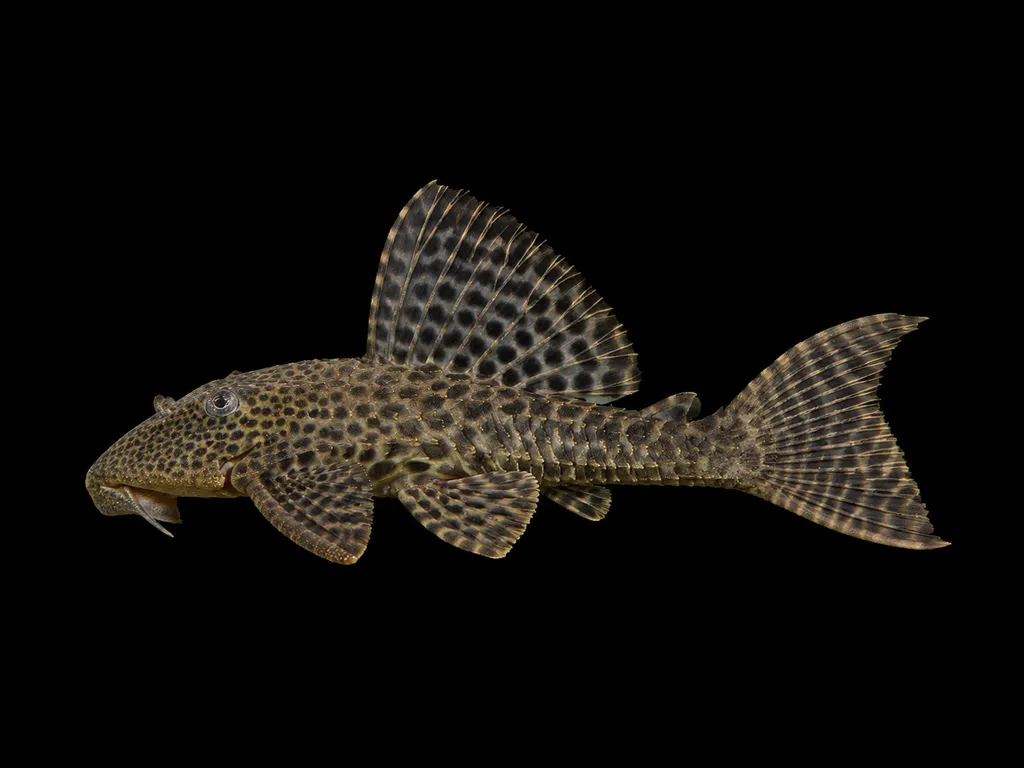 10.2 in (26 cm)79 gal (300 L)77–84°F (25–29°C)
Brown pleco
Hypostomus plecostomoides
10.2 in (26 cm) · 79 gal (300 L)
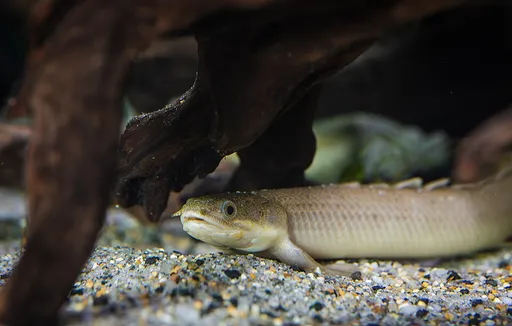 13.8 in (35 cm)143 gal (540 L)75–82°F (24–28°C)
Senegal bichir
Polypterus senegalus
13.8 in (35 cm) · 143 gal (540 L)
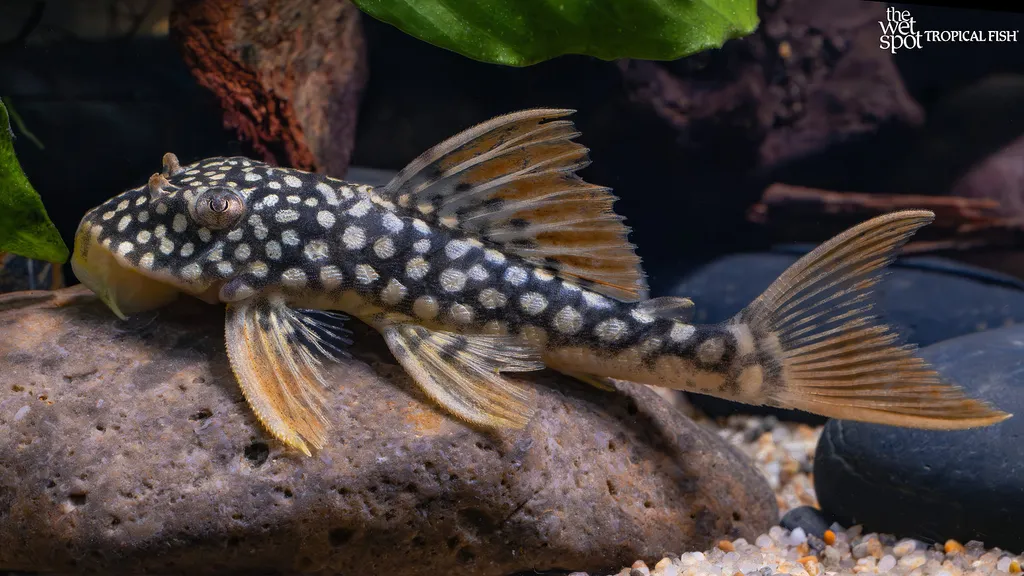 13.8 in (35 cm)106 gal (400 L)79–86°F (26–30°C)
Sunshine pleco (L014)
Scobinancistrus aureatus
13.8 in (35 cm) · 106 gal (400 L)
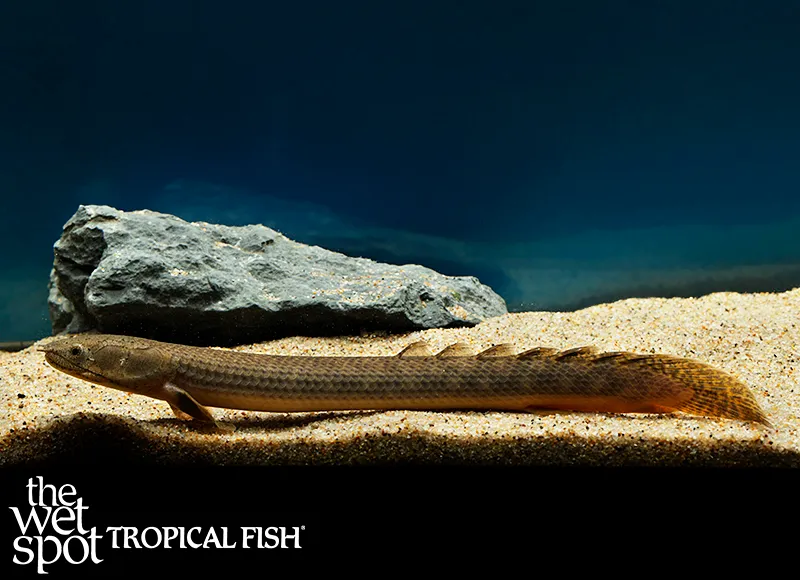 13.8 in (35 cm)53 gal (200 L)77–82°F (25–28°C)
West African bichir
Polypterus retropinnis
13.8 in (35 cm) · 53 gal (200 L)
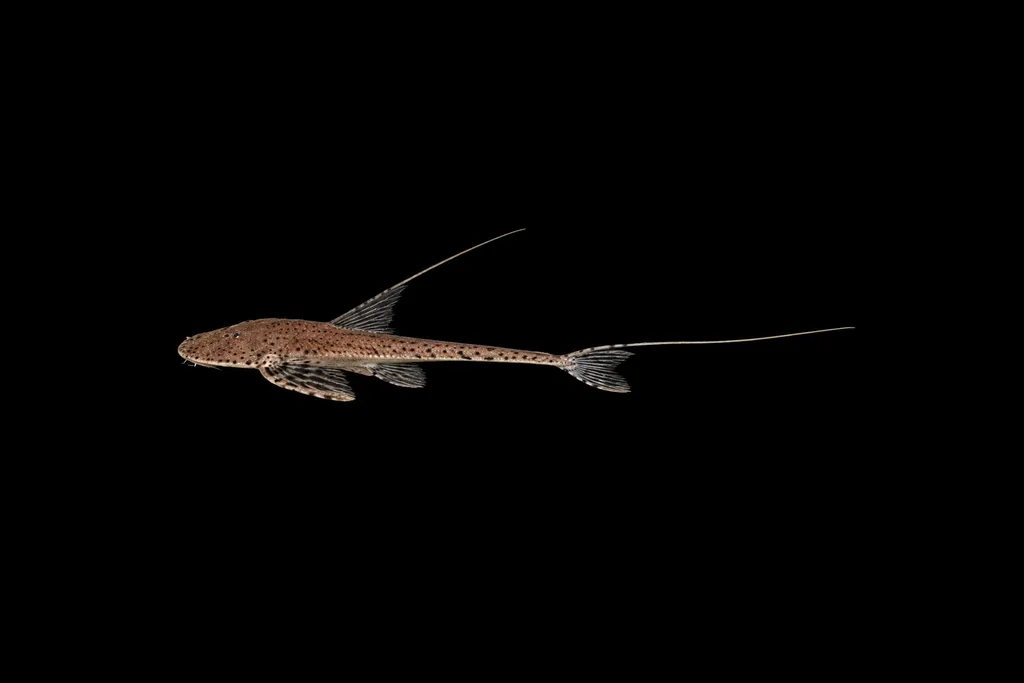 8.7 in (22 cm)79 gal (300 L)75–82°F (24–28°C)
Circular whiptail
Planiloricaria cryptodon
8.7 in (22 cm) · 79 gal (300 L)
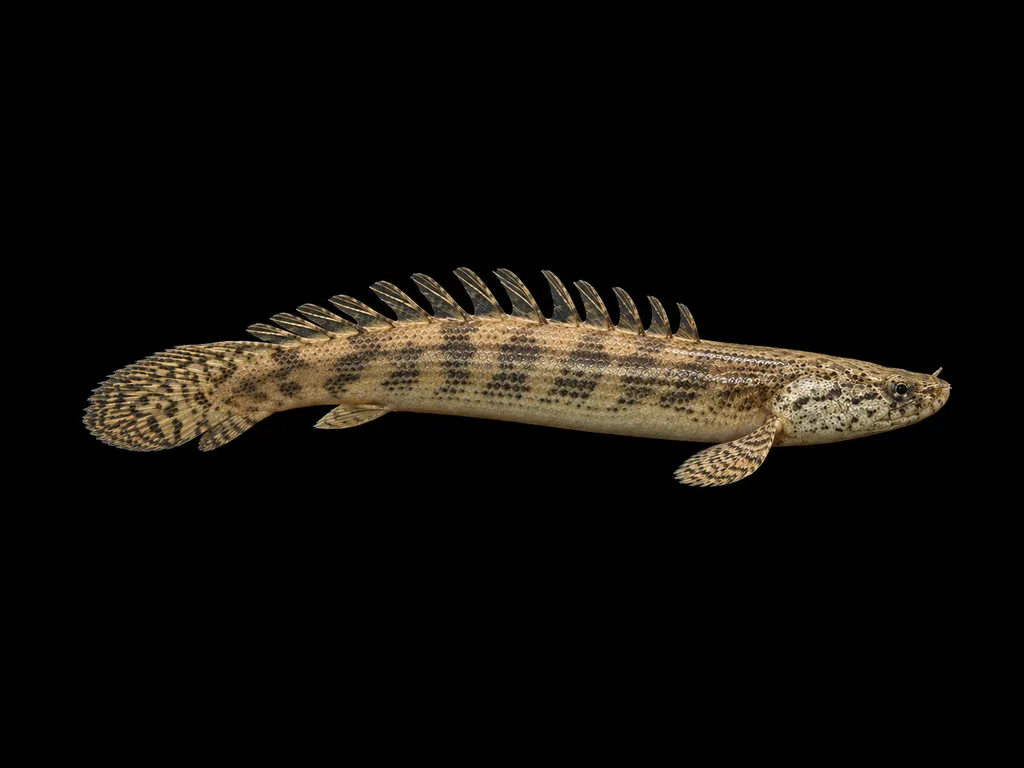 15.7 in (40 cm)119 gal (450 L)75–82°F (24–28°C)
Ansorge's bichir
Polypterus ansorgii
15.7 in (40 cm) · 119 gal (450 L)