Freshwater moray eel
Gymnothorax polyuranodon
Also known as Freshwater tiger moray, Many-toothed moray
FreshwaterBrackishFish
Care at a glance
- Temperature
- 73–82°F
- 23–28°C
- pH
- 7.0–8.2
- Adult size
- 35.4 in
- 90 cm
- Minimum tank
- 159 gal
- 600 L
- Temperament
- Aggressive
- Social behavior
- Solitary
- Tankmates
- With caution
- Swim level
- Bottom
- Diet
- Carnivore
- Difficulty
- Difficult
- Breeding
- No record
- Rarity
- Rare
- Family
- Muraenidae
- Origin
- Rivers of the Indo-Pacific islands, from Sri Lanka to Fiji
Overview
The freshwater moray eel is a true moray that lives in fresh and brackish rivers, a large, aggressive predator for a dedicated system only. It suits only experienced keepers.
Did you know
Most freshwater morays in shops are really estuary fish that only tolerate fresh water for a while. This species is the honest article, able to spend years in genuinely fresh river water far from the sea.
Caring for the freshwater moray eel
Give a freshwater moray eel a large tank of at least 159 gal (600 L), with secure rockwork and caves. It hides among the rock by day and hunts at night. Use a sand or fine gravel bed and dim light. It is a determined escape artist, so a heavy, sealed lid is not optional.
Keep it in hard, alkaline water at 73 to 82°F (23 to 28°C) and a pH of 7.0 to 8.2. Many keepers add some marine salt. Feed meaty foods such as strips of fish, prawn and other seafood on a stick, which keeps your fingers clear.
The freshwater moray eel is an aggressive predator, and it is best kept on its own. It will eat any tank mate small enough to swallow, so choose any companions with great caution.
It is catadromous, migrating to the sea to spawn. Its young drift as transparent leptocephalus larvae before entering rivers, so it is effectively not bred in home aquaria.
Good to know
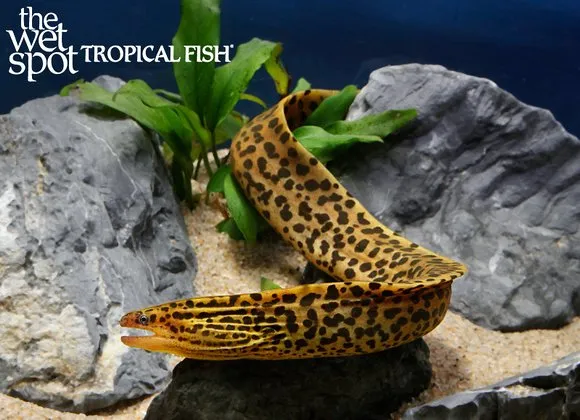
The freshwater moray eel belongs to the moray family, Muraenidae, and is boldly marked with dark leopard spotting. It is one of the larger freshwater fishes of its region, and exceptional wild fish are recorded to about 150 cm. It is also called the freshwater tiger moray or many-toothed moray.
In the wild
The freshwater moray eel ranges across the islands of the Indo-Pacific, from Sri Lanka to Fiji. It lives in rivers, usually within a short distance of the coast.
Common questions
What size tank does a freshwater moray eel need?
A freshwater moray eel needs at least 159 gal (600 L). It spends most of its time in the bottom.
What temperature and pH does a freshwater moray eel need?
A freshwater moray eel is comfortable at 73–82°F (23–28°C) with a pH of 7.0–8.2.
What does a freshwater moray eel eat?
A freshwater moray eel eats meaty foods such as strips of fish, prawn and other seafood. Feed it on a stick to keep your fingers clear.
How big does a freshwater moray eel get?
An adult freshwater moray eel reaches about 35.4 in (90 cm).
Related species
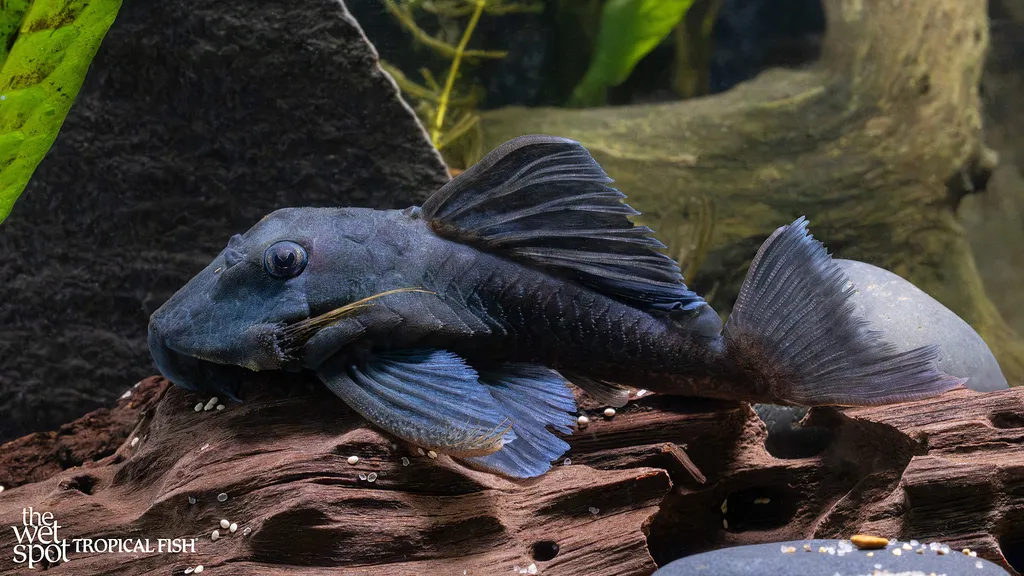 35.4 in (90 cm)264 gal (1,000 L)77–84°F (25–29°C)
Adonis pleco (L155)
Acanthicus adonis
35.4 in (90 cm) · 264 gal (1,000 L)
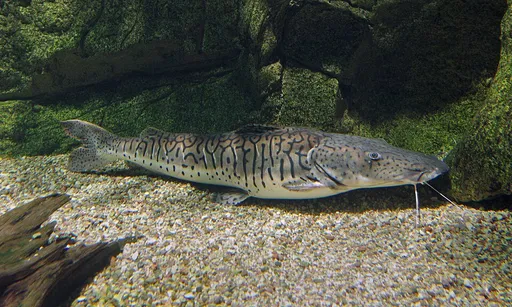 35.4 in (90 cm)300 gal (1,135 L)75–82°F (24–28°C)
Tiger shovelnose catfish
Pseudoplatystoma fasciatum
35.4 in (90 cm) · 300 gal (1,135 L)
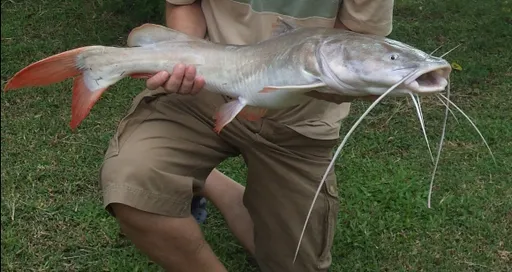 39.4 in (100 cm)450 gal (1,703 L)72–82°F (22–28°C)
Asian redtail catfish
Hemibagrus wyckioides
39.4 in (100 cm) · 450 gal (1,703 L)
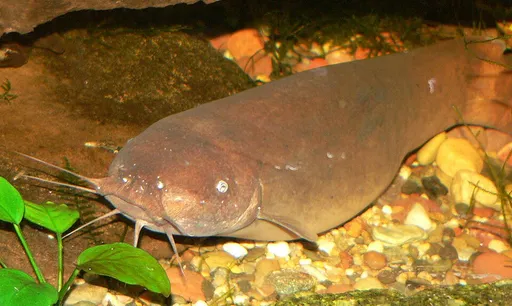 39.4 in (100 cm)198 gal (750 L)73–82°F (23–28°C)
Electric catfish
Malapterurus electricus
39.4 in (100 cm) · 198 gal (750 L)
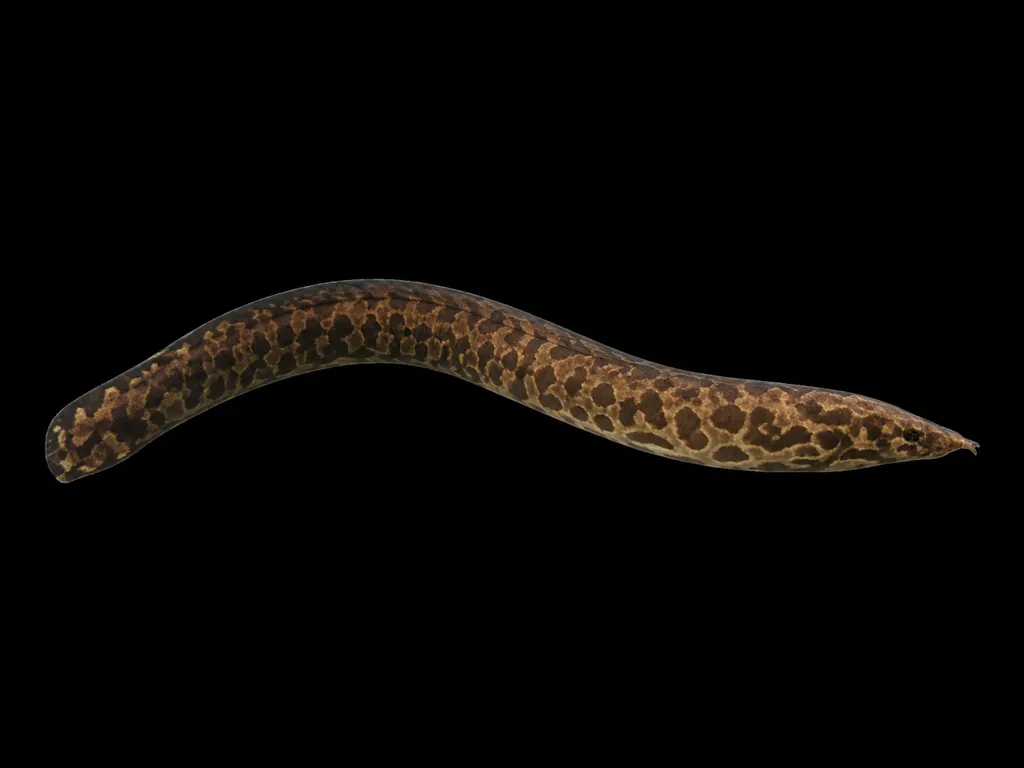 39.4 in (100 cm)119 gal (450 L)72–82°F (22–28°C)
Marbled swamp eel
Synbranchus marmoratus
39.4 in (100 cm) · 119 gal (450 L)
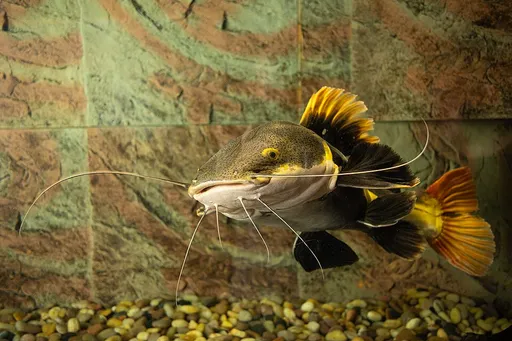 39.4 in (100 cm)1,506 gal (5,700 L)68–79°F (20–26°C)
Redtail catfish
Phractocephalus hemioliopterus
39.4 in (100 cm) · 1,506 gal (5,700 L)