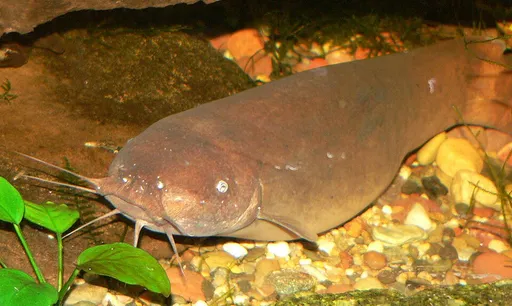
Electric catfish
Malapterurus electricus
Also known as African electric catfish
FreshwaterFish
Care at a glance
- Temperature
- 73–82°F
- 23–28°C
- pH
- 6.5–7.5
- Adult size
- 39.4 in
- 100 cm
- Minimum tank
- 198 gal
- 750 L
- Temperament
- Aggressive
- Social behavior
- Solitary
- Own kind
- One per tank
- Tankmates
- Species tank only
- Swim level
- Bottom
- Difficulty
- Difficult
- Breeding
- No record
- Rarity
- Rare
- Family
- Malapteruridae
- Origin
- Widespread across tropical Africa, including the Nile and Congo basins.
Overview
This is a large, potentially dangerous predator that can deliver a real electric shock, so it must be kept alone in a species tank and handled with great care during maintenance. It reaches roughly a meter and needs a big tank of at least 750 liters with strong filtration and solid cover. It is aggressive and will eat any tankmate it can catch, so no companions of any kind. Feed meaty foods like fish, prawns, and earthworms, and never put your hands in the tank with the fish loose.
In the wild
The electric catfish lives in slow and still waters across tropical Africa, hiding by day among rocks, roots, and hollows and hunting at night. It prefers dim, calm surroundings with plenty of solid cover and gentle flow, at 23 to 28 degrees C. A species-only tank with a secure setup and no fragile equipment inside is the safe way to keep it.
Good to know
Malapterurus electricus can generate electric discharges of several hundred volts, with reports up to 350 to 450 volts, using specialized muscle-derived electric organs that wrap much of its body. It reaches around a meter in the wild, though captive fish often stay nearer 40 to 60 cm. It uses the shock both to stun prey and to defend itself.
Did you know
It is one of the few fish that can shock a person, and it was known to the ancient Egyptians, who depicted it in tomb art thousands of years ago.
Common questions
What size tank does an Electric catfish need?
An Electric catfish needs at least 198 gal (750 L). It spends most of its time in the bottom.
What temperature and pH does an Electric catfish need?
An Electric catfish is comfortable at 73–82°F (23–28°C) with a pH of 6.5–7.5.
How big does an Electric catfish get?
An adult Electric catfish reaches about 39.4 in (100 cm).
Related species
 39.4 in (100 cm)450 gal (1,703 L)72–82°F (22–28°C)
Asian redtail catfish
Hemibagrus wyckioides
39.4 in (100 cm) · 450 gal (1,703 L)
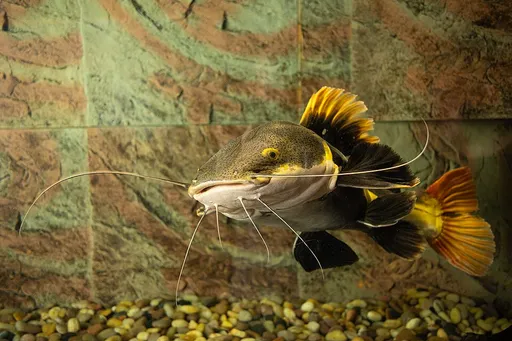 39.4 in (100 cm)1,506 gal (5,700 L)68–79°F (20–26°C)
Redtail catfish
Phractocephalus hemioliopterus
39.4 in (100 cm) · 1,506 gal (5,700 L)
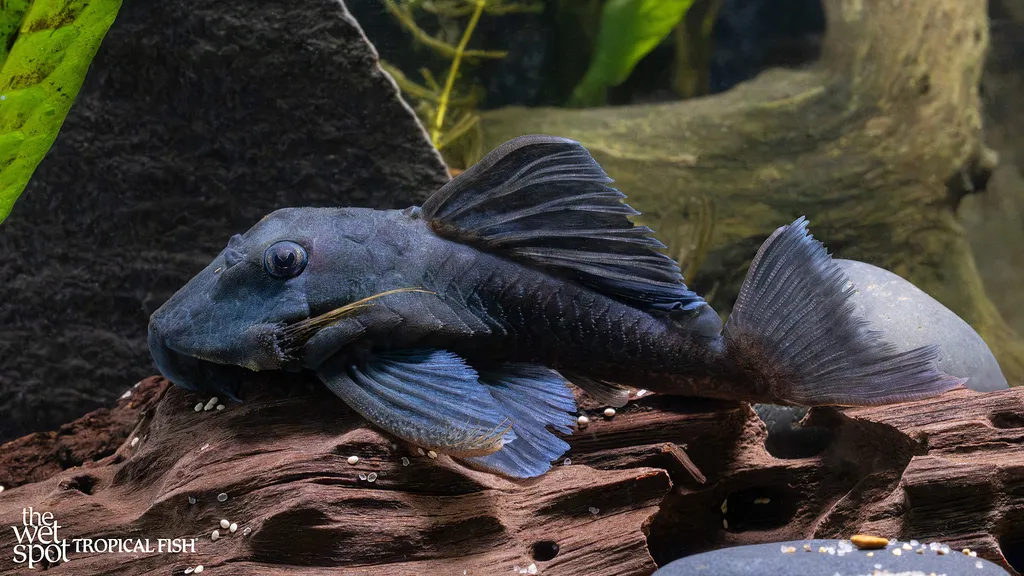 35.4 in (90 cm)264 gal (1,000 L)77–84°F (25–29°C)
Adonis pleco (L155)
Acanthicus adonis
35.4 in (90 cm) · 264 gal (1,000 L)
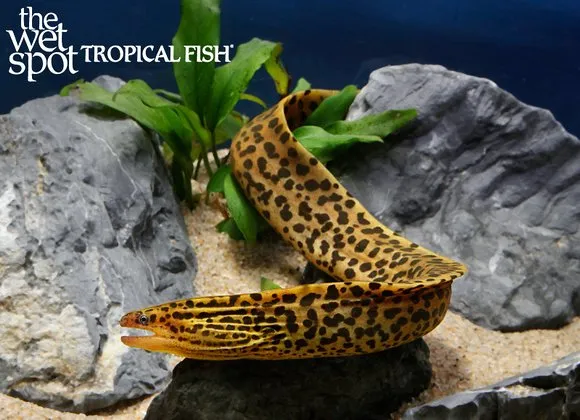 35.4 in (90 cm)159 gal (600 L)73–82°F (23–28°C)
Freshwater moray eel
Gymnothorax polyuranodon
35.4 in (90 cm) · 159 gal (600 L)
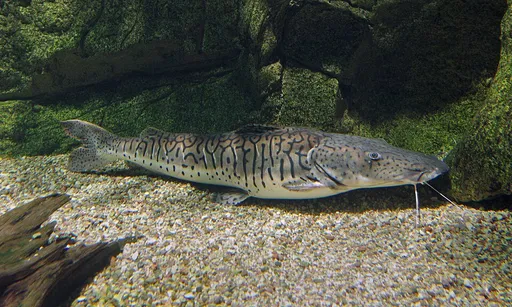 35.4 in (90 cm)300 gal (1,135 L)75–82°F (24–28°C)
Tiger shovelnose catfish
Pseudoplatystoma fasciatum
35.4 in (90 cm) · 300 gal (1,135 L)
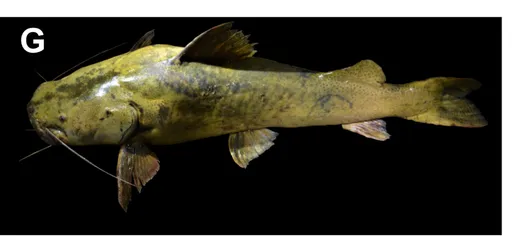 55.1 in (140 cm)793 gal (3,000 L)72–82°F (22–28°C)
Jau catfish
Zungaro zungaro
55.1 in (140 cm) · 793 gal (3,000 L)