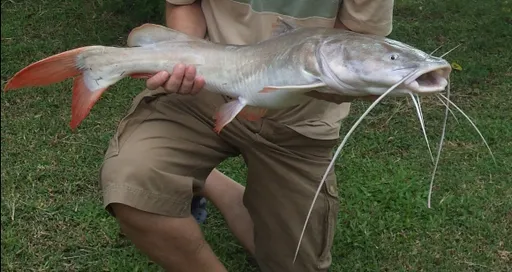
Asian redtail catfish
Hemibagrus wyckioides
Also known as Asian red-tailed catfish
FreshwaterFish
Care at a glance
- Temperature
- 72–82°F
- 22–28°C
- pH
- 6.0–7.5
- Adult size
- 39.4 in
- 100 cm
- Minimum tank
- 450 gal
- 1,703 L
- Temperament
- Aggressive
- Social behavior
- Solitary
- Tankmates
- With caution
- Swim level
- Bottom
- Difficulty
- Difficult
- Breeding
- No record
- Rarity
- Common
- Family
- Bagridae
- Origin
- Southeast Asia: Mekong and Chao Phraya river basins (Thailand, Laos, Cambodia, Vietnam, southern China)
Overview
Keep one per tank with no tankmates at all. This is one of the most aggressive catfish in the hobby, highly territorial and predatory, and it will eat or kill anything it can catch, showing little fear even of your hands. It sits on the bottom of large tanks of 1703 liters or much more, in water held at 22 to 28 C and a pH of 6 to 7.5. Feed meaty foods like prawn, mussel, fish strips, earthworms, and sinking carnivore pellets, and avoid mammalian or poultry meat. It is a powerful jumper, so a heavy, securely weighted lid is essential. Large predatory catfish are restricted or banned in some regions, so check your local rules before buying and never release one into the wild.
In the wild
Asian redtail catfish come from large upland rivers in the Mekong and Chao Phraya basins, across Thailand, Laos, Cambodia, Vietnam, and southern China. These are deep, fast-flowing channels with rocky beds and strong current. To come anywhere close to that, you need a very large tank, at least 1703 liters as a practical floor and ideally 3000 liters or more for an adult, with robust filtration, strong water movement, and large rock or cave structures for refuge. Keep the water at 22 to 28 C, pH 6 to 7.5, and the lighting dim.
Good to know
This is a member of the family Bagridae, a bottom-dwelling demersal predator that reaches around 90 to 100 cm and has been recorded up to 130 cm and 70 to 80 kg. It can live for decades, so it is realistically a public-aquarium or monster-tank fish only. There is no reliable home-aquarium breeding record. It has been spawned commercially in aquaculture, but not in the home.
Did you know
Despite the size and aggression, it tolerates a wider range than the kept numbers suggest, with reports of pH up to 8.0 and temperatures down to about 19 C. The bigger problem is time and space. A fish that can pass a meter, weigh as much as a grown person, and live for decades quickly outgrows almost any home setup, which is why so many end up rehomed or surrendered.
Common questions
What size tank does an Asian redtail catfish need?
An Asian redtail catfish needs at least 450 gal (1,703 L). It spends most of its time in the bottom.
What temperature and pH does an Asian redtail catfish need?
An Asian redtail catfish is comfortable at 72–82°F (22–28°C) with a pH of 6.0–7.5.
How big does an Asian redtail catfish get?
An adult Asian redtail catfish reaches about 39.4 in (100 cm).
Related species
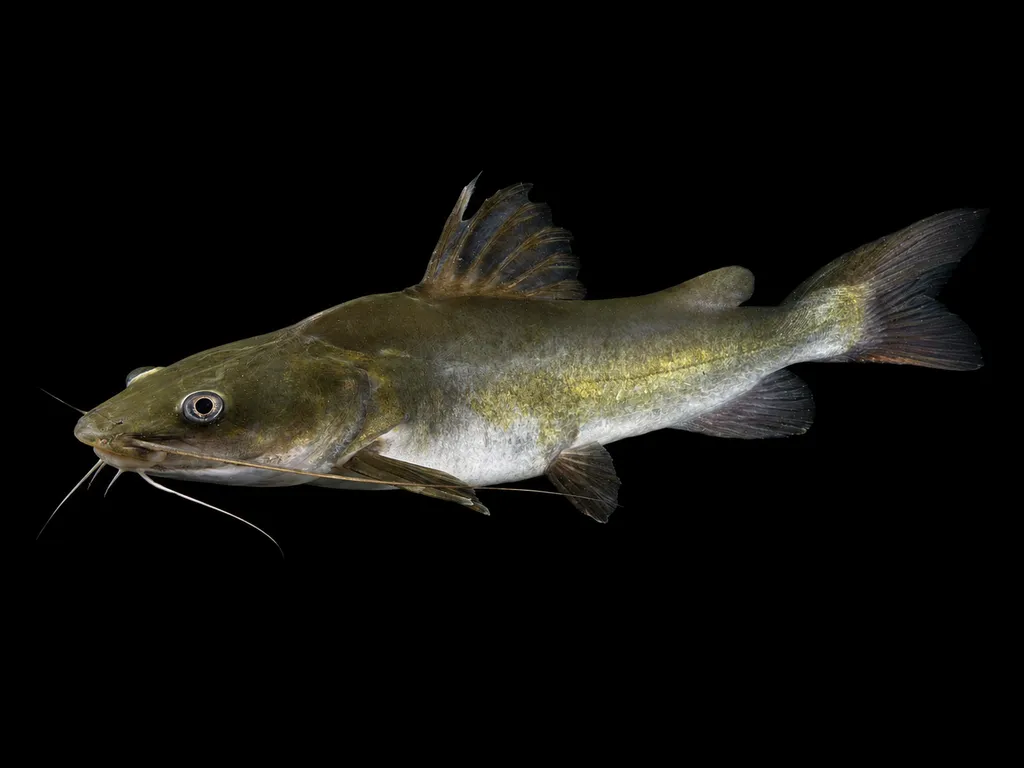 25.6 in (65 cm)185 gal (700 L)72–81°F (22–27°C)
Redtail bagrid
Hemibagrus nemurus
25.6 in (65 cm) · 185 gal (700 L)
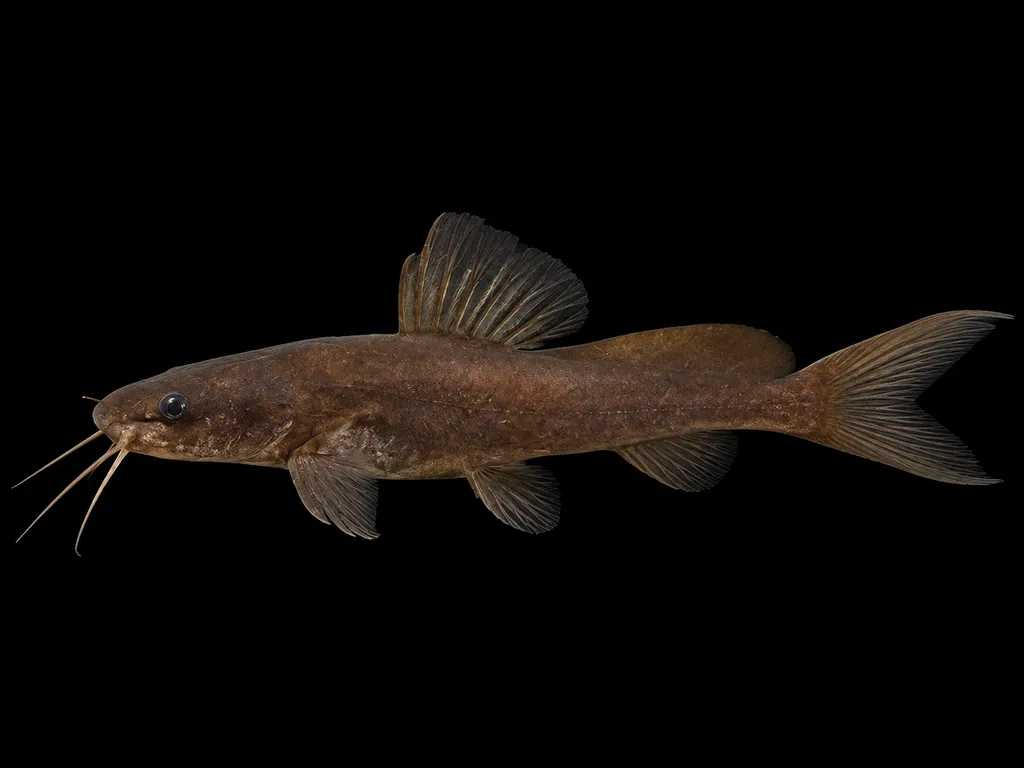 7.9 in (20 cm)79 gal (300 L)73–81°F (23–27°C)
Dragon bagrid catfish
Hemibagrus olyroides
7.9 in (20 cm) · 79 gal (300 L)
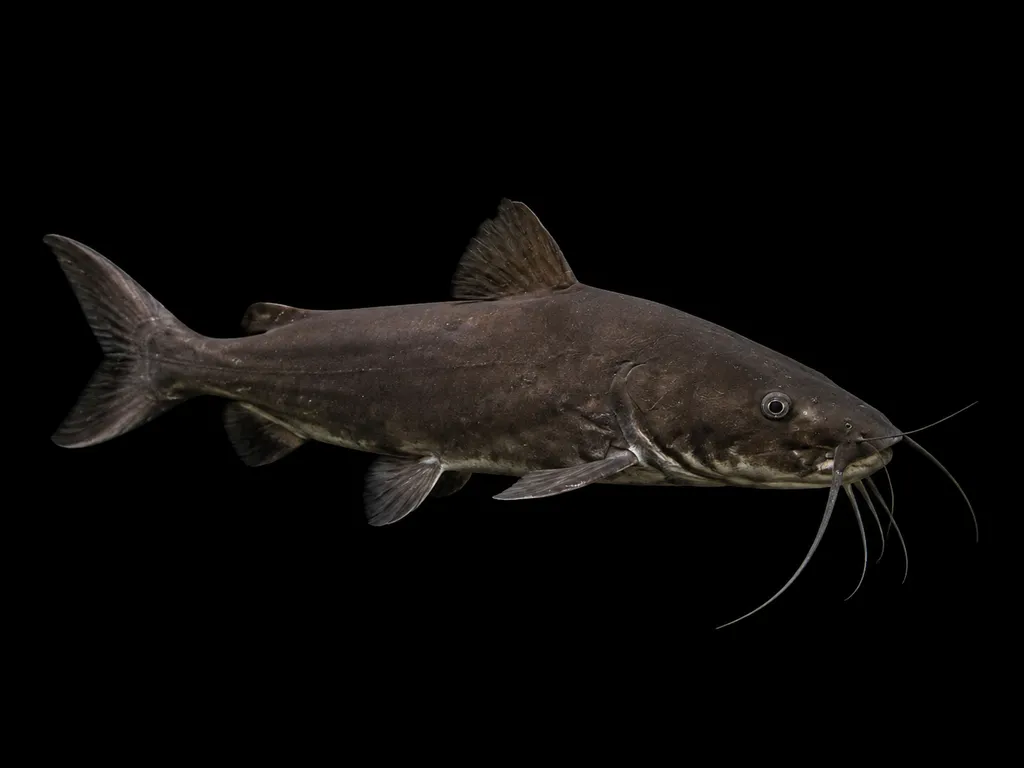 59.1 in (150 cm)1,057 gal (4,000 L)73–82°F (23–28°C)
Kampango
Bagrus meridionalis
59.1 in (150 cm) · 1,057 gal (4,000 L)
 59.1 in (150 cm)1,057 gal (4,000 L)72–86°F (22–30°C)
Rita catfish
Rita rita
59.1 in (150 cm) · 1,057 gal (4,000 L)
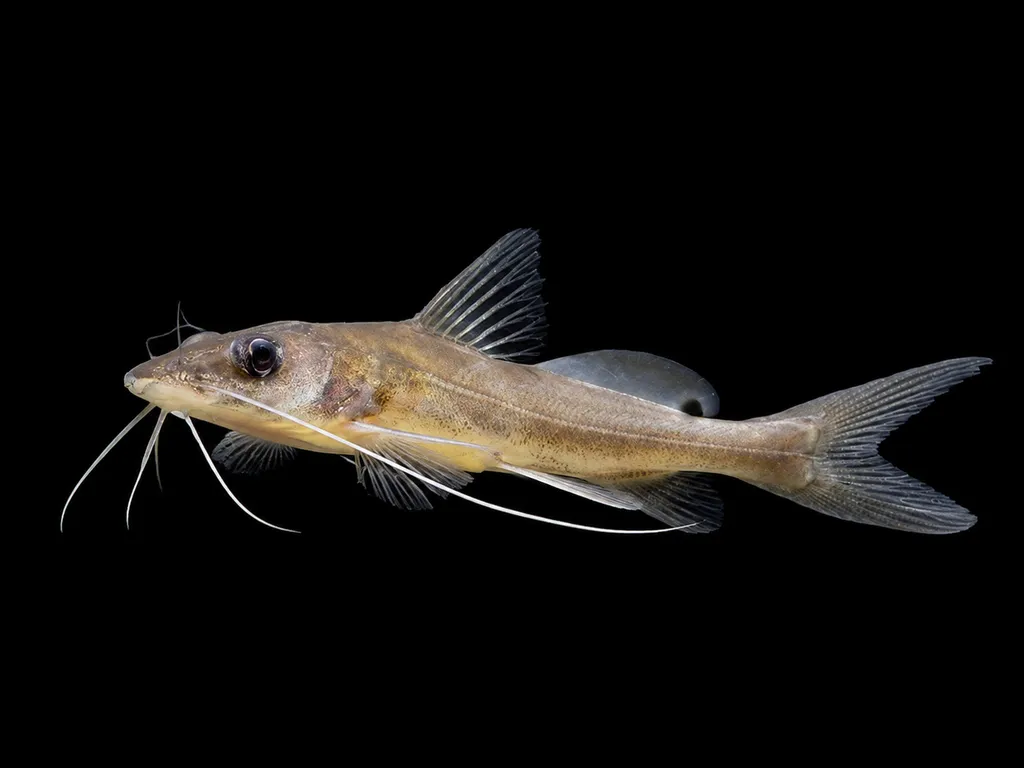 70.9 in (180 cm)1,057 gal (4,000 L)73–82°F (23–28°C)
Irrawaddy shovelnose bagrid
Sperata acicularis
70.9 in (180 cm) · 1,057 gal (4,000 L)
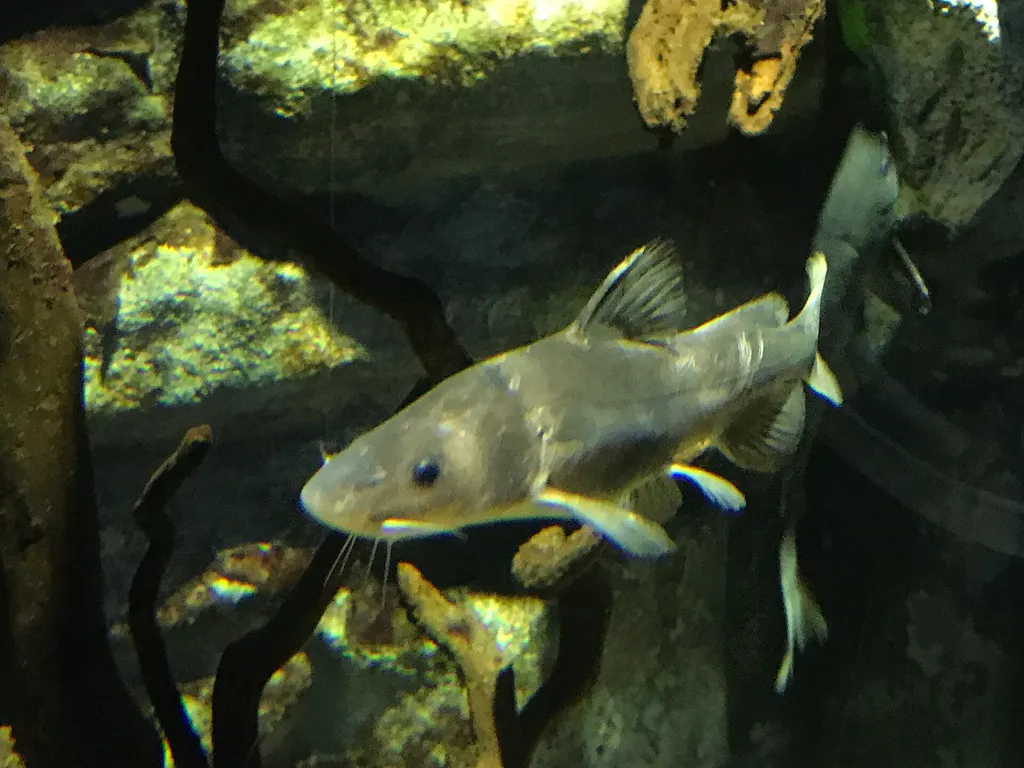 27.6 in (70 cm)264 gal (1,000 L)61–79°F (16–26°C)
Chinese longsnout catfish
Leiocassis longirostris
27.6 in (70 cm) · 264 gal (1,000 L)