Marbled goby
Oxyeleotris marmorata
FreshwaterBrackishFish
Care at a glance
- Temperature
- 72–82°F
- 22–28°C
- pH
- 6.0–7.5
- Adult size
- 23.6 in
- 60 cm
- Minimum tank
- 145 gal
- 550 L
- Temperament
- Aggressive
- Social behavior
- Solitary
- Tankmates
- With caution
- Swim level
- Bottom
- Difficulty
- Medium
- Breeding
- No record
- Rarity
- Very rare
- Family
- Butidae
- Origin
- Southeast Asia
Overview
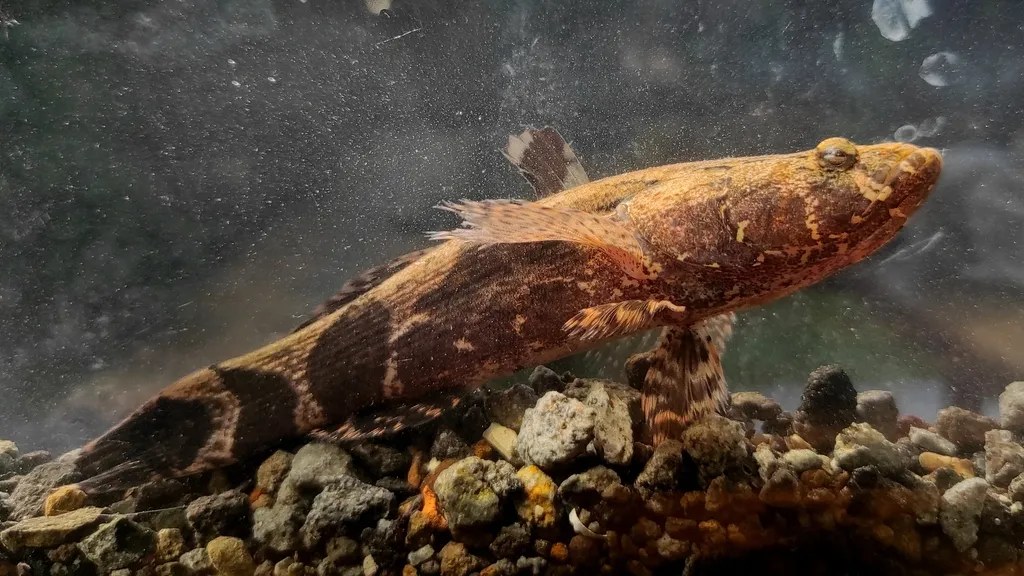
The marbled goby is a big, slow-moving ambush predator that is best kept on its own, as it is aggressive and will swallow any fish or shrimp small enough to fit in its wide mouth. It spends the day resting on the bottom, well camouflaged, and hunts at dusk, so it wants a dim, quiet tank with large caves, driftwood, and a soft floor. Do not house it with anything it could eat or with other large, pushy fish that would fight it for space. Feed meaty foods such as whole frozen fish, prawns, earthworms, and other large frozen or live items, as it will not take flake. Because it can reach a very large size, it needs a tank of 550 liters or larger with a big footprint.
In the wild
The marbled goby is native to Southeast Asia, through the Mekong and Chao Phraya basins and across Thailand, Cambodia, Malaysia, Indonesia, and the Philippines, where it lives in slow rivers, canals, lakes, and reservoirs and moves into brackish estuaries as well. It likes warm, still to slow-moving water, about 22 to 28 °C, and a pH from mildly acidic to neutral, roughly 6 to 7.5. Recreate this with a soft floor, big shaded hiding places, gentle flow, and steady warmth. As a large fish it produces a lot of waste, so strong biological filtration and regular water changes are important.
Good to know
The marbled goby belongs to Butidae and is one of the largest of all gobioid fishes, reaching around 60 cm and several kilograms in weight. It is a sleeper goby, so its pelvic fins are separate rather than fused into the sucker seen in true gobies. In its home range it is a valued food and aquaculture fish, known by names such as soon hock. Spawning pairs lay large numbers of adhesive eggs on a firm surface, which the male then guards, but this happens at a scale suited to ponds rather than tanks, and home aquarium breeding is not recorded.
Did you know
The marbled goby is a sit-and-wait hunter. It can rest almost motionless on the bottom for long stretches, its mottled pattern blending into the substrate, then lunge to engulf a passing fish or shrimp in a single gulp.
Common questions
What size tank does a Marbled goby need?
A Marbled goby needs at least 145 gal (550 L). It spends most of its time in the bottom.
What temperature and pH does a Marbled goby need?
A Marbled goby is comfortable at 72–82°F (22–28°C) with a pH of 6.0–7.5.
How big does a Marbled goby get?
An adult Marbled goby reaches about 23.6 in (60 cm).
Related species
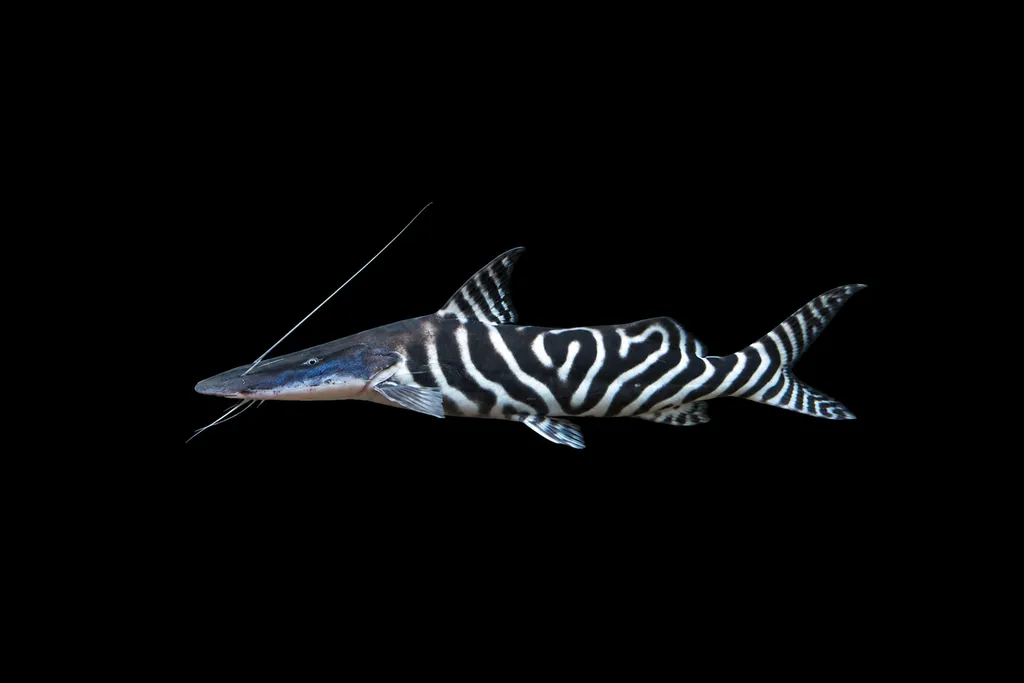 23.6 in (60 cm)151 gal (570 L)72–90°F (22–32°C)
Zebra shovelnose
Brachyplatystoma tigrinum
23.6 in (60 cm) · 151 gal (570 L)
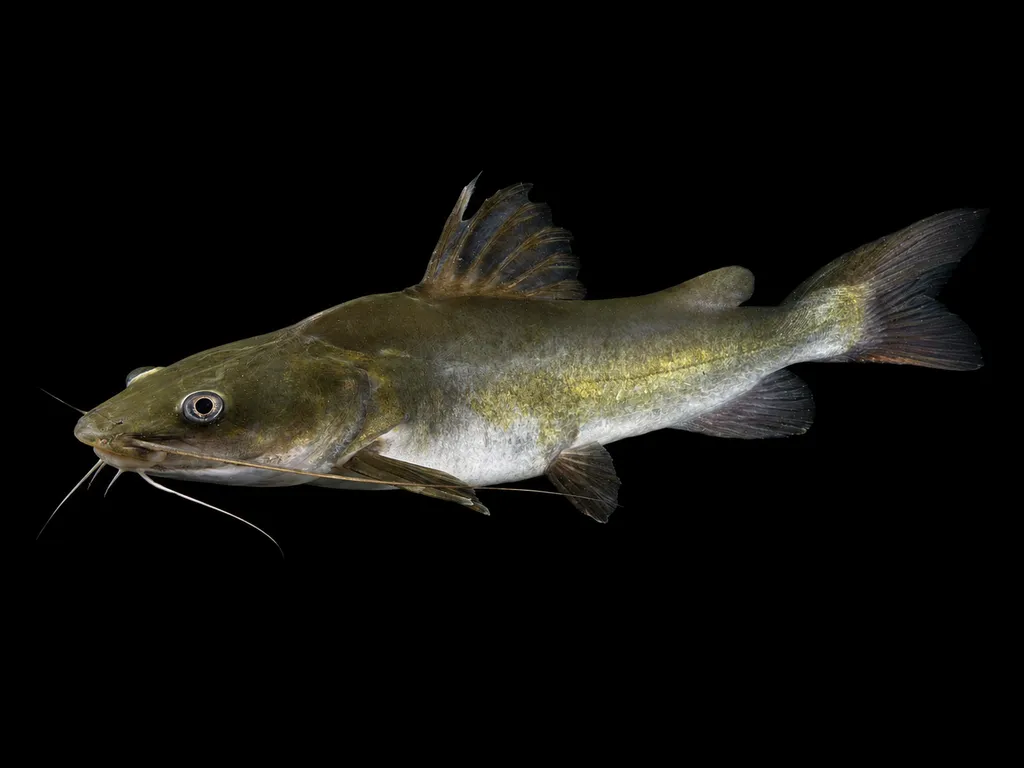 25.6 in (65 cm)185 gal (700 L)72–81°F (22–27°C)
Redtail bagrid
Hemibagrus nemurus
25.6 in (65 cm) · 185 gal (700 L)
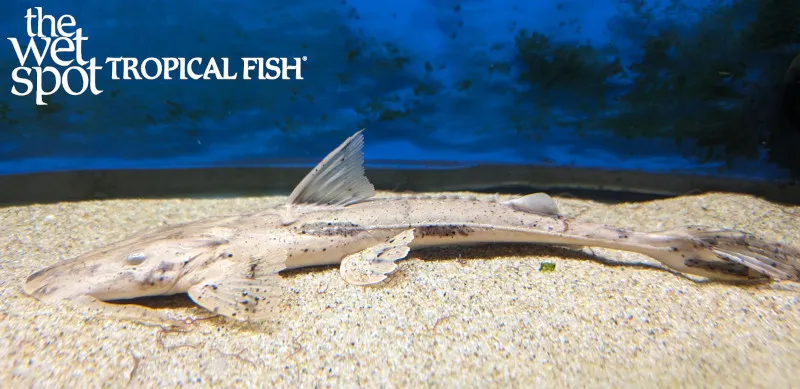 27.6 in (70 cm)660 gal (2,500 L)64–73°F (18–23°C)
Crocodile catfish
Bagarius suchus
27.6 in (70 cm) · 660 gal (2,500 L)
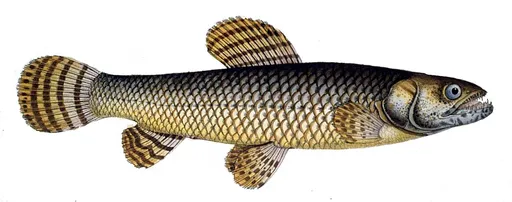 19.7 in (50 cm)106 gal (400 L)72–82°F (22–28°C)
Wolf fish
Hoplias malabaricus
19.7 in (50 cm) · 106 gal (400 L)
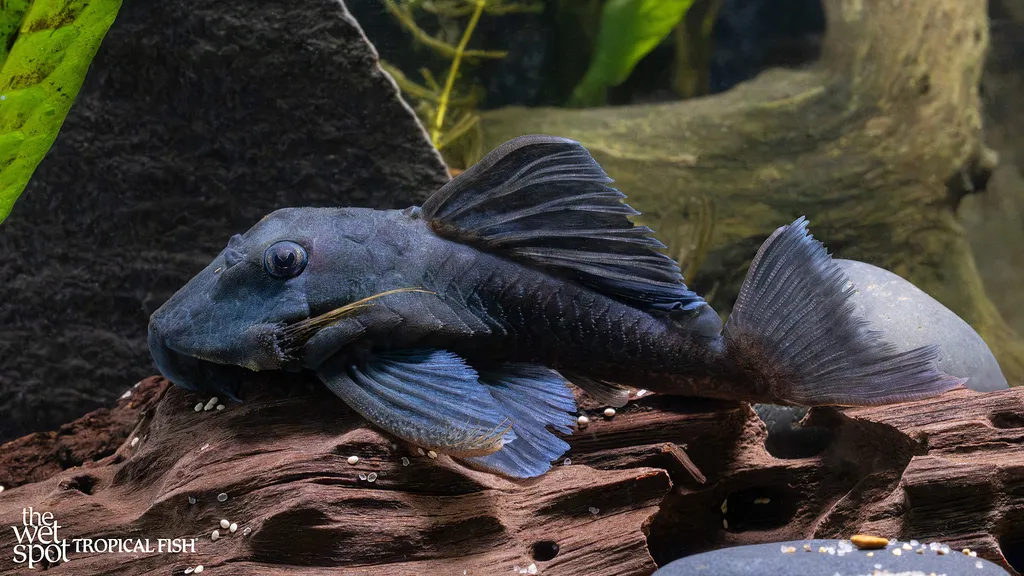 35.4 in (90 cm)264 gal (1,000 L)77–84°F (25–29°C)
Adonis pleco (L155)
Acanthicus adonis
35.4 in (90 cm) · 264 gal (1,000 L)
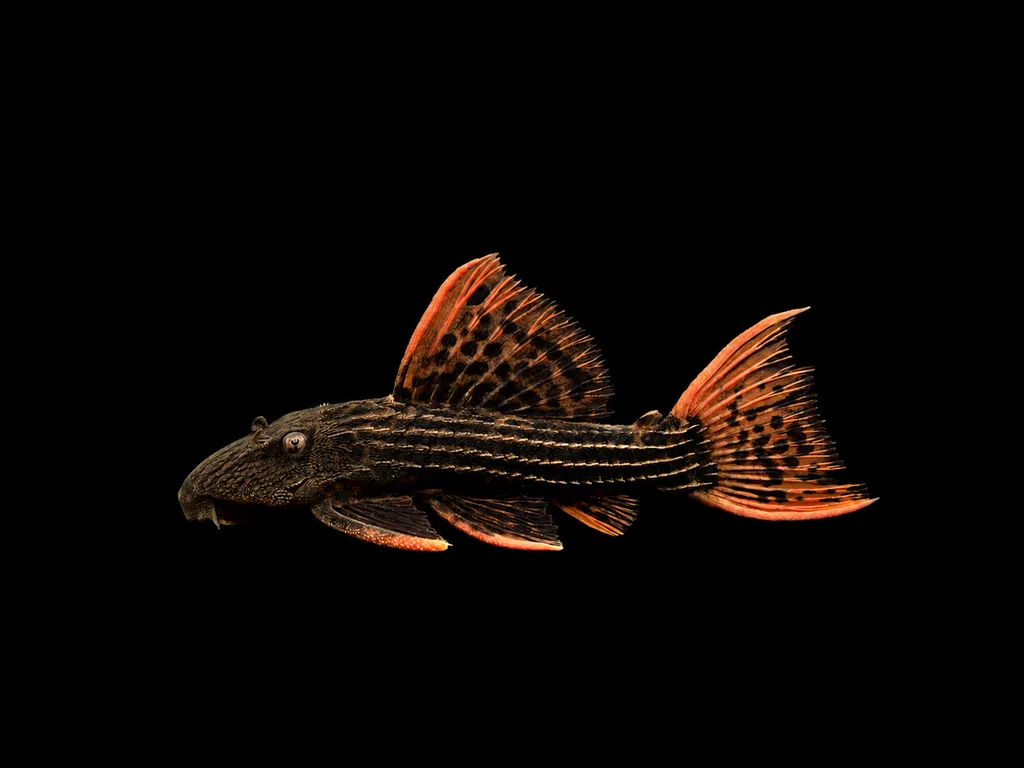 15.7 in (40 cm)119 gal (450 L)79–86°F (26–30°C)
Scarlet cactus pleco (L025)
Pseudacanthicus pirarara
15.7 in (40 cm) · 119 gal (450 L)