Malabar baril
Opsarius malabaricus
Also known as Barilius malabaricus, Malabar hill trout
FreshwaterFish
Care at a glance
- Temperature
- 68–79°F
- 20–26°C
- pH
- 6.5–7.5
- Adult size
- 4.3 in
- 11 cm
- Minimum tank
- 42 gal
- 160 L
- Temperament
- Mostly peaceful
- Social behavior
- Schooling
- Swim level
- Middle
- Diet
- Carnivore
- Difficulty
- Medium
- Breeding
- No record
- Rarity
- Rare
- Family
- Danionidae
- Origin
- Kerala rivers, southern Western Ghats, India
Overview
The Malabar baril is an active, trout-like fish for a long tank with real flow. It suits a keeper with some experience.
Did you know
Malabar, the old name for this stretch of the Indian coast, is attached to a whole run of fishes. This baril shares the label with the Malabar giant danio, which it often swims beside in the wild.
Caring for the Malabar baril
A group of Malabar barils needs a long, river-style tank of 42 gal (160 L) or larger. Give them brisk current, a substrate of sand, gravel and stone, and open length rather than heavy decor. They jump hard, so a tight lid is essential.
They prefer cooler water, at 68 to 79°F (20 to 26°C) and a pH of 6.5 to 7.5. Feed meaty floating and sinking foods, plus frozen bloodworm, daphnia and small insect larvae. They strike fast at food.
They are mostly peaceful, and a school of five or more spreads any sparring across the group. They patrol the middle of the tank and the surface. Give them robust companions and skip small or delicate fish. Their breeding is not documented in aquaria.
Good to know
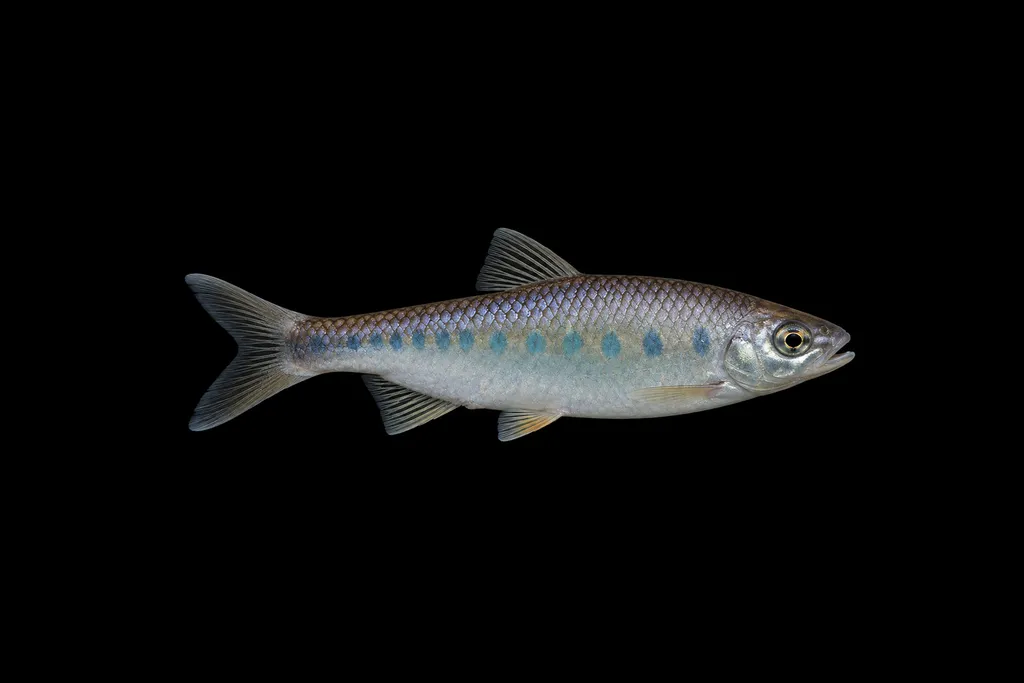
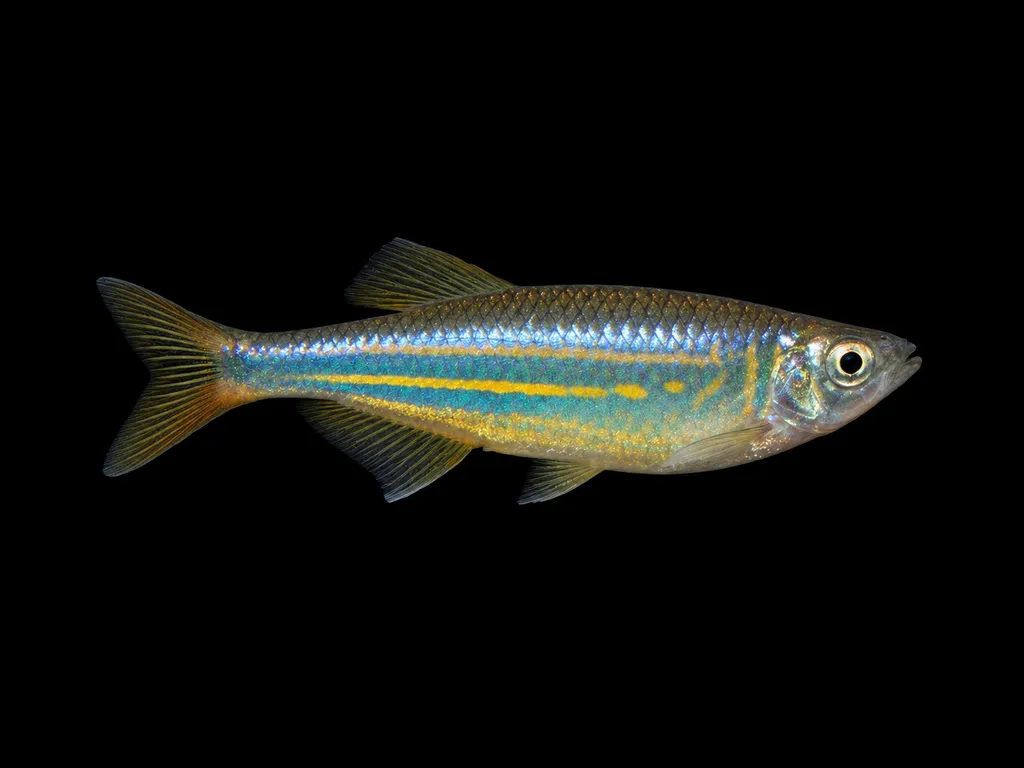
Opsarius malabaricus is a member of the danio family, Danionidae, silver with blue bars along the flank. Jerdon described it in 1849 and named it for Malabar, its home coast in southern India. Modern taxonomy moved it, with other peninsular Indian barils, out of Barilius and into Opsarius.
In the wild
The Malabar baril comes from short, fast rivers of the Malabar coast in Kerala, in the southern Western Ghats of India. The water there is clear, flowing and well oxygenated.
Weekly picks
Tank mates
The Malabar baril is a mostly peaceful, schooling species that keeps to the middle. These picks share a community profile with it, are safe together in both directions, and overlap on water type, temperature and pH.
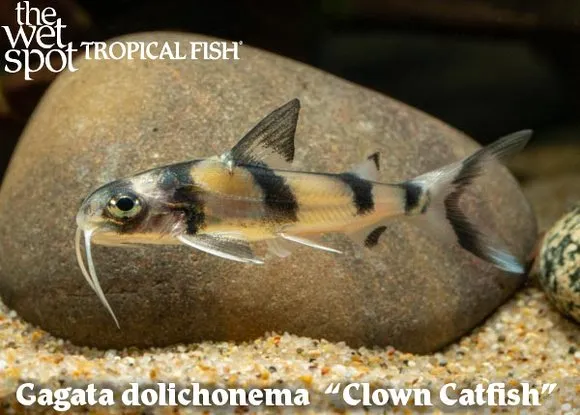
Clown gagata catfish
Gagata dolichonema
Freshwater5.1 in (13 cm) · 42 gal (160 L)68–79°F (20–26°C)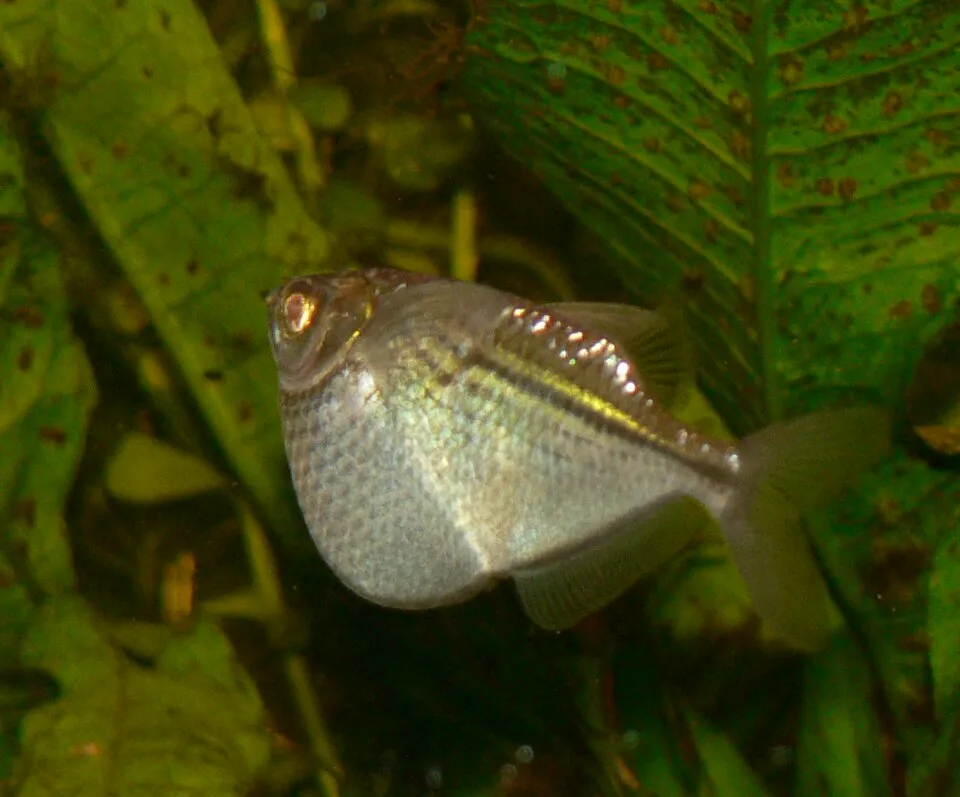
Common hatchetfish
Gasteropelecus sternicla
Freshwater1.6 in (4 cm) · 33 gal (125 L)68–82°F (20–28°C)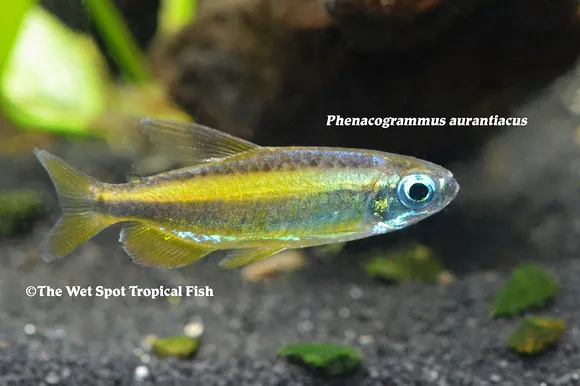
Orange Congo tetra
Phenacogrammus aurantiacus
Freshwater3.9 in (10 cm) · 42 gal (160 L)73–81°F (23–27°C)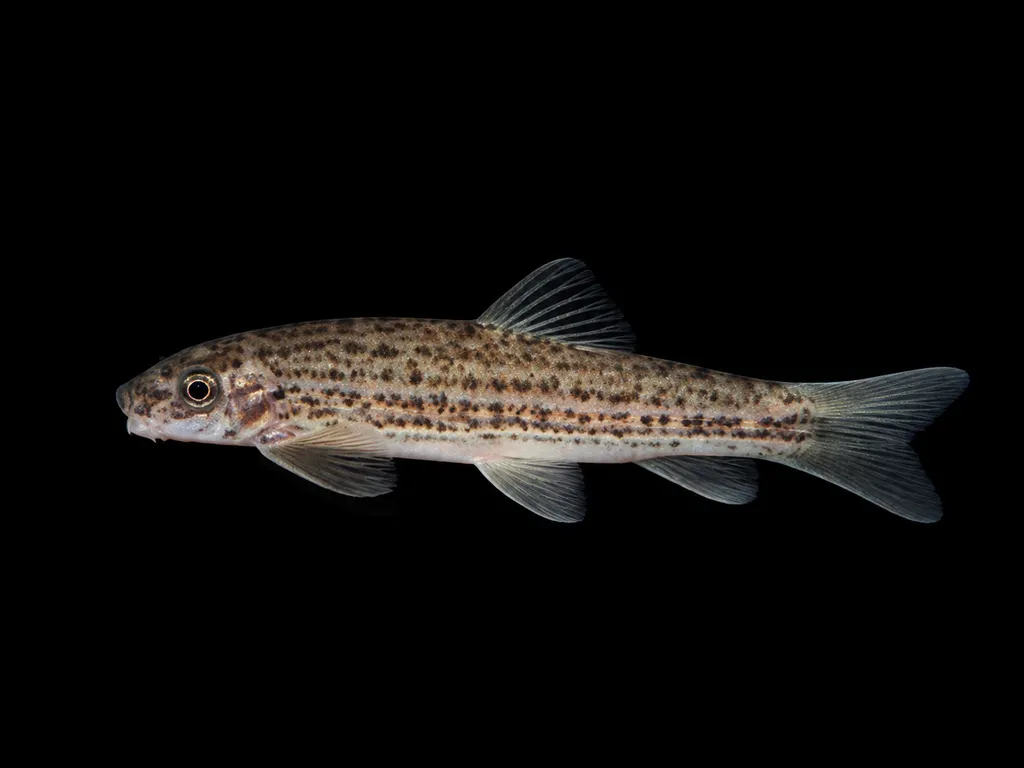
Kerala garra
Garra surendranathanii
Freshwater5.9 in (15 cm) · 42 gal (160 L)68–79°F (20–26°C)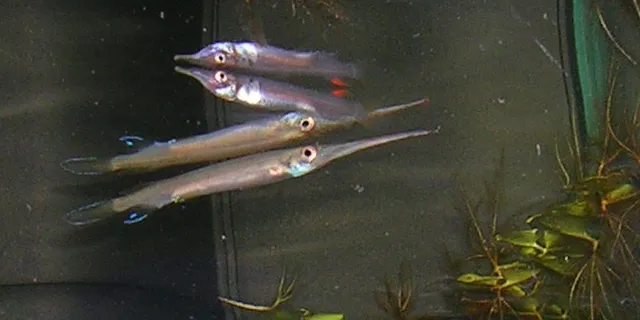
Forest halfbeak
Hemirhamphodon pogonognathus
Freshwater3.5 in (9 cm) · 34 gal (130 L)75–82°F (24–28°C)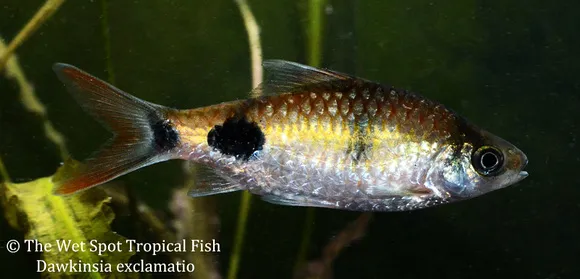
Exclamation barb
Dawkinsia exclamatio
Freshwater3.5 in (9 cm) · 42 gal (160 L)70–79°F (21–26°C)
Common questions
What size tank does a Malabar baril need?
A Malabar baril needs at least 42 gal (160 L). It spends most of its time in the middle.
What temperature and pH does a Malabar baril need?
A Malabar baril is comfortable at 68–79°F (20–26°C) with a pH of 6.5–7.5.
What does a Malabar baril eat?
A Malabar baril eats meaty floating and sinking foods, plus frozen bloodworm, daphnia and small insect larvae. It strikes fast at food.
How big does a Malabar baril get?
An adult Malabar baril reaches about 4.3 in (11 cm).
Does a Malabar baril need a group?
Yes. A Malabar baril is a schooling species and should be kept in a group, not singly.
Related species
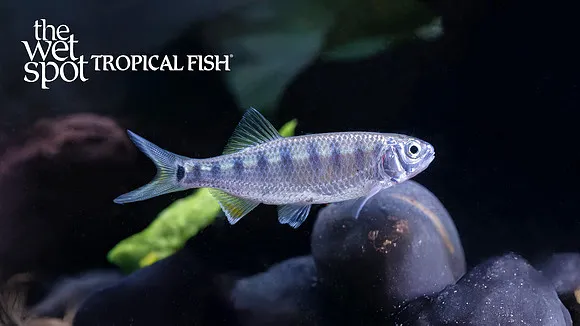 4.3 in (11 cm)42 gal (160 L)72–81°F (22–27°C)
Bernatzik's baril
Opsarius bernatziki
4.3 in (11 cm) · 42 gal (160 L)
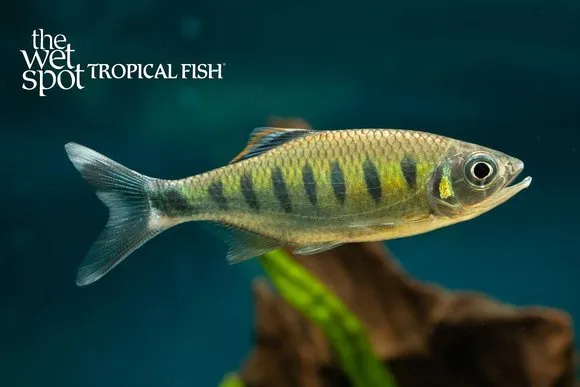 4.1 in (10.5 cm)42 gal (160 L)68–79°F (20–26°C)
Fiery baril
Opsarius ardens
4.1 in (10.5 cm) · 42 gal (160 L)
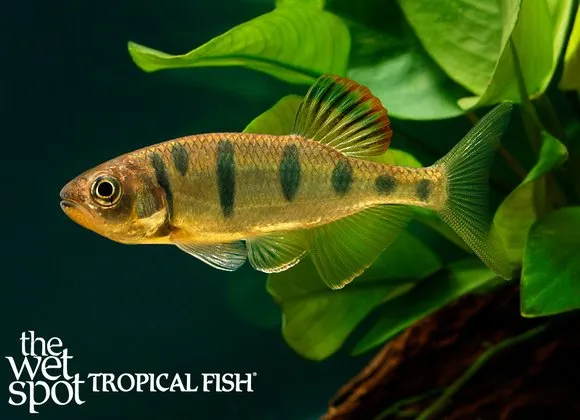 5.1 in (13 cm)53 gal (200 L)72–81°F (22–27°C)
Jeweled baril
Opsarius pulchellus
5.1 in (13 cm) · 53 gal (200 L)
 5.5 in (14 cm)53 gal (200 L)64–79°F (18–26°C)
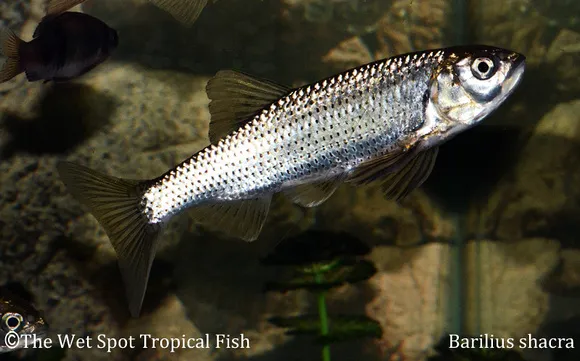
Shacra baril
Opsarius shacra
5.5 in (14 cm) · 53 gal (200 L)
 5.9 in (15 cm)53 gal (200 L)64–79°F (18–26°C)
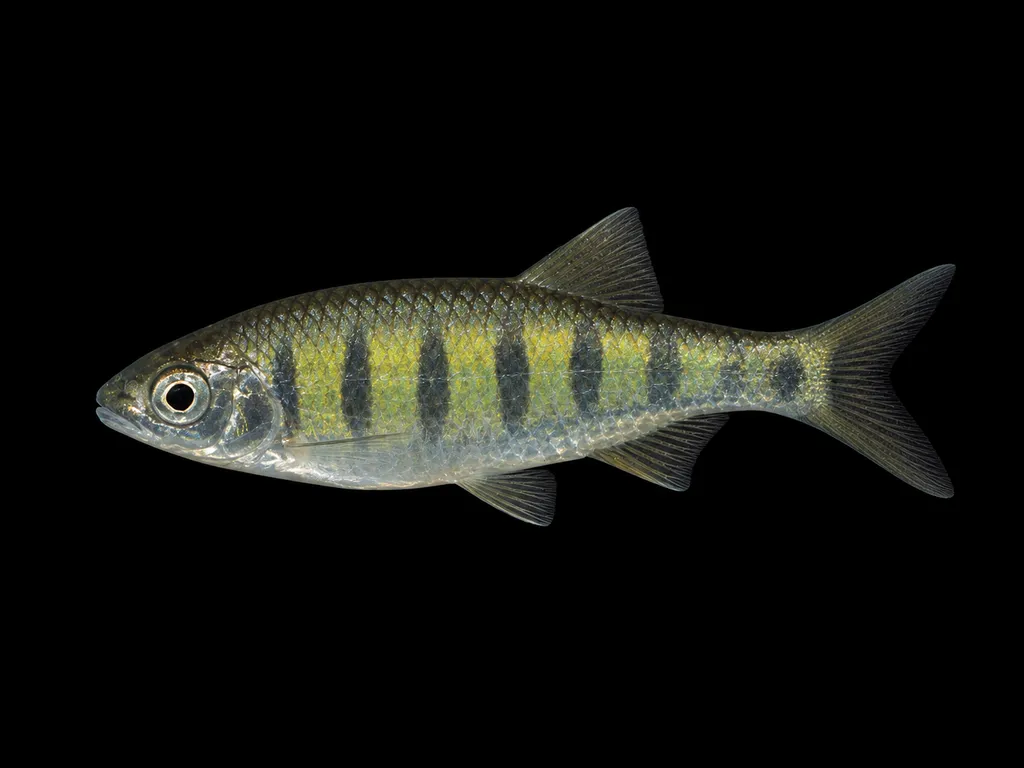
Barna baril
Opsarius barna
5.9 in (15 cm) · 53 gal (200 L)
 4.3 in (11 cm)42 gal (160 L)68–79°F (20–26°C)
Annandale danio
Devario annandalei
4.3 in (11 cm) · 42 gal (160 L)