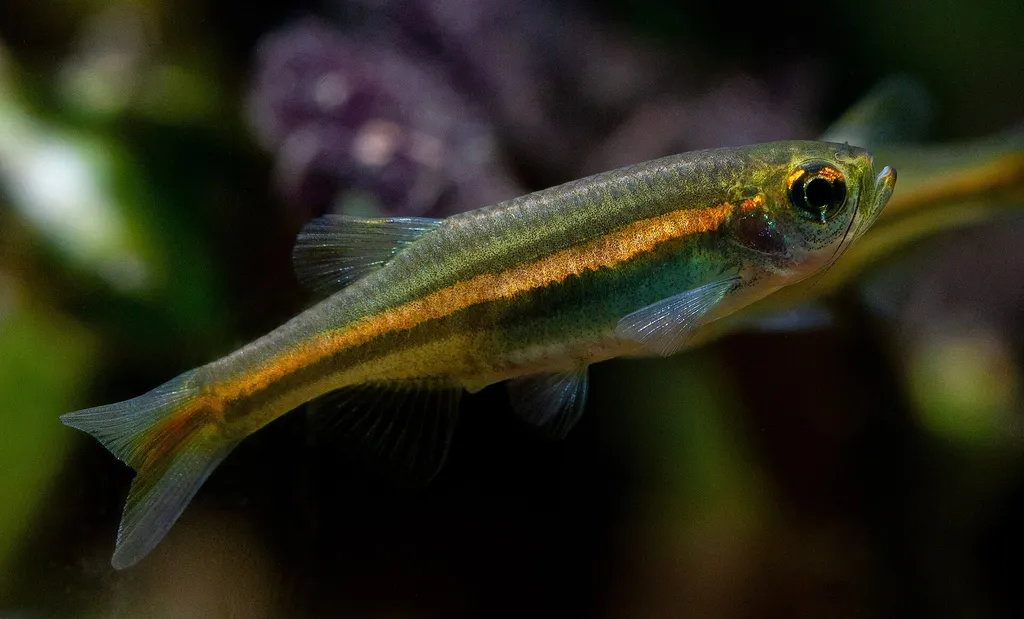
Korthaus rasbora
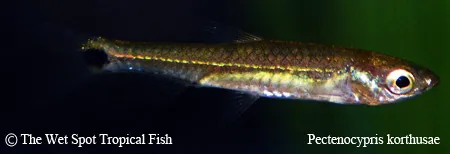
Pectenocypris korthausae
Also known as Pectenocypris korthusae, Comb rasbora, Orange spot torpedo rasbora
FreshwaterFish
Care at a glance
- Temperature
- 73–82°F
- 23–28°C
- pH
- 4.5–6.5
- Adult size
- 1.7 in
- 4.2 cm
- Minimum tank
- 14 gal
- 54 L
- Temperament
- Peaceful
- Social behavior
- Schooling
- Swim level
- Middle
- Difficulty
- Medium
- Breeding
- No record
- Rarity
- Rare
- Family
- Danionidae
- Origin
- Peat swamps of Sumatra and Borneo, Indonesia
Overview
The Korthaus rasbora is a slender, peaceful rasbora for a dim blackwater tank. It is a step up from the easiest community fish.
Did you know
The Korthaus rasbora feeds like a filter, drawing plankton and fine particles out of blackwater through its gill rakers. Those rakers are combed as fine as any plankton-straining fish's, a basking-shark trick shrunk to the size of a matchstick.
Caring for the Korthaus rasbora
Give a group of Korthaus rasboras a dim, planted tank of 14 gal (54 L) or larger over leaf litter. Botanicals, a dark substrate and gentle filtration through peat or almond leaves suit them.
Soft, acidic water is non-negotiable, and the fish loses condition in hard, alkaline water. Hold it warm, at 73 to 82°F (23 to 28°C) and a pH of 4.5 to 6.5. They hang in midwater and feed on fine drifting foods. Offer small frozen and live items such as cyclops, daphnia and baby brine shrimp, with finely crushed dry food.
Keep a school of eight or more. They are peaceful and mix well with other soft-water species, such as small rasboras and kuhli loaches. Their breeding is not on record.
Good to know
Pectenocypris korthausae belongs to the danio family, Danionidae. Kottelat described it in 1982 and named it for the German aquarist Edith Korthaus, who helped collect the first specimens. The genus name means comb carp, after its comb-like gill rakers.
In the wild
The Korthaus rasbora lives in blackwater peat swamps and slow forest streams of Sumatra and Borneo. The water there is tea-dark, soft and acidic.
Weekly picks
Tank mates
The Korthaus rasbora is a peaceful, schooling species that keeps to the middle. These picks share a community profile with it, are safe together in both directions, and overlap on water type, temperature and pH.
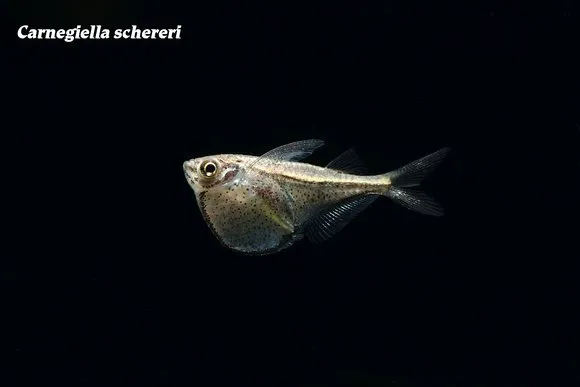
Scherer's hatchetfish
Carnegiella schereri
Freshwater1 in (2.6 cm) · 14 gal (54 L)73–82°F (23–28°C)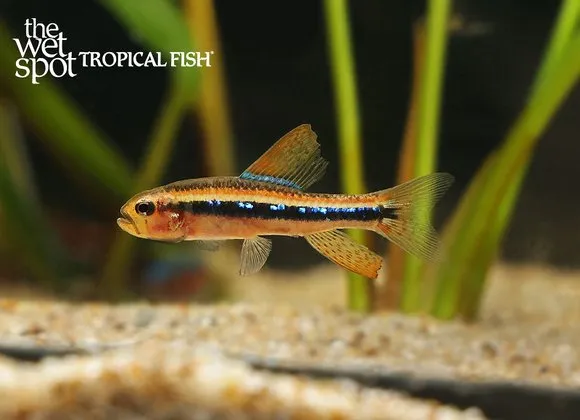
Black darter tetra
Poecilocharax weitzmani
Freshwater1.9 in (4.7 cm) · 14 gal (54 L)75–82°F (24–28°C)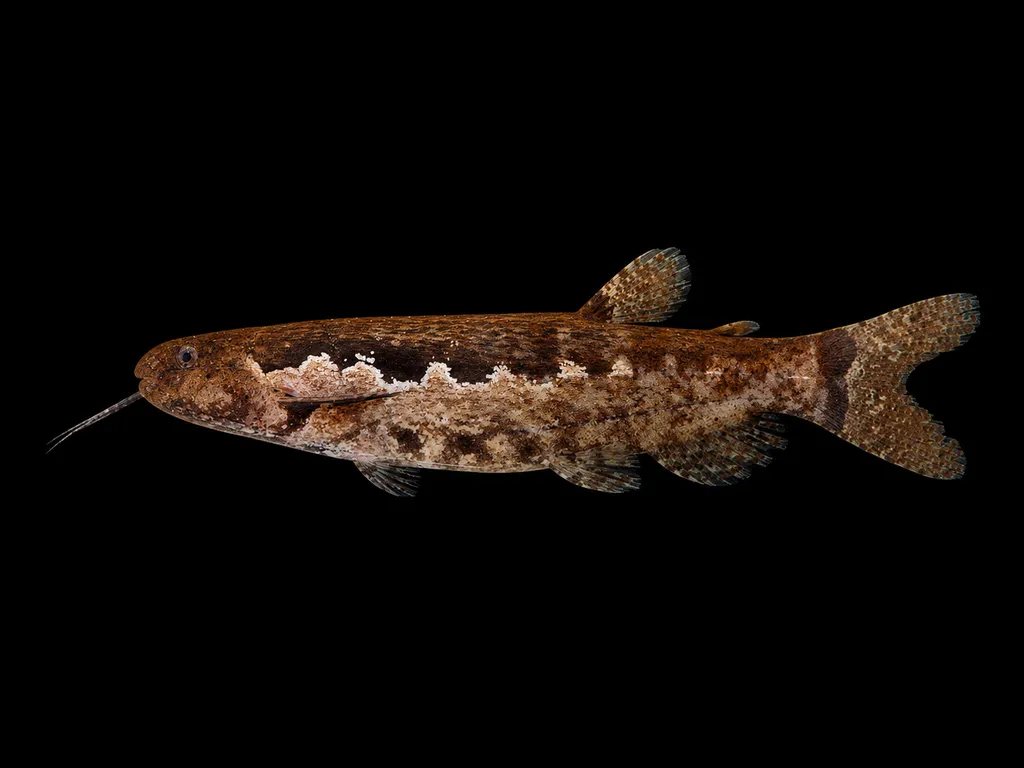
Marbled helogenes
Helogenes marmoratus
Freshwater3.1 in (8 cm) · 14 gal (54 L)73–82°F (23–28°C)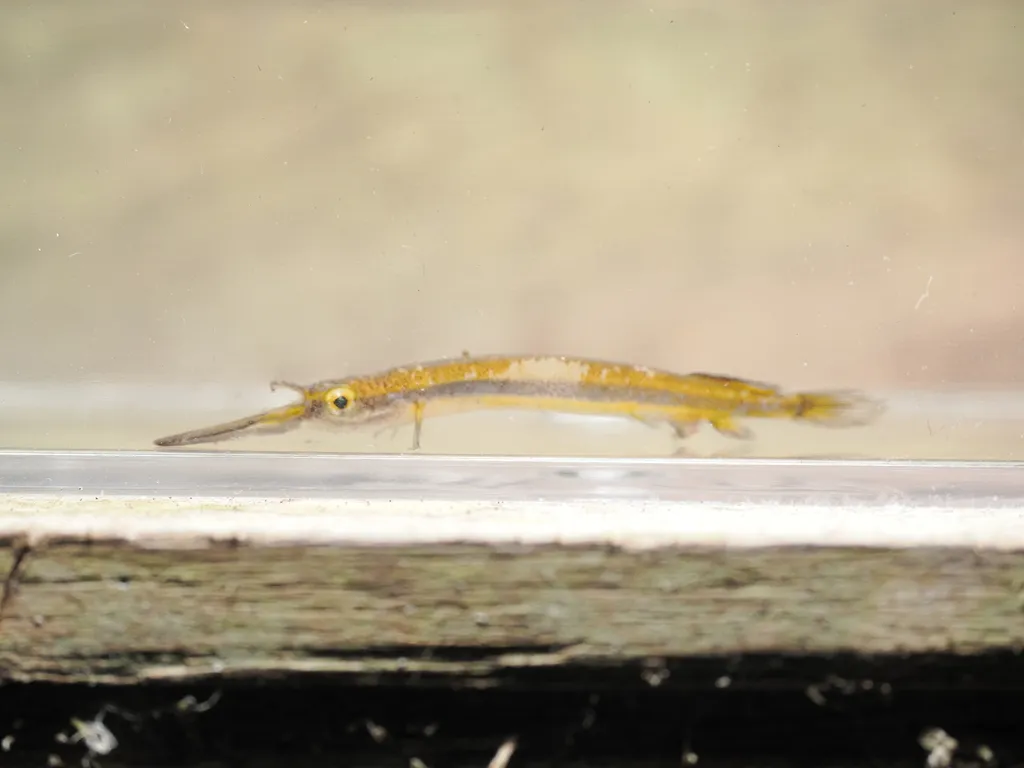
Gold-spotted halfbeak
Hemirhamphodon chrysopunctatus
Freshwater2.6 in (6.5 cm) · 14 gal (54 L)73–81°F (23–27°C)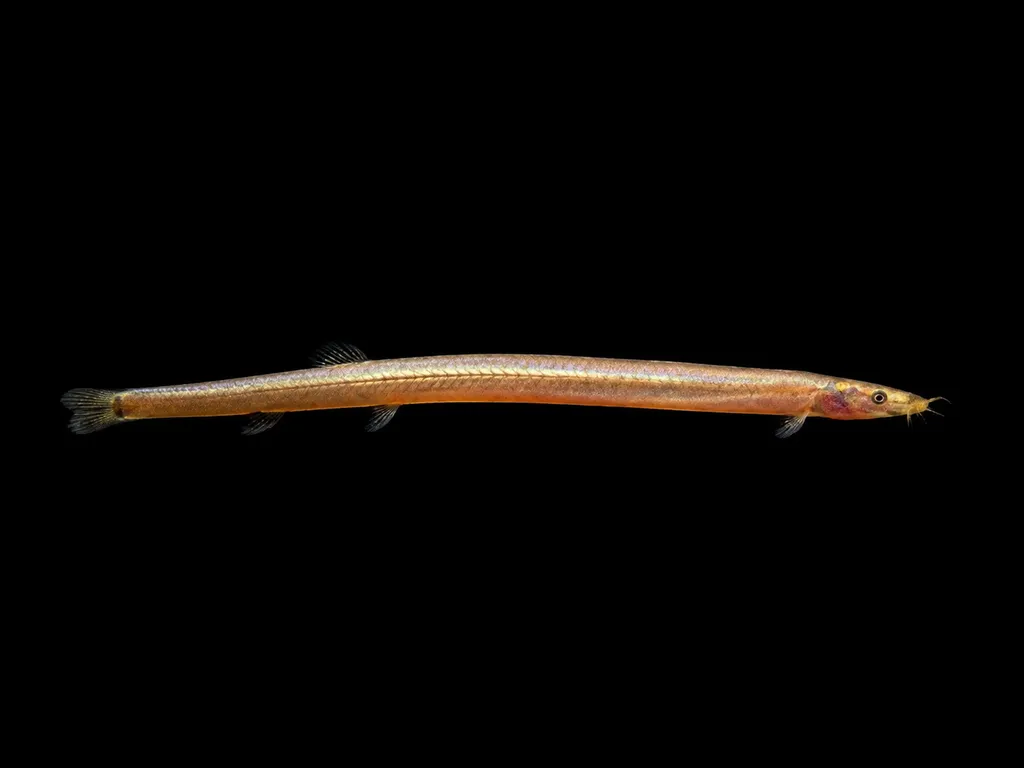
Sumatran neon loach
Pangio bitaimac
Freshwater3.7 in (9.5 cm) · 14 gal (54 L)73–82°F (23–28°C)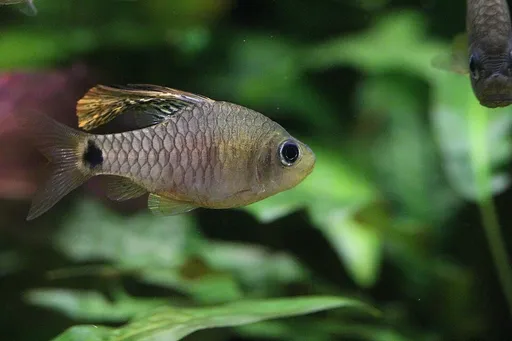
Drape-fin barb
Oreichthys crenuchoides
Freshwater1.6 in (4 cm) · 14 gal (54 L)73–82°F (23–28°C)
Common questions
What size tank does a Korthaus rasbora need?
A Korthaus rasbora needs at least 14 gal (54 L). It spends most of its time in the middle.
What temperature and pH does a Korthaus rasbora need?
A Korthaus rasbora is comfortable at 73–82°F (23–28°C) with a pH of 4.5–6.5.
What does a Korthaus rasbora eat?
A Korthaus rasbora feeds on fine drifting foods in midwater. Offer small frozen and live items such as cyclops, daphnia and baby brine shrimp, with finely crushed dry food.
How big does a Korthaus rasbora get?
An adult Korthaus rasbora reaches about 1.7 in (4.2 cm).
Does a Korthaus rasbora need a group?
Yes. A Korthaus rasbora is a schooling species and should be kept in a group, not singly.
Related species
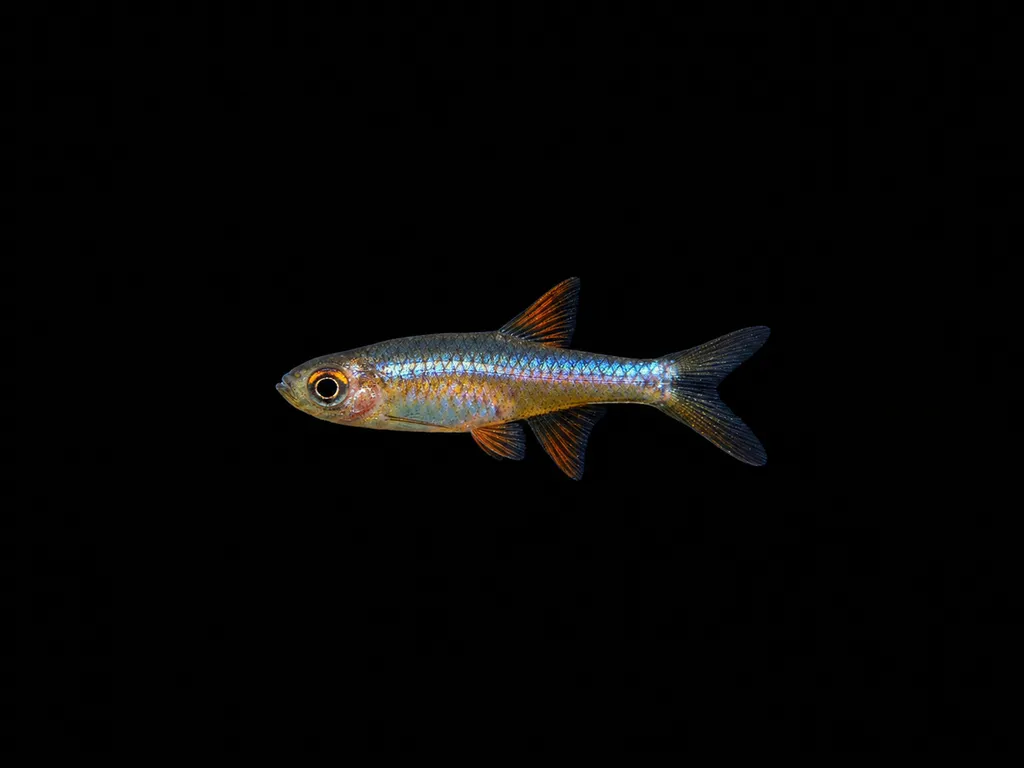 1.6 in (4 cm)14 gal (54 L)75–82°F (24–28°C)
Pearly rasbora
Rasboroides vaterifloris
1.6 in (4 cm) · 14 gal (54 L)
 1.6 in (4 cm)14 gal (54 L)72–81°F (22–27°C)
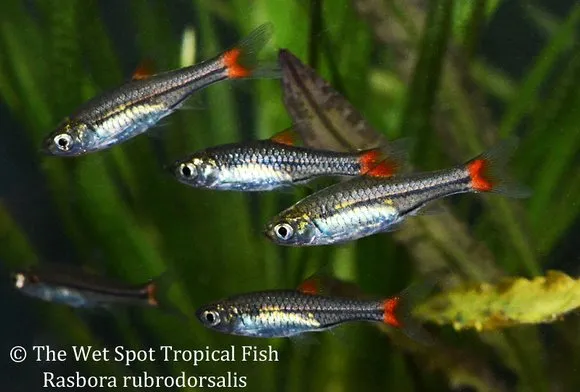
Redback rasbora
Rasbora rubrodorsalis
1.6 in (4 cm) · 14 gal (54 L)
 1.6 in (4 cm)14 gal (54 L)73–81°F (23–27°C)
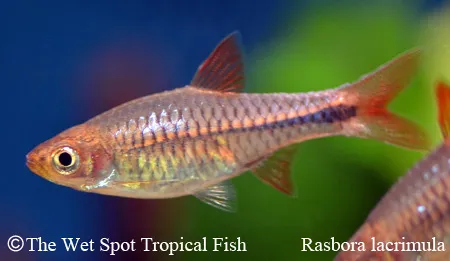
Teardrop rasbora
Rasbora lacrimula
1.6 in (4 cm) · 14 gal (54 L)
 1.8 in (4.6 cm)20 gal (75 L)70–79°F (21–26°C)
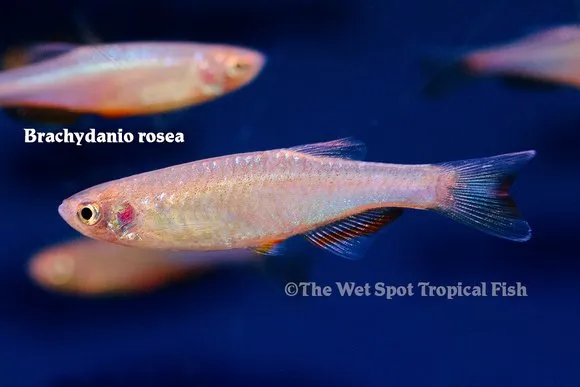
Rose danio
Danio roseus
1.8 in (4.6 cm) · 20 gal (75 L)
 1.4 in (3.6 cm)14 gal (54 L)72–79°F (22–26°C)
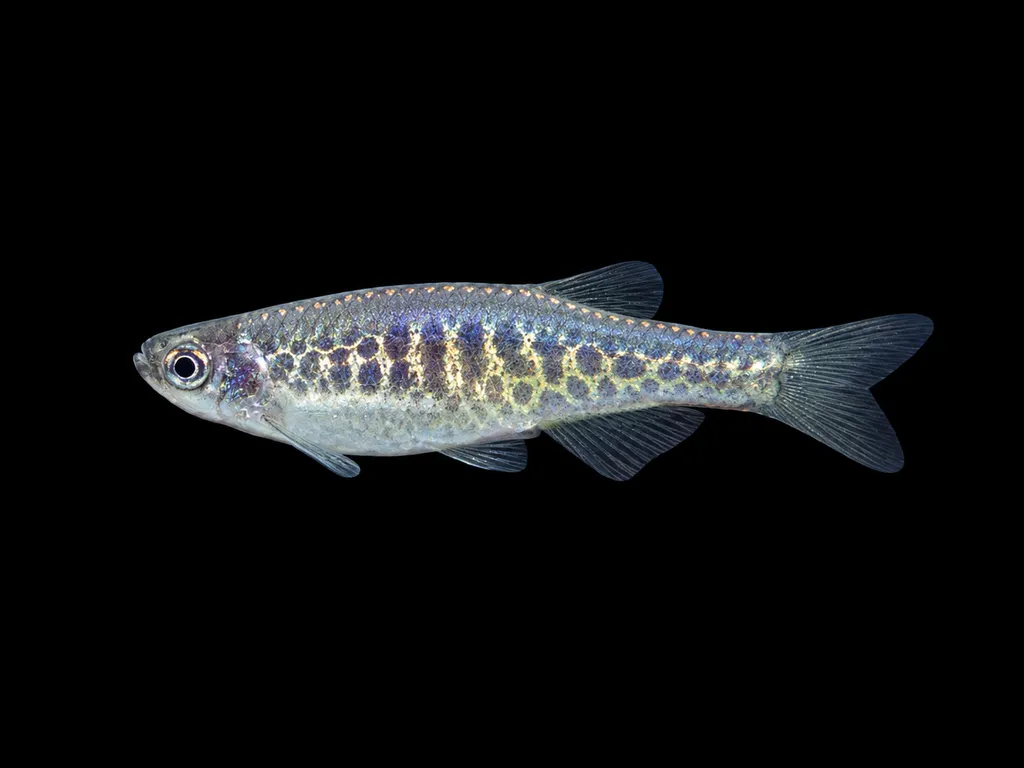
Panther danio
Danio aesculapii
1.4 in (3.6 cm) · 14 gal (54 L)
 2 in (5 cm)20 gal (75 L)64–75°F (18–24°C)
Jaintia danio
Danio jaintianensis
2 in (5 cm) · 20 gal (75 L)