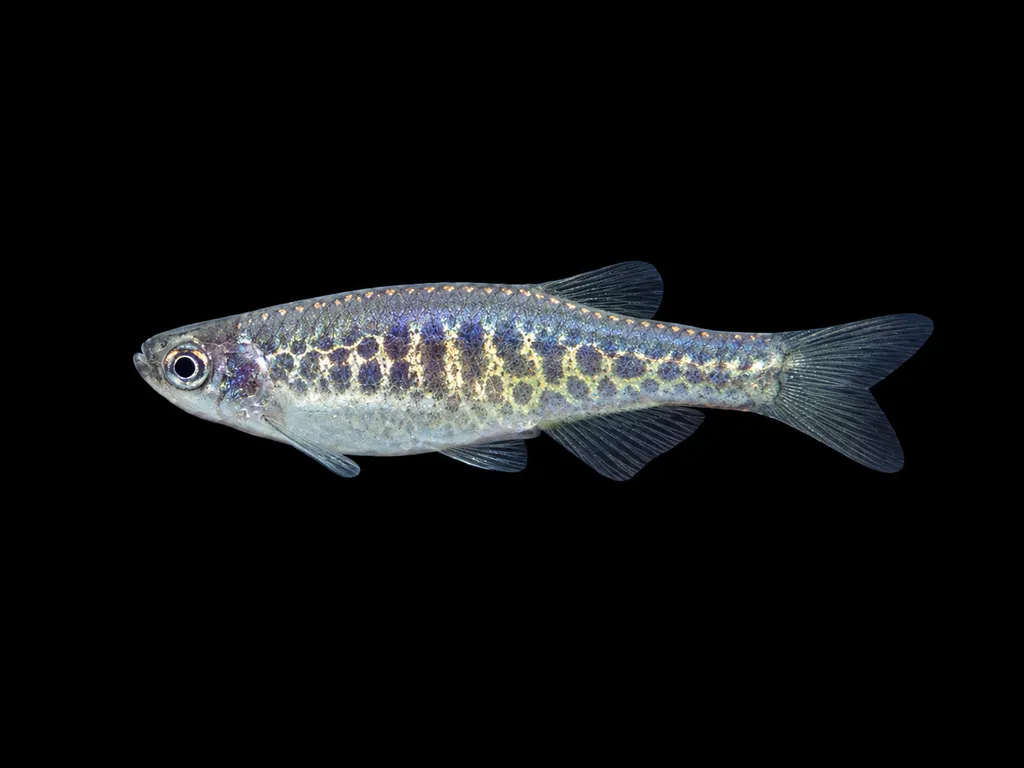
Panther danio
Danio aesculapii
Also known as Aesculapius danio
FreshwaterFish
Care at a glance
- Temperature
- 72–79°F
- 22–26°C
- pH
- 6.5–7.5
- Adult size
- 1.4 in
- 3.6 cm
- Minimum tank
- 14 gal
- 54 L
- Temperament
- Peaceful
- Social behavior
- Schooling
- Swim level
- Middle
- Difficulty
- Easy
- Breeding
- Egg scatterer · Medium
- Rarity
- Rare
- Family
- Danionidae
- Origin
- Rakhine Yoma streams, southwestern Myanmar
Overview
The panther danio is a small, active and peaceful schooling fish for a planted community tank. It is a good first fish.
Did you know
The panther danio's species name honors Aesculapius, the Roman god of medicine, whose staff is entwined by a snake. The describers thought the fish's broken markings recalled a snake's skin. The aquarium trade ignored all that and named it for a big cat instead.
Caring for the panther danio
A starter group of panther danios needs a planted tank of 14 gal (54 L) or larger, with open swimming lanes and gentle flow. Add some driftwood and shade, and keep the water steady and well filtered.
Hold the temperature at 72 to 79°F (22 to 26°C) and the pH at 6.5 to 7.5, on the soft to neutral side. They are unfussy eaters and take good flake, small pellets and frozen foods such as daphnia and bloodworm.
Keep a group of at least eight, since smaller numbers turn nervous and lose their color. They swim mostly in the middle of the tank and stay peaceful. A quick feeder like this can nip the trailing fins of very slow, long-finned tank mates. Pair them with other small, brisk community fish rather than delicate showpieces.
Panther danios are egg-scattering spawners that guard nothing. A mature, densely planted tank can yield the odd fry with no special effort.
Good to know
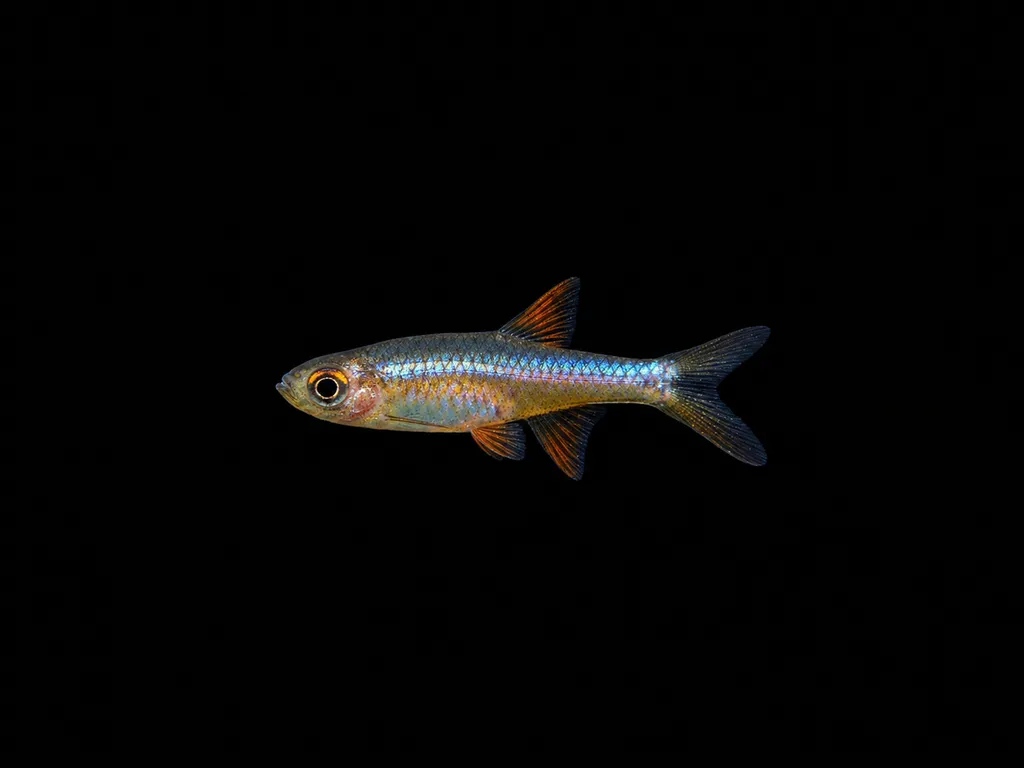
Danio aesculapii is a member of the family Danionidae, described in 2009. It is sometimes placed in the genus Brachydanio alongside other small danios. It carries a broken, blotched bar pattern rather than the clean stripes of its relatives.
In the wild
The panther danio comes from small, clear forest streams draining the Rakhine Yoma of southwestern Myanmar. These are shallow runs and pools over sand and leaf litter, with gentle current.
Weekly picks
Tank mates
The panther danio is a peaceful, schooling species that keeps to the middle. These picks share a community profile with it, are safe together in both directions, and overlap on water type, temperature and pH.
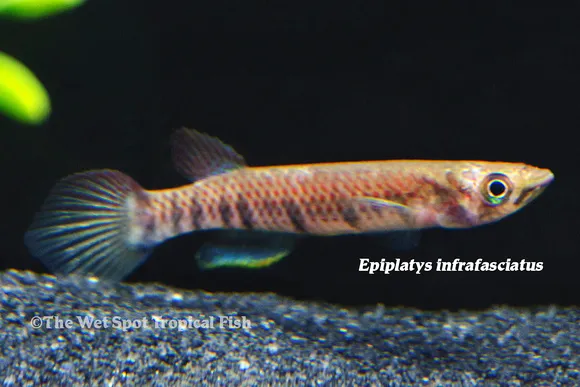
Infrafasciatus killifish
Epiplatys infrafasciatus
Freshwater2.4 in (6 cm) · 14 gal (54 L)68–77°F (20–25°C)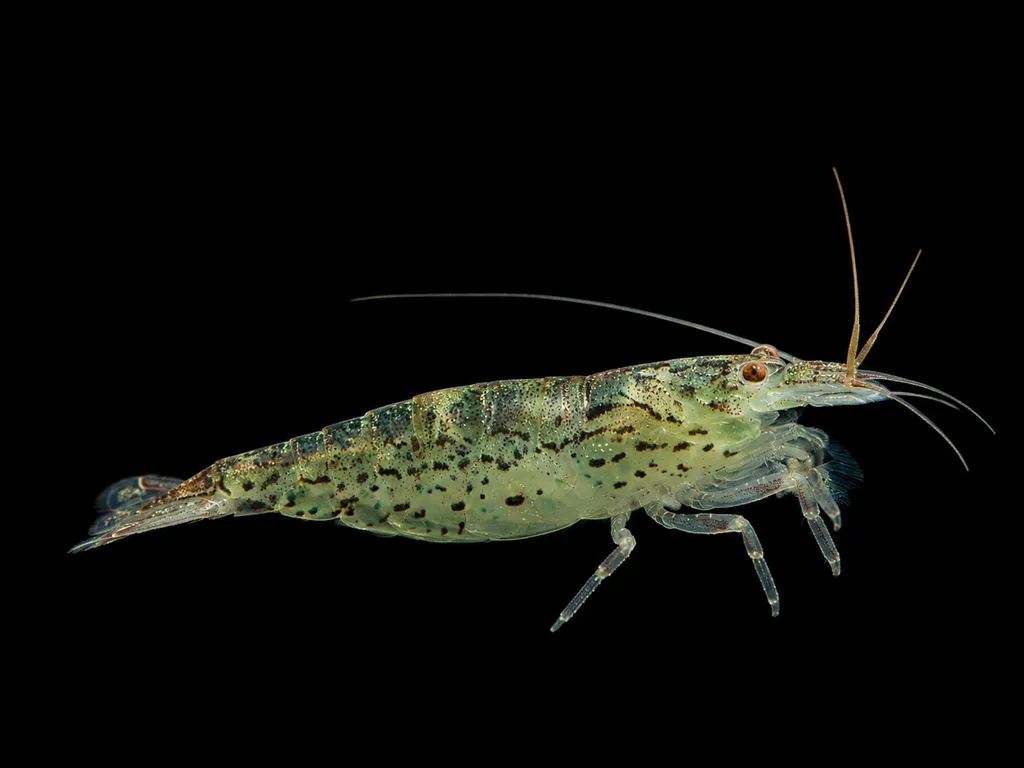
Green lace shrimp
Atyoida pilipes
Freshwater2.8 in (7 cm) · 14 gal (54 L)73–82°F (23–28°C)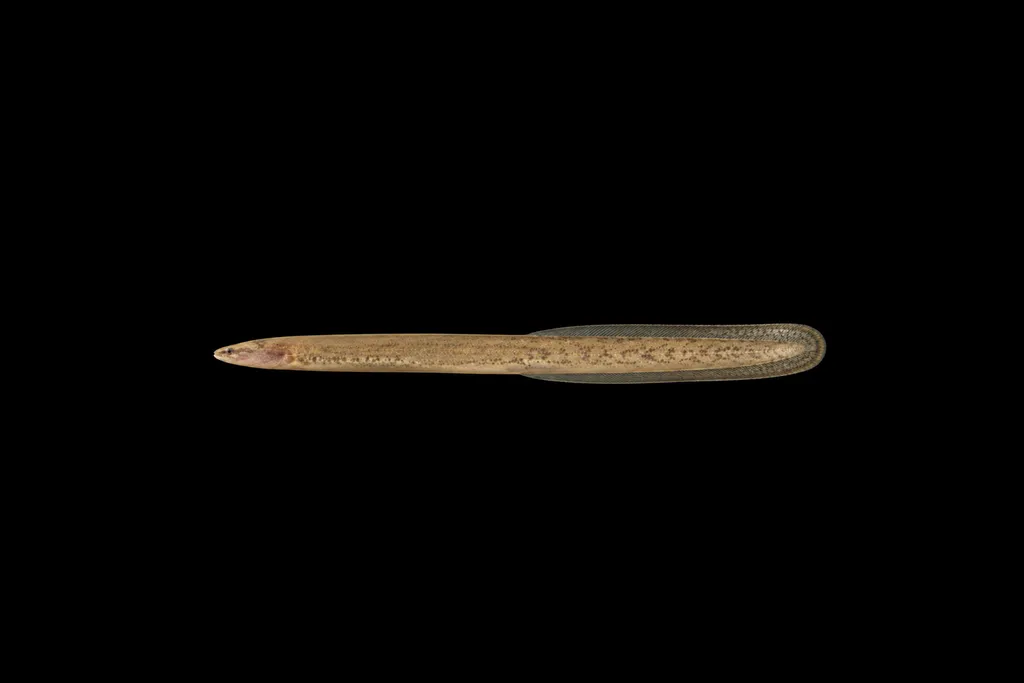
Dwarf spineless eel
Garo khajuriai
Freshwater2.8 in (7 cm) · 14 gal (54 L)68–79°F (20–26°C)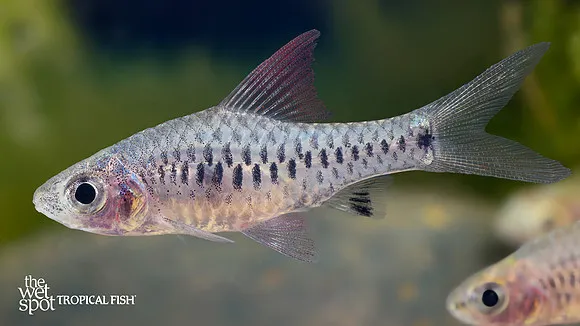
Dwarf hi-fin barb
Oreichthys parvus
Freshwater1.4 in (3.6 cm) · 14 gal (54 L)72–79°F (22–26°C)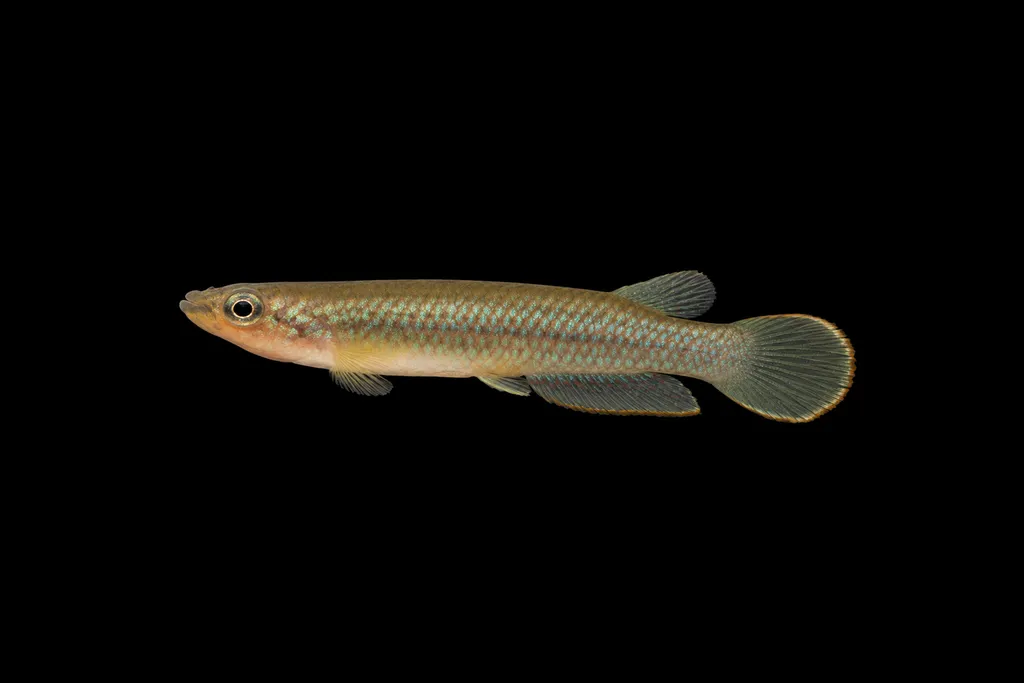
Guinean panchax
Epiplatys guineensis
Freshwater2.8 in (7 cm) · 14 gal (54 L)68–77°F (20–25°C)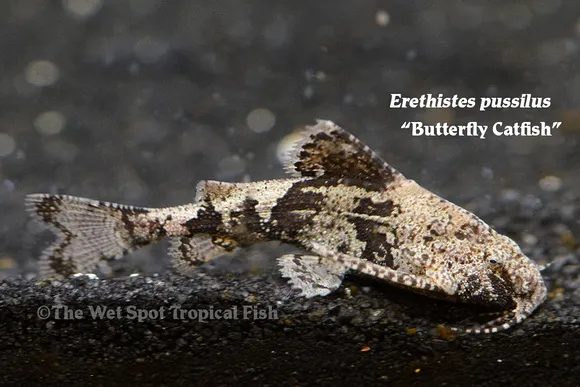
Butterfly moth catfish
Erethistes pusillus
Freshwater2 in (5 cm) · 14 gal (54 L)68–79°F (20–26°C)
Common questions
What size tank does a panther danio need?
A panther danio needs at least 14 gal (54 L). It spends most of its time in the middle.
What temperature and pH does a panther danio need?
A panther danio is comfortable at 72–79°F (22–26°C) with a pH of 6.5–7.5.
What does a panther danio eat?
A panther danio is an unfussy eater. It takes good flake, small pellets and frozen foods such as daphnia and bloodworm.
How big does a panther danio get?
An adult panther danio reaches about 1.4 in (3.6 cm).
Does a panther danio need a group?
Yes. A panther danio is a schooling species and should be kept in a group, not singly.
How does a panther danio breed?
Panther danios scatter their eggs and guard nothing. In a mature, densely planted tank, the odd fry can turn up with no special effort.
Related species
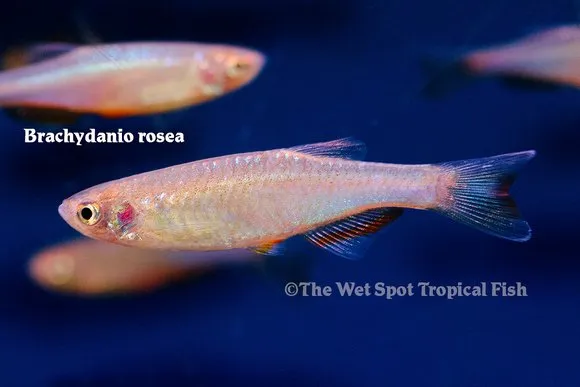 1.8 in (4.6 cm)20 gal (75 L)70–79°F (21–26°C)
Rose danio
Danio roseus
1.8 in (4.6 cm) · 20 gal (75 L)
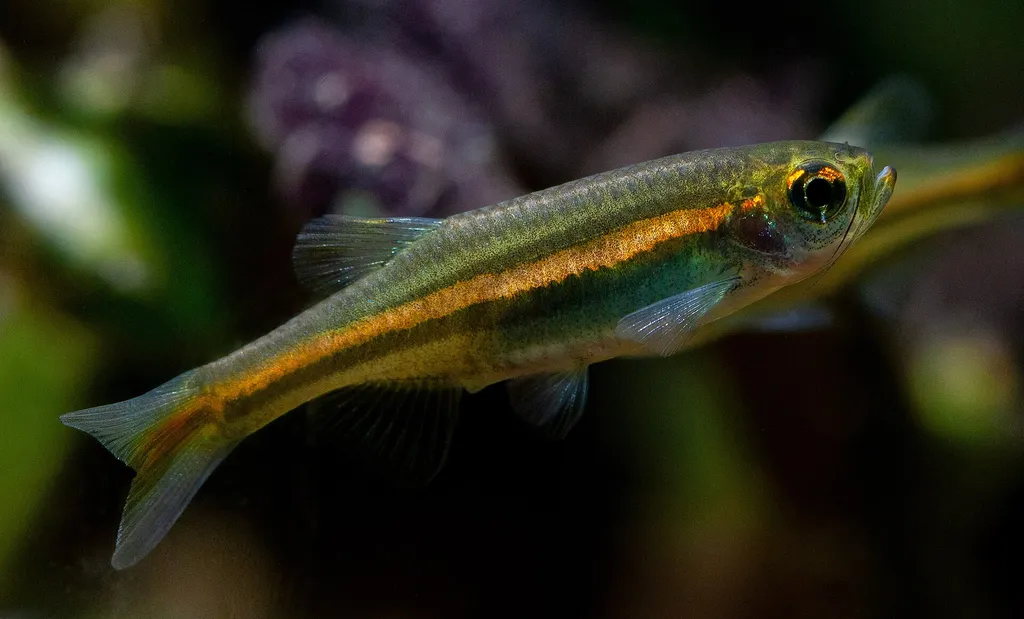 2 in (5 cm)20 gal (75 L)64–75°F (18–24°C)
Jaintia danio
Danio jaintianensis
2 in (5 cm) · 20 gal (75 L)
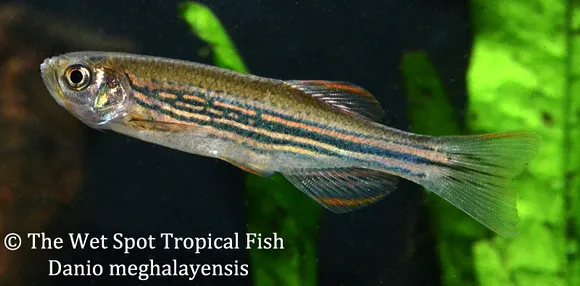 2.4 in (6 cm)24 gal (90 L)64–75°F (18–24°C)
Meghalaya danio
Danio meghalayensis
2.4 in (6 cm) · 24 gal (90 L)
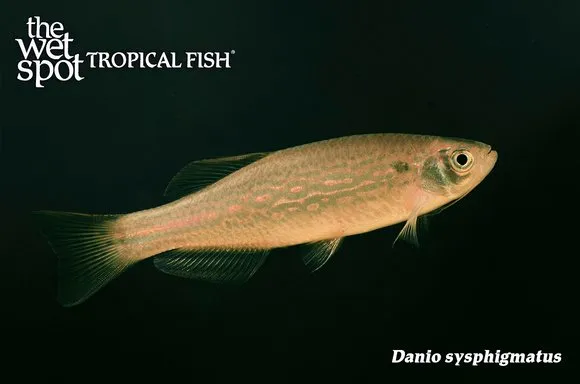 3.3 in (8.5 cm)29 gal (110 L)72–81°F (22–27°C)
Sittaung danio
Danio sysphigmatus
3.3 in (8.5 cm) · 29 gal (110 L)
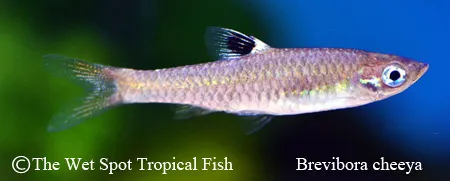 1.3 in (3.4 cm)14 gal (54 L)72–81°F (22–27°C)
Cheeya rasbora
Brevibora cheeya
1.3 in (3.4 cm) · 14 gal (54 L)
 1.6 in (4 cm)14 gal (54 L)75–82°F (24–28°C)
Pearly rasbora
Rasboroides vaterifloris
1.6 in (4 cm) · 14 gal (54 L)