Dragon moray
Enchelycore pardalis
Also known as Leopard moray, Japanese dragon eel, Hawaiian dragon eel, Tiger moray
SaltwaterFish
Care at a glance
- Temperature
- 72–79°F
- 22–26°C
- pH
- 8.0–8.4
- Adult size
- 35.4 in
- 90 cm
- Minimum tank
- 180 gal
- 680 L
- Temperament
- Aggressive
- Social behavior
- Solitary
- Own kind
- One per tank
- Tankmates
- With caution
- Swim level
- Bottom
- Difficulty
- Difficult
- Breeding
- No record
- Rarity
- Rare
- Reef safe
- Reef safe with caution
- Family
- Muraenidae
- Origin
- Native to the Pacific and Indian Oceans, especially around Japan and Hawaii, living in rocky reef caves and crevices.
Overview
House a single dragon moray in a fish-only tank of at least 680 litres with heavy rockwork, a large cave and an escape-proof lid, since morays are champion escape artists. Keep it at 22 to 26 C and pH 8.0 to 8.4 with strong filtration. It leaves corals alone but eats fish, shrimp and crabs, so keep only large, unswallowable tankmates. Feed chunks of fresh marine fish, squid and shrimp on a feeding stick two or three times a week and keep hands well clear of the mouth.
In the wild
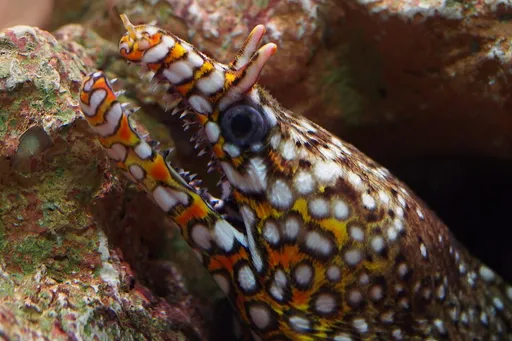
The dragon moray is one of the most striking eels in the hobby, patterned in orange, red, white and black with raised tube-like nostrils and jaws that never fully close over its hooked teeth. It is an aggressive ambush hunter that lunges from a cave to seize prey. Adults reach around 90 cm and are pure muscle.
Good to know
Enchelycore pardalis has curved, non-closing jaws lined with long recurved teeth built to hold onto slippery fish. Its raised front nostrils extend into horn-like tubes that give it the dragon look. Like most morays it has poor eyesight and hunts largely by smell.
Did you know
The hooked, permanently open jaws of a dragon moray are not just for show, they let it grip struggling fish so securely that prey almost never wriggles free once seized.
Common questions
What size tank does a Dragon moray need?
A Dragon moray needs at least 180 gal (680 L). It spends most of its time in the bottom.
What temperature and pH does a Dragon moray need?
A Dragon moray is comfortable at 72–79°F (22–26°C) with a pH of 8.0–8.4.
How big does a Dragon moray get?
An adult Dragon moray reaches about 35.4 in (90 cm).
Related species
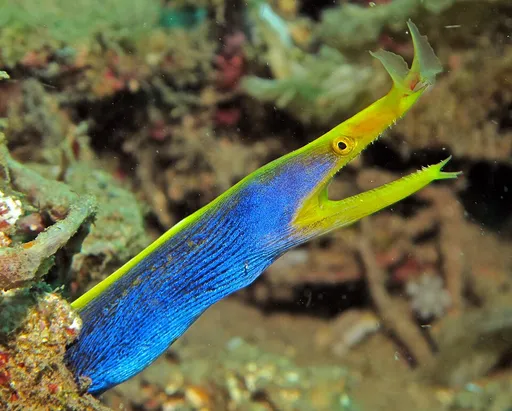 39.4 in (100 cm)66 gal (250 L)75–81°F (24–27°C)
Ribbon eel
Rhinomuraena quaesita
39.4 in (100 cm) · 66 gal (250 L)
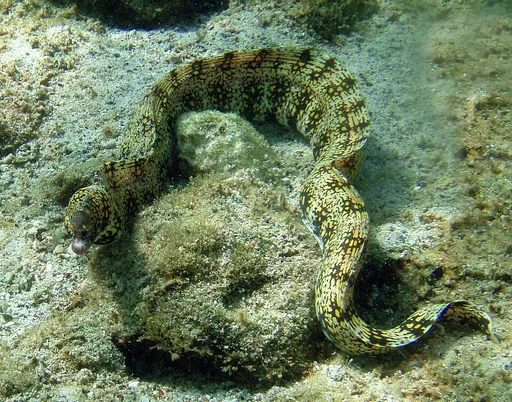 39.4 in (100 cm)50 gal (189 L)72–79°F (22–26°C)
Snowflake eel
Echidna nebulosa
39.4 in (100 cm) · 50 gal (189 L)
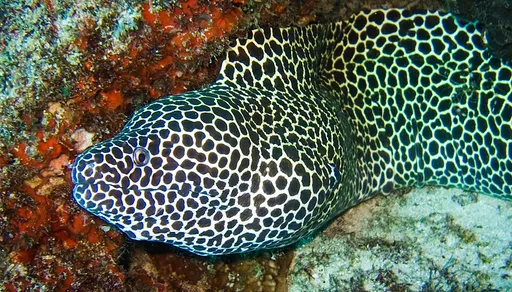 70.9 in (180 cm)291 gal (1,100 L)75–81°F (24–27°C)
Honeycomb moray
Gymnothorax favagineus
70.9 in (180 cm) · 291 gal (1,100 L)
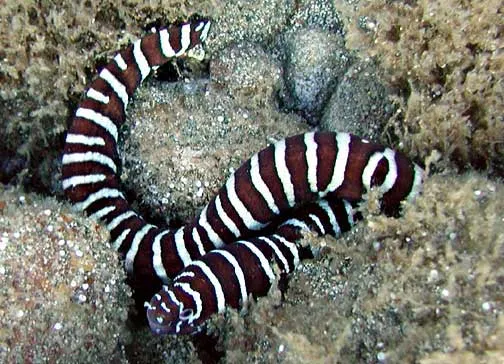 59.1 in (150 cm)180 gal (680 L)72–79°F (22–26°C)
Zebra moray
Gymnomuraena zebra
59.1 in (150 cm) · 180 gal (680 L)
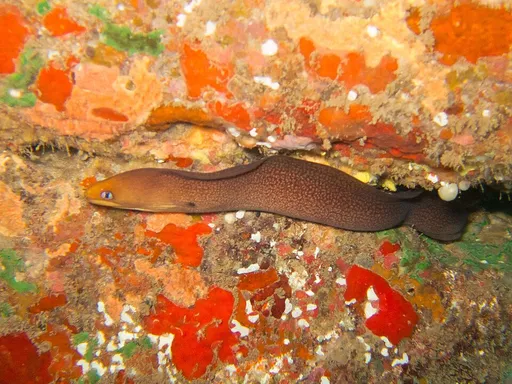 11.8 in (30 cm)65 gal (246 L)72–79°F (22–26°C)
Golden dwarf moray
Gymnothorax melatremus
11.8 in (30 cm) · 65 gal (246 L)
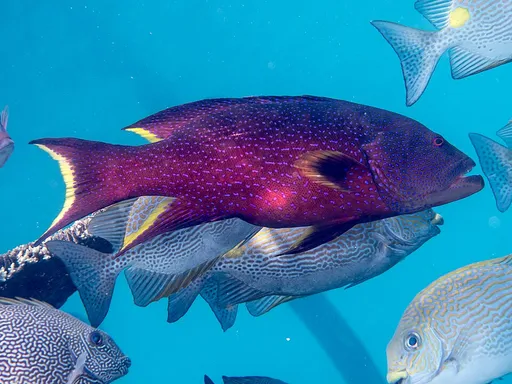 31.5 in (80 cm)291 gal (1,100 L)75–81°F (24–27°C)
Lyretail grouper
Variola louti
31.5 in (80 cm) · 291 gal (1,100 L)