Honeycomb moray
Gymnothorax favagineus
Also known as Laced moray, Tessellate moray, Leopard moray eel, Blackspotted moray
SaltwaterFish
Care at a glance
- Temperature
- 75–81°F
- 24–27°C
- pH
- 8.0–8.4
- Adult size
- 70.9 in
- 180 cm
- Minimum tank
- 291 gal
- 1,100 L
- Temperament
- Aggressive
- Social behavior
- Solitary
- Own kind
- One per tank
- Tankmates
- With caution
- Swim level
- Bottom
- Difficulty
- Difficult
- Breeding
- No record
- Rarity
- Common
- Reef safe
- Reef safe with caution
- Family
- Muraenidae
- Origin
- Native to the Indo-Pacific and Red Sea, living on coral and rocky reefs where it hides in large caves by day.
Overview
This eel is only for keepers with a very large fish-only system, a minimum of around 1100 litres and realistically much more given its potential size. Keep it at 24 to 27 C and pH 8.0 to 8.4 with a massive cave and a heavy, clamped lid. It ignores corals but eats any fish or crustacean it can catch, so pick large, tough tankmates only. Feed silversides, whole shrimp, squid and chunks of marine fish on a stick, and keep hands out while it is hungry.
In the wild
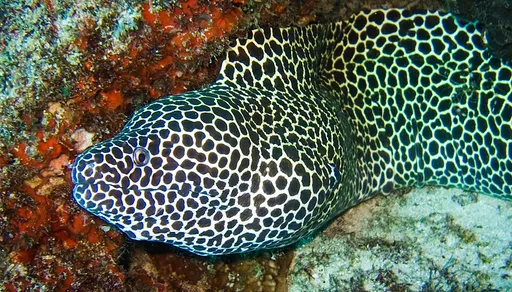
The honeycomb moray is a big pale eel covered in a dense pattern of black blotches that look like a honeycomb or leopard print. It is one of the larger morays offered in the trade and grows into a genuinely huge animal. It hunts fish and cephalopods at night and can be bold and snappy at feeding time.
Good to know
Gymnothorax favagineus is reported to reach up to 3 metres in the wild, though most specimens seen are well under 2 metres. The density of its black spotting varies a lot with location, from fine speckles to broad blotches. Like all morays it breathes by constantly opening and closing its mouth to pump water over its gills, which looks threatening but is normal.
Did you know
The amount of black on a honeycomb moray varies so much between reefs that heavily spotted and lightly spotted fish were once thought to be different species.
Common questions
What size tank does a Honeycomb moray need?
A Honeycomb moray needs at least 291 gal (1,100 L). It spends most of its time in the bottom.
What temperature and pH does a Honeycomb moray need?
A Honeycomb moray is comfortable at 75–81°F (24–27°C) with a pH of 8.0–8.4.
How big does a Honeycomb moray get?
An adult Honeycomb moray reaches about 70.9 in (180 cm).
Related species
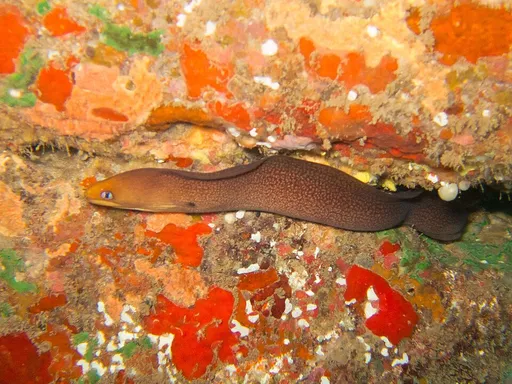 11.8 in (30 cm)65 gal (246 L)72–79°F (22–26°C)
Golden dwarf moray
Gymnothorax melatremus
11.8 in (30 cm) · 65 gal (246 L)
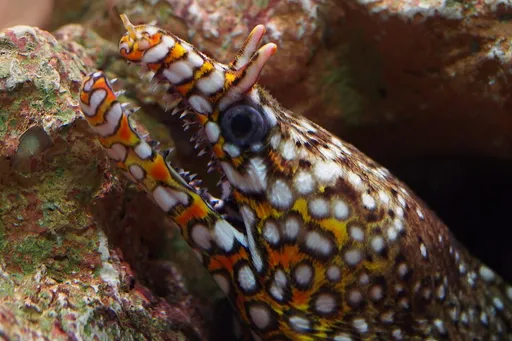 35.4 in (90 cm)180 gal (680 L)72–79°F (22–26°C)
Dragon moray
Enchelycore pardalis
35.4 in (90 cm) · 180 gal (680 L)
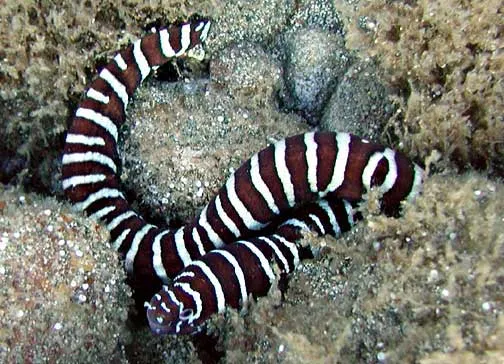 59.1 in (150 cm)180 gal (680 L)72–79°F (22–26°C)
Zebra moray
Gymnomuraena zebra
59.1 in (150 cm) · 180 gal (680 L)
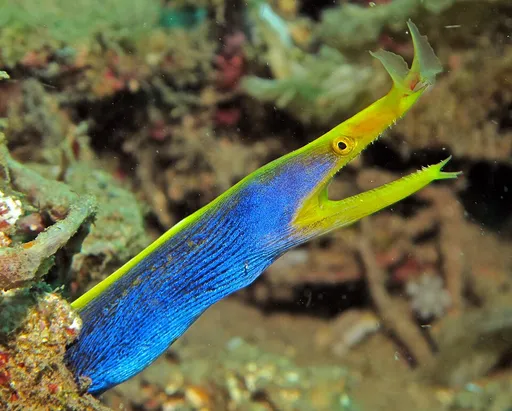 39.4 in (100 cm)66 gal (250 L)75–81°F (24–27°C)
Ribbon eel
Rhinomuraena quaesita
39.4 in (100 cm) · 66 gal (250 L)
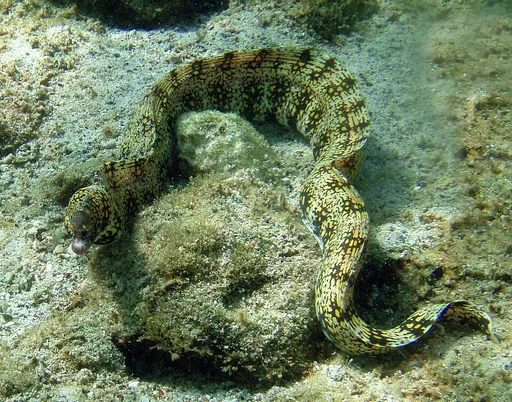 39.4 in (100 cm)50 gal (189 L)72–79°F (22–26°C)
Snowflake eel
Echidna nebulosa
39.4 in (100 cm) · 50 gal (189 L)