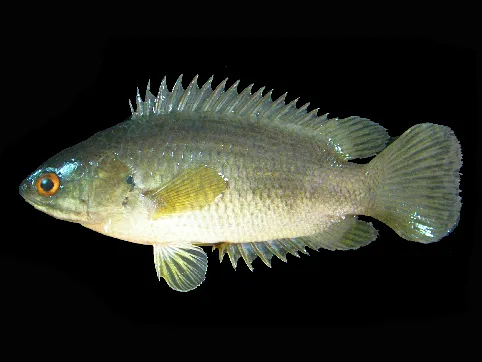
Climbing perch
Anabas testudineus
FreshwaterFish
Care at a glance
- Temperature
- 59–86°F
- 15–30°C
- pH
- 6.0–7.5
- Adult size
- 7.9 in
- 20 cm
- Minimum tank
- 40 gal
- 150 L
- Temperament
- Aggressive
- Social behavior
- Solitary
- Tankmates
- With caution
- Swim level
- Bottom
- Difficulty
- Medium
- Breeding
- No record
- Rarity
- Very rare
- Family
- Anabantidae
- Origin
- South Asia, South East Asia
Overview
The climbing perch is a tough, aggressive air-breather that is best kept alone or with large, robust fish it cannot bully or swallow. It spends much of its time low in the tank, rooting around near the bottom, but comes to the surface to breathe. It is greedy and will eat smaller tankmates, so plan stocking with care. Feed meaty foods such as earthworms, prawn, mussel and sinking carnivore pellets, and expect it to take almost anything offered. Because it is a determined escape artist that can survive out of water, a heavy, tight-fitting lid is essential. Give it a tank of at least 150 liters.
In the wild
Anabas testudineus is widespread across South and Southeast Asia, living in ponds, canals, swamps, rice paddies and stagnant pools that are often warm and poorly oxygenated. It tolerates a very wide temperature span, from about 15 to 30 degrees Celsius, and pH from 6.0 to 7.5, which is part of why it is so hardy. A simple, robust setup suits it: a soft substrate, some sturdy wood or rock, and a tight lid. Plants are optional, as the fish is boisterous, but floating cover helps it feel secure and keeps the surface calm for air breathing.
Good to know
The climbing perch is the best known member of the family Anabantidae and reaches around 20 centimeters. Its labyrinth organ is unusually well developed, letting it breathe air efficiently and survive for long periods out of water. It spawns by scattering floating eggs that are left unguarded, and home breeding is essentially unrecorded. The species name testudineus, meaning tortoise-like, refers to the hard, plated appearance of its head and gill covers.
Did you know
The climbing perch earns its name from its ability to leave the water and travel over damp ground, using its spiny gill covers and fins to shuffle along in search of new pools. It can breathe air and survive for days out of water if kept moist.
Common questions
What size tank does a Climbing perch need?
A Climbing perch needs at least 40 gal (150 L). It spends most of its time in the bottom.
What temperature and pH does a Climbing perch need?
A Climbing perch is comfortable at 59–86°F (15–30°C) with a pH of 6.0–7.5.
How big does a Climbing perch get?
An adult Climbing perch reaches about 7.9 in (20 cm).
Related species
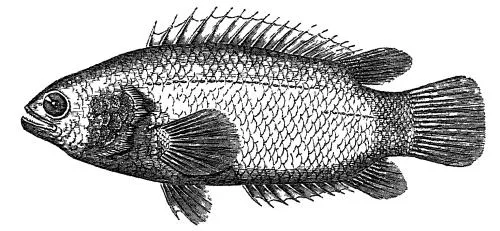 9.8 in (25 cm)66 gal (250 L)72–86°F (22–30°C)
Gangetic climbing perch
Anabas cobojius
9.8 in (25 cm) · 66 gal (250 L)
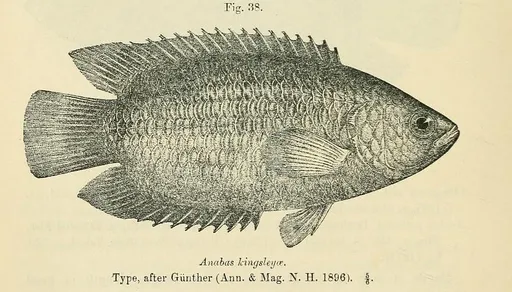 7.9 in (20 cm)66 gal (250 L)73–82°F (23–28°C)
Tailspot climbing perch
Ctenopoma kingsleyae
7.9 in (20 cm) · 66 gal (250 L)
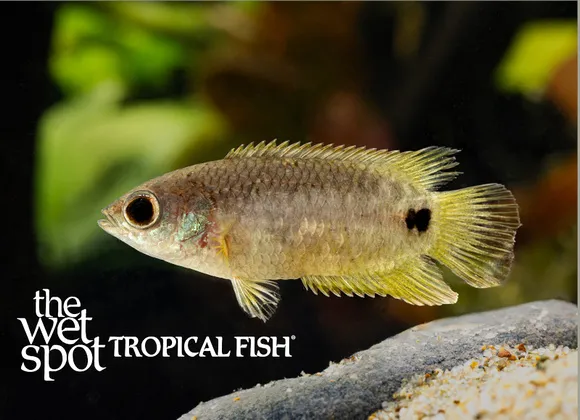 6.9 in (17.5 cm)53 gal (200 L)73–82°F (23–28°C)
Petherick's bushfish
Ctenopoma petherici
6.9 in (17.5 cm) · 53 gal (200 L)
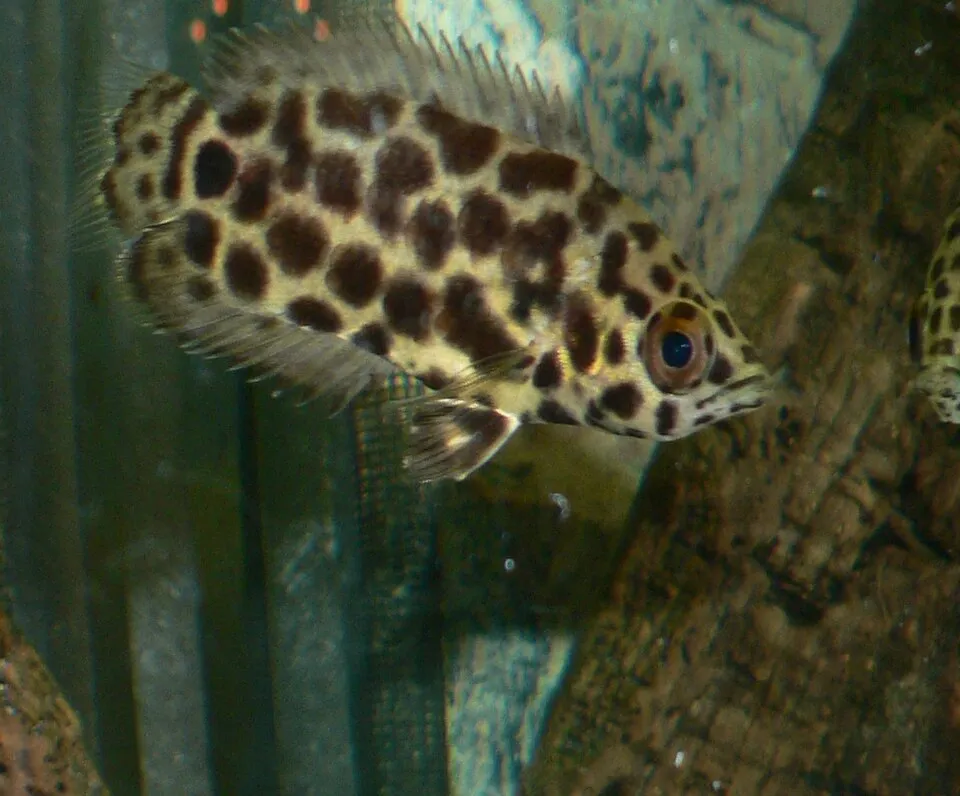 6.3 in (16 cm)40 gal (150 L)68–82°F (20–28°C)
Leopard bush fish
Ctenopoma acutirostre
6.3 in (16 cm) · 40 gal (150 L)
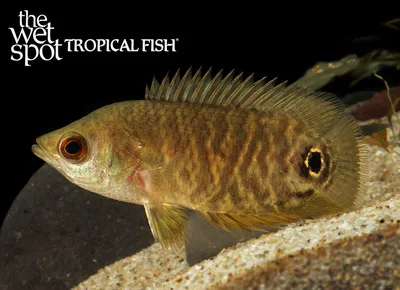 5.9 in (15 cm)42 gal (160 L)73–82°F (23–28°C)
Eyespot bushfish
Ctenopoma ocellatum
5.9 in (15 cm) · 42 gal (160 L)
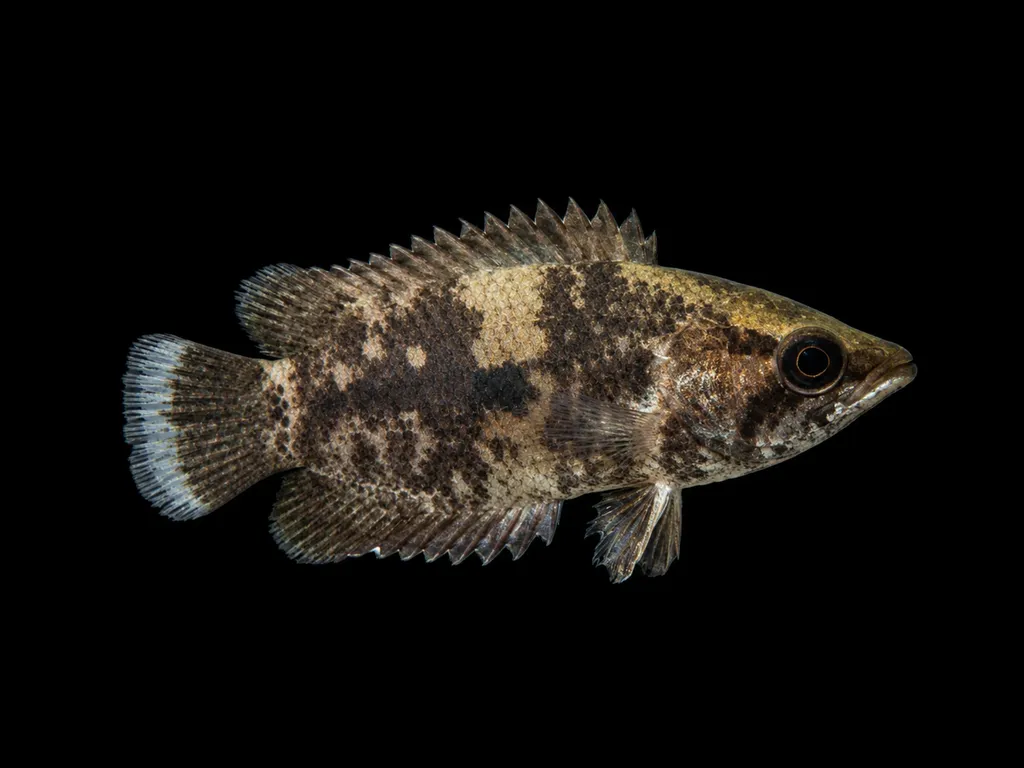 4.7 in (12 cm)42 gal (160 L)73–82°F (23–28°C)
Mottled bushfish
Ctenopoma weeksii
4.7 in (12 cm) · 42 gal (160 L)