Leopard bush fish
Ctenopoma acutirostre
Also known as Leopard bushfish
FreshwaterFish
Care at a glance
- Temperature
- 68–82°F
- 20–28°C
- pH
- 6.0–7.5
- Adult size
- 6.3 in
- 16 cm
- Minimum tank
- 40 gal
- 150 L
- Temperament
- Mostly peaceful
- Social behavior
- Social
- Tankmates
- With caution
- Swim level
- Middle
- Difficulty
- Easy
- Breeding
- No record
- Rarity
- Very rare
- Family
- Anabantidae
- Origin
- Congo Basin
Overview
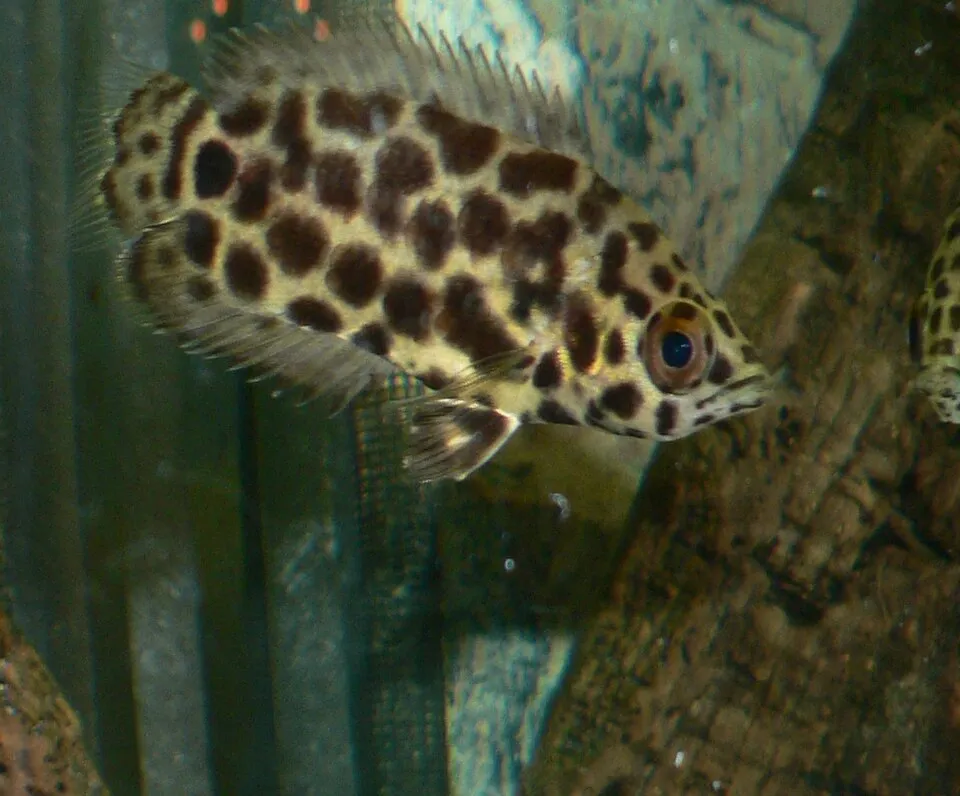
The leopard bush fish is a slow, stealthy predator that is peaceful toward anything too big to eat but will happily swallow small fish and shrimp. It drifts in the middle of the tank among wood and plants, often tilting and hovering as it stalks food. It can be kept singly or in a small group, and mixes with medium to large calm community fish. Feed meaty foods such as earthworm, prawn, mussel and larger frozen items, and be patient weaning it onto dry pellets. Despite its predatory habits it is an easy, hardy fish for a shady, well-decorated tank of around 150 liters or more.
In the wild
Ctenopoma acutirostre lives in the Congo River basin in central Africa, in warm, slow, shaded waters full of submerged wood and leaf litter. It relies on cover and dappled light to ambush prey. Recreate that with plenty of driftwood, tangled roots, robust plants and a dim tank with floating cover overhead. Keep the temperature between 20 and 28 degrees Celsius and the pH from 6.0 to 7.5, in soft to moderately hard water. A dark substrate and scattered leaves complete the look and help the fish show its bold leopard markings.
Good to know
The leopard bush fish belongs to the family Anabantidae, the same African and Asian group as the climbing perch, and grows to about 16 centimeters. Its cream body is covered in dark, leopard-like blotches, and young fish carry an eyespot near the tail. It scatters floating eggs and gives no parental care, and aquarium breeding is seldom recorded. As a labyrinth fish it breathes air, and its patient, hovering hunting style sets it apart from most community fish.
Did you know
The leopard bush fish is a master of disguise. It drifts at an angle and hangs almost motionless, looking like a dead, spotted leaf, until a small fish comes close enough to be inhaled in a single gulp.
Common questions
What size tank does a Leopard bush fish need?
A Leopard bush fish needs at least 40 gal (150 L). It spends most of its time in the middle.
What temperature and pH does a Leopard bush fish need?
A Leopard bush fish is comfortable at 68–82°F (20–28°C) with a pH of 6.0–7.5.
How big does a Leopard bush fish get?
An adult Leopard bush fish reaches about 6.3 in (16 cm).
Related species
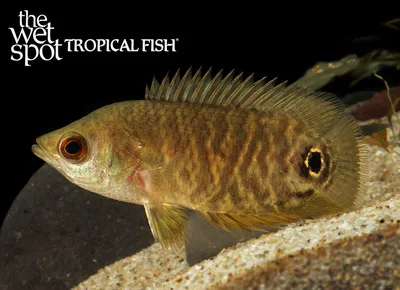 5.9 in (15 cm)42 gal (160 L)73–82°F (23–28°C)
Eyespot bushfish
Ctenopoma ocellatum
5.9 in (15 cm) · 42 gal (160 L)
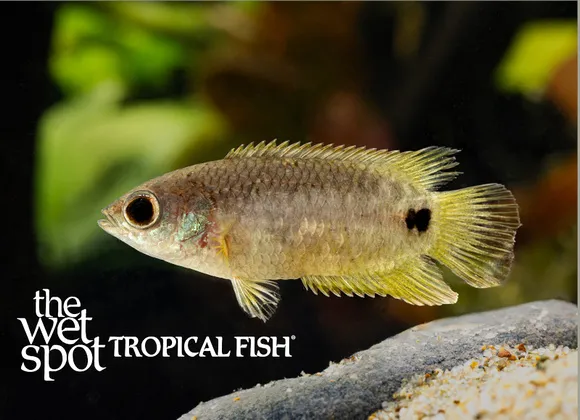 6.9 in (17.5 cm)53 gal (200 L)73–82°F (23–28°C)
Petherick's bushfish
Ctenopoma petherici
6.9 in (17.5 cm) · 53 gal (200 L)
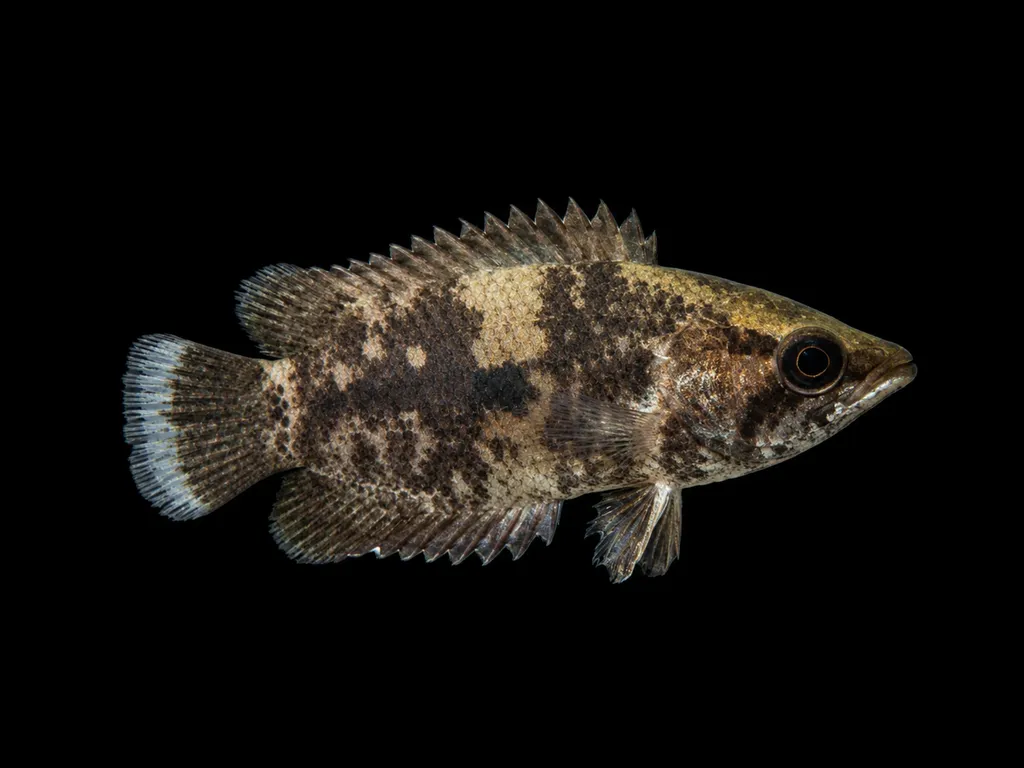 4.7 in (12 cm)42 gal (160 L)73–82°F (23–28°C)
Mottled bushfish
Ctenopoma weeksii
4.7 in (12 cm) · 42 gal (160 L)
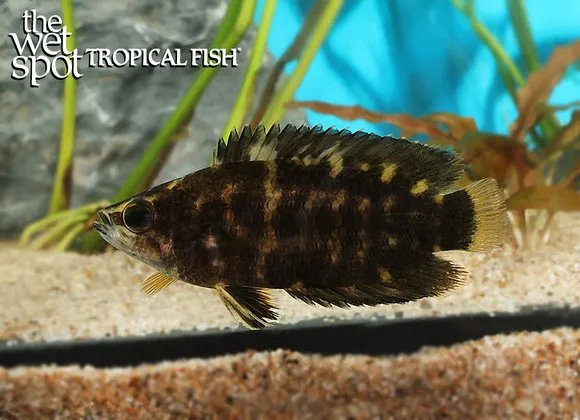 4.7 in (12 cm)42 gal (160 L)73–82°F (23–28°C)
Niger Delta bushfish
Ctenopoma nebulosum
4.7 in (12 cm) · 42 gal (160 L)
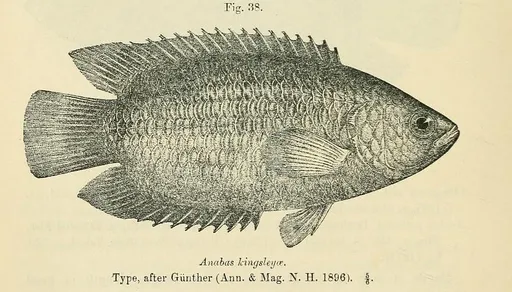 7.9 in (20 cm)66 gal (250 L)73–82°F (23–28°C)
Tailspot climbing perch
Ctenopoma kingsleyae
7.9 in (20 cm) · 66 gal (250 L)
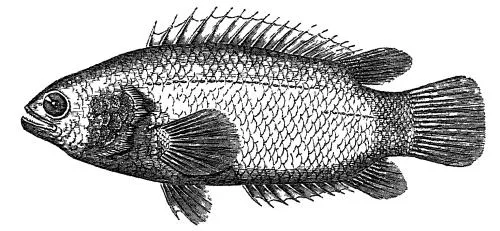 9.8 in (25 cm)66 gal (250 L)72–86°F (22–30°C)
Gangetic climbing perch
Anabas cobojius
9.8 in (25 cm) · 66 gal (250 L)