Tailspot climbing perch
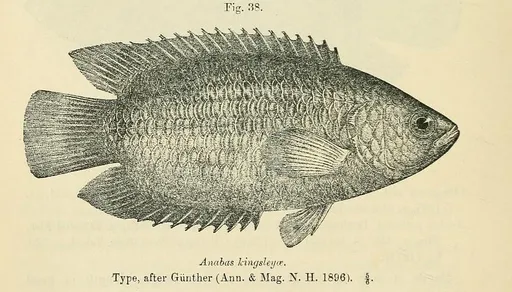
Ctenopoma kingsleyae
Also known as Tailspot ctenopoma, Kingsley's ctenopoma, Tailspot bushfish
FreshwaterFish
Care at a glance
- Temperature
- 73–82°F
- 23–28°C
- pH
- 6.0–8.0
- Adult size
- 7.9 in
- 20 cm
- Minimum tank
- 66 gal
- 250 L
- Temperament
- Aggressive
- Social behavior
- Solitary
- Tankmates
- With caution
- Swim level
- Middle
- Diet
- Carnivore
- Difficulty
- Medium
- Breeding
- Egg scatterer · Hard
- Rarity
- Rare
- Family
- Anabantidae
- Origin
- Wide range across western and central Africa, from Senegal to the Congo, in varied slow waters.
Overview
The tailspot climbing perch is an aggressive, predatory African labyrinth fish for a big, well-covered tank. It suits a keeper who already has some experience.
Did you know
Climbing perches like the tailspot can gulp air and haul themselves across damp land to reach new water. That habit gave the family its name.
Caring for the tailspot climbing perch
Give the tailspot climbing perch a tank of at least 66 gal (250 L) with strong cover of wood and plants. A tight lid is essential, because it can jump and climb.
Keep the water at 73 to 82°F (23 to 28°C) with a pH of 6.0 to 8.0. Feed meaty foods such as earthworms, prawns, mussel and larger frozen items, since it rarely takes flake.
The tailspot climbing perch is predatory and eats smaller fish, so keep it only with fish too big to swallow. Expect it to be aggressive and territorial. It is fine in a group of its own kind.
It is an egg-scattering free spawner rather than a nest builder, unlike its Microctenopoma cousins. Breeding it is hard.
Good to know
Ctenopoma kingsleyae is a member of the family Anabantidae and one of the larger African climbing perches. Adults are large and powerful for a labyrinth fish. A dark spot at the base of the tail gives it the tailspot name. It is also sold as the tailspot ctenopoma, Kingsley's ctenopoma or tailspot bushfish.
In the wild
The tailspot climbing perch ranges across many West and Central African rivers, floodplains and pools, from Senegal to the Congo. It adapts to a range of conditions and lives in mid-water as an ambush predator, lurking near cover for prey. Its labyrinth organ lets it survive in warm, oxygen-poor water.
Common questions
What size tank does a tailspot climbing perch need?
A tailspot climbing perch needs at least 66 gal (250 L). It spends most of its time in the middle.
What temperature and pH does a tailspot climbing perch need?
A tailspot climbing perch is comfortable at 73–82°F (23–28°C) with a pH of 6.0–8.0.
What does a tailspot climbing perch eat?
A tailspot climbing perch eats meaty foods such as earthworms, prawns, mussel and larger frozen items. It rarely takes flake, and it eats smaller fish.
How big does a tailspot climbing perch get?
An adult tailspot climbing perch reaches about 7.9 in (20 cm).
How does a tailspot climbing perch breed?
A tailspot climbing perch is a free spawner that scatters its eggs and builds no nest. Breeding it is hard.
Related species
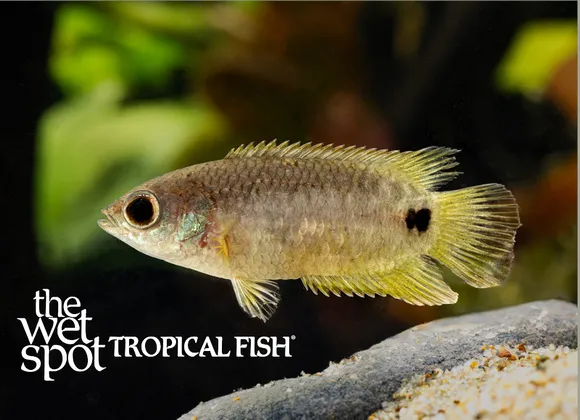 6.9 in (17.5 cm)53 gal (200 L)73–82°F (23–28°C)
Petherick's bushfish
Ctenopoma petherici
6.9 in (17.5 cm) · 53 gal (200 L)
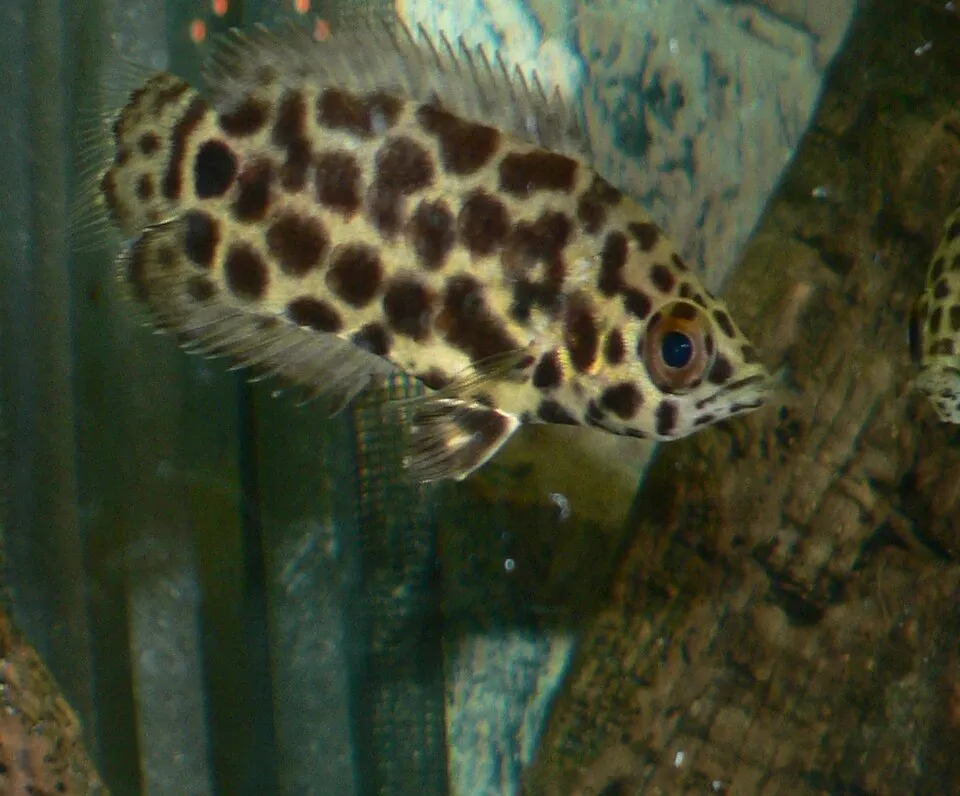 6.3 in (16 cm)40 gal (150 L)68–82°F (20–28°C)
Leopard bush fish
Ctenopoma acutirostre
6.3 in (16 cm) · 40 gal (150 L)
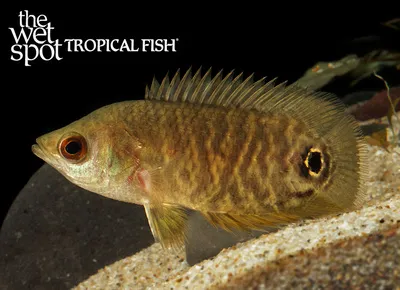 5.9 in (15 cm)42 gal (160 L)73–82°F (23–28°C)
Eyespot bushfish
Ctenopoma ocellatum
5.9 in (15 cm) · 42 gal (160 L)
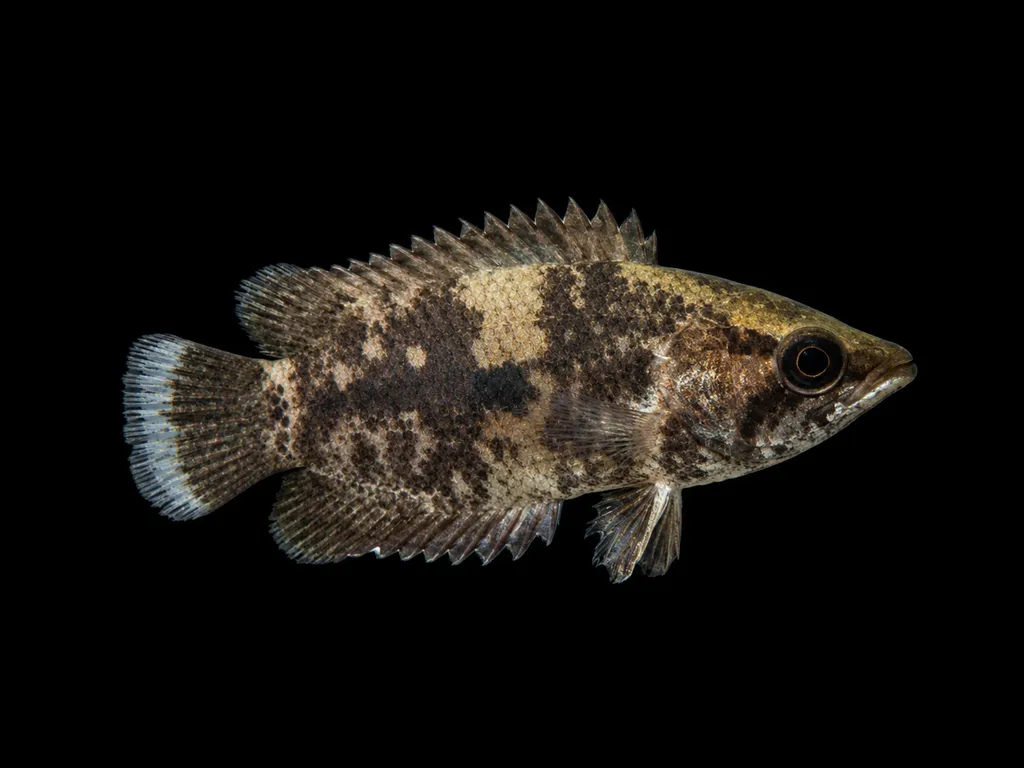 4.7 in (12 cm)42 gal (160 L)73–82°F (23–28°C)
Mottled bushfish
Ctenopoma weeksii
4.7 in (12 cm) · 42 gal (160 L)
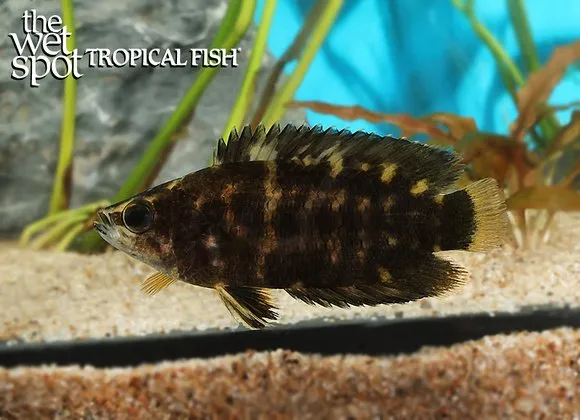 4.7 in (12 cm)42 gal (160 L)73–82°F (23–28°C)
Niger Delta bushfish
Ctenopoma nebulosum
4.7 in (12 cm) · 42 gal (160 L)
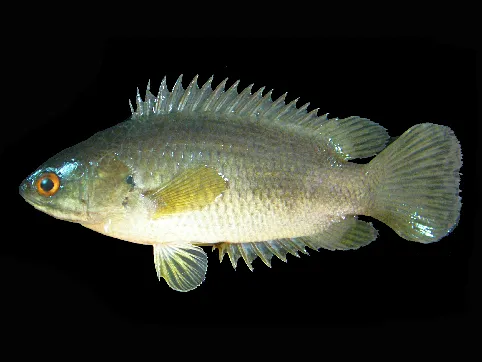 7.9 in (20 cm)40 gal (150 L)59–86°F (15–30°C)
Climbing perch
Anabas testudineus
7.9 in (20 cm) · 40 gal (150 L)