Clove polyps
Clavularia
Also known as Clove Polyp, Glove Polyp, Clavularia Polyps
SaltwaterCoral
Care at a glance
- Temperature
- 75–81°F
- 24–27°C
- pH
- 8.1–8.4
- Adult size
- 5.9 in
- 15 cm
- Minimum tank
- 11 gal
- 40 L
- Temperament
- Mostly peaceful
- Social behavior
- Solitary
- Swim level
- Bottom
- Difficulty
- Beginner
- Breeding
- Easy
- Rarity
- Very common
- Reef safe
- Reef safe
- Family
- Clavulariidae
- Origin
- Indo-Pacific reefs
Overview
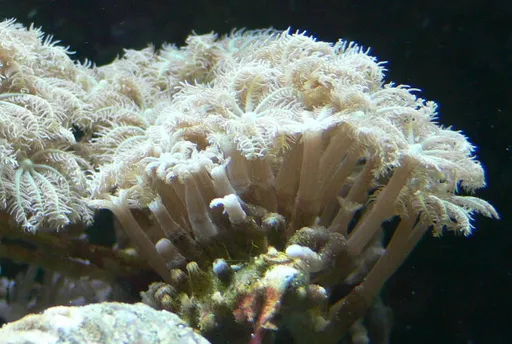
A sessile octocoral that spreads by extending its stolon across rock, slowly but steadily colonizing open surfaces and needing the same isolated-rock treatment as other mat-forming star polyps. It has no sweeper tentacles and will not chemically attack neighbors, but its creeping growth can eventually overgrow slower corals nearby, which is why keepers give it its own rock or a sand moat. It is photosynthetic and rarely needs feeding, though it will take fine meaty foods if offered. Propagation is simple: cut a piece of stolon with a few polyps attached and let it re-anchor on a new rock.
In the wild
Clove polyps grow on Indo-Pacific reef flats and lagoons, where individual stalked polyps rise from a thin connecting mat anchored to rock and rubble. In the aquarium they do well under low to moderate light, roughly 50 to 150 PAR, and want moderate to strong flow to keep the connecting stolon clean and the polyps swaying. Mount them on rock rather than sand, since the stolon cannot cross bare substrate, and leave a border of open sand or an isolated rock if you do not want the mat creeping into the rest of the aquascape.
Good to know
Clavularia is a colonial soft coral in the family Clavulariidae, a separate family from green star polyps (Pachyclavularia violacea, family Briareidae) already in this catalog, even though both are loosely called star or clove polyps in the trade. Each polyp carries the eight pinnate tentacles typical of an octocoral and rises on its own stalk from a shared stolon, giving the colony a more open, spaced out look than the dense turf of green star polyps. It draws most of its energy from zooxanthellae and can pull each polyp down into its base when disturbed.
Did you know
Clove polyps spread more slowly than fast movers like green star polyps or xenia, but the same sand-moat trick keepers use to fence in those corals works here too, since a clove polyp colony that reaches the main aquascape can be just as stubborn to fully remove.
Common questions
What size tank does a Clove polyps need?
A Clove polyps needs at least 11 gal (40 L). It spends most of its time in the bottom.
What temperature and pH does a Clove polyps need?
A Clove polyps is comfortable at 75–81°F (24–27°C) with a pH of 8.1–8.4.
How big does a Clove polyps get?
An adult Clove polyps reaches about 5.9 in (15 cm).
Related species
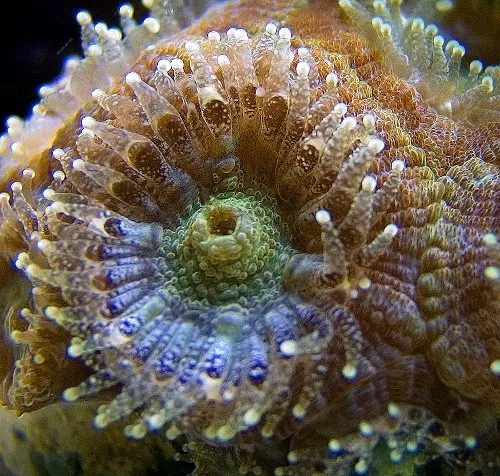 5.9 in (15 cm)11 gal (40 L)75–81°F (24–27°C)
Acan lord coral
Micromussa lordhowensis
5.9 in (15 cm) · 11 gal (40 L)
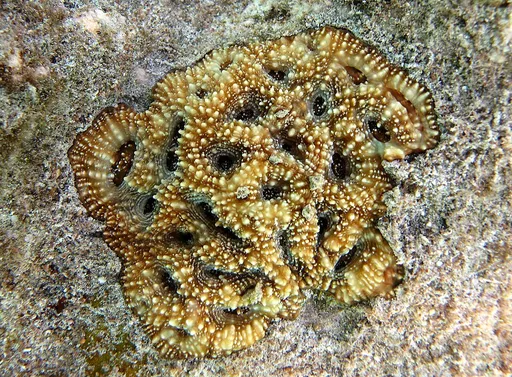 7.9 in (20 cm)11 gal (40 L)75–81°F (24–27°C)
Acan coral
Acanthastrea echinata
7.9 in (20 cm) · 11 gal (40 L)
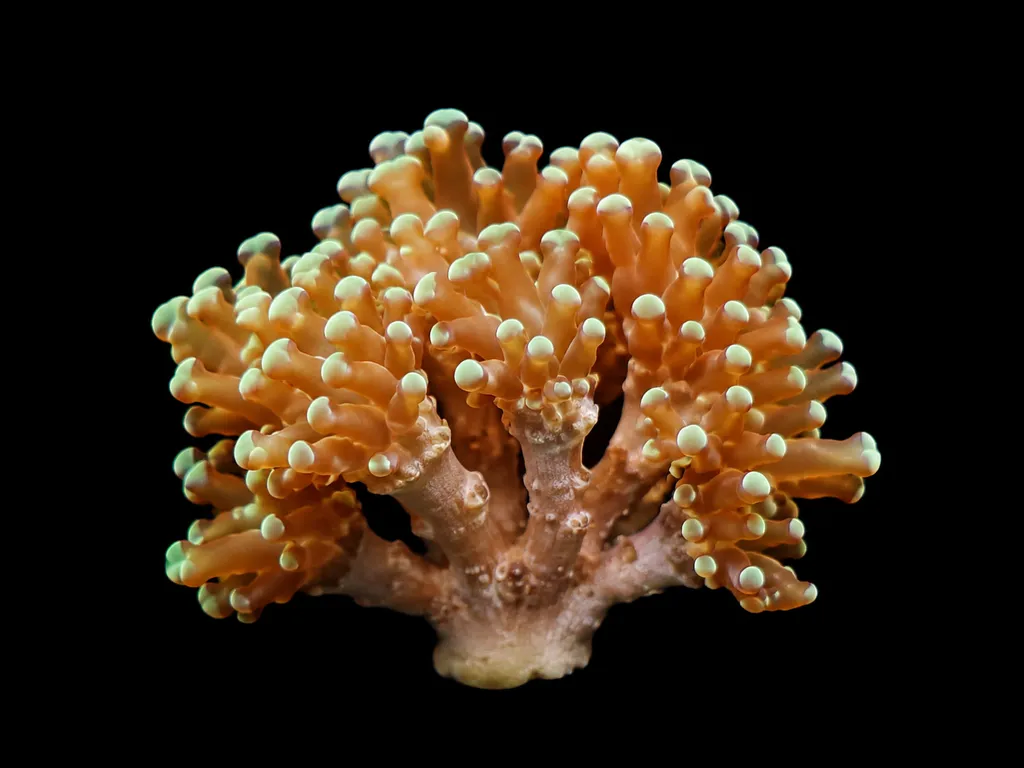 7.9 in (20 cm)20 gal (75 L)75–81°F (24–27°C)
Branching frogspawn coral
Fimbriaphyllia paradivisa
7.9 in (20 cm) · 20 gal (75 L)
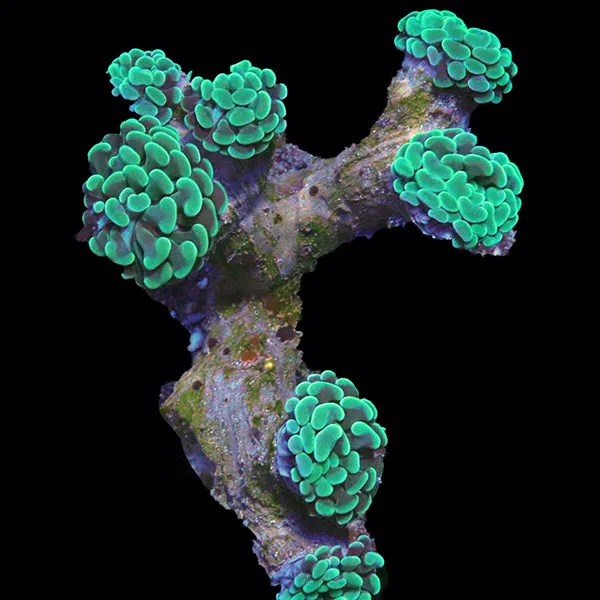 7.9 in (20 cm)20 gal (75 L)75–81°F (24–27°C)
Branching hammer coral
Fimbriaphyllia paraancora
7.9 in (20 cm) · 20 gal (75 L)
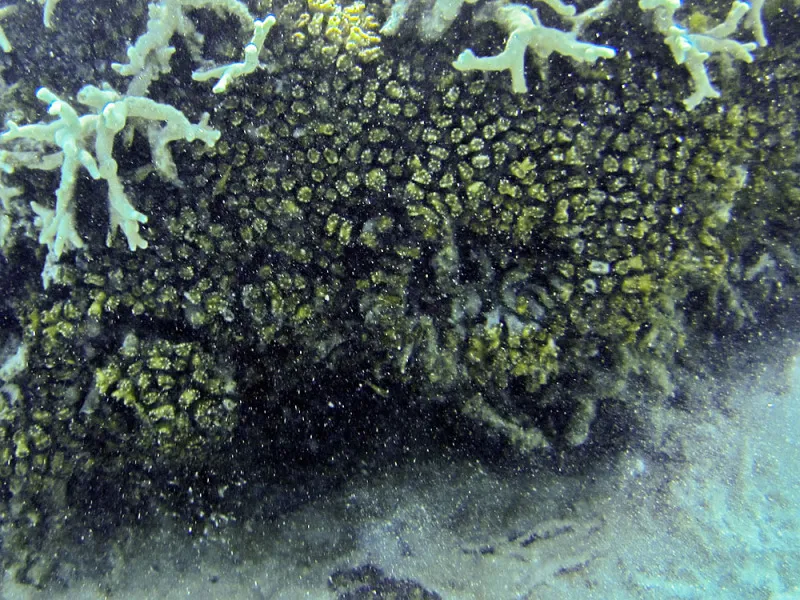 7.9 in (20 cm)11 gal (40 L)75–81°F (24–27°C)
Candy cane coral
Caulastraea furcata
7.9 in (20 cm) · 11 gal (40 L)
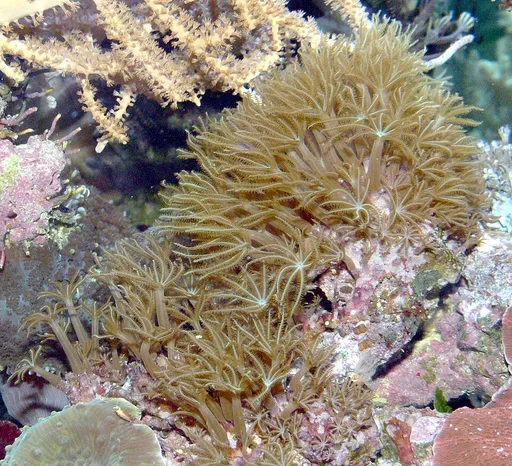 7.9 in (20 cm)11 gal (40 L)75–81°F (24–27°C)
Encrusting star polyps
Briareum
7.9 in (20 cm) · 11 gal (40 L)