Green star polyps
Pachyclavularia violacea
Also known as GSP, Star Polyps, Briareum, Daisy Polyps
SaltwaterCoral
Care at a glance
- Temperature
- 75–81°F
- 24–27°C
- pH
- 8.1–8.4
- Adult size
- 7.9 in
- 20 cm
- Minimum tank
- 11 gal
- 40 L
- Temperament
- Peaceful
- Social behavior
- Solitary
- Swim level
- Bottom
- Difficulty
- Beginner
- Breeding
- Easy
- Rarity
- Very common
- Reef safe
- Reef safe
- Family
- Briareidae
- Origin
- Indo-Pacific reefs
Overview
A sessile encrusting octocoral that spreads rapidly across any hard surface. It has no strong stinging tentacles and will not chemically harm neighbors, but its aggressive overgrowth means it competes purely by encrusting over slower corals, so physical isolation on its own rock is the standard control.
In the wild
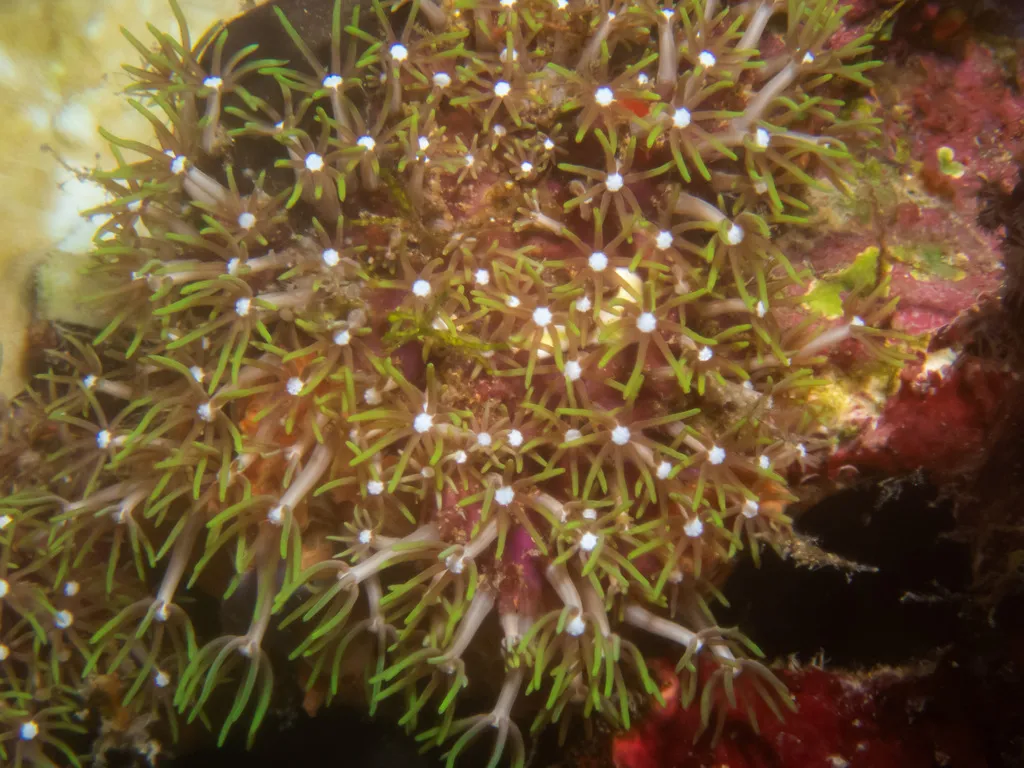
Green star polyps form a purple encrusting mat that sprouts bright green feathery polyps, extending or shortening with the light. GSP is highly adaptable and tolerates low to high light, staying compact under bright light and stretching under dim light, with the green fluorescing hardest under blue actinics. It prefers moderate to strong flow to stay clean and grows fast, so it is safest on an isolated rock separated from the main aquascape.
Good to know
Green star polyps are an octocoral, with each polyp carrying eight feathery tentacles, and the genus Pachyclavularia is often treated as synonymous with Briareum. Polyps retract into a shared purple mat called a stolon when disturbed. It grows by encrusting outward over any hard surface, including live rock, glass and the bases of other corals, which is why it is considered one of the fastest and most invasive spreaders among soft corals.
Did you know
Green star polyps spread so relentlessly that many reefers keep them only on a detached island rock, since once GSP creeps onto the main aquascape it is nearly impossible to fully remove without pulling the rock.
Common questions
What size tank does a Green star polyps need?
A Green star polyps needs at least 11 gal (40 L). It spends most of its time in the bottom.
What temperature and pH does a Green star polyps need?
A Green star polyps is comfortable at 75–81°F (24–27°C) with a pH of 8.1–8.4.
How big does a Green star polyps get?
An adult Green star polyps reaches about 7.9 in (20 cm).
Related species
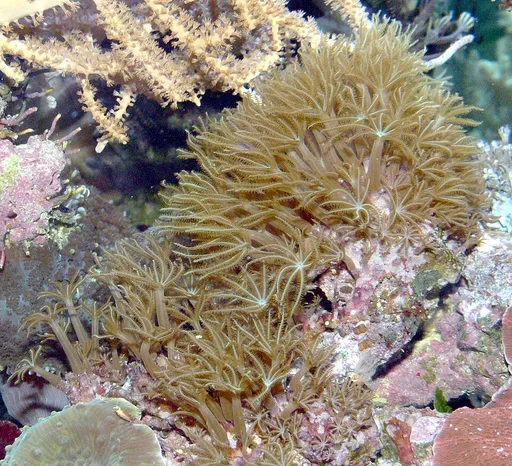 7.9 in (20 cm)11 gal (40 L)75–81°F (24–27°C)
Encrusting star polyps
Briareum
7.9 in (20 cm) · 11 gal (40 L)
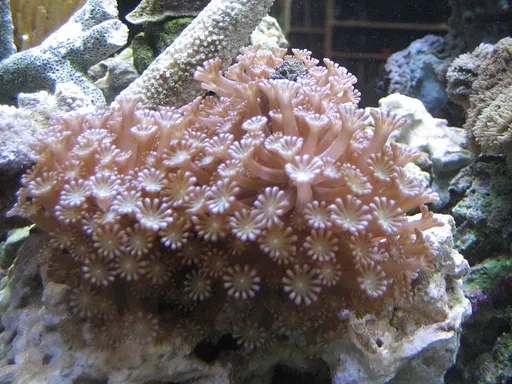 7.9 in (20 cm)11 gal (40 L)75–81°F (24–27°C)
Alveopora coral
Alveopora
7.9 in (20 cm) · 11 gal (40 L)
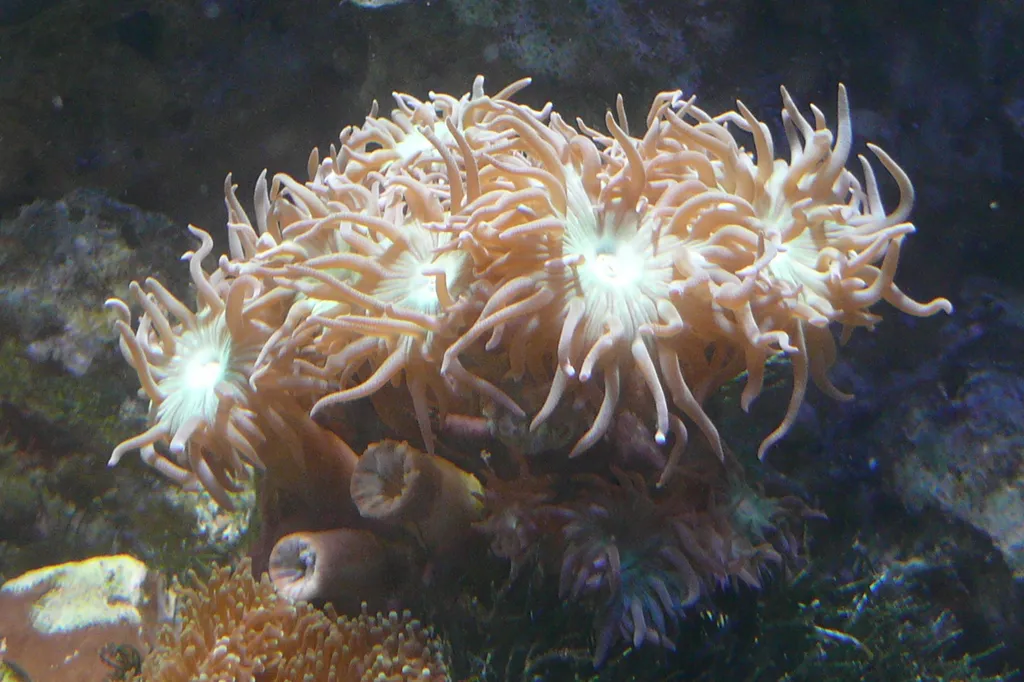 7.9 in (20 cm)11 gal (40 L)75–81°F (24–27°C)
Duncan coral
Duncanopsammia axifuga
7.9 in (20 cm) · 11 gal (40 L)
 7.9 in (20 cm)20 gal (75 L)73–81°F (23–27°C)
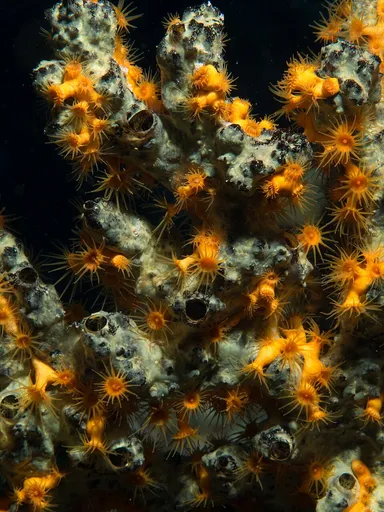
Gold polyps
Parazoanthus swiftii
7.9 in (20 cm) · 20 gal (75 L)
 7.9 in (20 cm)26 gal (100 L)75–81°F (24–27°C)
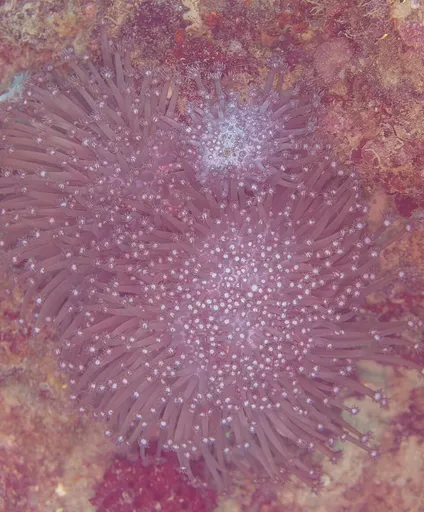
Long-polyp flowerpot coral
Goniopora stokesi
7.9 in (20 cm) · 26 gal (100 L)
 7.9 in (20 cm)20 gal (75 L)75–81°F (24–27°C)
Montipora digitata (finger coral)
Montipora digitata
7.9 in (20 cm) · 20 gal (75 L)