Gold polyps
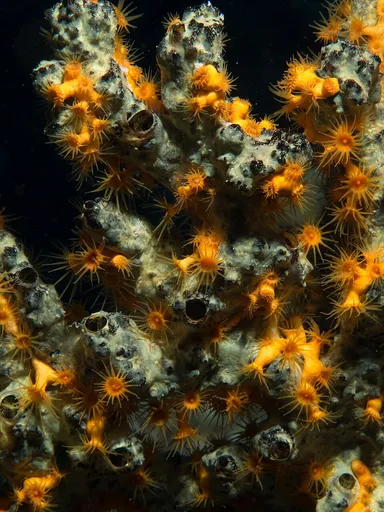
Parazoanthus swiftii
Also known as Golden Zoanthid, Gold NPS Polyps
SaltwaterCoral
Care at a glance
- Temperature
- 73–81°F
- 23–27°C
- pH
- 8.1–8.4
- Adult size
- 7.9 in
- 20 cm
- Minimum tank
- 20 gal
- 75 L
- Temperament
- Peaceful
- Social behavior
- Solitary
- Swim level
- Bottom
- Difficulty
- Difficult
- Breeding
- Medium
- Rarity
- Rare
- Reef safe
- Reef safe
- Family
- Parazoanthidae
- Origin
- Caribbean reefs, walls and overhangs
Overview
Gold polyps are a reef-safe colonial animal from Caribbean reefs, and the colony has to be fed most days. They are best left to experienced keepers.
Did you know
In the wild, gold polyps almost always grow as streaks of color across living sponges, one of the classic sights of Caribbean reef walls. In a tank they abandon that arrangement without complaint and simply carpet rock.
Caring for the gold polyps
Place gold polyps anywhere from bright light to full shade, since lighting is irrelevant to their nutrition. Give them moderate to strong flow so food streams past the polyps. A tank of at least 20 gal (75 L) suits a colony.
Keep the water at 73 to 81°F (23 to 27°C) with a pH of 8.1 to 8.4. Feed them like a non-photosynthetic coral, with fine meaty and powdered foods most days. Without a feeding routine, the colony slowly shrinks no matter how good the light is.
Gold polyps stay peaceful with all neighbors. Well-fed colonies spread by budding new polyps along creeping runners.
Good to know
Parazoanthus swiftii is an accepted species in the family Parazoanthidae. Despite the zoanthid look, it is not a stony coral but a colonial, anemone-like zoantharian. Unlike the photosynthetic button polyps most reefers know, it is azooxanthellate and captures every meal itself. Its golden color is the animal's own pigment, not a product of symbiotic algae. Cultured colonies come from Bocas Mariculture in Panama.
In the wild
Gold polyps live on the walls and under the overhangs of Caribbean reefs. There they wind across sponges in bright golden chains, each polyp around half a centimeter across. The colonies stand out vividly against the purples and browns of their host sponges.
Common questions
What size tank do gold polyps need?
Gold polyps need at least 20 gal (75 L).
What temperature and pH do gold polyps need?
Gold polyps are comfortable at 73–81°F (23–27°C) with a pH of 8.1–8.4.
What do gold polyps eat?
Gold polyps eat fine meaty and powdered foods, which they need most days. Without that feeding routine, the colony slowly shrinks.
How big do gold polyps get?
Gold polyps reach about 7.9 in (20 cm).
Related species
 7.9 in (20 cm)11 gal (40 L)75–81°F (24–27°C)
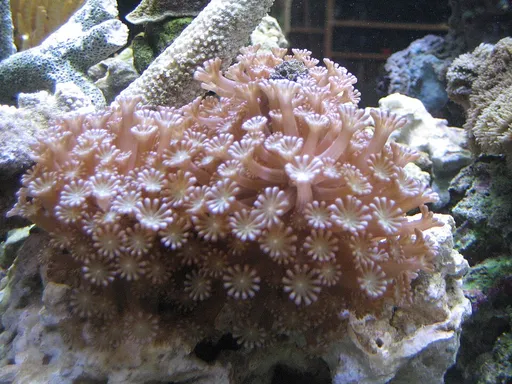
Alveopora coral
Alveopora
7.9 in (20 cm) · 11 gal (40 L)
 7.9 in (20 cm)11 gal (40 L)75–81°F (24–27°C)
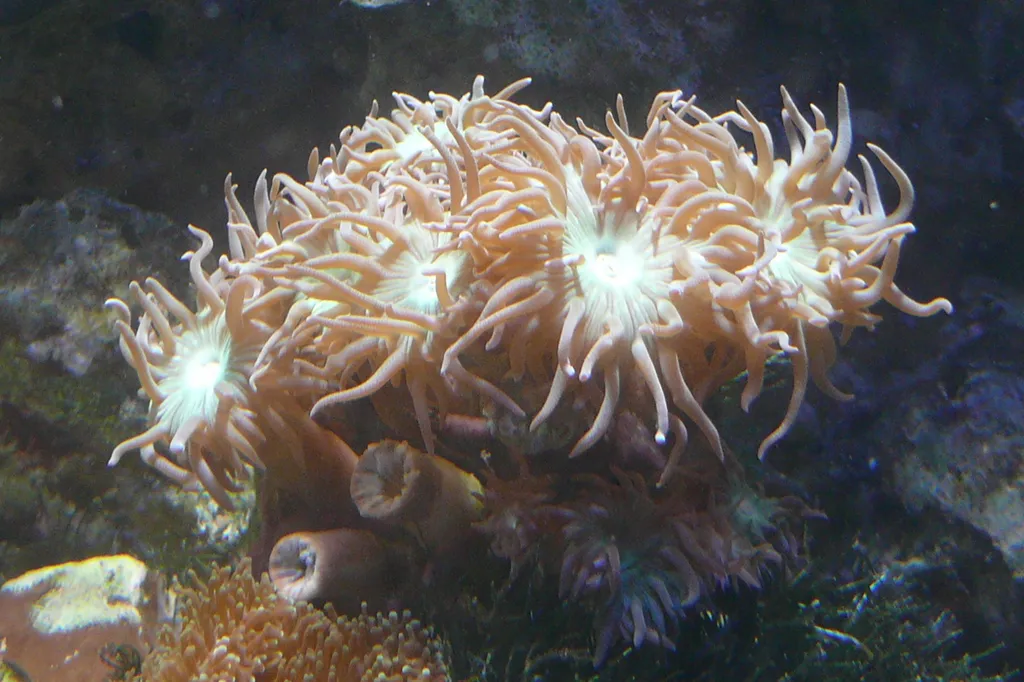
Duncan coral
Duncanopsammia axifuga
7.9 in (20 cm) · 11 gal (40 L)
 7.9 in (20 cm)11 gal (40 L)75–81°F (24–27°C)
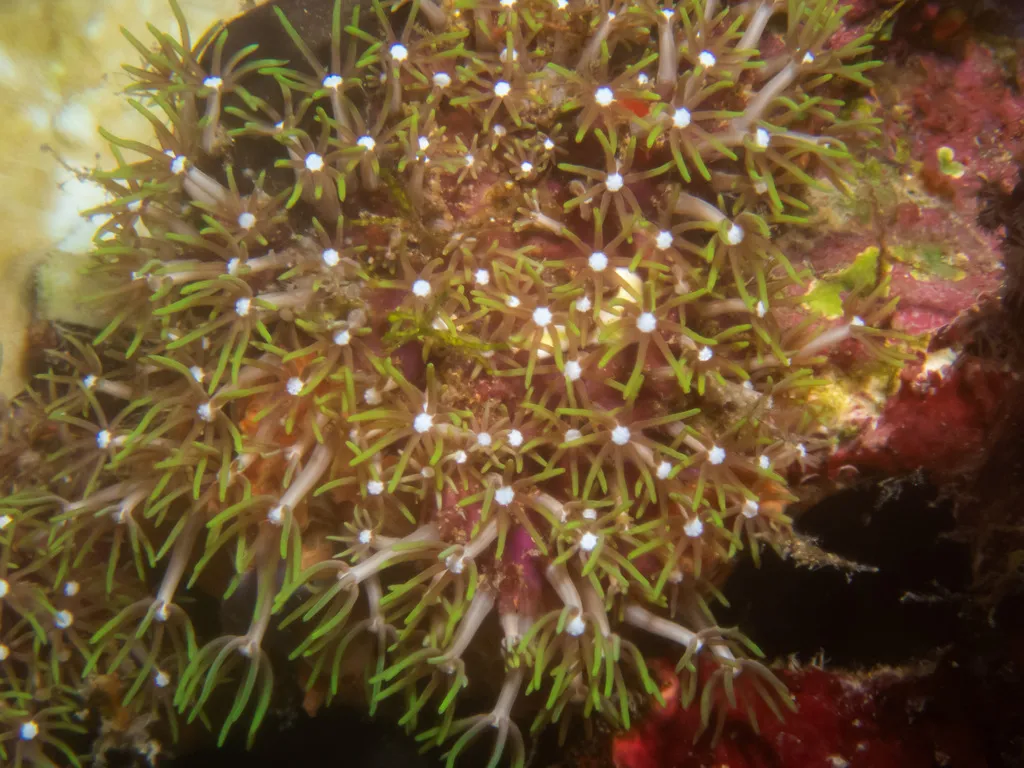
Green star polyps
Pachyclavularia violacea
7.9 in (20 cm) · 11 gal (40 L)
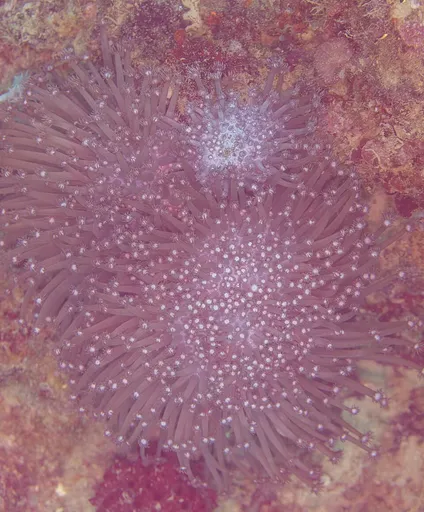 7.9 in (20 cm)26 gal (100 L)75–81°F (24–27°C)
Long-polyp flowerpot coral
Goniopora stokesi
7.9 in (20 cm) · 26 gal (100 L)
 7.9 in (20 cm)20 gal (75 L)75–81°F (24–27°C)
Montipora digitata (finger coral)
Montipora digitata
7.9 in (20 cm) · 20 gal (75 L)
 7.9 in (20 cm)20 gal (75 L)75–81°F (24–27°C)
Montipora plating (cap coral)
Montipora capricornis
7.9 in (20 cm) · 20 gal (75 L)