Blue-spot goby cichlid
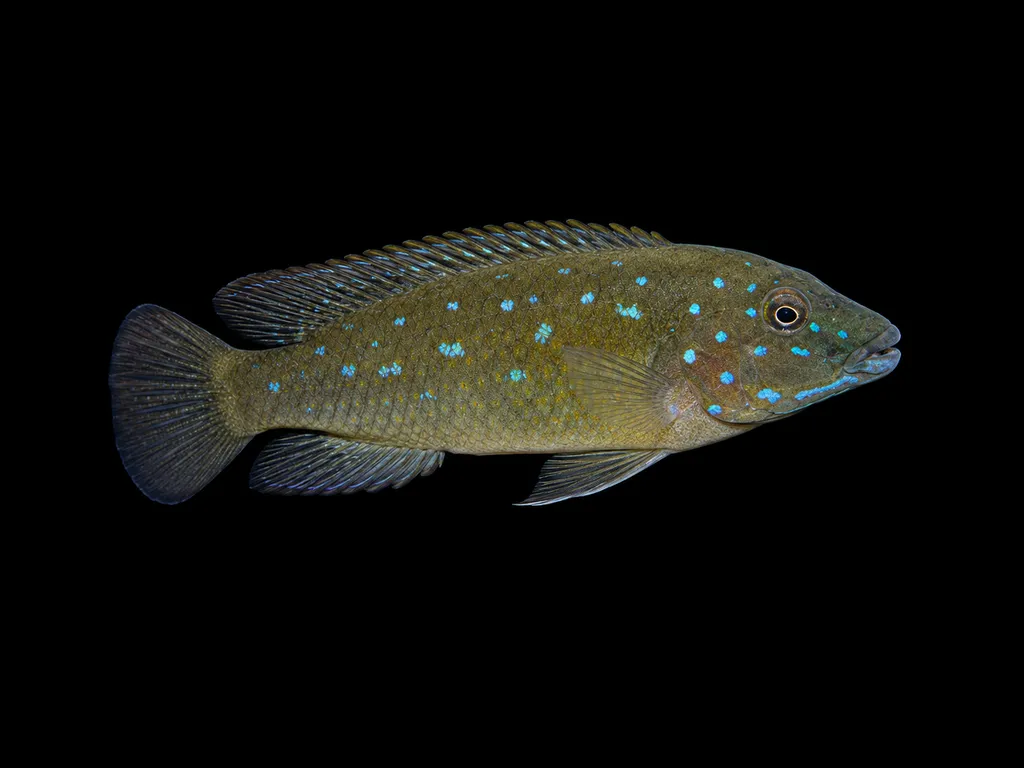
Spathodus erythrodon
Also known as Burundi goby cichlid, Red-tooth goby cichlid
FreshwaterFish
Care at a glance
- Temperature
- 75–81°F
- 24–27°C
- pH
- 7.8–9.0
- Adult size
- 3.3 in
- 8.5 cm
- Minimum tank
- 29 gal
- 110 L
- Temperament
- Mostly peaceful
- Social behavior
- Social
- Swim level
- Bottom
- Diet
- Omnivore
- Difficulty
- Difficult
- Breeding
- Mouthbrooder · Hard
- Rarity
- Rare
- Family
- Cichlidae
- Origin
- Lake Tanganyika, northern surf zone
Overview
The blue-spot goby cichlid is a goby-like cichlid from Lake Tanganyika that hops and clings across rock rather than swimming freely. It suits experienced keepers with a hard-water tank and strong flow.
Did you know
Goby cichlids have a much reduced swim bladder, so they cannot hover in open water and hop along the bottom instead. That loss is an advantage in the surge zone, where a fish with normal buoyancy would be tossed off the rocks by the waves.
Caring for the blue-spot goby cichlid
Keep blue-spot goby cichlids as a bonded pair, or as a small group in a larger tank so a pair can form. Give them at least 29 gal (110 L), with a floor of rounded cobble and stones. Use powerheads for strong flow and good surface agitation, and bright light to grow algae.
Keep the water hard and alkaline at 75 to 81°F (24 to 27°C), with a pH of 7.8 to 9.0. Its diet is largely algae and tiny invertebrates, so feed a low-protein, vegetable-based menu. Offer spirulina flake and the odd frozen cyclops. Avoid rich meaty foods, which trigger bloat.
The blue-spot goby cichlid is mild mannered but territorial in a small space, so give it its own rockwork. Pick calm tank mates with the same need for hard water and high oxygen.
Breeding is hard. It is a biparental mouthbrooder, and the female carries the eggs for around two weeks. She then passes the young to the male, who broods them until they are free swimming.
Good to know
Spathodus erythrodon is one of the goby cichlids, in the family Cichlidae. Its stout body, high-set eyes and underslung mouth for grazing rock are adaptations to turbulent shallows.
In the wild
Spathodus erythrodon lives in the top meter or two of Lake Tanganyika's northern shoreline, where waves break over rock and cobble. The water there is very hard, alkaline and rich in oxygen.
Weekly picks
Tank mates
The blue-spot goby cichlid is a mostly peaceful, social species that keeps to the bottom. These picks share a community profile with it, are safe together in both directions, and overlap on water type, temperature and pH.
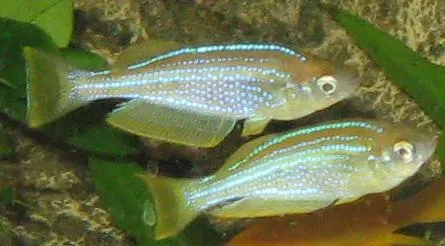
Tanganyika killifish
Lamprichthys tanganicanus
Freshwater5.5 in (14 cm) · 40 gal (150 L)73–77°F (23–25°C)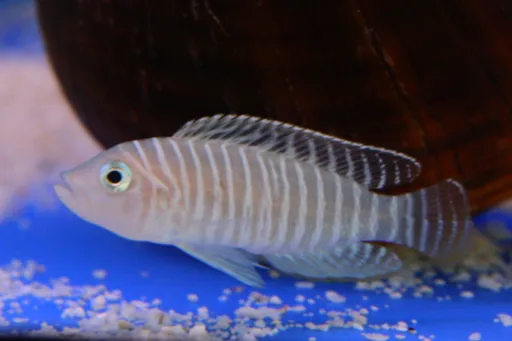
Similis shell dweller
Neolamprologus similis
Freshwater2 in (5 cm) · 20 gal (75 L)75–81°F (24–27°C)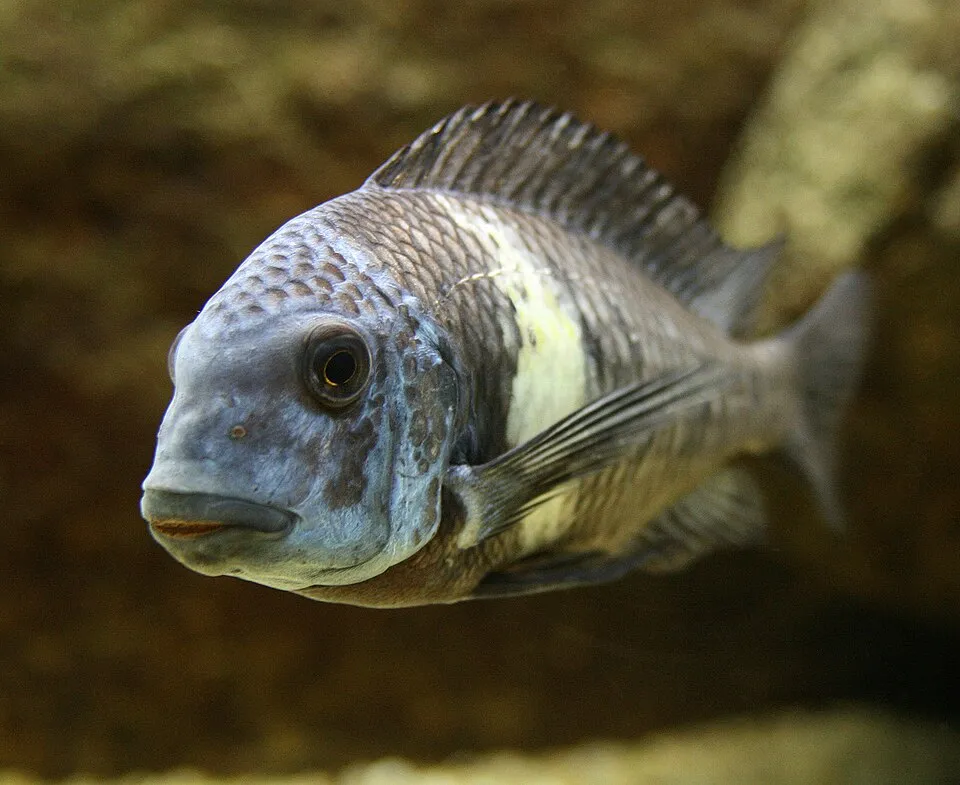
White-spotted cichlid
Tropheus duboisi
Freshwater4.7 in (12 cm) · 29 gal (110 L)73–82°F (23–28°C)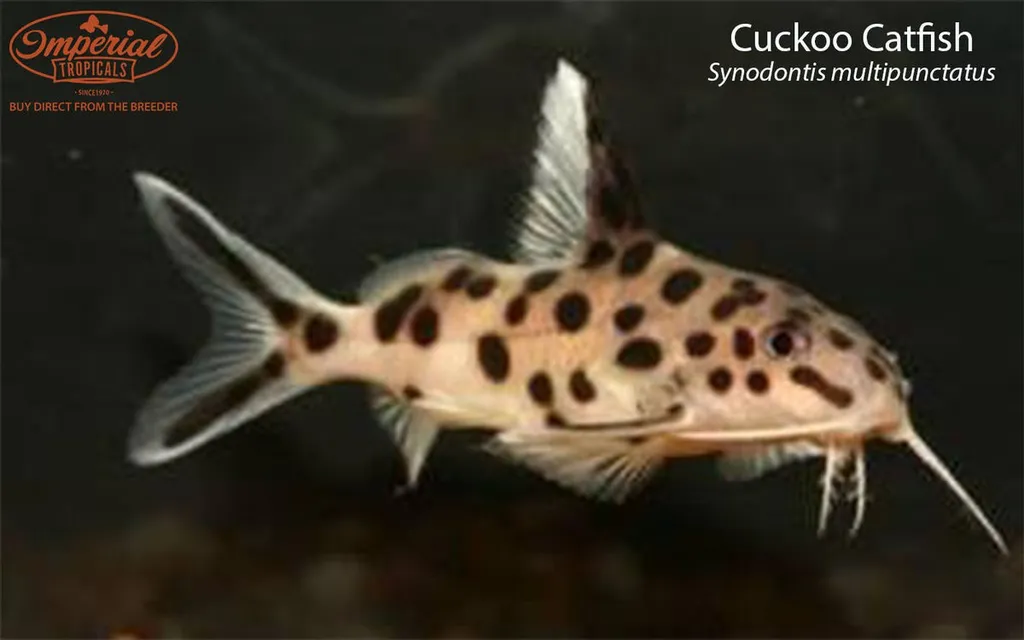
Cuckoo squeaker
Synodontis multipunctatus
Freshwater7.1 in (18 cm) · 29 gal (110 L)75–82°F (24–28°C)
Common questions
What size tank does a blue-spot goby cichlid need?
A blue-spot goby cichlid needs at least 29 gal (110 L). It spends most of its time in the bottom.
What temperature and pH does a blue-spot goby cichlid need?
A blue-spot goby cichlid is comfortable at 75–81°F (24–27°C) with a pH of 7.8–9.0.
What does a blue-spot goby cichlid eat?
A blue-spot goby cichlid eats mostly algae and tiny invertebrates. Feed it a low-protein, vegetable-based menu such as spirulina flake, with the odd frozen cyclops, and skip rich meaty foods.
How big does a blue-spot goby cichlid get?
An adult blue-spot goby cichlid reaches about 3.3 in (8.5 cm).
How does a blue-spot goby cichlid breed?
A blue-spot goby cichlid is a biparental mouthbrooder. The female carries the eggs for around two weeks, then passes the young to the male until they swim free. Breeding it is hard.
Related species
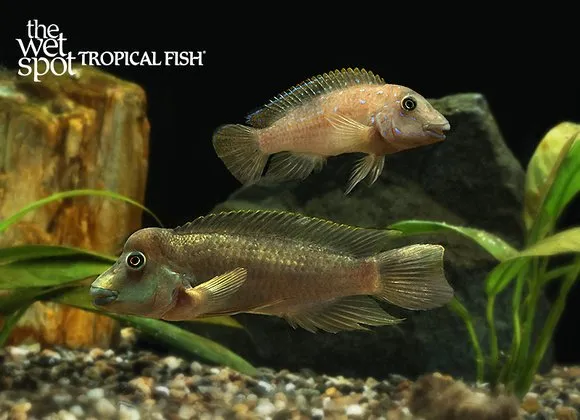 3.9 in (10 cm)42 gal (160 L)75–81°F (24–27°C)
Marlier's goby cichlid
Spathodus marlieri
3.9 in (10 cm) · 42 gal (160 L)
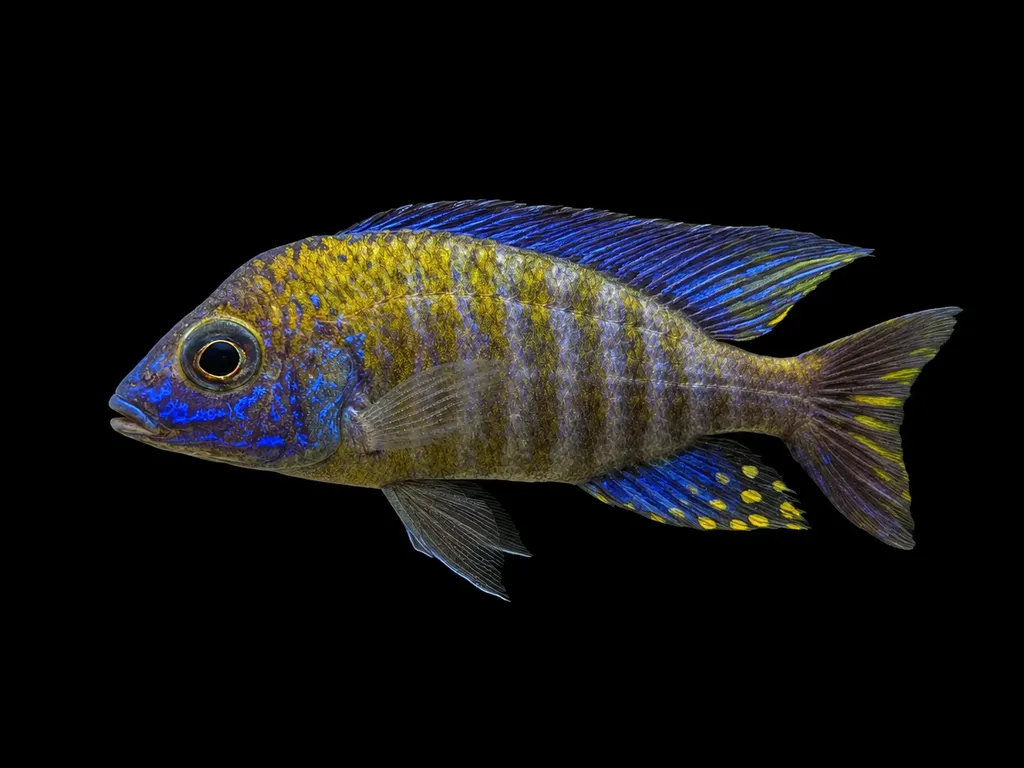 3.5 in (9 cm)63 gal (240 L)75–81°F (24–27°C)
Chitande aulonocara
Aulonocara ethelwynnae
3.5 in (9 cm) · 63 gal (240 L)
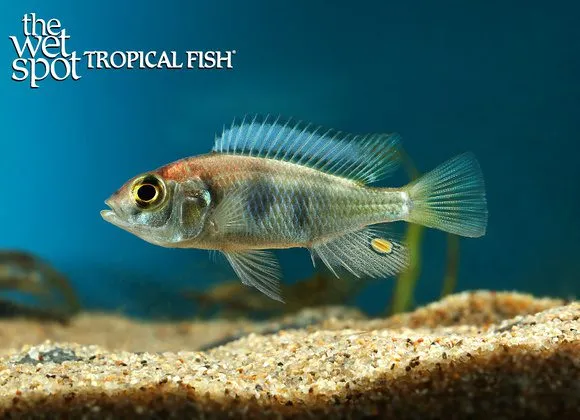 3.5 in (9 cm)42 gal (160 L)73–81°F (23–27°C)
Mwanza dung hap
Enterochromis coprologus
3.5 in (9 cm) · 42 gal (160 L)
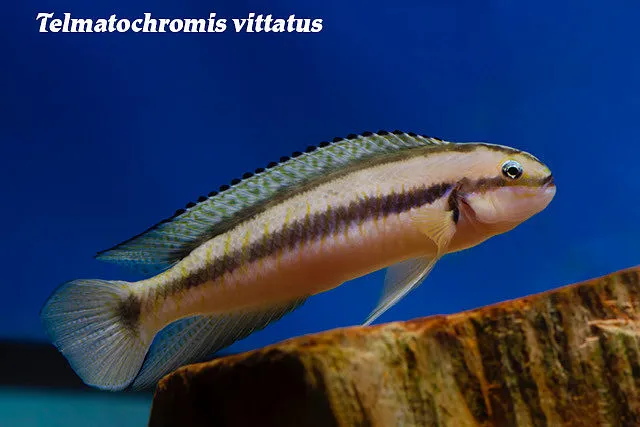 3.5 in (9 cm)20 gal (75 L)75–81°F (24–27°C)
Striped telmatochromis
Telmatochromis vittatus
3.5 in (9 cm) · 20 gal (75 L)
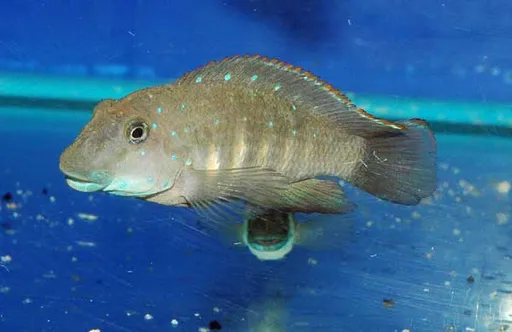 3.5 in (9 cm)29 gal (110 L)75–81°F (24–27°C)
Tanganyika clown
Eretmodus cyanostictus
3.5 in (9 cm) · 29 gal (110 L)
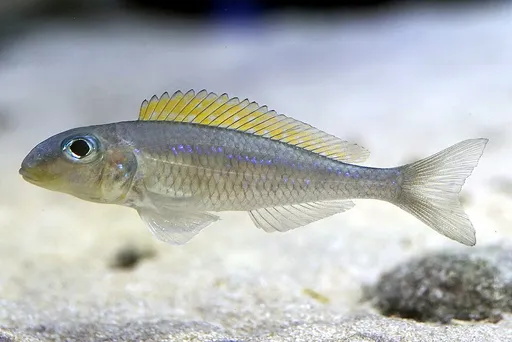 3.5 in (9 cm)53 gal (200 L)75–81°F (24–27°C)
Yellow sand cichlid
Xenotilapia flavipinnis
3.5 in (9 cm) · 53 gal (200 L)